Human Performance and Latent Causes

Human Performance and Latent Causes

by Robert E. Statham, subject matter expert in Latent Cause Analysis for Human Performance.
Season 2026
The Hidden Tax of Blame on Operational Velocity

Join Rob Statham as he discusses the hidden tax of Blame. Blame comes with a high price tag. Most organizations treat failure as a people problem or a process problem and then they spend a significant amount of time doing investigations that never really touch on the conditions that allowed it to happen in the first place. That burns cash and slows everything down. Discover how to increase your operational velocity easily.
Failing Smarter: Turning Setbacks into Advantage with Rachel Franco

Rachel Franco, Founder of Fail Smarter LLC, joins Rob to discuss how leaders can turn failure into a competitive advantage. They dig into psychological safety, productive failure, and the practical systems that help teams stop hiding setbacks and start learning from them—without the blame game. A natural conversation between Latent Cause thinking and the Fail Smarter approach.
The Gift of Near Misses
Most organizations treat near misses as non-events — a close call, a sigh of relief, and then back to business. But what if that near miss was actually a gift? In this episode, we explore why near misses are some of the most valuable learning opportunities available in any high-risk or complex operation. When something almost goes wrong, the system has already revealed a weakness. The only question is whether we are willing to receive the warning and act on it. Drawing from Latent Cause Analysis principles, we examine: Why near misses expose latent conditions before harm occurs How a culture of blame causes people to stay silent Why the same disciplined, no-blame process used for major incidents should also be applied to near misses Practical ways leaders can turn near-miss reporting into a genuine strength instead of a neglected formality Near misses are the system whispering. Incidents are the system screaming. The difference often comes down to whether an organization is prepared to listen. If you lead safety, reliability, operations, or continuous improvement work, this conversation will challenge how you and your teams respond the next time something almost happens.
The Root that Changes Everything
Latent Cause Analysis. This is the Failsafe edge: We don’t just give you better tools. We help you become better learners, leaders, and teammates.
HOP is good, but something Criticial is Missing!
Human and Organizational Performance (HOP) has earned well-deserved attention in recent years. It correctly shifts focus from blaming people to improving the systems in which they work. These are meaningful advances. Yet many organizations that have adopted HOP principles are still experiencing the same types of incidents. The reason is usually that something important is still missing.
Why Most RCA Training Fails: How LCA is Different.

At Failsafe Network, we’ve been in the trenches for over four decades, helping organizations learn from the things that go wrong. What we’ve seen over all those years is that most traditional RCA training doesn’t fall short because people aren’t trying hard enough—it fails because the approach itself has some pretty fundamental flaws. Let's walk through why that happens and how our Latent Cause Analysis™, or LCA, brings something genuinely different to the table.
Human Performance and Latent Causes: Case Study
Case study of catastrophic hydrotreater explosion.
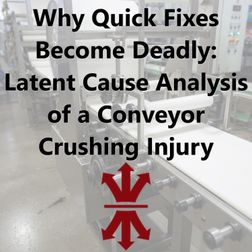
Why Quick Fixes Become Deadly: Latent Cause Analysis of a Conveyor Crushing Injury

In this episode of Human Performance and Latent Causes, Robert E. Statham, President of Failsafe Network, takes a deep dive into a real crushing injury and partial finger amputation that occurred during a routine jam clearance on a high-speed wrapper conveyor in a food packaging plant.
Latent Cause Analysis Brings Leaders to Life: Real Leadership Lessons

Latent Cause Analysis (LCA) is an evidence-based method for investigating incidents that goes beyond fixing immediate problems to uncover deeper systemic, human, and cultural causes. LCA strengthens leadership at all levels and transforms organizational culture toward continuous improvement, better decisions, and fewer repeated failures.
Root Cause Analysis Is Not Enough – How Latent Cause Analysis Changes Everything
Traditional Root Cause Analysis (RCA) often falls short because it stops at surface-level issues—like equipment failure or individual error—and tends to become a blame-focused, checkbox exercise. As a result, organizations see the same problems repeat. Latent Cause Analysis (LCA) is a more powerful alternative because it examines the underlying systems and human factors that create the conditions for failure.
1 of 9