faafo radio

faafo radio

by Courtney -- Sisi in Brazil
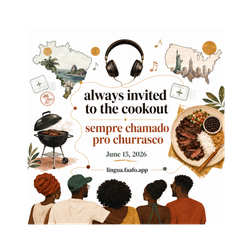
always invited to the cookout / sempre convidado
Are you trying to learn Brazilian Portuguese while also understanding the culture behind the words? This one is not just about vocabulary. It is about what happens when Black Americans, Brazilians, immigrants, expats, and people across the diaspora start using the same words differently. always invited to the cookout / sempre chamado pro churrasco came from me trying to explain something that is funny, complicated, and sometimes frustrating. In the United States, many Black communities have a way of recognizing Blackness across nationality. Jamaican, Haitian, Nigerian, Brazilian, Colombian, Canadian, Australian, mixed, culturally ambiguous, whatever. If you are Black and you are in the community, you are usually treated like kin. That is where the phrase “invited to the cookout” comes from. It is our way of saying: you are welcome here. You are family enough. But in Brazil, I have had to sit with how differently people use words like gringa, negra, preta, brasileira, and americana. This song is me laughing a little, side-eyeing a little, and asking people to think a little deeper about identity, belonging, and the systems that taught us to misunderstand each other. If you are learning Portuguese, listen for words around identity, culture, community, and belonging. If you are Brazilian learning English, listen for how English phrases like “the cookout” carry more meaning than the literal words. Visit lingua.faafo.app for the blog, study cards, and language notes connected to the songs. For networking tips, visibility, and digital tools, visit rede.faafo.app.
eu quero / i want - pix? acarajé? cerveja gelada?
Are you trying to learn Brazilian Portuguese? Are you moving to Brazil, planning a trip to Bahia, or simply tired of memorizing vocabulary lists that disappear a week later? In this song you'll learn one of the most useful phrases in Brazilian Portuguese: "eu quero" (I want). With just those two words you can order an acarajé in Salvador, ask for water, buy groceries, order a drink, request directions, or tell someone exactly what you need. You'll also hear real Bahian Portuguese, including local expressions and speech patterns that visitors often notice when they arrive in Salvador, Bahia. If you're Brazilian and learning English, the song works in reverse too. Every Portuguese phrase is paired with English so your ear begins connecting both languages naturally through rhythm and repetition. Whether you're learning Portuguese for travel, relocation, work, relationships, or everyday life, start with one phrase and build from there. Study cards and the blog are at lingua.faafo.app --- all my shows are at faafo.app/radio

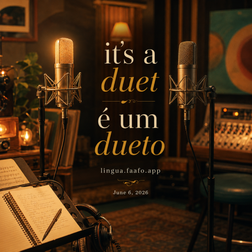
it's a duet / é um dueto
it's a duet / é um dueto was inspired by a simple realization: language is not a solo activity. Most of us learn by listening first. But eventually there comes a moment when you have to join in. You have to answer. Repeat. Respond. Sing the next line. This song was designed as an invitation. One voice starts, another voice follows. The listener becomes part of the conversation. It is less about memorizing vocabulary and more about building confidence through participation. Interestingly, the final recording generated with a female voice only, even though it was originally written as a duet. I decided to keep it. The lesson still works. The invitation is still there. The next voice in the duet is you. Study cards and the blog are at lingua.faafo.app --- all my shows are at faafo.app/radio

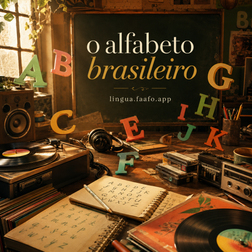
O Alfabeto Brasileiro
o alfabeto brasileiro was created for one reason: if you can hear the alphabet, you can start spelling, reading signs, understanding names, and building confidence much faster. When most of us learned the alphabet as children, we did not memorize it from a textbook. We learned it through repetition, rhythm, and music. I wanted to bring that same idea into Brazilian Portuguese, but in a way that feels a little more grown-up and a little more fun. This song focuses on the actual names of the letters, not just the symbols. Listen carefully to how Brazilians pronounce each letter. Let the rhythm help your memory. Sing along, repeat what you hear, and do not worry about getting it perfect the first time. The goal is simple: make the alphabet feel familiar enough that you stop thinking about it and start using it. study cards and the blog are at lingua.faafo.app --- all my shows are at faafo.app/radio
where to listen: introducing lingua by sisi
thank you for listening to and supporting lingua by sisi. in this episode, i introduce myself, explain how lingua works, and where you can listen. where to listen: website --- lingua.faafo.app (songs + bilingual vocabulary cards) youtube --- lingua by sisi playlist on @linguabysisi podcast --- available on apple podcasts, spotify, iHeartRadio, pandora, amazon music, and all major platforms. subscribe to get notified when new songs drop. new songs on tuesdays. sometimes thursdays and sundays. contact and other podcasts --- faafo.app faafo.app/radio --- listen to all shows
onde ouvir --- apresentando lingua by sisi
obrigada por ouvir e apoiar o lingua by sisi. neste episódio, me apresento, explico como o lingua funciona e onde você pode ouvir. onde ouvir: site --- lingua.faafo.app (músicas + cartões de vocabulário bilíngues) youtube --- playlist lingua by sisi no canal @linguabysisi podcast --- disponível no apple podcasts, spotify, iHeartRadio, pandora, amazon music e todas as principais plataformas. inscreva-se para ser notificado quando novas músicas saírem. músicas novas às terças. às vezes quintas e domingos. contato e outros podcasts --- faafo.app faafo.app/radio --- ouça todos os shows
the magic was the door
no dishes in the sink / só o corpo imaginando is about that quiet kind of desire that shows up when the house is finally still. No dishes. No noise. No errands pulling at you. Just the body remembering it has an imagination. This song lives in the space between domestic calm and private longing. It is not loud or obvious. It is the moment after everything practical is done, when the mind starts wandering and the body starts speaking in its own language. I wanted it to feel sensual, grown, and intimate without needing to explain too much. Sometimes the most charged moments are the quiet ones. The empty sink. The warm room. The pause. The thought you do not say out loud. study cards and the blog are at lingua.faafo.app --- all my shows are at faafo.app/radio

amor proibido / forbidden love
amor proibido / forbidden love is about the ache of wanting a world that does not fully exist. Forbidden love has a strange power because it lives in the almost. It does not have to survive ordinary life, bills, routines, boredom, dishes, misunderstandings, or the thousand small human things that make love real. Instead, it stays suspended. Untouched. Unresolved. This song sits inside that longing. Not just “I want you,” but “I want the version of life where this was allowed.” That is what makes it feel holy, dangerous, addictive, and cruel all at once. There is something deeply saudade about it. Missing someone, yes, but also missing a life you can feel and cannot enter. study cards and the blog are at lingua.faafo.app --- all my shows are at faafo.app/radio
use what you have / usa o que você tem
use what you have / usa o que você tem is about resourcefulness in a world where technology keeps moving, whether we are ready or not. Not everyone has the budget to build the perfect online presence, pay for every tool, or make everything instantly accessible in multiple languages. But sometimes the workaround is the doorway. Sometimes it is as simple as opening Google Chrome, tapping the three dots, and translating a page so someone can understand what was not originally made for them. This song is practical, but it is also bigger than a browser setting. Technology can be a tool for access, learning, business, and connection. It can also be used as a weapon, a distraction, or a gatekeeper. In a global economy, we cannot afford to treat it like entertainment only. This one is a reminder to start where you are. Use what you have. Learn the tool. Find the workaround. Open the door anyway. study cards and the blog are at lingua.faafo.app --- all my shows are at faafo.app/radio
sem pressa, sem pressão / no rush, no pressure
sem pressa, sem pressão is the reminder most adult learners need before they give up on themselves. Language learning can make grown people feel like children again, and not always in the sweet way. You forget words. You freeze. You understand one sentence and lose the next three. You know what you want to say, but your mouth acts like it has other plans. This song is for that moment. No rush. No pressure. No shame. Just rhythm, repetition, and permission to keep going. Because learning a language is not about sounding perfect right away. It is about staying with it long enough for the words to start feeling familiar. study cards and the blog are at lingua.faafo.app --- all my shows are at faafo.app/radio

1 of 4