
Stripe — Redesigning Checkout for AI Shopping Agents
Episode notes
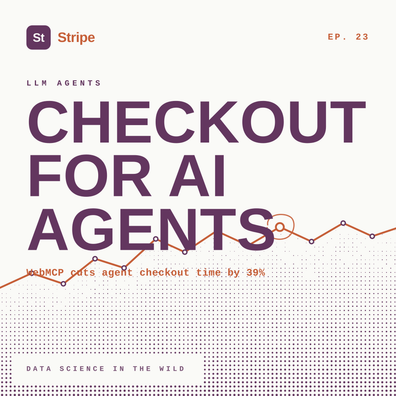
AI shopping agents can check out by parsing raw HTML, but it costs about 1.8 million tokens per purchase. Stripe exposed Checkout to agents through WebMCP: 42% fewer tokens, 39% faster, and every test run completed.
Key takeaways:
- The token tax. A baseline agent checkout took about 1.8 million tokens, roughly 39 tool calls and over two and a half minutes of guessing which element was the button.
- WebMCP. Instead of scraping the page, agents call structured tools the page itself exposes, which share the same logic as the human UI, so there's no separate API to maintain.
- Progressive disclosure. Agents see only the tools that matter right now. For example, submit_payment appears only once the required fields are filled.
- Results. In 60 tests across six models, WebMCP used 42% fewer tokens and 38% fewer tool calls and ran 39% faster, about a minute less waiting, and all runs completed checkout.
- Why it matters. Stripe serves 7.8 million businesses, so cheaper agent checkout changes the economics of agent commerce.
Chapters:
00:00 Agents in a world built for humans
01:32 The agentic web's hidden friction
03:06 Reading the DOM like a screen reader
04:36 The cost per checkout
06:07 What WebMCP is
07:38 Shared logic and accessibility
09:10 Progressive tool disclosure
10:41 Results
12:15 Do a few seconds matter?
14:36 Who built WebMCP
16:08 Stripe's bigger agent strategy
19:14 The chicken-and-egg problem
20:45 Recap
Sources:
- How Stripe is designing Checkout for AI agents (Stripe Developers blog, Sep 2026)
Related episode: E13: Uber — Who's Really Behind Your AI Agent's Actions?
Enjoyed it? Follow Data Science in the Wild (one real production ML/AI system or paper per episode, hosted by Peter Liu) and rate it on Apple Podcasts or Spotify.
Also from Peter: The GenAI Evolution Atlas, Wednesday AI deep dives and Friday news roundups.
Made with AI-generated voices; curated by Peter Liu from the sources above.