Conversations with Musicians, with Leah Roseman

Conversations with Musicians, with Leah Roseman

by Leah Roseman
Season 2

Linsey Pollak: Maker, Musician, Stories from his life!

Linsey Pollak is an Australian musician who is known worldwide as a passionate and creative advocate for community music. His life has been full of unusual opportunities to explore different styles of music, and his inventiveness has spurred him to create countless instruments from found objects. In this episode you’ll get to hear him play 4 different instruments in different improvisatory styles, and I’m sure that everyone will be inspired by stories from his life, describing some of his incredibly unusual, fun and beautiful collaborations and creations. This is available both video and podcast :https://www.leahroseman.com/episodes/linsey-pollak Please support this podcast! Get access to unique perks: https://ko-fi.com/leahroseman photo credit: Beat Lehmann Timestamps: (00:00 Intro) (01:30) gaida music (04:59) Rafting trip, discovering Macedonian bagpipes, first trip to Macedonia (11:35) trip to Greece to study klarino with Stavros Vasthekis (13:15) discovering the Macedonian community in Australia, establishing Kulcha (17:36) Linsey’s start making instruments, London and Early Music scene (23:14) busking in Europe, learning Macedonian dance, Živko Firfov Group, Destan Destanovski (31:48) importance of humour in his solo shows (33:17) duduk design and music (38:56) Linsey’s early musical education and projects (41:27) developing live looping in the early 90s, his solo shows (49:25) rubber glove bagpipe (54:36) Linsey’s current project going out to record in the forest with ambient sounds (his album of this music is on Bandcamp), also the frog sounds album (56:53) Dva with Tunji Beier and now Beier-Griffin-Pollak trio with Philip Griffin (58:23) Humarimba community music project (01:09:16) Paranormal Music Society Romano Crivici and Blair Greenberg, and QWERTY with Peter Rowe (01:13:47) MIDI wind controller Dangerous Song project with demonstration using animal sounds (01:33:26) Linsey’s drive to create instruments and connect people, his creative process (01:37:20) Linsey’s decision to stop touring outside of Australia (01:40:07) Linsey’s advice
Season 1

James Ehnes: Inspiring Excerpts Bonus!

Bonus
James Ehnes is known internationally as one of the foremost violin soloists. He’s a GRAMMY winner who’s created over 60 acclaimed albums. In this short episode you’ll hear him talk about the joys and challenges of squeezing in chamber music with the Ehnes String Quartet, his youth in Brandon and his studies with both Frances Chaplin and Sally Thomas. The episode ends with some great advice for all musicians! The full episode is available here, both video and podcast, along with the transcript: https://www.leahroseman.com/episodes/e11-s1-james-ehnes Buy me a coffee? https://ko-fi.com/leahroseman photo: Benjamin Ealovega
Season 2

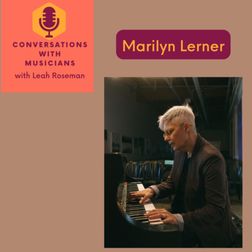
Marilyn Lerner: Pianist, Psychoanalyst, Improvisor, Composer

I was honored to have this conversation with Marilyn Lerner, who is a unique pianist and composer who is a powerfully expressive musician across a range of styles. She’s a wonderful improvisor and has performed worldwide, as well as recorded extensively as both a soloist and as an ensemble player. She’s also a therapist and psychoanalyst, and our conversation moved through many fascinating and important topics including ideas around identity and creativity. The video version is available here, and the transcript will later be published to the same link: https://www.leahroseman.com/episodes/marilyn-lerner Please support this series! https://ko-fi.com/leahroseman photo: Jake Sherman Timestamps (00:00) Intro (01:06) jazz piano improvisation (03:47) exploring different musical styles (04:52) accompanying Silent film music (08:58) teaching classical musicians to improvise, KlezCanada, Lori Freedman (14:18) the piano as a textural instrument and different kinds of improv (with musical example) (16:46) Marilyn’s youth (21:10) university years at York University (switching from Psychology into music), and Marilyn’s work as a psychoanalyst, exploring the psychological aspects of being a musician, issues around identity (27:48) the challenges of making a living as a musician (30:22) experiences during 2020 lockdowns for both Marilyn and Leah (36:33) Adrienne Cooper, Anna Margolin, Dave Wall, “All Silent Things Speak Today” collection of songs, “Dreaming in Yiddish” (41:21) Yiddish and Ashkenazic Jewish history (45:45) Marilyn plays piano “Romanian Fantasy” (51:09) Yoshie Fruchter “The Pieces Broken” (52:27) mridangam studies Trichy Sankaran, opportunities at York University, Reginald Godden, Ethnomusicology (56:58) Salsa: learning Montunos with Rodrigo Munoz (57:47) Jane Bunnett, Larry Kramer, Maqueque,Cuban musicians, “Birds Are Returning” Dafnis Prieto (01:03:04) classical influences in improvising (01:07:18) psychology, becoming a therapist (01:09:47) Marilyn’s youth, development as a pianist and musician (01:11:45) challenges of finding focus and creative time

Hristina Beleva: Gadulka player

This episode features the wonderful Bulgarian gadulka player Hristina Beleva, and this project would not have been possible without the generous translation and voice-overs from fellow musician Milena Krassi. Milena was with us during the interview and it’s mostly her voice that you’ll be hearing. Hristina is a virtuoso of the traditional bowed instrument of Bulgaria, the gadulka, which looks a bit like an upside-down violin, with usually 3 main strings and several resonating strings, up to 16. Hristina performs as a soloist with the Ensemble Philip Koutev Folk Orchestra of the Bulgarian National Radio, the Mystery of the Bulgarian Voices, Bulgara, the Milanov-Beleva duo, and is featured on the 2019 Grammy nominated album with David Kuckhermann and Lisa Gerrard, “Hiraeth”. Hristina recently released a wonderful duo album with bass player Vasil Hajigrudev, “Trikop”. This episode features lots of music, and we talk about both traditional music and her fusion collaborations. The video version of this episode is here: https://www.leahroseman.com/episodes/hristina-beleva-gadulka-player Support this series! https://ko-fi.com/leahroseman Timestamps: (00:00) Intro (01:38) gadulka performance: Ruchenitsa traditional Bulgarian folk dance ( 03:11) - " Hubava si Moia Goro" You are Beautiful My Forest" - old Bulgarian song ( 03:25) introduction to the instrument and the modal tradition ( 09:12) Hristina’s fusion projects and collaborations: Vasil Hajigrudev, Peter Milanov, Mystery of the Bulgarian Voices, David Kuckhermann and Lisa Gerrard (15:32) “Melancholy Beauty” by Georgy Andreev story of the rescue of the Bulgarian Jews during the Holocaust (17:29) experience during pandemic lockdowns (19:32) gadulka performance (20:42) traditional dances of Bulgaria (22:05) traditional folklore orchestra of ensemble Philip Koutev (24:20) demonstration with improvisations of different musical modes (27:16) comparison of different instruments and traditions ( 28:06) Hristina’s development as a musician photo credit: Ivelina Milanova

Peter Purich Part 2

Bonus
Peter Purich is an innovative violin maker known for his unique personalized chin rest design. He’s also a multi-instrumentalist who plays in many different styles, and a dedicated violin and viola pedagogue. Because this conversation was extra-long it has been divided into two episodes. Part 2 continues with a lot of specifics about playing and teaching the violin, and he describes some of his innovative instrument designs, his unique shoulder support, and some great wisdom. If you missed Part 1, it delves into his development as an instrument maker and innovator, and as a creative musician. He describes some of his innovations with chin rest design and the episode ends with some improvisation and some great parenting advice! I have added timestamps in the description, and like all these episodes this is available both as a podcast and a video, the link is in the description and the transcript will be published to the same link, where you can also find Part 1: https://www.leahroseman.com/episodes/peter-purich Support this series and get access to unique perks! https://ko-fi.com/leahroseman (00:00) Intro (01:06) violin and viola pedagogy: bow arm, using imagery, Peter’s devices to help students (10:43) archery (14:08) concepts in teaching bowing technique for violin and viola, Galamian (29:45) Peter’s instruments and instrument innovations (38:62) shoulder rests, how to hold a violin, Peter’s invention Senza Rest (52:06) freedom of expression (53:08) perspectives on orchestra players (56:46) Peter’s creative process in building and playing

Peter Purich Part 1: Luthier, Innovator, Multi-Instrumentalist, Educator

Peter Purich is an innovative violin maker known for his unique personalized chinrest design. He’s also a multi-instrumentalist who plays in many different styles, and a dedicated violin and viola pedagogue. Because this conversation was extra-long it has been divided into two episodes. Part 1 delves into his development as an instrument maker and innovator, and as a creative musician. He shows and describes some of his innovations with chinrest design. The episode ends with some improvisation and some great parenting advice! Part 2 will continue with a lot of specifics about playing and teaching the violin, and he shows some of his inventive instrument designs, his unique shoulder support, and some great wisdom. I have added timestamps below, and like all these episodes this is available both as a podcast and a video, and the transcript will be published to this same link: https://www.leahroseman.com/episodes/peter-purich Please support this podcast: https://ko-fi.com/leahroseman Timestamps (00:00) Intro (01:29) Peter’s father and his start making instruments and bows (06:12) Peter’s trip to Europe, Vienna Philharmonic instruments (10:17) different kinds of woods, styles of violin bows (13:44) research on carbon fiber (19:25) Peter’s custom-made chin rests, vibrato, shifting, how to hold a violin (46:34) Peter’s pedagogy (49:30) Peter’s approach to improvisation and experiences with different styles and instruments (51:30) I Musici chamber orchestra in Montreal, Yuli Turovsky (54:30) Arthur Garami (56:27) Gerald Stanick (57:44) why it’s good to improvise with demonstrations (01:09:36) teaching students improvisation (01:11:59) parenting and Peter’s great advice

Season 1

Aaron Schwebel: Inspiring Excerpts Short Bonus

Bonus
In this Inspiring Excerpts short bonus episode, you will hear violinist Aaron Schwebel's reflections on the best environments for learning and growth, on how the pandemic has affected his priorities, and some of the unique benefits and challenges of a life of a professional musician. Aaron Currently holds the positions of Concertmaster with the National Ballet of Canada Orchestra and Associate Concertmaster with the Canadian Opera Company. He is a member of the LARK ensemble and the Rosebud String Quartet, and is the founder and artistic director of Echo Chamber Toronto, a series that merges chamber music and contemporary dance. The full episode is linked here, both podcast and video format, and the transcript can be found through the same link: https://www.leahroseman.com/episodes/e10-s1-aaron-schwebel-violinist photo credit: Bo Huang
Season 2

Raphael Weinroth-Browne Part 2

Bonus
Raphael Weinroth-Browne is an internationally renowned Canadian cellist, multi-instrumentalist, and composer. He merges his classical cello training with a love of progressive metal and Middle Eastern music, and has formed several acclaimed ensembles including The Visit, Musk Ox, and Kamancello (this duo is with a previous guest of this podcast, kamanche player Shahriyar Jamshidi). Raphael has been touring with the Norwegian progressive band Leprous since 2017, and has appeared on over 150 studio albums. In 2020 he released his first solo album, Worlds Within. Raph is a very thoughtful and articulate person, and this conversation touched on many interesting topics. Part 2 of this episode includes some interesting background on Raphs’ development as a musician. He also shares his advice on building relationships in the music business to help artists find different avenues to promote their music. He speaks about improvisation, his love of Middle-Eastern music, and his collaboration with Shahriyar Jamshidi in Kamancello (featured in this series: https://www.leahroseman.com/episodes/shahriyar-jamshidi-kamancheh) If you missed Part 1, it is linked here along with the video of both episodes: https://www.leahroseman.com/episodes/raphael-weinroth-browne In Part 1 Raph demonstrates and talks about the first part of Worlds Within, and you get to hear about his career as a studio musician and his experiences touring with Leprous. He shares his thoughts about knowing yourself, being creative, connecting with your audience, and balancing your life and expectations of yourself. https://raphaelweinrothbrowne.com/ Support this podcast? Check out my perks: https://ko-fi.com/leahroseman Timestamps for Part 2: ( 00:00) Intro (01:23) Raph’s evolution as an artist, and his teen and university years ( 08:58) music from Worlds Within (16:12) more about Raph’s development as a musician ( 19:24) advice about developing as a performer (21:15) album reviews, advice for promoting your music, Laura Bitner ( 34:38) Shahriyar Jamshidi and Kamancello ( 45:09) Windsor symphony, community outreach photo credit: Jonathan Lorange

Raphael Weinroth-Browne Part 1

Raphael Weinroth-Browne is an internationally renowned Canadian cellist, multi-instrumentalist, and composer. He merges his classical cello training with a love of progressive metal and Middle Eastern music, and has formed several acclaimed ensembles including The Visit, Musk Ox, and Kamancello (this duo is with a previous guest of this podcast, kamanche player Shahriyar Jamshidi https://www.leahroseman.com/episodes/shahriyar-jamshidi-kamancheh). Raphael has been touring with the Norwegian progressive band Leprous since 2017, and has appeared on over 150 studio albums. In 2020 he released his first solo album, Worlds Within. Raph is a very thoughtful and articulate person, and this conversation touched on many interesting topics. In Part 1 you will get to hear him demonstrate and talk about the first part of Worlds Within, and hear about his career as a studio musician and his experiences touring with Leprous. He shares his thoughts about knowing yourself, being creative, connecting with your audience, and balancing your life and expectations of yourself. Part 2 of this episode is the next release in this podcast and video series, and everything is linked here: https://www.leahroseman.com/episodes/raphael-weinroth-browne Please consider leaving me a virtual tip! https://ko-fi.com/leahroseman You can access cool perks as well! https://raphaelweinrothbrowne.com/ Timestamps: (00:00) Intro (02:18 the creation of Worlds Within (09:40) production of music videos 15:26 Heather Sita-Black album art (19:30) differing tunings, music from Worlds Within ( 31:27) social media promotion, reaching new audiences ( 37:19) dealing with March 2020 lockdowns ( 41:26) Raph’s career as a studio musician (49:53) electric extended-range versus and acoustic cellos (57:08) Perfectionism, intonation, improvisation ( 01:05:01) Leprous (01:13:09) hearing damage ( 01:15:46) habits for physical and mental health (01:23:51) taking time to enjoy the slow process and take pride in your work photo credit: Jonathan Lorange

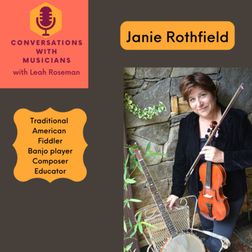
Janie Rothfield: Traditional American Fiddler, Banjo Player, Composer and Educator

The incredibly charming American musician Janie Rothfield is a great traditional fiddler, banjo player, educator, composer, and so much fun to talk to! This episode features quite a bit of music on both fiddle and banjo. The conversation delved into the best ways to teach music, learn tunes, play with ease, accompany dancers and most importantly find connection with others through music! We talked about her childhood, learning violin in one of the first Suzuki classes in the United States with Louise Behrend, figure skating, learning the banjo, moving to Scotland, playing at music festivals, and why she started her unique “Janie’s Jumpstart Weekend Camps”. Janie records and tours with many bands and teaches both fiddle and clawhammer banjo. This episode is available as a video, and the transcript will later be published to my website as well: https://www.leahroseman.com/episodes/janie-rothfield-traditional-american-fiddler-banjo-player-composer-and-educator I’ve also included timestamps below. Janie's website: https://janierothfield.com/ photo credit: Clara Williams Buy me a coffee? Please help this podcast keep going! https://ko-fi.com/leahroseman Timestamps: (00:00) Intro (01:36) New Jordon on fiddle by Uncle Norm Edmonds (04:04) groove and rhythmic drive and variety (05:34) Suzuki lessons, Louise Behrand (09:09) Janie’s Jumpstart Weekend camps, how they got started (11:08) pivoting during pandemic (12:38) Contra dances (15:30) Allan Carr (17:01) Janie’s childhood figure skating, dancing (18:56) early career, balancing parenting, Little Missy with Shona Carr (21:35) Hen’s Teeth duo with Nathan Bontrager, and the Idumea string quartet with Ewan McDonald and Becka Wolfe (26:21) meeting Allan in Scotland (27:24) how Janie teaches music (33:11) different influences in old-time music (34:50) festivals Clifftop and Fire in the Mountain (36:28) how to memorize tunes (38:53) cross-tuning, variety in interpretation with Candy Girl (45:15) old-time history Jimmy McConn, Paul David Smith, Owen “Snake” Chapman and a simple approach to learning (46:53) history of enslaved blues fiddlers, wondering about the connection with old-time dances during the time of slavery, Julie Lyonn Lieberman research, Béla Fleck (48:26) Shetland rhythms, different fiddling traditions, story of Albany radio station being heard in Shetland and influencing the music of Peerie Willie Johnson 50:15 benefit of playing for dancers, Alexis Chartrand 51:55 Janie’s sister musician Suzy Thompson, folk influences from their mother 52:59 learning the banjo 54:27 Johnny Don’t Come Home Drunk on banjo 57:33 difference with bluegrass and old-time, story about Blaine Sprouse 01:01:12 Candy Girl on the banjo 01:03:34 learning the guitar, Allan Carr’s approach 01:04:27 Brendan Power harmonica player 01:07:55 fiddlesticks, Colin Currie Nicole Lizée, foot percussion 01:11:38 Jane’s tune “Harry Garrison” on fiddle 01:15:04 discussion about Jane’s outgoing and upbeat personality and how it’s impacted her career and music, her advice for inviting collaborations 01:22:37 Jane’s tune “The Mist”
20 of 26