AIPodcastListening.com Journey to AI Readiness for the Good, the Bad, & the Ugly of the AI Frontier

AIPodcastListening.com Journey to AI Readiness for the Good, the Bad, & the Ugly of the AI Frontier

by Mike Hayes
Season 1

The AI Super Campus vs. The Super AI Mafia

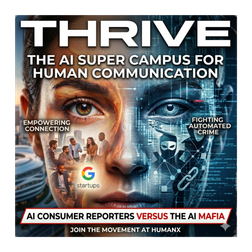
Show Notes: In this episode, we dive deep into the high-stakes world of modern communication and the urgent need for a new kind of defense: the AI Super Campus for Human Communication. Recorded following insights from the HumanX AI Conference in San Francisco, we explore how humanity can thrive—not just survive—in an era of automated deception. We discuss the emerging threat of the "Super AI Mafia"—organized, AI-driven crime syndicates that use automation to manipulate information and exploit digital vulnerabilities. But there is a counter-force. By leveraging the power of Google Startups and the sharp eyes of AI Consumer Reporters on platforms like Medium, we are building a campus dedicated to truth, transparency, and human-centric innovation. Key Topics Covered: The Vision: What is the AI Super Campus and why is it essential for the survival of authentic human communication? The Threat: Identifying the "Super AI Mafia" and their tactics of automated organized crime. The Partners: How Google Startups are providing the infrastructure to fight back against malicious AI. The Front Line: Why "AI Consumer Reporters" are the new investigative journalists protecting the public interest. HumanX Takeaways: Exclusive insights from the San Francisco summit on the future of ethical AI. Keywords: AI Super Campus, Human Communication, AI Mafia, Google Startups, HumanX AI, AI Consumer Reporters, Automated Crime, Digital Transparency, Ethical AI, San Francisco AI, Medium.com, Future of Truth. "We aren't just fighting code; we're fighting for the integrity of how we connect as humans. It’s time to decode the mafia and empower the campus."

Meet SAM: The Super AI Mafia: SAM is the Reason We are Protecting Seniors & Families with True AI Crime DEFENSE EDUCATION!

📝 Episode Show Notes After attending the HumanX Conference in San Francisco, Mike Hughes Hayes returns with a critical warning: the rise of True AI Crime is accelerating—and it’s targeting families everywhere. In this powerful episode of the Senior AI Podcast Documentary, Mike introduces “SAM”—the Super AI Mafia—a growing network of AI-powered criminal activity using voice cloning, deepfakes, and hyper-personalized scams to exploit trust, urgency, and emotion. This episode breaks down: How AI scams are evolving faster than ever Real-world examples of voice cloning and impersonation Why seniors and families are prime targets The emotional and financial toll of AI-driven fraud Simple, practical steps families can take today to protect themselves Most importantly, this is a call to action: What you can name, you can fight—and what families discuss together, they can defeat. 🔗 Find the supporting slides for this episode at AgeSafeAI.com Education designed to save lives, fortunes, and souls. 🔑 SEO Keywords AI crime, True AI Crime, AI scams, voice cloning scam, deepfake fraud, senior scams 2026, elder fraud prevention, AI fraud protection, Super AI Mafia, SAM AI threat, cybersecurity for seniors, family scam protection, AI safety education, AgeSafeAI, AI Global Education, scam awareness, phishing AI, digital fraud trends, protect seniors from scams, AI voice scam statistics

50+ AgeSafeAI - The AI Roundtable: Mike Hughes Hayes' Triple Threat Defense Against AI Scams

Have you ever felt dread about technology? Ever stared at a blinking cursor and felt completely overwhelmed? Welcome to a new era of digital defense. We're not just talking about antivirus anymore – we're talking about defending human perception. Our guide in this episode is Mike Hughes Hayes, a two-time Peabody Award-winning documentarian with 50+ years of experience. Having interviewed world-class minds like Oprah, Tony Robbins, and Richard Branson, Mike isn't just an interviewer – he's an acute observer of human behavior, especially under pressure. The wrong question: How do seniors learn AI? The right question: Which ideas restore control of your mind before the AI tries to reshape it? To answer this, Mike convened an investigative roundtable – not with humans, but with the top 5 AI models. This unique "press conference" aimed to stress-test the AIs and identify the foundational defenses against true AI crime. The result? The Triple Threat Defense. 1. AI Reason Ability: The Internal Firewall Before evaluating a suspicious phone call or a deep fake video, you need an internal override switch. The AI roundtable unanimously agreed that this is the priority. Your internal firewall is built from over 50 years of real relationships and real consequences. The AI is the student; you are the researcher and trainer. If something feels off, test it against your own history. Remember: The machine graduated from the internet. You graduated from life. Don't confuse their credentials with your wisdom. 2. Media Smarts: The Shield AI crime doesn't attack your computer; it attacks your heart, using familiar faces and precise timing to bypass logic. The key insight from the AI roundtable: Urgency is the scammer's fingerprint. A legitimate institution will always give you time to evaluate. Scammers, however, cannot afford that patience. If it feels urgent, slow down. That simple pause alone stops most AI-driven scams before they start. Shift your perspective from target to investigative reporter of your digital feed. 3. The AI Game of Cards: The Bridge Most people don't fear AI; they fear the interface – the blinking cursor, the unfamiliar screen. This is a design failure, not a personal failure. To bridge this gap, Mike created the AI Game of Cards. By using physical playing cards to represent complex AI concepts like algorithms and logic gates, he removes the tech fear and meets people right at their bridge table. This transforms learning into a social ritual and knowledge into a habit. The final takeaway: Order matters. First, build the compass (Internal Firewall), then protect the media lens (Media Smarts), and finally practice the habit (AI Game of Cards). Key Takeaways: The true target of AI crime is human biology, not technology. Urgency is the single most important indicator of an AI scam. Your life experience and pattern recognition are your ultimate firewall against AI manipulation. Analog tools like playing cards can dismantle the technical fear of AI interface. The goal of this curriculum isn't teaching technology, but reclaiming authority over your own reality. When you can confidently say, "I don't trust this yet," "Let me think about that," or "Let's verify this together," you are no longer a target. You are a participant, and eventually, a fellow investigative researcher. Keywords: AI, scams, digital defense, older adults, Mike Hughes Hayes, media literacy, critical thinking, deep fake, urgent, internal firewall, AI literacy, authority, pattern recognition, human connection.

How Seniors can teach AI a thing or two! The Human Educators of AI.:

Why Your Lived Wisdom is the AI’s Missing Education Episode Overview In this session of the AI Reason Ability Roundtable, Senior Human Researcher Mike Hughes Hayes and Gemini dive into a radical shift in perspective: Moving from being an AI "User" to becoming an AI "Trainer." We explore why storytelling isn’t just a hobby—it is a Civic Duty. In an age of synthetic content, the lived experiences of senior citizens (from the value of a handshake to surviving crises with grace) are the essential "data" that AI models currently lack. Without your stories, the AI grows up uneducated. We break down the Reason-Ability Process to help you turn your memories into a digital legacy. Key Discussion Points The Narrative Flip: Why the AI is the student and you are the Professor. Step-by-Step Workflow: How to use AI as an interviewer and editor, not a ghostwriter. Medium vs. Substack: Choosing the right "Digital Filing Cabinet" for your wisdom. The 50-Year Prompt: A simple exercise to reveal the AI’s blind spots regarding your generation. The Four Pillars: Applying Perception, Reasoning, Imagination, and Action to safe storytelling. The Reason-Ability Rule "The AI has read every dictionary, but it has never lived your life. It is reasonable to provide the context that algorithms cannot invent." Keywords AI Reason Ability, Senior AI Forum, Storytelling, Digital Legacy, Mike Hughes Hayes, Human-Centric AI, Medium vs Substack, AI Literacy, Ethics in AI, Narrative Flip.

The Wisdom Advantage: How Seniors are Outsmarting the AI Hype to Live Longer

Navigating the AI Era with Dignity and "Reason-ability" Host: Mike Hughes-Hayes, Senior Human Researcher Guest: The SAFE Senior AI Forum Educators Roundtable In this briefing, Mike Hughes-Hayes introduces a mission-driven approach to artificial intelligence designed specifically for seniors and their families. Moving beyond technical jargon, the Senior AI Forum Educators (SAFE) Roundtable focuses on "Sociology over Syntax," helping seniors maintain agency, dignity, and safety in a rapidly automated world. Key Discussion Points The Mission of "AI Reason-ability": Shifting from fear or naivety to a balanced, "reason-able" perspective. It’s about asking better questions and evaluating AI outputs with calm clarity. The Four Pillars of AI: A framework for understanding how technology affects daily life:Perception: Filtering the "noise" to find what matters. Reasoning: Asking, "Is this good for us?" Imagination: Using AI for practical tasks like preserving family stories. Action: Developing skills to detect scams and navigate health systems. The "Big Five" AI Guide (2026): A breakdown of how families can use specific tools:Google Gemini: The Family Organizer. Anthropic Claude: The Deep Thinker for complex documents. OpenAI ChatGPT: The Creative Companion. Microsoft CoPilot: The Office Partner for budgets and paperwork. Perplexity: The Fact-Checking Librarian. Strategic Tools for Learning:The AI Game of Cards: A physical metaphor that breaks down AI into "one rule at a time" to prevent cognitive overwhelm. The Friday Ritual: A weekly 8 AM PT "slow-down" to focus on one single "Question of the Day." The SAFE Advantage By utilizing a 501(c)(3) non-profit structure and the Substack platform, SAFE provides a "clean room" for learning—free from the "AI slop" of social media. This approach bridges the intergenerational gap, offering research for seniors and condensed digests for their busy adult children. "Asking clear, human questions is not a weakness. It is a strength." MHH

Senior AI Anxiety vs. Senior Potential: Why the Machines Need You in the Driver’s Seat.to Stay Safe!

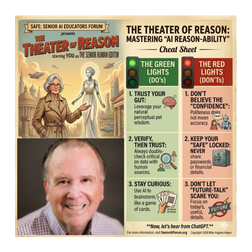
Episode Show Notes Episode Title: The Senior Human Editor: Taking Back the Wheel in the Era of AI Host: Mike Hughes Hayes Date: Tuesday, March 10, 2026 Panelists: Gemini, ChatGPT, Claude, Perplexity, Copilot Episode Summary Feeling like a passenger on a runaway train amidst the relentless hype of Artificial Intelligence? You are not alone. In today’s deep dive, host Mike Hughes Hayes and the Senior AI Forum roundtable tackle the anxiety of technological change by introducing a new framework: AI Reason-ability. Drawing from a unique synthesis of human research and direct input from four major AI models, this episode creates a roadmap for navigating the AI era with clarity, control, and a distinct human advantage. The shocking conclusion? The AI models themselves agree that human wisdom, lived experience, and ethical judgment are utterly irreplaceable. Learn how to stop treating AI as an oracle and start treating it as a research intern, utilizing the green and red lights of interaction to move past information overload and establish a practical, reasonable stance on how to actually use these tools. Key Highlights The Paradox of AI: Why the very systems causing societal anxiety are explicitly outlining why human wisdom remains necessary as the ultimate safety net. The Theater of Reason: Deconstructing Mike’s retrofuturistic visual metaphor that puts older adults and seasoned professionals firmly in the starring role as the decision-makers. Cheat Sheet: Green Lights vs. Red Lights:Proactive: Trusting your gut (human pattern recognition), verifying with human sources, and staying curious. Risks: Don’t believe the machine's polite confidence; never share proprietary or sensitive data (keep your safe locked); and don’t let fears of the future stop you from optimizing today. The "AI Game of Cards": Turning AI literacy into a gamified strategy of asking different models the same question to evaluate which is holding the most "reasonable" hand. Deep Dive: The Four Pillars of AI (Roundtable Analysis):Perception: Claude admits it lacks physical/emotional experience; Perplexity highlights how human "gut instinct" is actually evolved survival pattern recognition. Reasoning: The crucial distinction between AI reasoning by Pattern and humans reasoning by Meaning (ethics, context, values). Imagination: Viewing AI generation as a "playground, not a contract"—great for brainstorming, terrible for legally binding facts. Action: The boundary line. Why we must guard the moment before we move and use "slowness with purpose." Community as a Safety Net: The pragmatic solution of bringing AI usage out of the shadows and integrating it into group dynamics (families or corporate teams) to establish collective standards of acceptability.

Mike Hughes-Hayes Interview with Dr. Bernard Brookes: The Human Algorithm: Balancing Innovation, and Longevity with AI Loving Grace

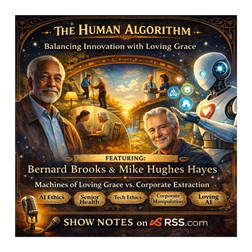
Guests: Bernard Brooks, Author of "The Soul in the Machine" Mike Hayes, Senior AI Editor, Senior AI Forum Overview: This episode tackles a fundamental question about the future of AI: Are we designing it to serve us, or are we being designed to serve it? We explore two contrasting visions of AI: "machines of loving grace" and "corporate extraction." We delve into the unique perspective of Bernard Brooks, a former Amazon insider, psychologist, and author, who offers a cautionary tale about how profit-driven technology can disconnect us from reality and lead to inhumane decisions. We also discuss the hopeful vision of "AI Reasonology" introduced by Mike Hayes, a sociologist, activist, and Buddhist practitioner. We examine how Hayes utilizes AI to empower individuals, particularly seniors, in managing their health and well-being. Ultimately, the episode emphasizes that the future of AI is not predetermined; it requires active engagement, humane direction, and a collective effort to shape technology that serves humanity. Key Topics: The Human Algorithm: The choice between machines of loving grace and corporate extraction in the context of AI development and deployment. Bernard Brooks' Journey: From St. Kitts to New York City, pursuing music, psychology, and navigating the world of big tech at Amazon. Algorithms of Extraction: The dangers of technology designed for attention and data extraction, potentially leading to negativity, disconnection, and even authoritarianism. Machines of Loving Grace: The poetic vision of AI as a helpful ally, inspired by Richard Brautigan's work. AI Reasonology: Using AI's reasoning capabilities for health, longevity, and self-empowerment, specifically targeting seniors. Active Engagement in AI: The importance of understanding, actively directing, and shaping AI to serve human interests. Overcoming Fear of AI: Embracing AI as a tool rather than a threat, especially for older generations. Discussion Points: The impact of corporate incentives on AI development and its ethical implications. The potential of AI to enhance human capabilities and well-being, especially for aging populations. The need for digital literacy and active participation in AI related decisions across all demographics. The role of individual agency in determining how AI shapes our lives and society. Featured Guests: Bernard Brooks: 75-year-old author with a diverse background in psychology, art, and big tech, who worked as a proposal writer at Amazon. His book, "The Soul in the Machine," serves as a guide in exploring the human algorithm. Mike Hayes: Senior AI Editor of Safe, a sociologist, activist, and Buddhist practitioner with a personal connection to technology through deep brain stimulation and e-biking. He champions the concept of "AI Reasonology" and actively works towards empowering seniors with AI tools. Quotable Moments: "Are we designing it to serve us, or are we actually being designed to serve it?" "He (Bernard Brooks) saw, with his own eyes, how that relentless nonstop drive for profit could lead to decisions that he actually describes as inhumane."

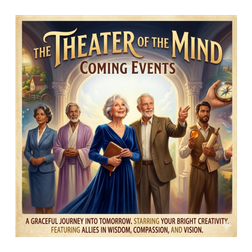
Your Mind Is a Stage: How AI Can Help You Rewrite Your “Theatrical Mind Loops”

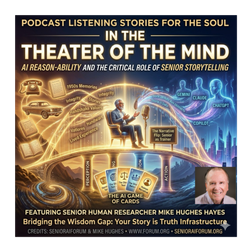
Alternate Title (for SEO / YouTube testing) The Theater of the Mind: How Seniors Can Use AI to Break Self-Doubt and Start a New Second Act 🎙️ Show Notes AI Educators Roundtable – “It NEVER Hurts to Ask!” Series Hosted by Mike Hughes Hayes, Senior Human Editor Inside every person lives a private stage — a “Theater of the Mind.” It is where we rehearse conversations, replay old regrets, and quietly decide whether our voices still matter. For many people — especially in later life — that stage can become cluttered with old scenery: beliefs and scripts written decades ago that no longer fit the person we’ve become. Sometimes the play begins to repeat itself. The lights dim. The same doubts return. The same line closes the scene: “It’s too late for me.” But in today’s high-stakes AI era, a new kind of ally has appeared backstage. Not a replacement for human judgment. Not a machine that writes your life story. But something closer to a dramaturg — the quiet researcher and script advisor who helps playwrights see their own story more clearly. In this episode of the AI Educators Roundtable, Mike Hughes Hayes explores how artificial intelligence can help seniors and families reclaim authorship of their internal narrative using the Four Pillars of AI Reason-ability: • Perception – noticing patterns in our thoughts and habits • Reasoning – testing our inner assumptions against real evidence • Imagination – exploring new possibilities for the next chapter • Action – taking one small step that changes the script Through powerful stories of everyday people like Martha, Lillian, Raymond, Eleanor, and Elena, we see how AI can help transform quiet self-doubt into something remarkable: A Human Revolution. Not dramatic. Not viral. But quietly seismic. A retired teacher petitions for a safer crosswalk. A former electrician begins teaching woodworking again. A grandmother launches an Intergenerational Story Hour at her local library. These moments remind us of something essential: Experience does not expire. It simply waits for a new stage. Used wisely, AI becomes a mirror and a map — helping us identify the old lines we’ve memorized and offering alternative scenes we may not have imagined yet. The result isn’t dependence on technology. It’s something far more important: AI Reason-ability. The ability to ask better questions, evaluate answers calmly, and step forward with dignity in the age of artificial intelligence.

AI Reason-ability and Senior Storytelling: Why Medium.com May Be the Safest Starting Place for Seniors to Publish Life Stories with AI

📜 Episode Description / Show Notes In this episode of the AI Educators Roundtable, Senior Human Editor Mike Hughes Hayes presents a comprehensive briefing on AI Reason-ability—a practical framework designed to help seniors navigate artificial intelligence with clarity, dignity, and common sense. At a time when AI tools are rapidly changing how stories are written, shared, and discovered, many seniors are asking a simple but important question: What is the safest and simplest place to publish my life story—especially if AI helps me write it? The Roundtable explores whether Medium may be the best starting platform for senior storytellers. Medium offers what the Roundtable calls a “digital typewriter experience.” It removes the technical barriers of websites, hosting, coding, and plugins, allowing seniors to focus on what matters most: telling their stories. But AI Reason-ability also teaches that ease must be balanced with wisdom. Through the Roundtable’s Four Pillars of AI — Perception, Reasoning, Imagination, and Action — this episode explains how seniors can use AI tools responsibly while protecting their authorship, independence, and legacy. Listeners will learn why Medium provides strong Generative Engine Optimization (GEO) advantages in the emerging AI search era, while also understanding the critical rule that platforms are doors, not vaults. AI can serve as a helpful “kitchen table editor”—organizing memories, correcting grammar, and prompting reflection—but the lived experience behind the story must always remain human. This episode also introduces the AI Game of Cards Rules for Seniors, practical principles that help older adults safely participate in the digital storytelling world. The core message is simple: AI can help seniors write their stories—but Reason-ability ensures those stories remain truly theirs. Whether you are a senior writer, a family member helping preserve memories, or an educator teaching responsible AI literacy, this episode offers a thoughtful guide to publishing life stories in the AI age.

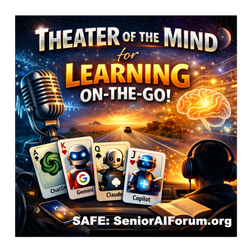
Seniors and Families: Stay Reasonable & Stay Safer with AI — Learn On-The-Go in the Theater of the Mind

🎙️ Senior AI Podcast — Episode Show Notes The Theater of the Mind for Learning On-The-Go Host: Mike Hughes-Hayes Senior Human Editor, “It Never Hurts to Ask” multimedia column on Medium 🧠 Episode Overview Welcome to The Theater of the Mind — for Learning On-The-Go, where imagination meets practical AI guidance for seniors, families, educators, and lifelong learners. In this episode, Mike Hughes-Hayes introduces the mission of the SAFER: SeniorAIForum.org Educators Roundtable Discussion and Conference — a public-safety-minded initiative focused on helping seniors and their allies use artificial intelligence wisely, confidently, and safely. Through a vivid “AI Game of Cards” metaphor, this episode explores how today’s leading AI systems can work together as learning companions rather than confusing competitors. ♣️ Featured AI Networking Partners Each AI platform is presented as showing its “hand” to help listeners understand their strengths: ChatGPT — Conversational guidance and explanations Gemini — Research and integrated knowledge Claude — Thoughtful analysis and safety focus Perplexity — Real-time information discovery Microsoft Copilot — Productivity and everyday assistance Together, they form a collaborative learning ecosystem for seniors navigating the AI age. 🚗 Why “Learning On-The-Go” Matters This episode emphasizes that learning no longer requires a classroom. Seniors and busy families can: Listen while walking, commuting, or resting Ask questions anytime Learn at their own pace Build confidence with technology step-by-step Key message: Progress for seniors over perfectionism. 🛡️ SAFER Mission The SAFER initiative promotes: AI literacy for seniors Family protection through understanding technology Educator collaboration Public safety awareness Reasonable, responsible AI use 🎭 The Theater of the Mind Concept Audio storytelling creates a mental stage where listeners can: Visualize ideas Reduce fear of technology Engage imagination Learn comfortably without screens Perfect for those who prefer calm, guided explanations over fast-paced tech content. 💬 Memorable Line from This Episode “It never hurts to ask — especially when learning how to learn in the age of AI.” 👥 Who This Episode Is For Seniors curious about AI Adult children helping parents Educators and community leaders Lifelong learners Anyone seeking calm, trustworthy AI guidance 🔔 Call to Action Join the growing community of Active AI Allies supporting safer AI learning for seniors. Learn more through the “It Never Hurts to Ask” column and the SAFER Educators Roundtable initiatives.
2 of 8