BSPE Legal Marketing Podcast

BSPE Legal Marketing Podcast

by Viktoria Altman
Season 5

Litigation or Mediation: Which Fits a High-Conflict Chicago Divorce? - Caesar & Bender, LLP

From Caesar & Bender, LLP - Litigation or Mediation: Which Fits a High-Conflict Chicago Divorce? breaks down how litigation and mediation differ for couples in Chicago facing a high-conflict divorce, explaining how each process works, the timelines involved, and what Illinois law requires along the way. The description walks through the key difference between the two paths: litigation puts final decisions in the hands of a Cook County judge, while mediation allows spouses to work with a neutral facilitator to craft their own agreement, offering flexibility, privacy, and lower costs when both parties can participate safely. The podcast description highlights how Michael Ian Bender of Caesar & Bender, LLP brings a former Cook County Domestic Relations Judge's perspective to high-conflict divorce cases, offering firsthand insight into judicial decision-making alongside Molly E. Caesar's certified mediation training and trial experience across all court levels. Listeners will hear how litigation follows a structured process through the Circuit Court of Cook County, from filing a Petition for Dissolution of Marriage to exchanging a Financial Affidavit under Cook County Local Rule 13.3.1, while mediation offers a more private and informal alternative for resolving divorce issues. The description also covers what makes a Chicago divorce high-conflict, including patterns of refusal to negotiate, concealment of financial information, and violations of court orders, and how Illinois law addresses these situations. It touches on how courts may excuse parties from mandatory mediation when such impediments exist, and how litigation and mediation can even be combined into a hybrid approach depending on the circumstances of a case in Cook County. Listeners seeking guidance on navigating a high-conflict divorce in Chicago will come away with a clearer understanding of how litigation and mediation compare, and how Caesar & Bender, LLP helps clients throughout Chicago and Cook County evaluate which approach, or combination of approaches, best fits their situation. Caesar & Bender, LLP 150 N Michigan Ave #2130, Chicago, IL 60601 (312) 236-1500 https://www.google.com/maps?cid=10482794179944044586
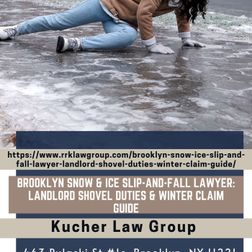
Brooklyn Snow & Ice Slip-and-Fall Lawyer: Landlord Shovel Duties & Winter Claim Guide - Samantha Kucher

From Kucher Law Group – Brooklyn Snow & Ice Slip-and-Fall Lawyer: Landlord Shovel Duties & Winter Claim Guide unpacks critical insights for New Yorkers facing winter sidewalk hazards. This episode explores the legal responsibilities of landlords, property owners, and even the City of New York when it comes to clearing snow and ice. Through the lens of real legal standards and community expectations, the podcast helps victims understand their rights after winter-related injuries and what steps to take immediately after a fall. Listeners will learn how NYC Administrative Codes § 7-210 and § 16-123 assign sidewalk maintenance duties to landlords and when exceptions apply. You'll discover how “constructive notice,” winter weather patterns, and even improper shoveling can impact liability. The episode also discusses who may be responsible when accidents happen during ongoing storms, why timing is crucial under the storm in progress doctrine, and how the city handles claims involving municipal properties like NYCHA. Kucher Law Group’s own attorneys — including Samantha Kucher, Michael Roitman, and Alex Rybakov — bring their extensive experience with Brooklyn sidewalk injury claims to the discussion. With ties to neighborhoods like Park Slope and Williamsburg, they explain how landlords are held accountable when icy conditions are ignored, and how victims can recover damages like medical expenses, lost wages, pain and suffering, and property loss. Hospitals such as NYU Langone Hospital—Brooklyn and Kings County’s trauma centers are often involved in treatment, and the podcast outlines how those records support your claim. Whether you’re a tenant, pedestrian, or Brooklyn property owner, this episode of the Brooklyn Snow & Ice Slip-and-Fall Lawyer: Landlord Shovel Duties & Winter Claim Guide provides timely guidance on navigating New York’s icy legal terrain. If you've suffered a fall, time is critical — from preserving evidence to filing your claim before the deadline. Kucher Law Group is here to explain your options and help you take the next step toward justice. Kucher Law Group 463 Pulaski St #1c, Brooklyn, NY 11221, United States (929) 563-6780 https://www.google.com/maps?cid=5716384493669715397

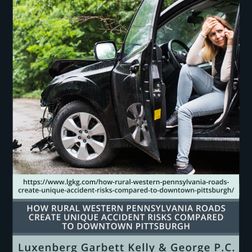
How Rural Western Pennsylvania Roads Create Unique Accident Risks Compared to Downtown Pittsburgh - Luxenberg Garbett Kelly & George P.C.

From Luxenberg Garbett Kelly & George, P.C. – How Rural Western Pennsylvania Roads Create Unique Accident Risks Compared to Downtown Pittsburgh examines how winding backroads, poor visibility, wildlife hazards, and limited emergency access make Western Pennsylvania’s rural roads more dangerous than downtown Pittsburgh. This episode draws directly from the article How Rural Western Pennsylvania Roads Create Unique Accident Risks Compared to Downtown Pittsburgh and explores how location-specific dangers such as narrow shoulders on Route 168 and Route 956, outdated infrastructure, and long EMS response times affect crash severity and survival rates. While urban drivers in Pittsburgh contend with congestion and complex intersections, rural motorists face deadlier hazards like high-speed head-on collisions, frequent deer crossings, and inadequate signage. We highlight compelling statistics from the Insurance Institute for Highway Safety, such as rural areas accounting for 41% of all traffic deaths despite having less traffic. The discussion also includes key local danger zones like Harlansburg Road and Shenango Road, where limited lighting and sudden curves dramatically raise accident risk. Listeners will hear from Lawrence County car accident attorney Joseph A. George, who shares legal insights on how these rural factors affect liability, emergency care access, and compensation recovery. Drawing on years of experience and recognition from groups like The National Trial Lawyers Top 100 and the Pennsylvania Association for Justice, Attorney George explains how drivers can protect their rights after crashes in areas that are far from major trauma centers and plagued by seasonal dangers like deer mating season. Whether it’s slow-moving farm equipment during harvest or treacherous conditions caused by mud and grain spills, the risks on rural roads are real—and often underestimated. Luxenberg Garbett Kelly & George, P.C. urges anyone injured in a crash on Western Pennsylvania’s rural roads to understand the state’s two-year statute of limitations and the differences between full and limited tort coverage. Tune in for real stories, legal strategies, and what every driver in New Castle and beyond should know. Luxenberg Garbett Kelly & George P.C. 315 N Mercer St, New Castle, PA 16101, United States (724) 658-8535 https://www.google.com/maps?cid=1349618312503922919

MCL 257.319 – Mandatory Suspensions - Paul J. Tafelski

From Paul J. Tafelski, Michigan Defense Law – MCL 257.319 – Mandatory Suspensions explores how Michigan’s strict license suspension laws impact drivers and what legal strategies can help individuals restore their driving privileges. This episode dives into the implications of Michigan Vehicle Code § 257.319, which imposes mandatory suspensions for offenses like reckless driving, DUI, and fraud. With automatic penalties enforced by the Michigan Secretary of State, understanding the nuances of MCL 257.319 is essential for those facing the loss of their driver’s license. We break down the key offenses that trigger these automatic suspensions, including leaving the scene of an accident, alcohol- and drug-related driving violations, and document fraud. Listeners will learn how perjury, malicious destruction of property, and even felonies involving the use of a vehicle can result in suspensions ranging from 30 days to a full year. The episode also highlights the differences between a suspension and a revocation, emphasizing the importance of understanding the legal consequences tied to each. Attorney Paul J. Tafelski of Paul J. Tafelski, Michigan Defense Law and his team of Oakland County license restoration lawyers provide insights into the legal options available to those dealing with mandatory suspensions. From requesting restricted licenses to challenging convictions or seeking hardship reinstatements, the episode outlines how drivers can protect their rights and avoid further penalties. Real-world scenarios and practical advice are shared to help listeners understand what steps to take if their license has been suspended or revoked. Whether you're facing a suspension under MCL 257.319 or navigating the complex reinstatement process after an OWI, this episode offers actionable information and guidance. Learn how to obtain a complete driving record, understand reinstatement eligibility, and prepare for SOS hearings. With the support of Paul J. Tafelski, Michigan Defense Law, drivers can take control of their legal situation and work toward restoring their driving privileges with confidence. Paul J. Tafelski, Michigan Defense Law 2525 S Telegraph Rd suite 100, Bloomfield Hills, MI 48302, United States (248) 451-2200 https://www.google.com/maps?cid=7441820969606749572

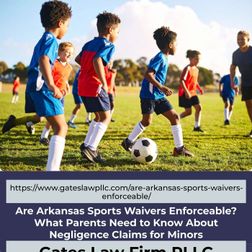
Are Arkansas Sports Waivers Enforceable? What Parents Need to Know About Negligence Claims for Minors - Joseph Gates

From Gates Law Firm PLLC – Are Arkansas Sports Waivers Enforceable? What Parents Need to Know About Negligence Claims for Minors uncovers the critical legal realities behind liability waivers signed at trampoline parks, amusement parks, water parks, and other recreational facilities across Arkansas. Many families believe signing a waiver means surrendering their rights, but this episode explores why that isn’t always true—especially when children are involved. Featuring insights from Little Rock child injury claims attorney Joseph Gates, this discussion sheds light on how Arkansas law protects minors and why waiver enforceability often comes down to more than just a signature. We explore what these waivers really mean—from exculpatory clauses and indemnity agreements to assumptions of risk—and how they are strategically crafted to shield businesses from responsibility. Yet, Arkansas public policy prioritizes child safety and imposes strict legal standards when parents sign away their children’s rights. The episode highlights why these waivers are not always enforceable, particularly when negligence at facilities like Altitude Trampoline Park, Sky Zone, or Magic Springs Theme and Water Park causes preventable injuries. Listeners will learn how legal protections for minors often override contractual language that favors recreational businesses. The podcast also examines the difference between inherent risks and actionable negligence—drawing a clear legal line between accidents that come with the territory and those caused by poor maintenance, inadequate supervision, or untrained staff. With real-world examples and references to Arkansas Children's Hospital and UAMS Medical Center, we address what constitutes gross negligence and how facilities can be held liable when they breach their duty of care. We also delve into how negligence claims can move forward in Pulaski County, Faulkner County, Saline County, or Lonoke County courts, regardless of any waiver a parent may have signed. Whether your child twisted an ankle during normal play or suffered a severe injury due to neglected equipment or insufficient safety protocols, this episode empowers parents to understand their rights and challenge assumptions. Hosted by Gates Law Firm PLLC—where Joseph Gates has fought for Arkansas injury victims since 2010—Are Arkansas Sports Waivers Enforceable? What Parents Need to Know About Negligence Claims for Minors is a must-listen for families navigating child injury claims and seeking justice in the face of intimidating legal documents. Gates Law Firm PLLC 2725 Cantrell Rd Ste 200 Little Rock, AR 72202, United States (501) 779-8091 https://www.google.com/maps?cid=4114337096292287489

Getting a Hardship License in Michigan: What You Need to Know - Paul J. Tafelski

From Paul J. Tafelski, Michigan Defense Law – Getting a Hardship License in Michigan: What You Need to Know explores how limited driving privileges can help you maintain your job, education, or medical treatment while your license is suspended. This episode breaks down the challenges Michigan drivers face when their license is revoked and how a hardship license offers a vital lifeline to stability. We walk through the essential criteria for qualifying under Michigan law, such as the restrictions outlined in MCL § 257.323c, and why simply needing convenience isn’t enough. Attorney Paul J. Tafelski of Michigan Defense Law shares how courts evaluate petitions, including the weight of supporting documentation, the importance of honest testimony, and the legal limits imposed on hardship license holders. We also explain how your driving history and prior violations impact eligibility—and what to do if you’ve been disqualified due to chemical test refusals or commercial violations. Listeners will learn about the full application process—from filing a petition in the Circuit Court to gathering key documents like certified driving records and employment letters. We'll walk you through what happens at your hearing, how judges decide your case, and what restrictions you must follow once a hardship license is granted. Understanding the details—like time-of-day driving limits and purpose-specific destinations—can make the difference between success and a denial. Finally, this episode highlights why having legal guidance matters. Paul J. Tafelski, Michigan Defense Law supports clients in Oakland County and across the state in preparing petitions, responding to challenges, and improving the chances of approval. If your daily responsibilities are at risk because of a license suspension, this episode offers the clarity and legal insights you need to move forward with confidence. Paul J. Tafelski, Michigan Defense Law 2525 S Telegraph Rd suite 100, Bloomfield Hills, MI 48302, United States (248) 451-2200 https://www.google.com/maps?cid=7441820969606749572

Medical Suspensions in Michigan: How to Win Your Hardship Appeal - Paul J. Tafelski

From Paul J. Tafelski, Michigan Defense Law – Medical Suspensions in Michigan: How to Win Your Hardship Appeal, dives into the legal and procedural complexities surrounding driver’s license suspensions due to medical conditions. This episode explores how Michigan residents can navigate the often-surprising process of a medical suspension and build a compelling Hardship Appeal to regain their driving privileges. With a focus on Oakland County, this conversation sheds light on the legal framework, critical evidence requirements, and strategic approach needed to succeed in court. We break down how the Michigan Secretary of State uses specific sources—such as physician reports, police officer observations, and citizen concerns—to initiate a Driver Assessment Reexamination. Listeners will gain insight into what happens during the reexamination, including the role of the Driver Assessment analyst, the importance of the Physician’s Statement (DI-4P), and the possible outcomes ranging from restrictions to revocation. Conditions like seizures, diabetes, vision impairment, and cognitive disorders are discussed in relation to how they impact a driver’s ability to retain their license. Paul J. Tafelski, a seasoned Oakland County license restoration lawyer and founder of Paul J. Tafelski, Michigan Defense Law, shares practical guidance for how to avoid common mistakes and build a legally persuasive case. He explains the importance of preparing your physician to complete the DI-4P with legally sound language, why the SOS may disregard your doctor’s opinion, and how strategic legal framing can significantly impact the results. Tafelski emphasizes the need to view the reexamination as a legal hearing—not just a medical evaluation. Finally, the episode outlines the legal avenues available after a suspension, focusing on the Hardship Appeal in Michigan Circuit Court. From filing petitions, choosing the correct venue, and meeting strict deadlines to understanding your appeal options—administrative, legal, and hardship—this episode empowers drivers to take control of their case. For anyone facing a medical suspension in Michigan, Medical Suspensions in Michigan: How to Win Your Hardship Appeal is your essential legal roadmap to restoring your independence. Paul J. Tafelski, Michigan Defense Law 2525 S Telegraph Rd suite 100, Bloomfield Hills, MI 48302, United States (248) 451-2200 https://www.google.com/maps?cid=7441820969606749572

What is MCL 257.321 – Surrender of License; Replacement in Michigan? - Paul J. Tafelski

From Paul J. Tafelski, Michigan Defense Law – What is MCL 257.321 – Surrender of License; Replacement in Michigan? explores the critical legal framework governing driver’s license suspensions and revocations across the state. This episode discusses how MCL 257.321 requires Michigan drivers to surrender their licenses when facing a suspension or revocation, and outlines the administrative process for obtaining a replacement once the suspension period ends. The conversation delves into the real-life impacts these legal challenges have on employment, mobility, and daily responsibilities. The episode highlights the key provisions of MCL 257.321, which mandates individuals to promptly surrender their physical license to the Michigan Department of State upon notification of suspension or revocation. Listeners will learn about the types of violations that trigger this requirement, including Operating While Intoxicated (OWI), reckless driving, driving without insurance, and failure to appear in court. The show emphasizes how noncompliance—such as retaining a suspended license—can lead to extended penalties or additional charges. We also break down the steps for license restoration in Michigan, including completion of suspension periods, compliance with legal and administrative requirements, and participation in a Driver Assessment and Appeal Division (DAAD) hearing for those with revoked licenses. The episode walks listeners through how to properly surrender a license, what documentation is needed, and the reinstatement process administered by the Secretary of State. Listeners facing challenges like administrative delays or multiple suspensions will gain insight into how these hurdles can be overcome with proper legal support. Whether you’re dealing with a first-time suspension or navigating the complexities of multiple revocations, What is MCL 257.321 – Surrender of License; Replacement in Michigan? offers actionable guidance. Paul J. Tafelski, Michigan Defense Law’s Oakland County license restoration attorneys are equipped to help clients resolve their legal issues and restore driving privileges. Tune in to understand your rights, responsibilities, and the steps toward reclaiming your independence behind the wheel. Paul J. Tafelski, Michigan Defense Law 2525 S Telegraph Rd suite 100, Bloomfield Hills, MI 48302, United States (248) 451-2200 https://www.google.com/maps?cid=7441820969606749572

MCL 257.320 – Duration of Revocation or Suspension; Eligibility for Reinstatement - Paul J. Tafelski

From Paul J. Tafelski, Michigan Defense Law – MCL 257.320 – Duration of Revocation or Suspension; Eligibility for Reinstatement explores how Michigan drivers can navigate the challenges of license suspension or revocation and what steps are required for reinstatement. This podcast dives into the complexities of MCL 257.320 – Duration of Revocation or Suspension; Eligibility for Reinstatement, a law that outlines the duration of license revocations or suspensions, eligibility requirements for reinstatement, and the importance of legal support in restoring your driving privileges. Listeners will learn how the Michigan Secretary of State enforces license actions under MCL 257.320 and related statutes like MCL 257.320a, 257.320b, and 257.320d. From driver reexaminations and medical fitness assessments to point accumulation and restricted license conditions, the podcast breaks down why licenses are revoked or suspended—and what that means for day-to-day life. It also addresses key differences between suspensions and revocations, how long each lasts, and the critical legal deadlines involved in challenging these actions. We also cover options available to drivers, such as attending a Driver Safety School or enrolling in a Basic Driver Improvement Course (BDIC), both of which can help prevent further penalties and preserve insurance rates. The episode sheds light on how the Office of Hearings and Administrative Oversight (OHAO) handles appeal hearings and the documentation needed to prove rehabilitation or compliance. Recent updates to the law under MCL 257.320e(4), which allow for automatic reinstatement in specific cases, are also discussed. Whether you’ve been involved in a fatal accident, accumulated excessive points, or violated license restrictions, MCL 257.320 – Duration of Revocation or Suspension; Eligibility for Reinstatement offers insight into the road to reinstatement. Backed by Paul J. Tafelski, Michigan Defense Law, this episode provides actionable information for drivers in Oakland County and beyond seeking to reclaim their freedom and drive legally again. Paul J. Tafelski, Michigan Defense Law 2525 S Telegraph Rd suite 100, Bloomfield Hills, MI 48302, United States (248) 451-2200 https://www.google.com/maps?cid=7441820969606749572

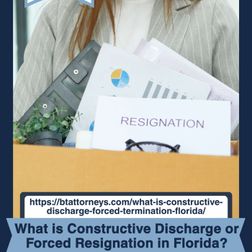
What is Constructive Discharge or Forced Resignation in Florida? - BT Law Group, PLLC

From BT Law Group, PLLC – What is Constructive Discharge or Forced Resignation in Florida? explores how intolerable working conditions—like harassment, discrimination, and retaliation—can legally force an employee to resign. This episode sheds light on the legal concept of constructive discharge and how Florida law treats such cases as wrongful termination, even if the employee technically resigned. With deep insight into both federal and state protections, this discussion is a must-listen for anyone navigating a hostile work environment in Florida. Attorneys Jason D. Berkowitz and Anisley Tarragona of BT Law Group, PLLC share how employees in Miami and throughout South Florida can recognize when their rights have been violated. Listeners will learn how landmark cases like Henson v. City of Dundee have shaped the legal landscape, and why the Eleventh Circuit Court of Appeals plays such a critical role in these claims. The episode breaks down what it means for conditions to be legally “intolerable” and what kinds of misconduct cross the threshold from unfair to unlawful. We dive into the practical steps employees should take before resigning, including documenting incidents, filing internal complaints, and seeking medical attention when necessary. The podcast outlines the importance of timely action, explaining how deadlines apply for filing claims with the EEOC Miami District Office or the Florida Commission on Human Relations. The conversation also touches on filing civil lawsuits, applying for unemployment benefits, and how laws like Title VII, the ADA, and the Florida Civil Rights Act offer vital protection. Finally, this episode offers strategic guidance for anyone feeling pushed to quit. Listeners will learn how BT Law Group, PLLC supports employees pursuing constructive discharge claims in federal and state courts, including the U.S. District Court for the Southern District of Florida. If you believe your employer has created an intolerable work environment, this episode will help you understand your legal options and empower you to take the next step in protecting your rights. BT Law Group, PLLC 3050 Biscayne Blvd STE 205, Miami, FL 33137 (305) 507-8506 https://www.google.com/maps?cid=1652198006057542154
50 of 178