BSPE Legal Marketing Podcast

BSPE Legal Marketing Podcast

by Viktoria Altman
Season 5

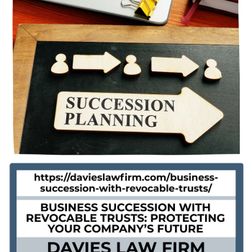
Business Succession with Revocable Trusts: Protecting Your Company’s Future - Davies Law Firm

From Davies Law Firm - Business Succession with Revocable Trusts: Protecting Your Company’s Future walks Central New York business owners through how a revocable living trust can keep a company running smoothly during incapacity and after death without getting stalled in probate. The episode frames succession planning in Syracuse and across Onondaga County as more than paperwork: it’s a practical roadmap for protecting operations, cash flow, employees, and family relationships while you keep control during your lifetime. You’ll hear how retitling key business interests into a revocable trust can help avoid delays in New York probate through the Onondaga County Surrogate’s Court, including how court timelines and public filings can disrupt day-to-day decision-making. The discussion spotlights Syracuse specifics like the courthouse at 401 Montgomery Street and probate administration under the Honorable Mary Keib Smith, and explains why a successor trustee can often act faster when ownership interests are properly titled in the trust. The conversation gets concrete about what funding the trust actually means for different entity types: LLC membership interests, corporate stock, and partnership interests, plus how to coordinate your operating agreement, shareholders’ agreement, or buy-sell agreement so your trust instructions and company rules speak the same language. It also covers banking and contract realities (leases, loans, vendors), disability planning to avoid guardianship, and the tax mechanics business owners can’t ignore, like grantor trust treatment under IRC §§671–679 and post-death QSST or ESBT elections to preserve S corporation status. Finally, you’ll learn how a solid transition packet and ongoing maintenance, like keeping filings current with the New York Department of State Division of Corporations (including the Biennial Statement) and tracking local requirements through the City of Syracuse Central Permit Office business licensing portal, can prevent nasty surprises. Featuring insights tied to the work of Frederick P. Davies and William P. Davies, this episode closes with a clear call to action for owners ready to protect what they’ve built: schedule a telephone conference with Davies Law Firm at (315) 472-6511. Davies Law Firm 210 E Fayette St, Syracuse, NY 13202, United States (315) 472-6511 https://www.google.com/maps?cid=11885144913064493862

What Are the Hidden, Long-term Consequences of a NY DWI Conviction? - Rachel Kugel

From The Kugel Law Firm - What Are the Hidden, Long-term Consequences of a NY DWI Conviction? breaks down the real-life fallout that can keep hitting long after sentencing, including the consequences that show up in Manhattan, Harlem, New York City, and throughout New York State. In this episode, Attorney Rachel Kugel explains what makes some DWI consequences “hidden”: collateral consequences that happen outside the courtroom when employers, landlords, insurance companies, and licensing boards review criminal records and background checks. The discussion covers how a conviction can quietly affect hiring, promotions, and government job eligibility, including reviews tied to the New York City Department of Citywide Administrative Services. The conversation also focuses on professional licensing and regulated careers. It explores how the New York State Office of Professions may review DWI convictions under New York Education Law § 6509, why the New York State Board of Nursing can scrutinize alcohol-related convictions closely, and how the New York Department of Financial Services can impact people working in finance, insurance, and securities. For drivers, the stakes can be even higher: CDL disqualification rules under 49 CFR § 383.51 can remove commercial driving privileges even if the incident occurred off-duty, and ride-share work may become harder to access. Finally, the episode lays out the long-term financial, housing, immigration, and education ripple effects. It covers higher insurance costs and the New York DMV Driver Responsibility Assessment, rental screening pressures in a competitive market, and complications that can affect green cards, visas, naturalization, DACA, and temporary protected status. It also addresses how long a DWI can follow you on both criminal and DMV records, what the Clean Slate Act may allow through sealing, and how The Kugel Law Firm approaches defense strategies designed to protect careers, housing, and future opportunities. The Kugel Law Firm 111 E 125th St 2nd Fl, New York, NY 10035, United States (212) 372-7218 https://www.google.com/maps?cid=17189431107850367088

Top-Rated Gloucester Car Accident Lawyers - GibsonSingleton Virginia Injury Attorneys

From GibsonSingleton Virginia Injury Attorneys - Top-Rated Gloucester Car Accident Lawyers explains what can happen when a routine drive through Gloucester Point or Gloucester County turns into a serious crash on Route 17 or near the Coleman Bridge. The discussion centers on how collisions disrupt lives with medical bills, time away from work, and uncertainty, and why heavy traffic along the George Washington Memorial Highway increases risk—especially during summer months and holiday weekends. The episode walks through what to do immediately after a wreck in the Middle Peninsula: call 911, cooperate with the Gloucester County Sheriff’s Office or Virginia State Police for an official crash report, seek medical care even if symptoms seem delayed, and document the scene with photos, road conditions, traffic signals, and witness details. It also flags common mistakes that can hurt a claim, including admitting fault, giving a recorded statement to an insurance company, posting on social media, or signing paperwork before getting legal advice. A major focus is how Virginia’s car accident laws affect recovery, including strict contributory negligence and the reality that even 1% of fault can block compensation. The conversation also covers key deadlines under Virginia Code § 8.01-243, shorter notice rules that may apply to government-related claims under § 8.01-195.6 and § 15.2-209, and situations where tolling under § 8.01-229 may extend time. You’ll also hear how uninsured and underinsured motorist coverage and medical payments coverage can come into play when the at-fault driver’s insurance is missing or insufficient. Finally, the blog highlights why Ken Gibson and John Singleton approach these cases with trial-ready preparation and local insight into Gloucester Courthouse and Gloucester County Circuit Court. Ken’s background includes service as an Assistant Commonwealth’s Attorney in Norfolk and a federal prosecutor at the U.S. Department of Justice in Washington, D.C., plus community involvement through groups like the Gloucester Point Rotary Club and the Middle Peninsula Bar Association. John brings insight from insurance defense work and service in the U.S. Marines, and he serves as a Special Justice for the Ninth Judicial Circuit, with both attorneys emphasizing a contingency fee structure and a Zero Fee Guarantee for people hurt in crashes across Gloucester County and surrounding communities. GibsonSingleton Virginia Injury Attorneys 4073 George Washington Memorial Hwy, Hayes, VA 23072, United States (804) 413-6777 https://www.google.com/maps?cid=16748039254555405766

Can You Sue an At-Will Employer for Wrongful Termination in Florida? - BT Law Group, PLLC

From BT Law Group, PLLC – Can You Sue an At-Will Employer for Wrongful Termination in Florida? dives deep into the complexities of Florida’s at-will employment doctrine and the real legal options available to wrongfully terminated employees. This episode explores how federal and state laws offer important protections—even in an at-will employment state—by outlining exceptions that allow individuals to sue for termination based on discrimination, retaliation, or violations of public policy. Employment attorneys Jason D. Berkowitz and Anisley Tarragona of BT Law Group, PLLC, based in Miami, shed light on how wrongful termination claims arise under laws like Title VII, the ADA, the ADEA, and the Florida Civil Rights Act. The discussion includes protections related to disability, age, race, pregnancy, and whistleblower activity, and how employers may attempt to disguise unlawful motives with claims of poor performance or restructuring. Listeners will learn to identify signs of pretextual firings and discover what kind of evidence can support their case. The episode also outlines what damages may be recovered in wrongful termination lawsuits, including back pay, front pay, emotional distress, and punitive damages. Listeners will learn the importance of filing charges with agencies like the EEOC or FCHR and how deadlines under the Florida Whistleblower Act and federal laws impact their ability to seek justice. Real-world examples show how quickly employers can cross legal lines, and what recourse employees have when they do. Whether you’re navigating a recent termination or want to better understand your rights as a Florida worker, BT Law Group, PLLC provides the knowledge and advocacy you need. With years of experience litigating employment cases in federal and state courts, Jason D. Berkowitz and Anisley Tarragona offer actionable guidance for those seeking justice. Tune in to understand when and how you can take legal action against wrongful termination in Florida. BT Law Group, PLLC 3050 Biscayne Blvd STE 205, Miami, FL 33137 (305) 507-8506 https://www.google.com/maps?cid=1652198006057542154
What Comes Out of My Compensation After a Personal Injury Settlement? - GibsonSingleton Virginia Injury Attorneys

From GibsonSingleton Virginia Injury Attorneys – What Comes Out of My Compensation After a Personal Injury Settlement? explores the financial realities injury victims face once their case is resolved. This episode breaks down what truly happens after a personal injury settlement in Virginia — from medical liens and attorney fees to insurance reimbursement claims — so you know exactly what to expect when your settlement check arrives. Hosts Ken Gibson and John Singleton, both proud U.S. Marine Corps veterans, draw from their deep legal experience and personal stories to guide listeners through complex settlement deductions. With backgrounds as a former federal prosecutor and insurance defense attorney respectively, Ken and John offer clear explanations of Virginia’s lien laws, contingency fee arrangements, and the exceptions to Virginia’s anti-subrogation statute — including how federal programs like Medicare, Medicaid, and Tricare can impact your recovery. Listeners will learn how case expenses such as court filing fees, expert witness costs, and medical record retrievals are calculated and deducted. Ken shares how his own experience being hit by a drunk driver in his early 20s shaped his understanding of the claims process, while John reflects on how his defense-side background helps him outmaneuver insurance tactics. They also discuss Virginia Code § 8.01-66.2 and § 38.2-3405 — key statutes that can make or break the final amount you receive. Whether you're recovering from an accident in Gloucester County, navigating settlement deductions near Route 17, or simply want to understand how to maximize your personal injury compensation, this episode offers strategic insight and practical tips. Tune in to hear how GibsonSingleton Virginia Injury Attorneys can help protect every dollar of your settlement. GibsonSingleton Virginia Injury Attorneys 4073 George Washington Memorial Hwy, Hayes, VA 23072, United States (804) 413-6777 https://www.google.com/maps?cid=16748039254555405766

Can I File a Wrongful Death Claim After a Truck Accident in Arkansas? - Joseph Gates

From Gates Law Firm PLLC – Can I File a Wrongful Death Claim After a Truck Accident in Arkansas? explores the legal rights of families who have lost loved ones in devastating commercial truck crashes across Arkansas. This episode breaks down the complexities of Arkansas Code § 16-62-102, which allows personal representatives or heirs at law to pursue civil claims for compensation after fatal accidents. Focused on the updated January 2026 guidance, this conversation provides urgent legal insight for families navigating tragedy in Little Rock and beyond. Attorney Joseph Gates of Gates Law Firm PLLC shares how families can protect their legal rights immediately following a fatal truck crash. From the first 48 hours—when critical evidence like ELD records, black box data, and toxicology reports must be preserved—to identifying all responsible parties such as negligent drivers, carriers, or shippers, this episode guides listeners through essential next steps. Gates explains how Arkansas law enables families to recover damages for both the deceased’s suffering and the survivors’ emotional and financial losses. Listeners will also learn who is legally allowed to file under Arkansas law, what compensation can be recovered, and how the estate and family claims differ. Topics include wrongful death damages such as funeral expenses, lost financial support, and mental anguish—along with how courts allocate compensation among statutory beneficiaries. The discussion also highlights the importance of early legal action and how Gates Law Firm PLLC can help prevent evidence from being destroyed or overlooked. Whether you're a grieving spouse, adult child, or concerned parent, this episode offers a compassionate and informative overview of the wrongful death claims process in Arkansas. Joseph Gates brings years of experience supporting families in Pulaski County and throughout the state. Tune in to understand your legal options, protect your family’s future, and ensure negligent trucking companies are held accountable. Gates Law Firm PLLC 2725 Cantrell Rd Ste 200 Little Rock, AR 72202, United States (501) 779-8091 https://www.google.com/maps?cid=4114337096292287489

Can You Get a Hardship License in New York After a DWI? - Rachel Kugel

From The Kugel Law Firm - Can You Get a Hardship License in New York After a DWI? explains what a hardship privilege is, who may qualify after a DWI arrest, and how New York’s prompt suspension law can disrupt daily life when your license is suspended at arraignment. In this episode, we cover the core rules in plain language, including how a chemical test showing 0.08% BAC or higher can trigger prompt suspension, what it means to request relief in criminal court, and how this differs from a DMV conditional license that may become available later even while your case is still pending. We also break down eligibility limits and common disqualifiers, including chemical test refusal under Vehicle & Traffic Law § 1194 and prior alcohol- or drug-related driving convictions within five years. You’ll learn what driving is typically allowed under a hardship privilege, such as travel to and from work, necessary medical care, and college or vocational education, and why out-of-state drivers can face extra complications through the Interstate Driver Compact. Finally, Manhattan drunk driving lawyer Rachel Kugel (Rachel Kugel Esq.) outlines how hardship requests are handled in Manhattan Criminal Court at 100 Centre Street in Lower Manhattan, what evidence can help demonstrate extreme hardship, and what can happen if you violate the terms. The discussion also covers the risks of moving violations or driving outside authorized times, including potential Aggravated Unlicensed Operation charges under Vehicle & Traffic Law § 511. To discuss your situation, contact The Kugel Law Firm at (212) 372-7218. The Kugel Law Firm 111 E 125th St 2nd Fl, New York, NY 10035, United States (212) 372-7218 https://www.google.com/maps?cid=17189431107850367088

What Are the Benefits of Divorce Mediation in New York? - Ryan Besinque

From The Law Office of Ryan Besinque - What Are the Benefits of Divorce Mediation in New York? explains how New York couples can use divorce mediation to reach fair agreements on property division, child custody, parenting time, child support, and spousal maintenance without handing those life-changing decisions to a judge in the Manhattan Supreme Court. In this episode-style breakdown, Manhattan divorce mediation lawyer Ryan Besinque, Esq. explains what mediation is as a voluntary process led by a trained neutral third party, how it differs from litigation, and why New York Domestic Relations Law § 236(B)(3) allows spouses to resolve divorce-related issues through a written, court-enforceable agreement. You’ll hear how streamlined financial disclosure, fewer court appearances, and reduced motion practice can keep cases moving on your schedule, especially in congested New York City courts. The conversation also dives into the practical advantages that matter most in Manhattan and across NYC: cost savings compared with contested divorces, stronger privacy and confidentiality than courtroom battles, and flexibility to craft creative outcomes like tailored parenting plans, practical solutions for the marital home, and smart trade-offs involving retirement accounts such as pensions and 401(k)s. It’s a clear look at how mediation can reduce emotional stress and support healthier co-parenting. Just as important, the episode flags when mediation may not be appropriate, including situations involving domestic violence, hidden assets, severe power imbalances, substance abuse, or child safety concerns, where litigation and formal discovery may be necessary. Drawing on experience across Manhattan, Brooklyn, the Bronx, Queens, Westchester County, and Nassau County, plus background including the University of San Diego School of Law, the CALI Award for Family Law, and service on the Manhattan Assigned Counsel Panel, Ryan outlines next steps, including a confidential consultation by phone at 929-251-4477 and support from the office at 115 W 25th Street in Manhattan, with cases that may proceed through 60 Centre Street. The Law Office of Ryan Besinque 115 W 25th St 4th floor, New York, NY 10001, United States (929) 251-4477 https://www.google.com/maps?cid=3422990479581259264

Who Can File a Wrongful Death Claim in Arkansas? - Joseph Gates

From Gates Law Firm PLLC - Who Can File a Wrongful Death Claim in Arkansas? breaks down how Arkansas law limits who has legal standing after a loved one’s death, focusing on the role of the personal representative and when heirs at law can step in. In this episode, Little Rock wrongful death attorney Joseph Gates explains the core rule under Arkansas Code § 16-62-102: the personal representative of the estate files the wrongful death lawsuit on behalf of all beneficiaries. You’ll also hear how probate proceedings in County Circuit Court can lead to the court appointing an executor or administrator, and how filings may run through places like Pulaski County Circuit Court at 401 West Markham Street in Little Rock. The conversation then maps out the statute’s list of statutory beneficiaries—surviving spouse, children (biological and adopted), parents, siblings (including half-siblings)—and clarifies who is not included, like aunts, uncles, cousins, and most grandparents. A key segment unpacks in loco parentis (“in the place of a parent”), including situations involving a stepparent, stepchild, grandparent, niece, or nephew, and what courts look for—parental care, financial support, guidance, and involvement in education or medical decisions. Finally, the episode covers why Arkansas recognizes one collective wrongful death action, how judges can divide damages, and what happens when families dispute who should file—especially under Arkansas Code Ann. § 16-62-102(b) and settlement oversight in Arkansas Code § 16-62-102(h). For listeners facing losses tied to negligence—like fatal car accidents, medical errors, or workplace incidents—Gates Law Firm PLLC shares next steps and offers a free consultation at (501) 779-8091, with an office located at 2725 Cantrell Road serving families in Little Rock and across Arkansas. Gates Law Firm PLLC 2725 Cantrell Rd Ste 200 Little Rock, AR 72202, United States (501) 779-8091 https://www.google.com/maps?cid=4114337096292287489

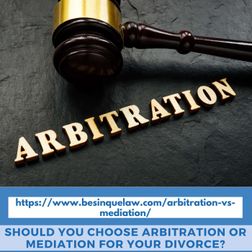
Should You Choose Arbitration or Mediation for Your Divorce? - Ryan Besinque

From The Law Office of Ryan Besinque – Should You Choose Arbitration or Mediation for Your Divorce? explores the core differences between two major paths for resolving divorce disputes outside the courtroom. In this episode, Manhattan divorce mediation attorney Ryan Besinque breaks down how arbitration and mediation function under New York law, highlighting how each approach impacts time, cost, control, and finality during divorce proceedings. Listeners will learn how arbitration mirrors a private trial, where a neutral third party makes binding decisions, while mediation promotes collaborative decision-making between spouses with the support of a trained facilitator. With references to New York’s CPLR Article 75 and insights into how outcomes become enforceable, Ryan explains when arbitration might make more sense—particularly in high-conflict or financially complex divorces. The episode also examines how mediation empowers couples to maintain control over settlement terms while preserving confidentiality. Ryan shares how mediation unfolds in Manhattan, from orientation and financial disclosures to final agreement drafting. He also discusses med-arb, a hybrid approach that lets couples mediate what they can and arbitrate what they can’t, avoiding full litigation at the New York County Supreme Court. Whether you’re in Midtown, Tribeca, or the Financial District, this podcast will help you decide if mediation, arbitration, or a combination of both aligns best with your unique situation. Tune in for guidance on how The Law Office of Ryan Besinque supports Manhattan couples through divorce with dignity, clarity, and a focus on long-term resolution. The Law Office of Ryan Besinque 115 W 25th St 4th floor, New York, NY 10001, United States (929) 251-4477 https://www.google.com/maps?cid=3422990479581259264
48 of 178