BSPE Legal Marketing Podcast

BSPE Legal Marketing Podcast

by Viktoria Altman
Season 5

Out-of-State License Restoration in Michigan: How to Clear a Michigan Hold on Your Driving Record - Paul J. Tafelski

From Paul J. Tafelski, Michigan Defense Law - Out-of-State License Restoration in Michigan: How to Clear a Michigan Hold on Your Driving Record breaks down the complex process drivers face when a Michigan hold prevents them from obtaining a license in another state. In this episode, listeners learn how the Michigan Secretary of State, the National Driver Register (NDR), and the Problem Driver Pointer System (PDPS) work together to flag revocations that follow drivers across state lines. The discussion explores how attorney Paul J. Tafelski approaches out-of-state license restoration cases through the Office of Hearings and Administrative Oversight (OHAO). The episode explains why certain conviction combinations under MCL 257.303 trigger revocations, how Michigan becomes the state of record, and why drivers in other states must resolve the hold through Michigan before their new state’s Department of Motor Vehicles will issue a license. Listeners will also hear a detailed explanation of the clearance process, including the difference between an administrative review and a full OHAO hearing, the role of the Driver Appeal Integrated System (DAIS), and the evidence required to prove sobriety and driving responsibility. Topics include substance use evaluations, drug screens, letters of support, and how remote hearings conducted through Microsoft Teams allow out-of-state applicants to participate without traveling back to Michigan. Finally, the episode highlights the background of Paul J. Tafelski, founder of Michigan Defense Law, whose legal career spans decades serving clients throughout Oakland County, Bloomfield Hills, and the greater Michigan area. A graduate of Michigan State University and the Detroit College of Law at Michigan State University, he maintains involvement with organizations such as the State Bar of Michigan, American Bar Association, Oakland County Bar Association, Criminal Defense Lawyers of Michigan, National College for DUI Defense, and The Advocates (Polish Bar Association), while earning recognition including Super Lawyers, Leading Lawyer, ASLA Top 100 Lawyer, and the Avvo Clients’ Choice Award. Paul J. Tafelski, Michigan Defense Law 2525 S Telegraph Rd suite 100, Bloomfield Hills, MI 48302, United States (248) 451-2200 https://www.google.com/maps?cid=7441820969606749572

First-Time DWI in New York - Rachel Kugel

From The Kugel Law Firm - First-Time DWI in New York explains what individuals should expect after being charged with a first-time DWI in Manhattan and throughout New York City. In this episode, we break down how Driving While Intoxicated cases are prosecuted under New York Vehicle and Traffic Law Section 1192, the difference between DWI, DWAI, and Aggravated DWI, and why a first offense can still carry serious criminal consequences. Listeners will learn how charges develop from arrest through arraignment at Manhattan Criminal Court at 100 Centre Street, and why understanding the legal process early can make a significant difference in the outcome of a case. Attorney Rachel Kugel of The Kugel Law Firm discusses how prosecutors in Manhattan evaluate first-offense DWI cases, including situations where charges may be reduced to Driving While Ability Impaired (DWAI). The conversation explores key evidence often used in these cases, such as breathalyzer results, blood alcohol concentration (BAC) testing, field sobriety tests, and officer observations. We also explain the role of the New York Department of Motor Vehicles, license suspension at arraignment, and how the Impaired Driver Program (IDP) can allow drivers to obtain a conditional license while their case moves through the court system. The episode also examines the real financial and legal impact of a DWI conviction in New York. From court fines and mandatory surcharges to Driver Responsibility Assessments, ignition interlock device requirements, and increased insurance premiums, the total cost of a conviction can exceed several thousand dollars. We discuss the timeline of a Manhattan DWI case, including arrest, booking, arraignment, pre-trial proceedings in Part E, and how defense strategies may challenge traffic stops, breathalyzer calibration, or testing procedures. Finally, Rachel Kugel shares insights from years of defending DWI cases across Manhattan, Harlem, and the greater New York City area through The Kugel Law Firm. A member of the National College of DWI Defense and the DUI Defense Lawyers Association, she is frequently invited to comment on legal issues by national media outlets such as CNN, FOX News, CourtTV, MSNBC, and HLN. This episode provides listeners with a clear understanding of how first-time DWI cases unfold in New York and what steps individuals can take immediately after an arrest to protect their rights and future. The Kugel Law Firm 111 E 125th St 2nd Fl, New York, NY 10035, United States (212) 372-7218 https://www.google.com/maps?cid=17189431107850367088

Manhattan Felony DWI - Rachel Kugel

From The Kugel Law Firm - Manhattan Felony DWI explores what happens when a drunk driving charge in Manhattan escalates from a misdemeanor to a felony under New York law. This episode explains how felony DWI charges arise under New York Vehicle and Traffic Law §1192, including repeat offenses, aggravating circumstances, and situations involving child passengers. Listeners will gain a clear understanding of how these cases develop across Manhattan and New York City and why felony DWI allegations carry serious and lasting consequences. The conversation highlights the work of Rachel Kugel, founder of The Kugel Law Firm, who has resolved thousands of DWI cases throughout New York. The episode examines how prior convictions can elevate charges under VTL §1193 and how laws such as Leandra's Law and Vince's Law significantly increase penalties. It also discusses the tragic case of Leandra Rosado on the Henry Hudson Parkway and how that event led to some of the strictest impaired driving laws in the country. Listeners will also learn what typically happens after a felony DWI arrest in Manhattan. The episode walks through the legal process beginning with arraignment at Manhattan Criminal Court at 100 Centre Street, the role of the grand jury, and how cases may move forward in New York County Supreme Court at 111 Centre Street. The discussion also covers defense strategies such as challenging the legality of traffic stops, examining chemical test procedures, and questioning field sobriety testing. The episode concludes by examining the long-term consequences of a felony DWI conviction, including New York Department of Motor Vehicles license revocations, ignition interlock requirements, and the lasting impact a felony record can have on employment, housing, and professional licensing. It also touches on Rachel Kugel’s involvement with the National College of DWI Defense and the DUI Defense Lawyers Association, along with recognition from AVVO and Super Lawyers, reflecting the commitment behind defending individuals facing felony DWI charges in Manhattan. The Kugel Law Firm 111 E 125th St 2nd Fl, New York, NY 10035, United States (212) 372-7218 https://www.google.com/maps?cid=17189431107850367088

What is NY VTL 1192(4-a)? - Rachel Kugel

From The Kugel Law Firm - What is NY VTL 1192(4-a)? explains the serious charge of Driving While Ability Impaired by the Combined Influence of Drugs or Alcohol and Any Drug or Drugs under New York Vehicle and Traffic Law § 1192(4-a). This episode breaks down how drivers in Manhattan and New York City can face charges even when their BAC is below .08% or when taking prescription medication as directed, highlighting real-world scenarios from locations like the FDR Drive and Harlem. Featuring insights from New York DWI defense lawyer Rachel Kugel, this podcast explores how cases move through Manhattan Criminal Court at 100 Centre Street and the role of the Manhattan District Attorney's Office in prosecuting these offenses. It also compares VTL 1192(4-a) with related statutes such as VTL 1192(3), VTL 1192(2), and VTL 1192(4), helping listeners understand the key legal differences between intoxication, impairment, and combined influence charges. Listeners will gain a clear understanding of the penalties associated with these charges, including misdemeanor and felony classifications, potential jail time, fines, license revocation, and additional consequences from the New York Department of Motor Vehicles (DMV). The discussion also covers the Driver Responsibility Assessment, the Impaired Driver Program (IDP), and how cases may escalate to the New York County Supreme Court, along with the long-term impact on insurance rates. The episode also dives into defense strategies used by The Kugel Law Firm, including challenging illegal traffic stops, questioning chemical test results, and disputing evidence of combined influence. With Rachel Kugel—featured on CNN, FOX News, CourtTV, MSNBC, and HLN—sharing practical insights, this podcast offers valuable guidance for anyone navigating DWI charges in Manhattan, Harlem, and across New York City. The Kugel Law Firm 111 E 125th St 2nd Fl, New York, NY 10035, United States (212) 372-7218 https://www.google.com/maps?cid=17189431107850367088

Why Does Connecticut's Minimum 25/50/25 Insurance Coverage Under § 38a-335 Leave Most Accident Victims Undercompensated? - Dan Petroskey

From DeFronzo & Petroskey, P.C. - Why Does Connecticut's Minimum 25/50/25 Insurance Coverage Under § 38a-335 Leave Most Accident Victims Undercompensated? breaks down how Connecticut’s minimum auto insurance requirements can leave injured drivers and passengers in Waterbury and across New Haven County facing major financial gaps after a serious crash. This episode explains what 25/50/25 coverage means under C.G.S. § 14-112 and C.G.S. § 38a-335, why those limits often fail to match the real cost of medical care and property damage, and what accident victims need to know when the at-fault driver carries only the minimum policy. Listeners will hear how even routine emergency treatment, hospital stays, surgery, lost wages, and vehicle replacement costs can quickly outpace the $25,000 per-person bodily injury limit and $25,000 property damage cap. Drawing on data referenced from the National Highway Traffic Safety Administration and the Centers for Disease Control and Prevention, the podcast highlights why these minimums can leave crash victims undercompensated long before they have fully recovered. The episode also explores the protections available under Connecticut law, including uninsured and underinsured motorist coverage under C.G.S. § 38a-336, underinsured motorist conversion coverage under C.G.S. § 38a-336a, and the possibility of pursuing a personal injury lawsuit against a negligent driver when insurance proceeds are not enough. It also explains how Connecticut’s modified comparative negligence rule under C.G.S. § 52-572h can directly affect compensation, especially in cases filed in the Waterbury Judicial District at Waterbury Superior Court. Featuring insight tied to the work of Waterbury car accident attorney Dan Petroskey, this podcast outlines practical steps drivers can take to better protect themselves, including reviewing UM/UIM limits, considering conversion coverage, adding MedPay, and exploring umbrella insurance. DeFronzo & Petroskey, P.C. brings its long-standing commitment to the Waterbury community to this discussion for anyone trying to understand insurance coverage gaps, personal injury claims, and the path to fuller financial recovery after a Connecticut car accident. DeFronzo & Petroskey, P.C. 255 Bank St # 2b, Waterbury, CT 06702, United States (203) 756-7408 https://www.google.com/maps?cid=2074756120617399372

Second Offense DUI Lawyer - Rachel Kugel

From The Kugel Law Firm - Second Offense DUI Lawyer explores the serious legal consequences drivers face after a second DUI or DWI charge and how defense strategies may affect the outcome of a case. In this episode, Rachel Kugel discusses the mandatory penalties under N.J.S.A. 39:4-50, including potential jail time, license suspension, fines, ignition interlock requirements, and insurance surcharges that can dramatically impact daily life across New Jersey and Hudson County. Listeners will learn how repeat DUI cases unfold in Jersey City Municipal Court, located at the Lewis S. McRae Justice Complex in Jersey City. The conversation explains what happens during key stages such as the first court appearance, discovery, pre-trial motions, and bench trials where judges decide DWI cases. The episode also covers how programs like the Intoxicated Driver Resource Center (IDRC) and penalties from the New Jersey Motor Vehicle Commission (MVC) can affect drivers long after a conviction. The podcast also breaks down important legal defenses that may arise in second offense cases. Rachel Kugel discusses challenges involving traffic stops, breath testing procedures using devices like the Draeger Alcotest 7110 MKIII-C and Alcotest 9510, and legal precedents including State v. Chun and State v. Laurick. The episode explains how these issues, along with questions about prior convictions or out-of-state offenses, can shape the defense strategy in repeat DWI cases. Finally, the discussion highlights Rachel Kugel’s work defending DUI cases through The Kugel Law Firm in Newark at One Gateway Center while sharing insight into her involvement with organizations such as the National College of DWI Defense, the DUI Defense Lawyers Association, Super Lawyers, the New Jersey State Bar Association, Garden State CLE, AVVO, and the Lawyernomics conference. This episode provides a clear overview of the legal process, penalties, and defense considerations for anyone facing a second DUI charge in New Jersey. The Kugel Law Firm 1 Gateway Ctr SUITE 2600, Newark, NJ 07102, United States (973) 854-0098 https://www.google.com/maps?cid=3822170752710866861

What Is a Due Diligence Review in NYC Real Estate? - Natalia A. Sishodia

From Sishodia PLLC - What Is a Due Diligence Review in NYC Real Estate? This episode breaks down the critical steps buyers must take when purchasing property in Manhattan or across New York City, explaining how due diligence reviews uncover legal and financial risks before a contract is signed. Listeners are guided through the essentials of real estate transactions in NYC, including the role of attorneys, timelines, and why this process is a non-negotiable safeguard for any serious investment. Hosted with insights drawn from the work of Natalia Sishodia, this discussion explores how attorneys analyze building financial statements, board minutes, offering plans, and public records to verify a seller’s claims. The episode highlights key institutions and systems like the New York City Department of Buildings (DOB), BIS, DOB NOW, and the New York State Attorney General, emphasizing how each plays a role in ensuring transparency and compliance in complex NYC property deals. The conversation also dives into the differences between co-op and condo purchases in Manhattan, Queens, Brooklyn, and the Bronx, including how ACRIS records and the Richmond County Clerk factor into title searches. Listeners will gain clarity on ownership structures, board approvals, financial risks, and how due diligence strategies shift depending on the property type, giving buyers a clearer understanding of what they are truly purchasing. Finally, the episode outlines common red flags such as open DOB violations, pending litigation, low reserve funds, and unpermitted alterations, showing how skipping due diligence can lead to costly consequences. With a focus on protecting investments in one of the world’s most competitive real estate markets, this podcast equips buyers with the knowledge needed to make informed, confident decisions before closing. Sishodia PLLC 600 3rd Ave 2nd floor, New York, NY 10016, United States (833) 616-4646 https://www.google.com/maps?cid=12450537318741950980

Can I Stack Multiple Insurance Policies for Underinsured Motorist Coverage in Connecticut Under § 38a-336? - Dan Petroskey

From DeFronzo & Petroskey, P.C. - Can I Stack Multiple Insurance Policies for Underinsured Motorist Coverage in Connecticut Under § 38a-336? explores how Connecticut law governs UM/UIM coverage, why stacking is generally prohibited, and the narrow circumstances where multiple policies may still come into play. Centered on the realities drivers face after a car accident, this episode breaks down complex statutes like CGS § 38a-336 and Public Act 93-297 into practical insights for injured motorists. Featuring insights tied to Waterbury car accident attorney Dan Petroskey, Esq., the discussion highlights how courts, including decisions like Chmielewski v. Aetna Casualty and Surety Co. and Lane v. Metropolitan Property & Casualty Ins. Co., interpret anti-stacking rules. Listeners will gain clarity on intra-policy vs. inter-policy stacking, how Connecticut insurers share payment obligations, and why your recovery is typically capped at the highest single policy limit. The episode also dives into key alternatives, including Underinsured Motorist Conversion Coverage (UIMC) under CGS § 38a-336a, explaining how it can expand compensation beyond traditional limits. Real-world scenarios illustrate how liability coverage, UM/UIM limits, and conversion coverage interact, giving drivers in New Haven County and beyond a clearer understanding of their insurance options. Finally, the podcast outlines actionable steps to take after an accident with an underinsured driver, including navigating claims, arbitration under § 38a-336(c), and filing within Connecticut’s statute of limitations under CGS § 52-584. With references to the Waterbury Superior Court and the Waterbury Judicial District, this episode serves as a practical guide for protecting your rights and maximizing recovery after a crash. DeFronzo & Petroskey, P.C. 255 Bank St # 2b, Waterbury, CT 06702, United States (203) 756-7408 https://www.google.com/maps?cid=2074756120617399372

Waterbury Head-On Collision Lawyer - Dan Petroskey

From DeFronzo & Petroskey, P.C. - Waterbury Head-On Collision Lawyer explores the causes, consequences, and legal options surrounding devastating head-on crashes in Waterbury and across New Haven County. The episode highlights how collisions between vehicles traveling in opposite directions often result in the most severe injuries on Connecticut roads and examines the factors that frequently contribute to these crashes, including distracted driving, impaired driving, and wrong-way incidents on highways like I-84. This discussion also breaks down the types of injuries victims often face after a serious head-on collision. From traumatic brain injury and spinal cord damage to internal organ injuries and fractures, these crashes can create long-term physical, financial, and emotional challenges. Listeners will learn how emergency treatment at facilities such as Waterbury Hospital and continued medical care can play a critical role in documenting injuries and supporting a personal injury claim. The episode explains how Connecticut’s fault-based system applies after a crash and how laws such as Connecticut General Statutes § 52-572h, § 52-555, and § 52-584 affect injury claims and wrongful death cases. It also covers the state’s modified comparative negligence rule and how insurance policies, including uninsured and underinsured motorist coverage, may influence compensation for victims throughout Waterbury, Naugatuck, Wolcott, Prospect, Middlebury, Southbury, and surrounding communities in New Haven County. Listeners will also hear about Dan Petroskey, owner of DeFronzo & Petroskey, P.C., who earned his J.D. from Albany Law School and his B.A. from Colby College. Admitted to practice in Connecticut and New York, Dan Petroskey has spent more than two decades representing plaintiffs in personal injury cases and serving the Waterbury community. With a long-standing presence on Field Street and Bank Street and cases handled in the Waterbury Superior Court at 300 Grand Street, the firm continues its commitment to helping injury victims pursue accountability and financial recovery after serious collisions. DeFronzo & Petroskey, P.C. 255 Bank St # 2b, Waterbury, CT 06702, United States (203) 756-7408 https://www.google.com/maps?cid=2074756120617399372

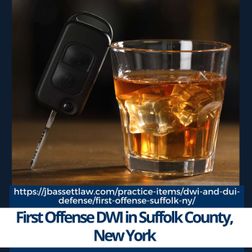
First Offense DWI in Suffolk County, New York - Jason Bassett

From Law Offices of Jason Bassett, P.C. - First Offense DWI in Suffolk County, New York explains what individuals should expect after a driving while intoxicated arrest and how the legal process unfolds in Suffolk County and Central Islip. This podcast-style discussion explores how a first-offense DWI under New York Vehicle and Traffic Law § 1192 can lead to fines, license revocation, and possible jail time, while highlighting the importance of understanding the Suffolk County court process. Listeners will gain insight into what happens after an arrest, including arraignments at the Cohalan Court Complex and the early legal decisions that may influence the direction of a case. The episode also introduces Jason Bassett and the mission behind the Law Offices of Jason Bassett, P.C., a criminal defense firm serving clients throughout Suffolk County and Long Island. Drawing on more than two decades of courtroom experience, Jason Bassett previously served as an Assistant District Attorney in the Queens County District Attorney's Office, a Principal Assistant County Attorney for the Suffolk County Department of Law, Chief Deputy Commissioner for the Town of Islip Department of Public Safety Enforcement, and Special Assistant Attorney General in the Office of the Attorney General of New York. His background reflects years of work inside multiple areas of the New York legal system, providing perspective on how DWI cases are investigated and prosecuted. Listeners will also learn how a DWI arrest affects driving privileges and what options may be available through the New York DMV, including a conditional license or hardship privilege. The discussion breaks down the role of the Impaired Driver Program, license suspension rules, and how Leandra's Law requires the installation of an Ignition Interlock Device after certain convictions. The podcast explains the financial and legal consequences many drivers do not anticipate, including driver responsibility assessments, court surcharges, and the long-term impact on insurance rates and driving records. Finally, First Offense DWI in Suffolk County, New York examines potential defense strategies that may arise in DWI cases, including challenges to traffic stops, breathalyzer procedures, and field sobriety tests. The episode also discusses the professional background of Jason Bassett, including his education at Boston College Law School and the University of Pennsylvania, as well as his involvement with organizations such as the National Association of Criminal Defense Lawyers, New York State Association of Criminal Defense Lawyers, Suffolk County Criminal Bar Association, National College for DUI Defense, and the Federal Bar Council. Through this overview, listeners gain a clearer understanding of the legal landscape surrounding DWI charges in New York and the steps individuals can take to protect their rights after an arrest. Law Offices of Jason Bassett, P.C. 320 Carleton Ave # 4200, Central Islip, NY 11722, United States (631) 259-6060 https://www.google.com/maps?cid=695024758410642184

38 of 178