BSPE Legal Marketing Podcast

BSPE Legal Marketing Podcast

by Viktoria Altman
Season 5

New Jersey Kidnapping Lawyer - Adam M. Lustberg

From Lustberg Law Offices, LLC - New Jersey Kidnapping Lawyer explores how kidnapping charges are defined, prosecuted, and defended under New Jersey law. This episode discusses N.J.S.A. 2C:13-1, the difference between first-degree and second-degree kidnapping, and why allegations involving unlawful removal, confinement, ransom, hostage situations, parental custody disputes, or criminal purpose can carry life-changing consequences.Listeners will learn how penalties for kidnapping in New Jersey can range from 5 to 10 years for second-degree charges to 15 to 30 years for standard first-degree kidnapping, with enhanced cases involving minors carrying 25 years without parole or 25 years to life. The episode also explains how the No Early Release Act, NERA, and N.J.S.A. 2C:43-7.2 require at least 85% of a kidnapping sentence to be served before parole eligibility.The discussion also covers defense strategies used in serious criminal cases, including challenging unlawful removal or confinement, disputing substantial distance or substantial period requirements, questioning the prosecution’s evidence, and seeking reductions to related offenses such as criminal restraint under N.J.S.A. 2C:13-2 or false imprisonment under N.J.S.A. 2C:13-3. Parental kidnapping, interference with custody under N.J.S.A. 2C:13-4, and affirmative defenses involving imminent danger are also addressed.Featuring information from attorney Adam M. Lustberg of Lustberg Law Offices, LLC in Hackensack, this episode highlights the criminal court process in New Jersey Superior Court, including detention hearings, grand jury indictment, arraignment, discovery, motions, plea negotiations, and trial. It also discusses service areas throughout Bergen County, Hudson County, Passaic County, Jersey City, Paterson, and courts across New Jersey, along with the long-term consequences a kidnapping conviction can have on employment, housing, licensing, firearms rights, immigration status, and family court matters. Lustberg Law Offices, LLC 1 University Plaza Dr #212, Hackensack, NJ 07601, United States (201) 880-5311 https://www.google.com/maps?cid=17248268094099978177

What Is the Average Car Accident Settlement in Connecticut and What Factors Affect My Payout? - Dan Petroskey

From DeFronzo & Petroskey, P.C. - What Is the Average Car Accident Settlement in Connecticut and What Factors Affect My Payout? explains why there is no single “average” car accident settlement in Connecticut and how each claim depends on the specific facts of the crash. This episode covers injury severity, medical records, lost wages, available insurance coverage, pain and suffering, and how Connecticut’s modified comparative negligence rule can reduce or bar compensation. The discussion highlights how Connecticut car accident settlements are calculated, including economic damages such as medical expenses, future medical costs, lost wages, diminished earning capacity, and property damage, along with non-economic damages for physical pain, emotional distress, and loss of enjoyment of life. Listeners will also hear how serious injuries such as traumatic brain injury, spinal cord damage, permanent disability, fractures, surgery, and fatal crashes can affect settlement value. This episode also explains important Connecticut laws and insurance issues, including Connecticut General Statutes § 52-572h, Connecticut General Statutes Section 52-584, the two-year statute of limitations, the strict three-year final deadline, minimum liability insurance of $25,000 per person and $50,000 per accident, uninsured and underinsured motorist coverage, and how fault percentages can change a payout. It also addresses why first insurance offers are often low, how claims-valuation software such as Colossus may be used, and why reaching maximum medical improvement can matter before settlement. Featuring Dan Petroskey of DeFronzo & Petroskey, P.C., the episode focuses on practical steps injured people can take after a Connecticut car accident, including seeking medical attention, following treatment recommendations, documenting expenses, preserving evidence, avoiding recorded statements, and speaking with a car accident attorney before negotiating. The firm serves injured clients in Waterbury, New Haven County, and throughout Connecticut, with an office at 255 Bank Street in Waterbury and free consultations available at (203) 756-7408. DeFronzo & Petroskey, P.C. 255 Bank St # 2b, Waterbury, CT 06702 (203) 756-7408 https://www.google.com/maps?cid=2074756120617399372

Waterbury Spinal Cord Injuries - Dan Petroskey

From DeFronzo & Petroskey, P.C. - Waterbury Spinal Cord Injuries explores how car accidents in Waterbury, New Haven County, and across Connecticut can lead to life-changing spinal cord injuries, including herniated discs, vertebral fractures, nerve damage, paraplegia, quadriplegia, and other catastrophic conditions. The episode discusses how crashes on I-84, Route 8, Meriden Road, and busy Waterbury intersections can cause serious trauma through rear-end collisions, rollovers, head-on crashes, and T-bone accidents.Listeners will hear how Connecticut law may allow injured people to pursue compensation when another driver’s negligence causes a spinal cord injury. The discussion covers distracted driving, drunk driving, speeding, failure to yield, police accident reports, dashcam footage, witness statements, accident reconstruction analysis, vehicle black box data, MRI scans, CT scans, and medical records that can help connect a crash to a spinal injury.The podcast also explains the financial and personal impact of spinal cord injuries, including hospital bills, surgery, rehabilitation, assistive devices, home modifications, in-home care, lost wages, diminished earning capacity, pain and suffering, emotional distress, loss of enjoyment of life, and loss of consortium. It references Connecticut’s modified comparative negligence rule under CGS § 52-572h, the statute of limitations under CGS § 52-584, and the importance of acting quickly before evidence is lost or insurance companies attempt to minimize a claim.Featuring Dan Petroskey of DeFronzo & Petroskey, P.C., this episode highlights legal guidance for injured people in Waterbury, Naugatuck, Wolcott, Cheshire, Prospect, Middlebury, Watertown, Southington, Meriden, Wallingford, Thomaston, New Haven County, and throughout Connecticut. DeFronzo & Petroskey, P.C., located at 255 Bank St #2b, Waterbury, CT 06702, offers free consultations at (203) 756-7408 and handles catastrophic injury claims on a contingency fee basis. DeFronzo & Petroskey, P.C. 255 Bank St # 2b, Waterbury, CT 06702 (203) 756-7408 https://www.google.com/maps?cid=2074756120617399372

Choosing the Right Legal Structure: LLC vs. Corporation vs. Trust for Foreign Real Estate Buyers - Natalia A. Sishodia

From Sishodia PLLC - Choosing the Right Legal Structure: LLC vs. Corporation vs. Trust for Foreign Real Estate Buyers explores how foreign investors can structure U.S. real estate purchases to address taxation, liability, inheritance, and long-term estate planning. The episode discusses why choosing between an LLC, corporation, or trust is more than a filing decision, and how the right structure can shape rental income treatment, asset protection, privacy, compliance, and wealth transfer for international buyers entering the New York City and broader U.S. property markets. Listeners will hear how U.S. tax rules affect foreign real estate ownership, including FDAP income, ECI elections under IRC Section 871(d), FIRPTA withholding, IRS Form 1040-NR filings, and the sharp estate tax difference between U.S. citizens and residents and nonresident aliens. The discussion also explains why direct ownership can create major estate tax exposure, especially when U.S.-sited real estate exceeds the limited $60,000 exemption available to nonresident aliens. The episode compares the advantages and drawbacks of LLCs, C Corporations, S Corporations, revocable trusts, irrevocable trusts, and foreign irrevocable non-grantor trusts. It covers LLC liability protection and pass-through taxation, the corporate blocker structure using foreign corporations in jurisdictions such as the British Virgin Islands or Cayman Islands, double taxation concerns, FinCEN and Corporate Transparency Act developments, BOI reporting changes, the Residential Real Estate Rule, and New York formation requirements through the New York Department of State. Featuring insight connected to Natalia A. Sishodia, Esq., LL.M., Managing Partner of Sishodia PLLC, this episode highlights planning considerations for investors from the UK, Canada, the UAE, India, Japan, Switzerland, Europe, Asia, the Middle East, and North America. It also examines advanced strategies such as trust-owned LLC structures, 1031 exchanges, cross-border acquisitions, luxury condominiums, multifamily properties, and customized estate and tax planning designed to help foreign investors protect U.S. assets and build a secure foundation for long-term growth. Sishodia PLLC 600 3rd Ave 2nd floor, New York, NY 10016, United States (833) 616-4646 https://www.google.com/maps?cid=12450537318741950980

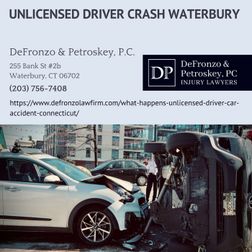
What Happens If an Unlicensed or Suspended Driver Causes My Car Accident in Connecticut? - Dan Petroskey

From DeFronzo & Petroskey, P.C. - What Happens If an Unlicensed or Suspended Driver Causes My Car Accident in Connecticut? explores what injured drivers in Waterbury and across Connecticut need to know after a crash involving an unlicensed, suspended, uninsured, or underinsured motorist. This episode breaks down how insurance coverage may still apply, why uninsured motorist coverage matters, and how Connecticut law can provide several possible paths to compensation. Listeners will learn how Connecticut General Statutes § 38a-336, § 14-112(a), § 14-36, § 14-215, § 52-572h, § 52-584, and C.G.S. § 14-224 may affect claims involving suspended drivers, hit-and-run crashes, negligent entrustment, comparative negligence, and personal injury filing deadlines. The discussion also covers UM and UIM coverage, active insurance policies, policy exclusions, direct lawsuits, vehicle owner liability, employer liability, and the role of Waterbury Superior Court.This episode highlights the evidence that can strengthen a car accident claim, including police reports, Department of Motor Vehicles records, medical records, bills, lost wage documentation, witness information, photographs, traffic camera footage, and insurance details. It also walks through the practical steps to take after a crash, from calling 911 and seeking medical attention to notifying your insurer and avoiding recorded statements before speaking with an attorney.Featuring DeFronzo & Petroskey, P.C. and Waterbury car accident attorney Dan Petroskey, this episode also discusses the firm’s work serving injured people throughout Waterbury, New Haven County, Hartford County, and surrounding Connecticut communities. Listeners will hear how Dan Petroskey’s background in motor vehicle accidents, slip-and-fall injuries, premises liability, dog bite incidents, and plaintiff personal injury cases connects to claims involving unlicensed and suspended drivers. DeFronzo & Petroskey, P.C. 255 Bank St # 2b, Waterbury, CT 06702 (203) 756-7408 https://www.google.com/maps?cid=2074756120617399372

How Long Does an Uncontested Divorce Take in New York? - Richard Roman Shum

From Law Office of Richard Roman Shum, Esq. - How Long Does an Uncontested Divorce Take in New York? explores the timeline, filing steps, paperwork, costs, and court procedures involved in an uncontested divorce in New York. This podcast episode discusses why most uncontested divorces take three to six months, how New York County Supreme Court processing can affect Manhattan cases, and why accurate paperwork is essential from the start. Listeners will learn what qualifies as an uncontested divorce, including agreement on property division, debt allocation, spousal maintenance, child custody, visitation, and child support. The episode also covers New York residency requirements under N.Y. Domestic Relations Law § 230 and the commonly used no-fault ground of irretrievable breakdown under N.Y. Domestic Relations Law § 170(7). The discussion walks through the Traditional filing method and Joint filing method, including documents such as the Summons with Notice, Verified Complaint, Affidavit of Service, Affidavit of Plaintiff, Affidavit of Defendant, Joint Affirmation of Facts and Agreement, Settlement Agreement, Note of Issue, Request for Judicial Intervention, Proposed Judgment of Divorce, Findings of Fact and Conclusions of Law, and Certificate of Dissolution of Marriage. Featuring insights connected to Richard Roman Shum, a Manhattan family law attorney, this episode also explains potential delays involving court backlogs, service of process, child-related documentation, and rejected filings. It highlights the Law Office of Richard Roman Shum, Esq., located at 20 Clinton Street in Manhattan’s Lower East Side, serving New York County and surrounding boroughs, and shares how listeners can contact the firm at (646) 259-3416. Law Office of Richard Roman Shum, Esq 20 Clinton St FRNT 5D, New York, NY 10002 (646) 259-3416 https://www.google.com/maps?cid=3597344583150276913

Virginia Golf Cart Accident - GibsonSingleton Virginia Injury Attorneys

From GibsonSingleton Virginia Injury Attorneys - Virginia Golf Cart Accident explores how serious golf cart crashes happen across Virginia and what injured riders, passengers, and families need to know after a collision, rollover, or ejection. The episode discusses accidents at golf courses, country clubs, resorts, campgrounds, marinas, apartment communities, workplaces, and public roads throughout Gloucester County, Hampton Roads, the Northern Neck, the Middle Peninsula, Route 17, and communities along the Chesapeake Bay shoreline.Ken Gibson and John Singleton explain how liability may involve a negligent golf cart operator, another careless driver, a property owner, a resort, an employer, a maintenance company, a municipality, or even a golf cart manufacturer. The conversation covers common causes such as DUI, distracted driving, speeding, brake failure, steering defects, unsafe cart paths, potholes, loose gravel, uneven pavement, steep slopes, and other hazards that can lead to traumatic brain injuries, spinal cord damage, fractures, crush injuries, neck and back trauma, internal organ injuries, amputation, or wrongful death.This episode also breaks down key Virginia laws, including Va. Code § 46.2-916.2 and Va. Code § 46.2-916.3 on golf cart use on designated public highways, as well as Va. Code § 8.01-243, Va. Code § 8.01-244, and Code § 8.01-50 involving personal injury and wrongful death deadlines. Listeners will learn why acting quickly matters, how evidence such as maintenance records, surveillance footage, witness statements, cart identification numbers, and incident reports can affect a claim, and why recorded statements to insurance companies should be handled carefully.GibsonSingleton Virginia Injury Attorneys represents injured Virginians from Gloucester County, Mathews, Middlesex, Essex, King and Queen counties, York County, Poquoson, Newport News, Hampton, Norfolk, Virginia Beach, Chesapeake, Portsmouth, Suffolk, Richmond, Henrico, Chesterfield, Hanover, Lancaster, Northumberland, Westmoreland, Williamsburg, James City County, Fredericksburg, and the Rappahannock corridor. For help after a Virginia golf cart accident, call GibsonSingleton Virginia Injury Attorneys at (804) 413-6777 or toll-free at (855) 781-6777 for a free consultation at their office located at 4073 S George Washington Mem Hwy, Hayes, VA 23072. GibsonSingleton Virginia Injury Attorneys 4073 S George Washington Mem Hwy, Hayes, VA 23072, United States (804) 413-6777 https://www.google.com/maps?cid=16748039254555405766

Uninsured and Underinsured Motorist Coverage in Virginia - GibsonSingleton Virginia Injury Attorneys

From GibsonSingleton Virginia Injury Attorneys - Uninsured and Underinsured Motorist Coverage in Virginia explores how UM and UIM coverage can protect injured drivers when an uninsured, underinsured, unknown, or hit-and-run motorist causes a crash in Gloucester County or anywhere in Virginia. This episode explains why these policies matter, especially with Insurance Research Council data showing Virginia’s uninsured motorist rate at 12.9%, and how a serious accident can leave victims facing medical bills, lost wages, property damage, pain and suffering, or permanent disability when the at-fault driver has little or no coverage.The discussion breaks down the difference between uninsured motorist coverage and underinsured motorist coverage under Virginia Code § 38.2-2206, including what counts as an uninsured vehicle, how phantom vehicle and hit-and-run claims work, and when UIM coverage fills the gap after the at-fault driver’s policy is exhausted. It also reviews Virginia’s minimum coverage requirements under § 46.2-472, the 2025 limits of $50,000 per person, $100,000 per accident, and $25,000 for property damage, as well as reduction elections, stacking issues, policy priority rules, written notice, releases, arbitration, and the two-year deadline under § 8.01-243.Listeners will also hear why UM/UIM coverage is especially important on Gloucester County roads such as Route 17, Route 198, Route 14, Hickory Fork Road, Guinea Road, Ware Neck Road, T.C. Walker Road, and other routes near Gloucester Point, the Coleman Bridge, the York River, the Chesapeake Bay, and Hampton Roads. The episode walks through what to do after a crash with an uninsured driver, from calling 911 and documenting the scene to notifying your insurer, preserving medical records, avoiding recorded statements, and speaking with an attorney before accepting a settlement.Led by Ken Gibson and John Singleton, GibsonSingleton Virginia Injury Attorneys represents accident victims across Hayes, Gloucester, the Northern Neck, the Middle Peninsula, Mathews County, York County, James City County, Newport News, Hampton, and throughout Virginia. With Ken Gibson’s background in the U.S. Department of Justice, Norfolk prosecution, the United States Marine Corps Reserves, and Gloucester community leadership, along with John Singleton’s insurance defense experience, Marine Corps service, and work in the Ninth Judicial Circuit, this episode shows how the firm helps clients hold insurers accountable and pursue the compensation their policies promise. GibsonSingleton Virginia Injury Attorneys 4073 S George Washington Mem Hwy, Hayes, VA 23072, United States (804) 413-6777 https://www.google.com/maps?cid=16748039254555405766

Legal Recognition of Same-Sex Marriage From Other States - Juan Luciano

From Juan Luciano Divorce Lawyer - Legal Recognition of Same-Sex Marriage From Other States explains whether a same-sex marriage legally performed in another state is valid in New York and what protections preserve those rights. This episode explores how Obergefell v. Hodges, the Respect for Marriage Act, the Full Faith and Credit Clause, and New York’s own Marriage Equality Act work together to protect married same-sex couples across New York, including the Bronx and New York City. Listeners will hear how New York’s Domestic Relations Law § 10-a recognizes otherwise valid marriages regardless of whether spouses are of the same or different sex. The episode also discusses the place of celebration rule, or lex loci celebrationis, and why a marriage that was lawful where it was performed remains recognized in New York even if the original state later changes its laws or still has older marriage restrictions on the books. The discussion highlights federal and state legal safeguards, including the Fourteenth Amendment, RFMA, Godfrey v. Spano, Davis v. Ermold, and the continued status of Obergefell. It also addresses common concerns about whether an existing same-sex marriage could disappear, whether couples need to remarry in New York, and how courts in the Bronx County Supreme Court or NYC Family Court may handle divorce, custody, property division, and family law matters involving LGBTQ+ clients. Juan Luciano, Esq., founder of Juan Luciano Divorce Lawyer, brings insight from his family law practice serving clients throughout the Bronx, all five boroughs, and surrounding areas. The episode also covers practical steps couples can take to safeguard their rights, including keeping a certified marriage certificate, updated wills, estate plans, financial and health care powers of attorney, property deeds, beneficiary designations, and birth certificates or adoption orders for children. Juan Luciano Divorce Lawyer - Bronx 187 E 163rd St, Bronx, NY 10451, United States (718) 519-8336 https://www.google.com/maps?cid=12209259138199663041

What Are the Most Common FMLA Violations by Employers? - BT Law Group, PLLC

From BT Law Group, PLLC - What Are the Most Common FMLA Violations by Employers? explores how Miami employees can recognize unlawful leave denial, interference, retaliation, and job-restoration violations under the Family and Medical Leave Act. This episode walks through the protections available to eligible workers in Florida, including unpaid, job-protected leave, continued group health insurance coverage, and remedies such as reinstatement, back pay, liquidated damages, interest, attorney’s fees, and other relief under federal law. Listeners will learn about the eight common FMLA violations discussed in the guide, including refusing to authorize leave, retaliating against employees for taking leave, counting protected absences under no-fault attendance policies, discouraging leave use, manipulating work hours, using FMLA leave as a negative factor in employment decisions, failing to provide required notices, and denying job restoration. The episode also explains how 29 U.S.C. § 2612, 29 U.S.C. § 2614, 29 U.S.C. § 2617, 29 CFR § 825.220, and 29 CFR § 825.300 shape employee rights and employer obligations. Featuring insights tied to Miami family medical leave act attorneys Jason D. Berkowitz and Anisley Tarragona, the discussion highlights how FMLA interference and retaliation claims differ, why Florida’s at-will employment rule does not allow employers to fire workers for protected leave, and how the Eleventh Circuit’s McDonnell Douglas framework may apply in retaliation cases based on circumstantial evidence. The episode also touches on related workplace laws, including the ADA, FLSA, Title VII, the Florida Civil Rights Act, and the Florida Whistleblower Act. For employees in Miami-Dade County, Broward County, and across South Florida, this episode offers practical steps for protecting FMLA rights, including submitting leave requests in writing, saving employer communications, tracking hours worked, keeping medical certifications, and documenting job changes after leave. BT Law Group, PLLC, located at 3050 Biscayne Blvd STE 205, Miami, FL 33137, can be reached at (305) 507-8506 for workers facing denied leave, wrongful termination, retaliation, or other workplace violations involving protected medical or family leave. BT Law Group, PLLC 3050 Biscayne Blvd STE 205, Miami, FL 33137 (305) 507-8506 https://www.google.com/maps?cid=1652198006057542154

22 of 178