Beyond Stabilization: Podcast

Beyond Stabilization: Podcast

by Tammy Willoughby
Season 1
Beyond Stabilization: Psychiatric Care
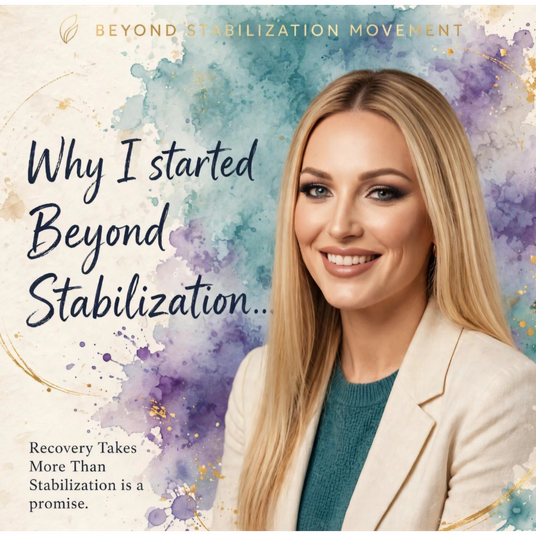
The Beyond Stabilization Movement Podcast The Beyond Stabilization Movement Podcast gives a voice to the people living through the mental health system—individuals, families, caregivers, advocates, and communities. We talk honestly about what happens after the crisis, from psychiatric discharge and gaps in care to recovery, caregiver struggles, advocacy, peer support, and meaningful change. This is a place for real stories, education, difficult conversations, and solutions. Because stabilization should never be the end of the journey. It should be the beginning of recovery.
Why Stabilized Isn’t The End
AI
Episode 2 Beyond Stabilization Founder Tammy Willoughby — Why “Stabilized” Isn’t the End of the Story is framed as an eye‑opening introduction to the realities families face after a loved one leaves crisis care. The episode explains that stabilization is only the first milestone, not the finish line, and that life after discharge requires structure, support, and long‑term planning. It highlights the gap between what families are told (“they’re stable now”) and what they actually experience at home — fragile progress, inconsistent insight, and the need for ongoing treatment. The tone is steady, compassionate, and educational, guiding listeners toward a clearer understanding of what true recovery looks like and why stabilization is only the beginning of the journey.
Anosognosia: When Someone Doesn’t Believe They’re Ill
Episode 2 — Anosognosia: When Someone Doesn’t Believe They’re Ill In this episode, Tammy Willoughby explains anosognosia, the neurological condition that prevents a person from recognizing their own mental illness. Tammy breaks down why insight disappears, how families can respond without escalating conflict, and what approaches actually help someone move toward stability. This episode offers essential clarity and compassion for anyone supporting a loved one who truly cannot see their symptoms — and shows families they are not alone.
Long-Acting injectables Stability, Safety and Hope
Episode 3 — Long‑Acting Injectables: Stability and Safety In this episode, Tammy Willoughby breaks down how long‑acting injectables (LAIs) create stability for individuals living with serious mental illness. Tammy explains why LAIs reduce crisis cycles, improve safety, and support insight — especially for people who struggle with daily medication. She also shares how families can advocate for LAIs, what to expect during treatment, and why these medications are often a turning point toward long‑term recovery. A must‑listen for families seeking practical tools that truly make a difference.
Beyond Stabilization :Life After Discharge
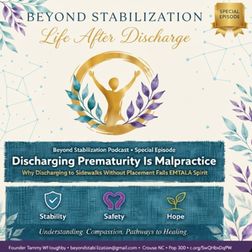
Beyond Stabilization: Life After Discharge Advocacy Podcast for Serious Mental Illness Welcome to Beyond Stabilization: Life After Discharge. I’m your host. This is where we refuse to accept the revolving door of psychiatric hospitalization as inevitable. Today we focus on the most critical and neglected stretch of recovery: life after discharge. The crisis ends. The paperwork is signed. Then what? Too often—not enough. Incomplete plans. Medication gaps. No warm handoff. Families left alone. Another preventable readmission waiting. Recovery after discharge is possible. The system can do better. The first 30–90 days carry high risk for relapse. Structure vanishes. Sleep breaks. Medications adjust. Residual symptoms and emotional weight remain. The Stress-Vulnerability Model shows biological sensitivity plus stress can trigger crisis. Protective factors—consistent medication, sleep, structure, early warning signs, support—can prevent it. Yet systems treat discharge as an endpoint. We demand mandatory person-centered plans with: confirmed outpatient appointments within 7–14 days, medication continuity (including long-acting injectables when appropriate), crisis contacts and early-action plans, peer support before leaving the unit, and family education. Anything less is abandonment. Create a gentle re-entry plan: rest, medication consistency, regular sleep and meals, short movement. Avoid major decisions. Review the discharge plan within 48 hours. Build a clear support team with defined roles. Strengthen protective factors: treat adherence as teamwork (organizers, apps, or long-acting injectables), prioritize sleep, keep simple daily structure, and create a shared early-warning-sign plan. Use grounding, gentle thought-challenging, small activity scheduling, and brief mindfulness. Rebuild identity beyond the patient role. Celebrate specific small victories. Explore strengths and meaningful activity. Recovery builds a more resilient normal. Evidence shows long-acting injectables improve adherence and reduce relapse and hospitalization. Options range from every two weeks to every six months. They remain underused, often saved for last resort. Every discharge conversation should include informed discussion of these options through shared decision-making—not coercion. With doctors: bring history, goals, and questions about suitable options, frequency, monitoring, logistics, and success measures. Frame around recovery goals. With a loved one: lead with curiosity, not pressure. Understand the “why.” Validate concerns. Link options to their values. Offer collaboration and peer input. Coercion damages trust. Relationship and autonomy are the long game. We need universal comprehensive discharge planning and warm handoffs; expanded access to long-acting injectables without barriers; peer specialists on units and post-discharge teams; family education as standard care; and success measured by fewer readmissions plus better quality of life and hope. Policymakers, hospitals, insurers, and clinicians: recovery before release is required. Continuity of care is not optional. The revolving door can stop. You are not starting from zero. Surviving crisis was strength. With consistent steps and a system that prioritizes continuity, the next chapter can be defined by resilience. Resources: NAMI, peer recovery communities, coordinated specialty care, and 988. Work with your team. You are not alone. This has been Beyond Stabilization: Life After Discharge. Share this. Demand better discharge practices. Keep showing up for recovery—one stable day at a time.
The New Asylum: Jails How Serious Mental Illness, Homelessness, and a Broken Promise of Community Care Turned American Jails into the Default Institutions for the Severely Ill
“The New Asylum: Jails” Beyond Stabilization founder Tammy Willoughby examines how untreated serious mental illness and homelessness have turned American jails into the default institutions for people with SMI. It traces the problem to the incomplete implementation of the 1963 Community Mental Health Act—the last major bill signed by President John F. Kennedy—which promised community-based care to replace large state hospitals but left a vacuum of housing, treatment, and support. Tammy talks about how mental healthcare is long overdue for systemic reform focused on continuity of care, supportive housing, and alternatives to incarceration.
Court Orders and Recovery for SMI
Beyond Stabilization — Court Orders and Recovery for SMI Most mental health systems stop at crisis stabilization — a safe discharge, not a sustained recovery. Beyond Stabilization closes the chasm between hospital and home that creates the revolving door: stabilize → discharge prematurely → return to unstable environment → rehospitalize. We replace that cliff-edge with a 5-pillar continuum: Transitional Care, Step-down Residential, Trauma-informed Recovery Support, Family Reintegration, and Long-term Continuity of Care. Our mantra: Housing + Healing + Choice = Stable. Housing First is non-negotiable — clinical gains don't stick without a door that locks. Peer support within 24 hours, shared decision-making on meds including long-acting injectables as a choice not mandate, family reintegration, and clear exit pathways. On court-ordered care (AOT/Assisted Outpatient Treatment): A court order can compel attendance but can't create insight, identity or hope. It only works when embedded in high-quality voluntary services. Without robust outpatient capacity, a mandate is a hollow gesture. Bottom line: Stabilization is the beginning of healing, not the end of treatment. Recovery isn't an event — it's a relationship. Recovery takes a system willing to deliver care before crisis. Sign the Pledge: c.org/5wQHbxdQpW