Behind the Commit

Behind the Commit

by Mia Bajić
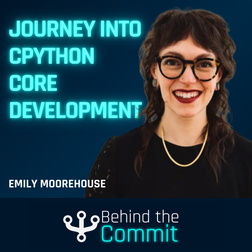
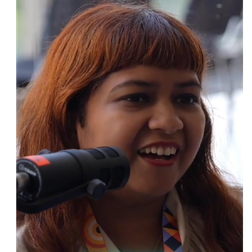
Emily Morehouse: Becoming a CPython Core Dev, the Walrus Operator and Chairing PyCon
In this episode, I'm chatting with Emily Morehouse — CPython core developer, former Python Steering Council member, PSF Fellow, and co-founder and director of engineering at Cuttlesoft. She holds three degrees in theater, computer science, and criminology, and picked up Python in college simply because it was more fun than C++. After Guido van Rossum announced at a Python conference that he wanted more women in CPython core development, she emailed Guido. He said yes and personally mentored her. She went on to implement the walrus operator (:=), one of the most controversial features in Python's history and one of the things that ultimately led Guido to step down as BDFL. She also chaired PyCon US for three years, two of which went fully online during the pandemic. Outline 0:00 Episode highlights 0:26 Introduction 1:02 "If someone told you 10 years ago you'd be a core developer…" 1:47 Three degrees: theater, CS, and criminology 1:54 Journey into core development 2:43 Guido's call for female core developers 3:08 "My husband was elbowing me in the side" 3:20 What were you afraid of? 3:57 She emailed Guido — and he said yes 4:34 First language summit: realizing experts are human 5:08 What it's actually like to be mentored by Guido 5:43 The async Friday ritual with Guido and Eric Snow 6:22 Why there's no low-hanging fruit in CPython 7:10 Implementing the Walrus operator (:=) 8:27 Support from the core developer community 8:32 How to inspire more people into core development 9:38 People still reach out years later 10:04 Chairing PyCon US through a pandemic 11:05 What community work teaches you about leadership 12:54 How parenthood changed her relationship with open source 13:59 Practical first steps to contribute to CPython 14:56 Outro Episode links – CPython dev guide: https://devguide.python.org – Cuttlesoft: https://cuttlesoft.com – Emily on GitHub: https://github.com/emilyemorehouse
Emily Morehouse: Becoming a CPython Core Dev, the Walrus Operator and Chairing PyCon
In this episode, I'm chatting with Emily Morehouse — CPython core developer, former Python Steering Council member, PSF Fellow, and co-founder and director of engineering at Cuttlesoft. She holds three degrees in theater, computer science, and criminology, and picked up Python in college simply because it was more fun than C++. After Guido van Rossum announced at a Python conference that he wanted more women in CPython core development, she emailed Guido. He said yes and personally mentored her. She went on to implement the walrus operator (:=), one of the most controversial features in Python's history and one of the things that ultimately led Guido to step down as BDFL. She also chaired PyCon US for three years, two of which went fully online during the pandemic. Full episode coming soon!
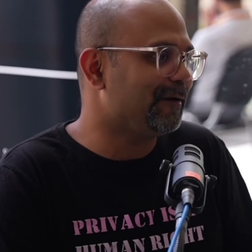
Is Your Vacuum Cleaner Spying on You? Kushal Das on Privacy and Digital Rights
In this episode, I'm chatting with Kushal Das — public interest technologist, core team member at the Tor Project, core developer of CPython, and director at the Python Software Foundation. He is also the founder of dgplug and a maintainer of SecureDrop — the platform journalists use to communicate securely with whistleblowers. We talk about why privacy is increasingly hard to protect, the hidden cameras in your robot vacuum cleaner, what happens to data once it leaves your hands, and what any developer can do right now to build more privacy-respecting software. Outline 0:00 Episode highlights 0:17 Introduction 0:38 "Privacy is a human right" — is it? 1:22 What turned Kushal from technologist to privacy advocate 2:57 SecureDrop: what it is and who it protects 3:33 How SecureDrop works in practice 5:36 Biggest technical challenges building SecureDrop 6:35 Helping people living under authoritarian regimes 10:38 Vacuum cleaner cameras and the toilet photo incident 11:44 The year hackers took over vacuum cleaners and shouted at owners 13:44 Why Kushal removed Alexa from his home 16:08 Social media as a surveillance tool 18:24 Stalkerware: when someone close to you is tracking your every move 19:31 Cambridge Analytica, the Great Hack, and election manipulation 21:43 Are governments fast enough to regulate technology? 22:55 Once you upload something to the internet, it never comes back 25:20 AI tools and what happens to the data you share with them 35:15 "If you break encryption, it will be broken for everyone" 37:36 How to fight for privacy 40:04 EFF, Tor Project, and where to get involved Episode links – Tor Project: https://www.torproject.org – SecureDrop: https://securedrop.org – EFF: https://www.eff.org – Stop Stalkerware: https://stopstalkerware.org – dgplug: https://dgplug.org – Kushal's blog: https://kushaldas.in
Trailer – Is Your Vacuum Cleaner Spying on You? Kushal Das on Privacy and Digital Rights
Trailer
In this upcoming episode, I chat with Kushal Das — core team member at the Tor Project, core developer of CPython, and director at the Python Software Foundation. We talk about the hidden cameras inside your robot vacuum cleaner, why encryption is non-negotiable, and what it actually takes to protect people's privacy online.
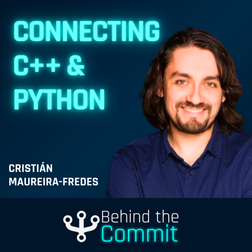
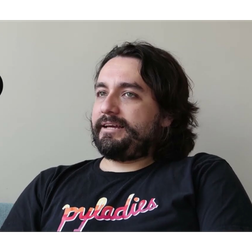
The Best of Two Languages: Connecting C++ & Python with Cristián Maureira-Fredes
Have you ever wondered what astrophysics has in common with the software running in your car, your coffee machine, and NASA's internal tools? In this episode, I sit down with Cristian Maureira-Fredes, a PhD in Astrophysics who decided to leave academia to join the software industry. Today, he is a Research and Development Principal Manager at The Qt Company, where he leads the team behind Qt for Python (PySide6) and the Qt Core team. Outline: 00:00 The persistence of C++ in industry 00:14 Introducing Kristian: From Astrophysics to Qt 01:13 The history and Open Source roots of Qt 02:58 Why we can’t just "rewrite" C++ in Rust 03:52 How PySide (Qt for Python) bindings work 05:07 The challenge of finding new C++ contributors 06:17 Impact of LLMs on understanding complex code 07:34 Qt in the real world: NASA, cars, and coffee machines 08:50 Why Qt uses Gerrit instead of GitHub 10:36 Where does the name "Qt" come from? 11:15 Conclusion
Trailer – The Best of Two Languages: Connecting C++ & Python with Cristián Maureira-Fredes
Trailer
What does a PhD in Astrophysics have in common with the software running in your car, your coffee machine, and NASA’s internal tools? In this episode I sit down with Cristian Maureira-Fredes, a Research and Development Principal Manager at The Qt Company. Cristian leads the team behind Qt for Python (PySide6) and the Qt Core team.
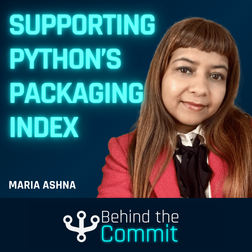
Inside PyPI: Maria Ashna on Supporting Python's Package Index
In this episode, I'm chatting with Maria Ashna — PyPI support specialist at the Python Software Foundation and founder of Magic Lightbulb, a tech and product consulting firm. PyPI serves nearly a million developers and is the backbone of Python's entire package ecosystem — maintained by a team of just four people. Maria shares what her role actually looks like day to day, how she cleared a backlog that was delayed by over a year, what happens when a package maintainer passes away, and what's coming next for PyPI organizations. Outline 0:00 Episode highlights 0:45 Introduction to Maria Ashna 1:11 What does a PyPI support specialist actually do? 2:07 The history of PyPI — born in 2003, formerly "the cheese shop" 2:47 How many people work on PyPI? 3:27 Most common support issues: account recovery and 2FA 3:48 2FA is now 100% mandatory on PyPI 4:10 Clearing a 500+ ticket backlog delayed by over a year 6:14 What is PEP 541? 7:01 What happens when users don't respond? 8:07 The edge case nobody thinks about: users who have passed away 8:30 How to open a ticket with the PyPI team 10:43 PyPI Organizations: what are they and who are they for? 13:17 Is PyPI going commercial? (No) 15:01 Nearly 1 million users, team of 4 15:38 How do you actually pronounce PyPI? 16:13 Where to find Maria online Episode links – PyPI: https://pypi.org – PEP 541: https://peps.python.org/pep-0541/ – Maria on GitHub: https://github.com/despy-brain – Contact Maria: maria@python.org
Trailer – Inside PyPI: Maria Ashna on Supporting Python's Package Index
Trailer
In this upcoming episode, I chat with Maria Ashna, PyPI support specialist at the Python Software Foundation. We discuss what it's actually like to support nearly a million Python developers with a team of four, the edge cases nobody thinks about, and what PyPI was called before it was PyPI. Full episode coming out soon!
Why Python is Slow: Antonio Cuni on SPy and Statically Compiled Python
Antonio Cuni (principal engineer at Anaconda, author of SPy, developer of PyScript and PyPy, co-founder of the HPy project, and creator of PDB++, Fancy Completer, and VMProf) shares why Python is slow and how SPy, a new statically compiled variant of Python, aims to be as fast as C while staying as Pythonic as Python. We discuss the trade-off between dynamic features and performance, how SPy's "red and blue" code model replaces best-effort JIT with predictable errors, why PyPy struggles with C extensions, and what "Pythonic" really means. Outline 00:00 - Episode highlights and introduction 00:40 - Why is Python so slow? 01:31 - Would a static Python be fast? 02:13 - What is SPy? 02:28 - What motivated you to create SPy? (Spoiler: frustration) 03:52 - Which ideas from PyPy and HPy went into SPy? 06:36 - Biggest challenges of building SPy 07:49 - What does "Pythonic" actually mean? 10:39 - Current roadmap and the two-level language idea 12:24 - Walking through the SPy compilation pipeline 13:57 - Red-shifting and the blue/red AST nodes 14:40 - Why blue and red? (No, it's not from The Matrix) 15:52 - PyPy vs SPy: when to use which 19:34 - C extensions and the C API problem 20:04 - How to actually make your Python code faster 23:34 - Memory management and garbage collection in SPy 24:44 - When will SPy be production-ready? 25:44 - How to contribute to SPy 26:26 - Where does the name "SPy" come from? Note: the episode was recorded in July 2025 and some features, such as list type, garbage collector, and documentation, have been implemented in the meantime. In the section below you can find the links to those features. Episode links – SPy on GitHub: https://github.com/spylang/spy – PyPy: https://pypy.org/ – HPy project: https://hpyproject.org/ – PyScript: https://pyscript.net/ – Anaconda: https://www.anaconda.com/ – decorators in SPy: https://github.com/spylang/spy/pull/225 – SPy roadmap: https://github.com/spylang/spy/blob/main/ROADMAP.md – list type in SPy: https://github.com/spylang/spy/blob/main/stdlib/_list.spy – garbage collector in SPy: https://github.com/spylang/spy/pull/390 – SPy documentation: https://spylang.github.io/docs/dev/ – series of blog posts on SPy: https://antocuni.eu/2025/10/29/inside-spy-part-1-motivations-and-goals/
Trailer – Why Python is Slow: Antonio Cuni on SPy and Statically Compiled Python
Trailer
In this upcoming episode, I chat with Antonio Cuni, the creator of SPy and long-time PyPy developer. We discuss why Python is slow, how a statically compiled Python variant can be as fast as C while still feeling Pythonic, and the "red and blue" model behind SPy's compilation pipeline. Full episode coming out soon!
1 of 3