Beasts of the Ancient World: Field Notes

Beasts of the Ancient World: Field Notes

by sciflix.one | Creature Horror & Folklore Audiobooks
The Wild Hunt Riders - Horror Documentary for Sleep
AI
A Beasts of the Ancient World: Field Notes episode. Across Europe, from the German territories to the Scandinavian coast, the Wild Hunt is known by many names: the Wütende Heer, Oskoreia, Gabriel's Hounds, the Mesnie Hellequin. Folklorists have long categorized these spectral riders as pagan survival, Christian demonization, or seasonal ritual encoded in narrative. This Field Note follows the older record carefully, not because it proves the legend, but because the pattern of observation is too consistent to dismiss inside the archive. Between 1100 and 1700, parish clerks, millers, ferrymen, and forest wardens documented auditory anomalies, sudden livestock deaths, and structural damage that correlated directly with severe winter storms. These accounts were consistently filed under administrative conveniences such as exhaustion, vagabond activity, or overwork. The explanations were functional, allowing the institutions to continue operating, but they were not correct. This fictional natural-history record reexamines the archived evidence of the Wilde Jagd. It separates the directly perceived auditory phenomena from the culturally reconstructed visual elements, exploring how practical survival knowledge was transmitted across generations through local custom, unspoken household rules, and a quiet refusal to travel certain roads after dark. Written by Sascha Schmidt, creator of the Beasts of the Ancient World lore.
The Mare (The Night Demon) - Horror Documentary for Sleep
AI
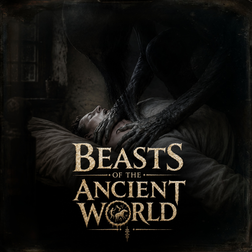
A Beasts of the Ancient World: Field Notes episode. This Field Note examines the folklore of the Mare, the Alp, and the Drude, tracing the scattered records of a nocturnal presence that has occupied the sleep chambers of Central Europe for centuries. Rather than treating these accounts as supernatural hauntings, the archive reconstructs the biology of a soft-bodied, boneless organism adapted to live within the architectural past. From the wattle-and-daub walls of alpine dairies to the straw pallets of Prussian barracks, the creature has persisted by exploiting the enclosed microclimates humans build to survive the winter. The manuscript follows a pattern of historical misclassification, observing how villages, clergy, and military courts translated the physical pressure of an unseen organism into moral failing, demonic visitation, and witchcraft. By reading against the grain of parish ledgers and hospital records, a consistent biological profile emerges. The entity navigates by the carbon dioxide of exhaled breath, drapes its mass across the sternum of sleeping hosts to harvest panic chemistry, and breeds in the organic substrate of old mattresses. This is a fictional natural-history record presented in a calm, observational tone. It treats the bedroom as an ecosystem and the folklore of the nightmare as a compressed, sensory-accurate memory of a real biological interaction. The Field Note follows the older records carefully, not because they prove the legend, but because the pattern of observation is too consistent to dismiss inside the archive. Written by Sascha Schmidt, creator of the Beasts of the Ancient World lore.
The Nibelung Mist Spirit - Horror Documentary for Sleep

AI
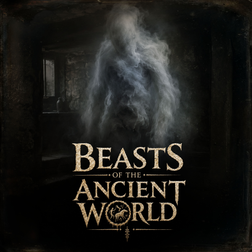
A Beasts of the Ancient World: Field Notes episode. This Field Note examines the Nebelvolk, the mist spirits of the Central German Uplands, the Harz foothills, and the Thuringian Forest. Across centuries of mining records, parish registries, and building modifications, local folklore has compressed these phenomena into tales of territorial guardians and gray shadows. This episode reframes those accounts as a sustained natural-history record of organized atmospheric organisms that maintain saturated microenvironments and extract organic material from their surroundings. The manuscript traces a continuous pattern of human adaptation from the sixteenth century to the modern era. It details the architectural folklore that developed in response, including raised thresholds, bricked windows, and sealed cellars designed to isolate the damp rooms these beings inhabit. Historical accounts from midwives, mining foremen, and forestry workers document the respiratory distress, unexplained condensation, and localized fog retention that characterize these encounters. This fictional documentary archive explores the biological logic of entities that do not eat in a conventional sense but alter their environment to the detriment of human occupants. It follows the older records carefully, not because they prove the legend, but because the pattern of observation is too consistent to dismiss inside the archive. Written by Sascha Schmidt, creator of the Beasts of the Ancient World lore.
The Dwarf - Horror Documentary for Sleep

AI
A Beasts of the Ancient World: Field Notes episode. This Field Note examines the administrative and parish records of Central European mining districts, where encounters with a subterranean entity were historically compressed into the folklore figure of the mining dwarf. The episode traces the Alberich-type not as a supernatural trickster, but as a reclusive, cave-dwelling organism occupying a deep-subsurface ecological niche. By reading against the grain of medieval tribunal confessions, smelter household inventories, and imperial timber reports, the archive begins to reveal a biological interface. Human excavation expanded the entity’s habitat, creating a convergent exploitation where miners followed the entity’s mineral excretions to find rich ore, while the entity followed human timber to cultivate fungal gardens. The manuscript details the anatomical and ecological logic of this species, from atrophied visual systems and elongated tactile digits to the heavy-metal processing that stained its skin grey and poisoned the surface dwellers who encountered it. Historical events previously classified as diabolical pacts, pagan survivals, or contagious miasma are re-evaluated as territorial enforcement and heavy metal contamination. The low-frequency acoustic pulses used by the entity to maintain its gallery boundaries caused severe vestibular disruption in human workers, a physiological failure that historical records consistently misidentified as madness or binding contracts. Presented as a fictional natural-history archive, this episode reconstructs the quiet, indifferent brutality of two species digging in the same rock for different reasons. It explores the grey dust on infant bedding, the unexplained yield anomalies, and the catatonic guards left behind in sealed shafts, tracing the fading of these encounters as modern industrial mining destroyed the deep-subsurface niche. The Field Note follows the older records carefully, not because they prove the legend, but because the pattern of observation is too consistent to dismiss inside the archive. Written by Sascha Schmidt, creator of the Beasts of the Ancient World lore.
The Changeling - Horror Documentary for Sleep

AI
A Beasts of the Ancient World: Field Notes episode. This Field Note examines the changeling, not as the word from the stories, but as the creature documented across centuries of parish books, poorhouse admissions, and household ledgers. The episode traces a consistent pattern of infant substitution recorded across Western Ireland, the Scottish Hebrides, and the North German plain. These archival fragments describe a creature with coarse hair, natal teeth, and a metabolic demand that human households could not sustain. The manuscript details the physical and behavioral anomalies that separate the creature from a sick human infant. It explores the biological logic behind the folklore, treating the historical accounts as observational data rather than superstition. The records show a creature perfectly integrated into human domestic ecology, exploiting reproductive biology and infant care structures. This fictional natural-history archive assembles the physical descriptions, the anomalous feeding behaviors, and the terminal phases of the creature. It follows the older records carefully, not because they prove the legend, but because the pattern of observation is too consistent to dismiss inside the archive. Written by Sascha Schmidt, creator of the Beasts of the Ancient World lore.
The Boggart (The Household Haunter) - Horror Documentary for Sleep

AI
A Beasts of the Ancient World: Field Notes episode. This Field Note examines the boggart, a figure deeply embedded in British folklore, reconstructing it not as a supernatural spirit but as a biological organism adapted to the structural gaps of human habitation. Drawing on centuries of parish ledgers, coroners' reports, and tenant records from Yorkshire, Lancashire, and beyond, the episode traces a consistent pattern of unexplained marks, localized infant and animal deaths, and the persistent mustiness of compromised building cavities. The manuscript details the creature's hydrostatic anatomy, its sensory clusters, and its reliance on the biological film of human-occupied spaces. It explores how historical families, lacking a modern biological framework, developed practical interventions—such as avoiding specific corners, altering speech patterns, and leaving offerings—that inadvertently reduced contact with the organism. These survival mechanisms allowed households to remain in procedurally difficult tenancies without triggering the institutional attention that would lead to eviction. Presented as a calm, observational archive of dark natural history, this fictional field-note episode follows the older records carefully, not because they prove the legend, but because the pattern of observation is too consistent to dismiss inside the archive. Written by Sascha Schmidt, creator of the Beasts of the Ancient World lore.
The Jötnar (The Giants) - Horror Documentary for Sleep
AI
A Beasts of the Ancient World: Field Notes episode. This Field Note reexamines the jötnar of Norse mythology, not as mythological gods or demonic entities, but as a surviving species of massive, slow-moving mammal inhabiting the high country of Scandinavia. Drawing on centuries of misclassified archival records, the episode traces a pattern of anomalous livestock deaths, crushed bones, and abandoned pastures from the Iron Age to the modern era. It presents a biological premise where folklore functions as a behavioral adaptation, enforcing a safe distance between human communities and an animal too large and durable to be hunted. The manuscript details the creature’s anatomy, territorial behavior, and profound winter lethargy, explaining how its mineralized, lichen-covered skin allows it to become indistinguishable from the bedrock. Historical accounts of bad air, symmetrical bruise patterns, and moving hills are stripped of their supernatural framing to reveal a consistent natural history. This episode follows the older records carefully, not because they prove the legend, but because the pattern of observation is too consistent to dismiss inside the archive. Written by Sascha Schmidt, creator of the Beasts of the Ancient World lore.
The Lindworm Dragon - Horror Documentary for Sleep
AI
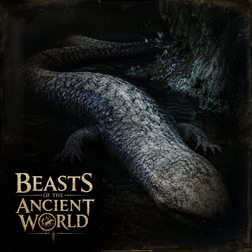
A Beasts of the Ancient World: Field Notes episode. Across the Alpine arc, the Carpathian basin, and the Dinaric ranges, historical records repeatedly describe encounters with a large, subterranean creature known in folklore as the Lindwurm, Drac, or Wyrm. This Field Note examines the administrative residues, parish ledgers, and mining reports documenting the animal’s presence, tracing a consistent pattern of biological evidence hidden beneath local myths. From crushed livestock and toxic shed skins to mysterious heavy-metal contamination in medieval wells, the archive points to a blind, venomous predator occupying the deep limestone passages. The episode details the organism’s anatomy, its copper-based blood, and its reliance on the underground water table. It explores how the creature’s constriction and sulfuric venom generated the historical myths of fire-breathing and hoarded gold, explaining how human communities relied on procedural fictions to process these lethal encounters without abandoning essential mines and water sources. The folklore is treated not as a fantastical invention, but as a compression engine for survival information. This fictional natural-history record reconstructs the animal’s life cycle, territorial behavior, and slow ecological timescale. It follows the older records carefully, not because they prove the legend, but because the pattern of observation is too consistent to dismiss inside the archive. Written by Sascha Schmidt, creator of the Beasts of the Ancient World lore.
The Barghest (The Black Dog) - Horror Documentary for Sleep

AI
A Beasts of the Ancient World: Field Notes episode. This Field Note examines the black dog of Britain and Northern Europe, not as a supernatural monster, but as a convergent perceptual-ecological phenomenon preserved within historical archives. Moving beyond medieval superstition, the episode traces the creature through coroner's inquests, poor law accounts, railway accident reports, and the private casebooks of midwives and physicians. It explores how the folklore emerged not from fantasy, but from the brutal intersection of high mortality, population movement, and degraded environmental conditions. The manuscript reveals how the black dog propagates not as a story, but as a practical adjustment. From a mail coach driver permanently rerouting his path to avoid a dead carrier, to workhouse officials bricking up a corridor associated with typhus deaths, the phenomenon survives in architectural modifications and unexplained ledger expenses. The folklore acts as a compression mechanism, preserving the correlation between anomalous encounters and terminal physiological events while losing the underlying mechanism. This fictional natural-history record observes how human populations under physiological stress, moving through unfamiliar terrain in conditions of low visibility, consistently produce these encounters. It is a quiet, observational study of how knowledge survives when it cannot be spoken, persisting as habit, as architecture, and as administrative residue in the gaps between what was recorded and what was actually experienced. Written by Sascha Schmidt, creator of the Beasts of the Ancient World lore.
The Black Death - Horror Documentary for Sleep
AI
A Beasts of the Ancient World: Field Notes episode. In the fourteenth century, parish clerks, hospital stewards, and grave-diggers across Europe recorded encounters with a tall, dark figure standing at the bedsides of the dying. Known by names such as Der schwarze Tod, la Morte Nera, and the black visitor, the entity was documented in burial registers, toll ledgers, and private notebooks. This Field Note follows the older record carefully, not because it proves the legend, but because the pattern of observation is too consistent to dismiss inside the archive. This fictional natural-history archive reinterprets the folklore of the Black Death as the behavior of a mobile, composite colony organism. The manuscript traces the entity’s biological lifecycle, from dormant dust in mass burial pits to its assembly from human bone and dark tissue. It examines the physical traces left behind in sickrooms, including black oily residues, sweet-rot odors, and the mechanical, jerky movement that later generations compressed into the Danse Macabre. By examining administrative debris from London to Avignon, the episode reconstructs the ecological function of the creature. It explores how the entity farmed the dead, spreading concentrated plague bacteria through its venting spores, and how medieval interventions like lime washing and sulfur burning accidentally disrupted its chemical processes. The records remain quiet, restrained, and precisely observed, mapping a historical horror that operates entirely within the bounds of natural law. Written by Sascha Schmidt, creator of the Beasts of the Ancient World lore.
1 of 2