The Art of Adventure

The Art of Adventure

by Arthur Beale
Season 2
The Last Tourist in Russia
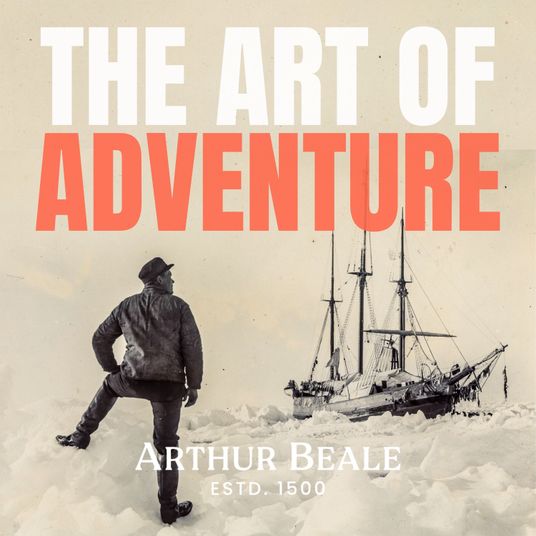
In February 2022, Charlie Walker flew to Russia to travel 600 miles alone across Arctic Siberia. Five days later, Russia invaded Ukraine. He had a narrow window to get out - and chose to stay and finish the trip, becoming very possibly the last Western tourist in Russia. Walker set off on foot from the coldest inhabited place on earth, hiking frozen rivers and ice roads in temperatures down to minus 50. The expedition itself mostly went to plan. The problem was everything around it. With independent media silenced and a new law threatening 15 years in prison for "fake news" about the war, his presence was logged village by village and reported. By the time he reached the coast, he was expected. What followed was an interrogation, a fabricated case, and four weeks in a Russian prison - with the real risk of becoming a bargaining chip - before he was finally deported. Charlie Walker - adventurer, author and Fellow of the Royal Geographical Society - joins Hugh to tell the full story: why he carried on after the invasion, how he talked about the war without being drawn on it, the memory cards he had to keep hidden, and what it's like to be locked up abroad with no idea when, or whether, you'll get out. Charlie's book, On Thin Ice: An Explorer's Memoir of Siberia, Surveillance, and Survival, is out now from Duckworth. The Art of Adventure is brought to you by Arthur Beale, outfitters to sailors, adventurers, vagabonds and explorers for over 500 years. Find out more at arthurbeale.co.uk. Listeners get 15% off with the code PODCAST at checkout.
Theodore Roosevelt's Last Great Adventure: The River of Doubt
In 1914, former US President Theodore Roosevelt nearly died in the Amazon. Feverish and delirious from an infected wound, he asked his son to leave him behind — and carried a lethal dose of morphine in case the end came. Roosevelt had gone to Brazil after losing the 1912 election, the strongest third-party run in American history. A planned speaking tour turned into an expedition to chart the River of Doubt, an uncharted Amazon tributary, alongside the Brazilian explorer Cândido Rondon. It went badly wrong: wrong boats, a drowned crew member, a murder among the men, malaria, starvation, and the leg injury that nearly killed Roosevelt before they reached safety. Dr Michael Cullinane, Walton Chair of Theodore Roosevelt Studies, joins Hugh to tell the full story — what happened on the river, how Roosevelt survived it, and why a man who had already been almost everything kept throwing himself at the unknown. For Roosevelt's own account, the Theodore Roosevelt Center holds a free digital archive of his letters home at theodorerooseveltcenter.org. Further reading: Candice Millard's The River of Doubt is the definitive account of the expedition, and Darrin Lunde's The Naturalist traces where Roosevelt's love of the wild began. The Art of Adventure is brought to you by Arthur Beale, outfitters to sailors, adventurers, vagabonds and explorers for over 500 years. Find out more at arthurbeale.co.uk. Listeners get 15% off with the code PODCAST at checkout.
Dismasted in the Southern Ocean: Lisa Blair's Solo Record Around Antarctica
Seventy-two days into her attempt to sail solo around Antarctica, more than 1,000 miles from the nearest land, Lisa Blair's mast came down in a storm. She was alone, outside rescue range, in the most hostile stretch of water on the planet. She fought through the night to save the boat and her life - and then, having lost the record she had spent years chasing, she had to decide what to do next. Lisa joins Hugh to tell the full story - and why she has learned to celebrate the small wins rather than the finish line. And she explains why the records were never really the point. In July 2027 she sets out on the Arctic Impact Project, an attempt to be the first person to sail solo, non-stop and unassisted around the Arctic Circle in a single season. It is a voyage that has only become possible because the ice is disappearing. Lisa Blair's book Facing Fear is out now: lisablairsailstheworld.com. Follow her on Instagram: https://www.instagram.com/lisablairsailstheworld/?hl=en The Art of Adventure is brought to you by Arthur Beale, outfitters to sailors, adventurers and explorers for nearly 500 years. Find out more at arthurbeale.co.uk. Listeners get 15% off with the code PODCAST at checkout.
Scott vs. Amundsen: Triumph and Tragedy (Part 2)
March 1912. Roald Amundsen has beaten Scott to the South Pole, outrun the winter ice, and telegraphed his triumph around the world. But back on the ice, Captain Scott and his men are still fighting for their lives — and no one yet knows their fate. In the conclusion of this two-part series, host Hugh Taylor is joined once more by historian Dr Max Jones - author of The Last Great Quest - to tell the other side of the story. Who was Amundsen, the meticulous Norwegian who made winning look almost easy? Why did Scott's tragic failure eclipse Amundsen's success in the public imagination? And how did a dying man's final journal turn defeat into one of the most enduring legends in British history? From the freak weather that sealed Scott's fate, to Oates walking out into the blizzard, the discovery of the tent, and a century of fierce debate over Scott's reputation — this is the story of how the race to the South Pole ended, and why we're still arguing about it today. The Art of Adventure is brought to you by Arthur Beale, outfitters to sailors, adventurers and explorers for nearly 500 years. Find out more at arthurbeale.co.uk.
Scott vs. Amundsen: The Race to The South Pole Begins (Part 1)
June 1910. Captain Robert Falcon Scott sets sail from Cardiff aboard the Terra Nova, convinced he has a clear run at the South Pole. Then a telegram arrives: "Beg leave to inform you Fram proceeding south. Amundsen." The race is on. In Part 1 of this two-part series, host Hugh Taylor is joined by historian Dr Max Jones - author of The Last Great Quest - to unpick the real story behind the Scott vs Amundsen rivalry. Who was Scott, really? Why was Britain so fixated on the Pole? And how did a bitter falling-out with Shackleton, a secret change of plan by Amundsen, and a fateful decision to take five men instead of four set the stage for one of history's most enduring tragedies? From naval ambition to the brutal reality of manhauling across the ice, this is the story of how the race to the South Pole began - and how Scott's party finally reached the Pole, and what they found when they arrived. The Art of Adventure is brought to you by Arthur Beale, outfitters to sailors, adventurers and explorers for nearly 500 years. Find out more at arthurbeale.co.uk. Listeners get 15% off with the code PODCAST at checkout.
Season 1
Sailing Solo Around the World Like It's 1968: The Golden Globe Race
In 1968, nine sailors set off on the first solo nonstop race around the world. Only one crossed the finish line. Sir Robin Knox-Johnston returned aboard Suhaili to claim the Sunday Times Golden Globe - while behind him, one competitor faked his positions, another sailed to Tahiti instead of the finish line, and a third pushed his boat so hard it fell apart 1,200 miles from home. Nearly fifty years later, Australian adventurer Don McIntyre decided to bring the race back. The rules were simple: sail around the world alone, without stopping, using only the technology available in 1968. No GPS. No satellite weather. No electronic instruments. Navigate by sextant, listen to music on cassette tapes, and if something breaks halfway round the world, fix it yourself or retire. Fewer than one in five who start the Golden Globe Race will finish it. Don joins Hugh to tell the full story: from his boyhood obsession with Knox-Johnston to the moment he decided to recreate the race that started it all. He explains why the GGR has become the purest test in ocean racing, why its followers are more gripped by short daily text updates than live satellite feeds from other races, and why — in an age of autopilots, AI, and nineteen-million-euro campaigns — stripping everything away and leaving one person alone with the sea might be exactly what the world needs. The 2026 Golden Globe Race starts from Les Sables-d'Olonne, France, on 6 September. Follow the race at goldengloberace.com. If you haven't seen it, the documentary The Voyage of Madman, covering the 2018 edition, is free on YouTube. Arthur Beale is an official partner of the Golden Globe Race. We have produced the exclusive clothing and accessory collection for the race — rooted in a heritage of craftsmanship that reflects the resilience, determination, and spirit needed for true adventure. The collection is available to buy from arthurbeale.co.uk from May 2026.
Gino Watkins: The Greatest Explorer You've Never Heard Of
In 1930, a 24-year-old Cambridge undergraduate named Gino Watkins led fourteen men to the east coast of Greenland on one of the most ambitious Arctic expeditions of the twentieth century. Their mission: to prove that aeroplanes could fly the Atlantic by mapping an unmapped coastline, discovering unknown mountain ranges, and manning a weather station in the middle of the Greenland ice sheet — through winter, in the dark, in winds of 130 miles per hour. Gino Watkins never lost a man. He discovered the highest mountains in the Arctic, became the first non-Inuit to master the Greenlandic kayak, and is now regarded as the godfather of British kayaking. By twenty-five, he had led three major expeditions and earned the Polar Medal from the King. And then, on a solo hunting trip during his next expedition, he disappeared - leaving only his kayak and his trousers behind. He was twenty-five years old. Nic Watkins, Gino's great-nephew and a filmmaker who has spent nearly a decade piecing together his story, joins Hugh to tell the full tale: the expeditions, the rescues, the family tragedies that shadowed Gino's short life, and what it was like to finally stand in the base camp where his great-uncle had lived, seeing in colour for the first time what he had only ever known in black and white. Find out more about Nic's documentary Bridging the Ice at bridgingtheicedoc.com, or visit nicwatkins.com. The film is distributed by Chip Taylor Communications at chiptaylor.com. Gino Watkins was himself an Arthur Beale customer - head to our website to see the telegram he sent from Greenland asking for an urgent restock of rope: arthurbeale.co.uk.
Solo to the North Pole: Pen Hadow
Pen Hadow appears by arrangement with DBA Speakers www.dbaspeakers.com In 2003, Pen Hadow became the first person to trek solo and without resupply from Canada to the North Geographic Pole - 770 kilometres across shifting sea ice, open water, and temperatures of minus 40. It is a feat that has never been repeated, and almost certainly never will be. But this is not the story of a single expedition. It is the story of a promise made to a dying father and fifteen years of refusing to give up. Pen joins Hugh to tell the full story: from a childhood toughened by the nanny who once looked after Captain Scott's son, to the moment he fell through the ice without his immersion suit just days from the Pole. He describes the paralysing effect of cold on decision-making, the protocols for surviving a polar bear encounter while swimming between ice floes, and why the hardest challenge of all was not physical - but managing the wild swings of emotion that come with being completely alone. He also explains what his years on the Arctic ice revealed about the disappearing sea ice, a discovery that has defined the second half of his life, and one he now shares with audiences around the world. Pen Hadow's book Solo is out now.
The Lost Franklin Expedition: What Really Happened?
In 1845, Sir John Franklin sailed from England with 129 men and two of the Royal Navy's finest ships, HMS Erebus and HMS Terror, to chart the last unmapped stretch of the Northwest Passage. They were expected back within three years. They were never seen again. What followed became one of the greatest mysteries in the history of exploration. Scattered bones on a frozen island. Inuit testimony of starvation and cannibalism. A hastily scrawled note in the margins of an Admiralty form. And a Victorian public that refused to believe its heroes could have met such an end. Russell Potter, one of the world's foremost Franklin scholars, joins Hugh to unpick nearly 180 years of searching, speculation, and discovery. He explains what we actually know, what we can only guess at, and why the mystery endures. Both ships have now been found, one remarkably preserved beneath the Arctic waters, but what lies within them has yet to be fully explored. From the fatal decision to abandon ship, to the race between Lady Franklin and the press, to the amateur sleuths and satellite hunters still searching today - this is a story that refuses to give up its secrets. We ask why the Franklin Expedition continues to grip us, what it reveals about the nature of obsession, and whether the answer might still be out there, waiting to be found. Russell Potter's book Finding Franklin: The Untold Story of a 165-Year Search is out now.
Navigating the Grand Canyon Like It's 1869: John Wesley Powell
In 1869, John Wesley Powell set off down the Colorado River with nine men, four wooden boats, and no idea what lay ahead. The Grand Canyon, 300 miles of unmapped canyon, unknown rapids, and sheer rock walls, was the last blank space on the map of the continental United States. Author John F Ross joins Hugh to tell the full story: how a one-armed Civil War veteran turned geologist became the first person to navigate the entire length of the Grand Canyon, racing against starvation through 360 rapids in boats that were entirely wrong for the job. From losing a third of their food supply on the very first day, to the desertion of three desperate men - it is a thrilling snapshot into a moment in time. We ask what Powell's extraordinary journey revealed about the American West, about leadership under impossible pressure, and about what it means to push into territory where no map can help you. John F Ross’ book The Promise of the Grand Canyon is out now. The Art of Adventure is brought to you by Arthur Beale, outfitters to sailors, adventurers and explorers for nearly 500 years. Find out more at arthurbeale.co.uk.
1 of 2