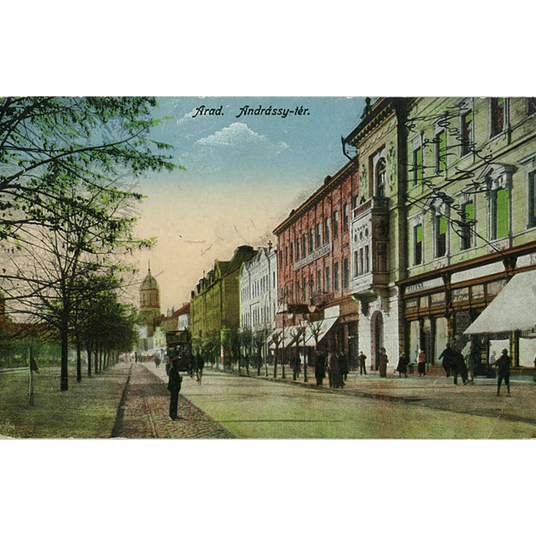
Discover Arad: a Hidden Gem of Central Europe

Discover Arad: a Hidden Gem of Central Europe

by Gabriel Roman, Puskel Péter, Ujj János, Király András, Lehoczky Attila, Muntean Tibor, Matekovits M
Season 1

History of Arad Fortress Franciscan Church
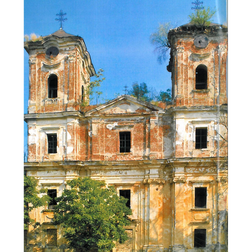
This collection of excerpts, primarily from a study titled "HISTORY OF THE FRANCISCAN CHURCH IN ARAD FORTRESS" compiled by Puskel Péter and translated in English by Gabriel Roman, provides an overview of the Franciscan Order's history and activities in the Banat region and Arad, particularly focusing on the Franciscan Church and Monastery within the Arad Fortress. The texts discuss the order's founding principles of poverty and its historical presence in Transylvania and Banat, detailing the establishment and evolution of the church building within the fortress, its architectural features resembling other Baroque structures in the region, and the daily life and property management of the monks. Furthermore, the documents touch upon the church's role and fate during the Hungarian revolution of 1848-1849, its subsequent transformation into a military hospital and later an Orthodox church, and its ultimate decline and current state of disrepair, emphasizing its significance as a historical monument. The source also includes a list of selective bibliography and acknowledgements of archived documents used. Read the full article at: https://www.arad.zone/blog-ar/file-din-istoria-bisericii-franciscane-din-cetatea-aradului

A History of the Arad Cultural Palace. Arad Philharmonic, Arad Museum Complex and Arad City Library
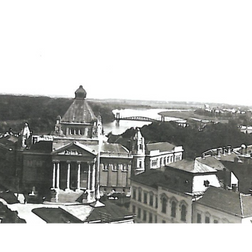
This excerpt from "A History of the Arad Cultural Palace" offers a detailed account of the institution's creation and early years, from 1913 to 1948. It discusses the centenary anniversary of the Palace, highlighting the personalities and significant events in its history. The text emphasizes the challenges and triumphs in bringing the Cultural Palace to fruition, from initial ideas and financial hurdles to the architectural design and inauguration. It also covers the impact of World War I and subsequent political changes on the Palace's functions and the evolution of its cultural offerings, including the museum, library, and concert hall. Finally, it touches upon the post-World War II period and the eventual division of the Cultural Palace into separate cultural entities. Written by Puskel Péter, in English by Gabriel Roman. Read the full history here: https://www.arad.zone/blog-ar/file-din-istoria-palatului-cultural-din-arad-1913-1948

The Magic of Early Film in Arad, rediscovering Early Arad Cinema and the neighborhood of Bohus Palace
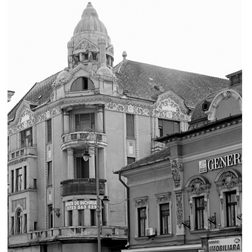
This source provides a detailed look into the history of early cinema in Arad, focusing on the Appolo movie theater and its importance as a pioneering venue for silent films and later, sound films. It highlights the impact of visiting film stars like Valdemar Psylander and Hungarian actor Jávor Pál, illustrating the public's fascination and the cultural significance of cinema. Additionally, the text offers a glimpse into the social and economic landscape of Arad around the turn of the 20th century, describing notable neighboring institutions such as the First Savings Bank of Arad, a People's Canteen that provided aid to the poor, and the building housing the influential newspaper "Românul" and its associated figures like Vasile Goldiș, painting a picture of a dynamic and evolving city. Recorded by Puskel Péter. In English by Gabriel Roman. Read the extensive article here: https://www.arad.zone/blog-ar/palat-pe-strada-zrinyi-mic%C4%83-monografie-a-palatului-bohus-din-arad-partea-ii-a

Arad's Bohus Palace - a marvel of art nouveau architecture
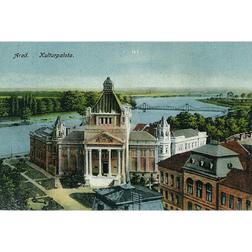
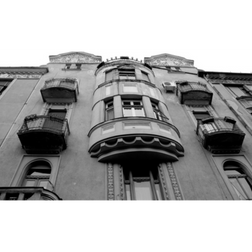
This monograph discusses the Bohus Palace in Arad, highlighting its significance as an iconic Art Nouveau building and its role as a central hub for economic, social, and cultural life in the early 20th century. The text explores the history of the Bohus family, their influence in the region, and the architectural design and features of the palace, including its pioneering use of reinforced concrete. It also describes the building's neighbors, its evolution over time, the various businesses and institutions it housed, including a notable cinema, and the artists who resided in its studios, while acknowledging its current state of disrepair and the challenges surrounding its restoration. Recorded by Puskel Péter. In English by Gabriel Roman. Read the full extensive history here: https://www.arad.zone/blog-ar/palat-pe-strada-zrinyi-mic%C4%83-monografie-a-palatului-bohus-din-arad-partea-i-a

Arad Architecture: Titans and Their Legacy. Crafting a City's Soul
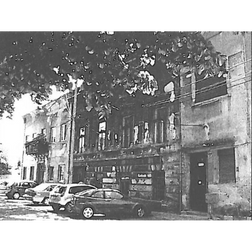
Puskel Péter's account, translated by Gabriel Roman, explores the significant architects who shaped the city of Arad. The text highlights individuals like Szántay Lajos and Milan Tabaković, detailing their notable creations such as the Cultural Palace and the “St. Anthony” Catholic Cathedral, respectively. It acknowledges other important designers and firms contributing to Arad's urban landscape, particularly during its period of prosperity. The narrative also touches upon the changing appreciation for these architectural titans over time, including instances of neglect and eventual recognition. Referencing various publications and studies on Arad's history and architecture, the source emphasizes the lasting impact of these figures on the city's identity. Read the full article at: https://www.arad.zone/blog-ar/proiectan%C8%9Bi-ai-palatelor-%C8%99i-bisericilor-din-arad-arhitec%C8%9Bii-ar%C4%83deni

Arad's hidden history: the red lantern district: brothels and entertainment
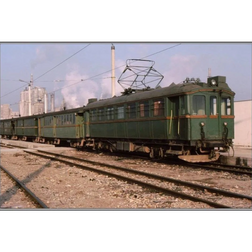
This episode recounts the history of Arad's former entertainment district, focusing on its brothels, inns, and social dynamics over the past century, including details about their operation, regulations, and eventual closure under communism. The source article from www.arad.zone offers a vivid portrayal of Arad's historic red-light district, centered around the former Fish Market area (now Heim Domokos Square). This neighborhood, once a hub of entertainment, featured a harmonious coexistence of inns, affordable hotels, taverns, and brothels. Frequented by a diverse clientele—including intellectuals, soldiers, craftsmen, and officials—it became an integral part of the city's social fabric. Notably, the district inspired literary figures like Imre Horváth and Ady Endre, who referenced it in their works. Over time, however, urban development and neglect led to the deterioration and demolition of many historic buildings, erasing much of this vibrant past. Today, the area serves as a poignant reminder of Arad's complex cultural and social history.

The Green Arrow: Arad-Podgoria Railway Story
This document presents a detailed history of the Arad-Podgoria Railway, also known as the "Green Arrow," a significant transportation link in the Arad region of Romania. It traces the railway's evolution from a proposed concept to its construction, electrification, and eventual decline, highlighting its technical importance as one of the world's earliest electrified railways and its enduring social and economic impact on the city of Arad and the surrounding wine-growing areas. The text also discusses the railway's current status as a nostalgic tourist attraction and a subject of historical interest, documenting efforts to preserve its legacy. ​The article on www.arad.zone provides an in-depth look at the historic Arad–Podgoria railway, affectionately known as "Săgeata Verde" or "The Green Arrow." This narrow-gauge railway, inaugurated in 1906 and electrified in 1913, was among the earliest electrified lines globally and the first in Eastern Europe. Read the full story here: https://www.arad.zone/blog-ar/a-pornit-la-drum-s%C4%83geata-verde-calea-ferat%C4%83-arad-podgoria

Arad's Marta Automobile Factory: A Pioneering History
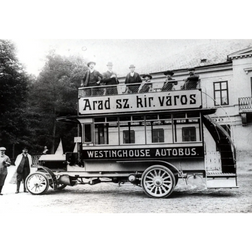
This document, recorded by Puskel Peter and translated by Gabriel Roman, chronicles the pioneering era of the automobile industry in Arad, focusing on the MARTA (Magyar Automobil Részvény Társaság Arad) Automobile Factory. The narrative details the factory's founding in 1908, its connection to Westinghouse, and its early production of various vehicles, including cars and buses. It also highlights Arad's broader industrial context, including its tramway history and collaboration with other companies. Despite facing financial difficulties and wartime requisition, MARTA played a significant role in Hungary's automotive history until its merger with Astra in 1925. The author suggests commemorating this legacy with a plaque and the restoration of the factory's administrative building.​The article on www.arad.zone offers a comprehensive look at the MARTA automobile factory in Arad, Romania, highlighting its significance as the first car manufacturing plant on the territory of modern-day Romania. Read the full story here: https://www.arad.zone/blog-ar/episoade-aradene-din-epoca-pionieratului-industriei-automobilistice-fabrica-de-automobile-marta-din-arad

The Neuman Family of Arad: Industrial Legacy and Philanthropy

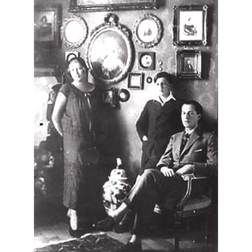
This historical account chronicles the Neuman family, prominent industrialists who significantly shaped the economic, social, and cultural landscape of Arad, Romania, from the mid-19th century into the 20th. Beginning with their establishment of a distillery that grew into a major industrial complex, the text highlights their philanthropic endeavors, their integration into Arad's public life, and the recognition they received, including noble titles. The narrative follows the family through periods of growth, challenges like fires and political shifts, and their adaptation to changing times, including nationalization under communism which led to the family's eventual departure. The later part of the source focuses on Baron Feri's significant role in World War II, his passion for sports, his escape from Romania, and the subsequent fate of the Neuman legacy aCentral European Citiesnd their industrial achievements in Arad.
5 of 5