
Klarna's AI Gamble: The $50M Mistake That Forced a Tech CEO to Admit He Went Too Far
AI
AI Edge Pro (en) by Dmitriy Dizhonkov
Apr 19, 2026
24:03
Episode notes
In February 2024, a single press release crashed the stock of one of the world's largest call center operators to a seven-year low — without a single lawsuit, merger, or earnings miss. The headline claimed an AI had just eliminated 700 jobs overnight. Wall Street panicked. The media ran with it. Almost everyone got the story completely wrong.
What Klarna actually did is far stranger — and far more instructive — than the ghost story that circulated in the press. The real sequence of events spans a valuation collapse of 85%, a secret architectural failure buried inside millions of customer conversations, and a CEO who eventually sat down on camera in 2025 and said words almost no tech founder utters during an AI hype cycle.
The cost of getting this wrong wasn't theoretical. It showed up on a balance sheet.
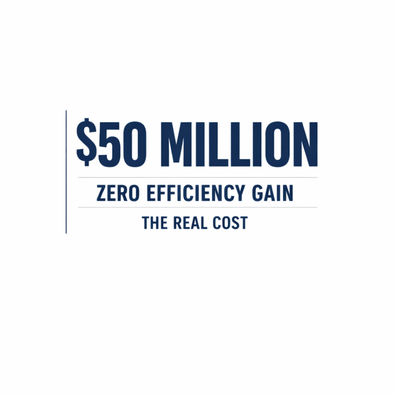
— Why did Klarna's customer service costs actually *increase* from $42M to $50M after deploying an AI system designed to eliminate those same costs?
— What is LangGraph, and why did Klarna's multi-agent architecture silently pass blank tickets to human agents — erasing every prior conversation?
— When a valuation craters from $45.6 billion to $6.7 billion in months, what does that pressure force an executive team to do that they would never attempt from a position of strength?
— Why did Swedish unions Unionen and Engineers of Sweden threaten to strike over an AI that was primarily replacing contractors in other countries?
— What specific category of customer query — not routine returns, not address changes — caused the entire system to structurally collapse?
— The CEO used one word on the 20VC podcast in early 2026 to describe his company's headcount trajectory toward 2030 — what was it, and why does it matter?
— If the AI was processing the equivalent of 800 full-time roles by 2026, why was Klarna simultaneously running a global rehiring campaign targeting university students?
Product managers watching AI deployments justify themselves on efficiency metrics, fintech operators building automation into core customer workflows, and executives preparing AI business cases for board approval will find a precise framework here — not for avoiding AI, but for understanding exactly where the algorithmic illusion shatters.
You cannot automate giving a damn. Klarna spent tens of millions of dollars in 2024 and 2025 to prove it.
🔑 Topics: Klarna · AI automation · buy now pay later · OpenAI · LangGraph · customer service AI · fintech · European labor unions · AI deployment · institutional knowledge · workforce automation · IPO 2025 · AI cost analysis · multi-agent AI · future of work · Sebastian Siemiątkowski
Keywords
AI 2026
Klarna AI Deployment
Buy Now Pay Later
OpenAI Integration
LangGraph Architecture
Customer Service Automation
AI Cost Analysis
Fintech Automation
Sebastian Siemiątkowski
Multi-Agent AI