Agua Cedito

Agua Cedito

by Manbo Pwofese Konnen Ki Fe
Season 2

Episode 54: Honoring the Female Spirits of the Petwo Nation in Haitian Vodou

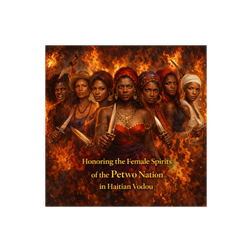
In this episode, we explore the meaning of the word ponya in Haitian Vodou and how it relates to many of the female spirits within the Petwo nanchon. We begin by explaining what this term represents in Vodou theology and how it reflects intensity, urgency, and the protective force often associated with certain Petwo lwa. From there, we move into a deeper conversation about sacred rage, looking at how the energy expressed by Petwo female spirits can be understood alongside the historical experiences of Black women. This part of the discussion helps reframe rage not as something destructive, but as a response to injustice and a force tied to survival, dignity, and protection. We close the episode by exploring several expressions of Petwo female spirits, including Ezili Je Wouj, Ezili Mapyang, Ezili Ke Nwa, Ezili 7 Kout Kouto, and Marie Louise. This final reflection highlights the diversity within the Petwo nanchon and invites listeners to understand these spirits as powerful expressions of resilience, protection, and spiritual strength within Haitian Vodou. Keywords: Petwo nanchon, Petwo female spirits, ponya in Haitian Vodou, Haitian Vodou, Vodou cosmology, Ezili Je Wouj, Ezili Mapyang, Ezili Ke Nwa, Ezili 7 Kout Kouto, Marie Louise lwa, Petwo lwas explained, sacred rage in Vodou, Black women spirituality, decolonizing Vodou, African diaspora religions, Vodou goddesses, Petwo energy, Haitian spiritual traditions

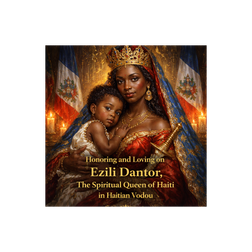
Episode 53: Honoring and Loving on Ezili Dantor, The Spiritual Queen of Haiti in Haitian Vodou

In this episode, we continue our conversation about the Ezili escort, picking up with the meaning of Black Madonna iconography within the Haitian Vodou cosmovision. We begin by explaining how these images function inside Vodou as layered symbols shaped by history, survival, and spiritual adaptation. From there, we decolonize and demystify who Ezili Dantor is, addressing common misunderstandings that often portray her through fear or distortion. We explore her energetic signature as fierce protection, maternal strength, righteous anger, loyalty, and uncompromising love—and how these qualities operate within Vodou theology. We also examine her connection to the Haitian Revolution, highlighting her role as a symbol of resistance, the protection of children, and collective liberation. We close the episode by exploring comparable deities across world religions who reflect similar protective and maternal energies. Finally, we reflect on what it might mean when Ezili Dantor begins to surface in your life, often signaling a call toward boundaries, protection, ancestral strength, and the courage to defend what is sacred. Keywords: Ezili Dantor, Ezili escort, Haitian Vodou, Black Madonna in Vodou, Vodou cosmology, Haitian Revolution spirituality, Petwo lwas, Vodou goddesses, fierce maternal protection, sacred motherhood, decolonizing Vodou, African diaspora religions, Vodou spirits explained, Ezili Dantor energetic signature, resistance and liberation spirituality, ancestral protection, comparative religion goddesses

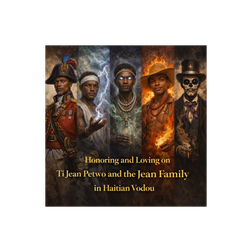
Episode 52: Honoring and Loving on Ti Jean Petwo and the Jean Family in Haitian Vodou

In this episode, we explore the theological meaning of physical impairments within the Haitian Vodou cosmovision and why spirits are sometimes described as carrying visible marks, wounds, or limitations. From there, we turn to Ti Jean, discussing his energetic signature and his role within the Petwo nanchon. We look at how Ti Jean’s presence reflects themes of resilience, complexity, and transformation, and how his character challenges surface-level interpretations of strength and ability. This part of the conversation helps listeners understand Ti Jean beyond stereotype, situating him within Vodou’s broader spiritual and historical framework. We close the episode by exploring the various expressions of the Jean escort, explaining how this spiritual current shows up in different forms and contexts. This final reflection invites listeners to see Ti Jean not as a singular figure, but as part of a dynamic lineage within Petwo, one that continues to evolve while remaining rooted in Haiti’s lived history and spiritual imagination. Keywords: Ti Jean, Jean escort, Haitian Vodou, Petwo nanchon, Petwo lwas, Vodou cosmology, Vodou theology, physical impairments in spirits, Vodou symbolism, Haitian spiritual traditions, African diaspora religions, decolonizing Vodou, Vodou spirits explained, Petwo energy, resilience and transformation, Haitian religious studies

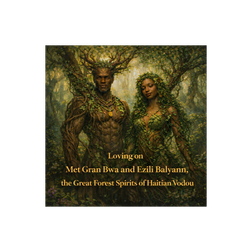
Episode 51: Loving on Met Gran Bwa and Ezili Balyann, the Great Forest Spirits of Haitian Vodou

In this episode, we explore the spiritual importance of plants, sacred trees, and the forest within Haitian Vodou cosmology. We begin by explaining why nature—especially fey (sacred leaves)—is central to ceremony, healing, and spiritual balance in Vodou, and how the forest is understood as a place of power, knowledge, and connection to the unseen world. From there, we introduce Gran Bwa, the lwa of the forest, discussing his energetic presence and why he is seen as a guardian of sacred knowledge, initiation, and the natural world. We then turn to Ezili Balyann, exploring her energetic signature and the qualities she represents within Vodou. We close the episode by examining comparable spiritual figures across world religions who share energetic qualities with Gran Bwa and Ezili Balyann. Finally, we reflect on what it may mean when either of these lwa begins to surface in your life, and how their presence can signal growth, healing, protection, or deeper spiritual awareness. Keywords: Gran Bwa, Ezili Balyann, Haitian Vodou, Vodou cosmology, sacred trees in Vodou, fey in Vodou, Vodou plants and healing, forest spirituality, lwa of the forest, nature spirits in Haitian Vodou, African diaspora spirituality, Vodou spiritual meanings, Gran Bwa explained, Ezili Balyann explained, Vodou deities, ancestral healing, sacred nature traditions, comparative religion spirituality

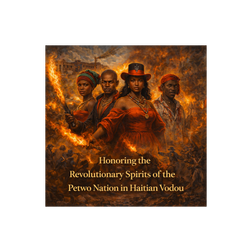
Episode 50: Honoring the Revolutionary Spirits of the Petwo Nation in Haitian Vodou

In this episode, we introduce listeners to the Petwo nation (nanchon in Kreyol), one of the major spiritual lineages within Haitian Vodou, and explore how it emerged during the Haitian Revolution. We begin by explaining how Petwo developed in response to enslavement, violence, and the struggle for survival and freedom in Haiti. From there, we address common misunderstandings about Petwo that often arise from colonial or external interpretations. We explain who the Petwo lwas are, what their energetic signature represents, and why they are associated with protection, urgency, resilience, and liberation rather than chaos or harm. This section helps clarify how Petwo functions within Vodou as a system of balance, not fear. We close the episode by exploring different expressions of the Petwo lwas, especially those we have not yet covered on the podcast such as Gran Chemin nan Petwo, Marassa nan Petwo, Danbala La Flambo, Lemba Zaou, and many more. This final part invites listeners to view Petwo as a living, evolving tradition that reflects Haiti’s history, collective struggle, and ongoing commitment to freedom, dignity, and spiritual self-determination. Keywords: Petwo nanchon, Petwo lwas, Haitian Vodou, Haitian Revolution, Vodou history, Vodou cosmology, African diaspora spirituality, decolonizing Vodou, Petwo Vodou explained, Vodou spirits, resistance and liberation, Haitian spiritual traditions, Vodou education, Petwo energy, Haitian ancestral knowledge

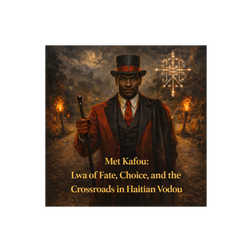
Episode 49: Met Kafou: Lwa of Fate, Choice, and the Crossroads in Haitian Vodou

In this episode, we take a closer look at how ideas of darkness and light are understood within African and Haitian Vodou cosmology, moving away from the good-versus-evil framework often imposed by colonial thinking. We begin by unpacking what these forces actually represent in Vodou and how they relate to balance, power, and spiritual responsibility. From there, we explore the spiritual importance of the crossroads, explaining why this space holds such meaning in African and Haitian traditions and how it reflects moments of choice, transition, and consequence in everyday life. We then turn our focus to Met Kafou, discussing his energetic nature, his role within the Petwo nanchon, and why his presence is often misunderstood. We close the episode by looking at spiritual figures across traditions with similar energetic qualities and reflecting on what it may mean when Met Kafou begins to show up in your life, sometimes signaling moments that require clarity, accountability, and conscious decision-making. Keywords: Met Kafou, Haitian Vodou, Vodou cosmology, crossroads, fate and choice, darkness and light, Petwo nanchon, Vodou lwa, African spiritual traditions, ancestral knowledge, decolonizing spirituality, African diaspora religions, spiritual balance, crossroads symbolism, Met Kafou energetic signature, Petwo Vodou, crossroads spirituality

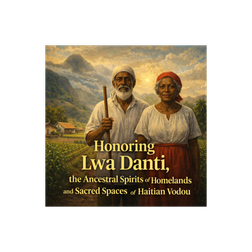
Episode 48: Honoring Lwa Danti, the Ancestral Spirits of Homelands and Sacred Spaces of Haitian Vodou

In this episode, we explore the sacred spaces that ground Haitian Vodou and shape how spiritual life is practiced, protected, and passed down. We begin with an overview of the physical and spiritual environments where Vodou ceremonies take place, introducing listeners to key sacred spaces such as the peristyle, bitasyon, demanbre, ounfo, ogatwa, and djevo, and explaining what each space represents within the tradition. From there, we move into a focused discussion on Lwa Danti and how the Lwa Danti presence is rooted in ancestral homelands across Haiti. We then examine the reality of abandoned, displaced, or inaccessible sacred spaces in Vodou, considering the historical, political, and social forces that have led to their loss or disruption. This part of the conversation acknowledges the emotional and spiritual impact of separation from one’s bitasyon and ceremonial lineage. We close the episode by offering perspectives for those who feel called to Vodou but do not know their ancestral bitasyon or are unsure where to begin. Rather than presenting a single path, we reflect on intention, respect, patience, and relationship as starting points, inviting listeners to consider how Vodou continues to meet people where they are while remaining rooted in land, community, and lineage. Keywords: Haitian Vodou, Vodou sacred spaces, Vodou peristyle, Vodou ounfo, Vodou bitasyon, Vodou djevo, Vodou ogatwa, Vodou demanbre, Haitian spiritual traditions, African diaspora religions, ancestral land and Vodou, Vodou lineage and initiation, Lwa Danti, Danti Vodou, Haitian ancestors and spirituality, Vodou ceremonial spaces, Vodou sacred geography, abandoned sacred spaces in Vodou, Vodou temples and ritual sites, learning Haitian Vodou, beginning Vodou practice, Vodou for the diaspora, reconnecting with ancestral spirituality, Vodou history and culture, Vodou religion explained, Vodou and ancestral memory, Haitian religious traditions, African-derived religions in the Caribbean.

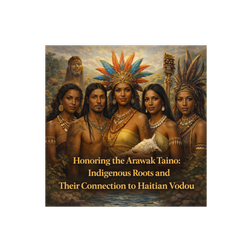
Episode 47: Honoring the Arawak Taíno: Indigenous Roots and Their Connection to Haitian Vodou

In this episode, we honor the Arawak Taíno and explore their deep Indigenous roots and lasting connection to Haitian Vodou. We begin by providing an overview of Taíno life on the island of Quisqueya before enslavement and colonization, grounding the conversation in who the Taíno were as a people, how they lived, and how they related to the land. We also discuss how the Arawak Taíno supported enslaved Africans before, during, and after the Haitian Revolution, offering knowledge of the land, survival strategies, and spiritual exchange that shaped Haiti’s future. From there, we move into a high-level discussion of Taíno spirituality, introducing listeners to core spiritual concepts and some of the Taíno spirits, often referred to as Zemis. We explore how Taíno spiritual worldviews centered on nature, ancestors, land, water, and sacred objects, and how these beliefs continued to live on even after genocide and displacement. We then examine how Taíno spirituality informed and continues to shape Haitian Vodou, especially through shared reverence for land, stones, ancestors, sacred sites, and spirit intermediaries. We close the episode by discussing comparable deities and spiritual forces in Haitian Vodou and other world religions that mirror the roles and functions of the Taíno Zemis, helping listeners understand these connections without collapsing or erasing cultural distinctions. This episode is an invitation to remember, honor, and speak the truth about Indigenous presence, survival, and spiritual legacy in Haiti, and to better understand how Haitian Vodou carries the memory of the land and its first peoples. Keywords: Arawak Taíno, Taíno people, Taíno spirituality, Haitian Vodou, Indigenous Haiti, Quisqueya, Taíno Zemis, Haitian spiritual tradition, Taíno history, Taíno life before colonization, Indigenous Caribbean spirituality, Taíno and Haitian Vodou, Indigenous roots of Haitian Vodou, Taíno culture and beliefs, Taíno ancestors, Sacred land in Haiti

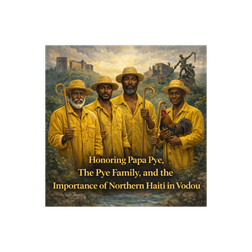
Episode 46: Honoring Papa Pye, The Pye Family, and the Importance of Northern Haiti in Vodou

In this episode, we take a deep dive into Northern Haiti and explore why this region is so spiritually significant within Haitian Vodou. Northern Haiti holds unique ancestral lineages, ritual practices, and spiritual expressions that continue to shape Vodou as it is practiced today. We begin by grounding the conversation in the history, land, and spiritual memory of the North, and why its Vodou traditions carry distinct meaning and power. From there, we deconstruct the concept of a pye (stone), including what it represents spiritually, how it functions in Vodou practice, and why stones are understood as living spiritual anchors rather than symbolic objects. This understanding leads us into a discussion of the Pye family of Lwas, where we explore how these spirits are connected to land, ancestry, stability, and place. We then expand the conversation to include other Northern Haitian Lwas, highlighting nuances in Vodou that are specific to the Northern Haitian experience and how regional expression shapes spiritual practice. As part of this exploration, we introduce Papa Pye, sharing who he is, where he comes from, and what his energetic signature feels like when he is present or working in someone’s life. We close the episode by breaking down the different expressions within the Pye escort, helping listeners understand how one spiritual family can hold multiple energies, roles, and responsibilities while still remaining deeply connected to land, lineage, and ancestral continuity. This episode is ideal for listeners who want a deeper, place-based understanding of Haitian Vodou, ancestral land spirits, and the spiritual importance of Northern Haiti. Keywords: Northern Haiti Vodou, Northern Haitian Vodou traditions, Haitian Vodou spirits, Pye stone Vodou, pye meaning in Vodou, Pye family of lwas, land spirits in Haitian Vodou, Papa Pierre lwa, Northern Haitian lwas, Vodou cosmology, ancestral stones Vodou, African diasporic spirituality, Haitian spirituality, Vodou regional traditions, Vodou ancestral land spirits, Pye escort lwas, Haitian Vodou podcast.
Episode 45: Honoring and Loving on the Elegant Rada Female Spirits of Haitian Vodou

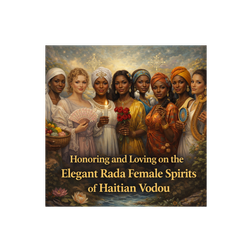
In this episode, we turn our attention to the female Lwas of the Rada nanchon and explore the calm, steady, and deeply nurturing energy they bring to Haitian Vodou. We begin the conversation with an overview of the Rada female spirits as a whole, discussing their shared energetic signature, often associated with balance, refinement, patience, emotional regulation, healing, and ancestral continuity. These aquatic spirits represent stability, tradition, and the kind of spiritual power that sustains families and communities over time. From there, we introduce listeners to beloved Metrès Lwas of the Rada nanchon that we haven’t yet covered on the podcast. In this episode, we will discuss Metrès Filomiz Pye, Metrès Sévérine, Mademoiselle Charlotte, Manbo Lovana, Anaïs Pyé, Metrès Dayila, Manzè Marie, Médan Létan, and Manbo Cécile. Where information is available, we share who they are, how they are understood within Vodou practice, and what their individual energetic signatures feel like, whether that shows up as gentleness, discipline, elegance, quiet authority, or protective care. This episode is an invitation to learn about the lesser-discussed but deeply respected Rada female spirits, and to appreciate the many ways feminine spiritual leadership shows up in Haitian Vodou beyond the more widely known names. Whether you’re expanding your knowledge of Vodou, deepening your spiritual practice, or simply curious about the diversity of the Lwa, this conversation offers a grounded and respectful introduction to these beautiful and refined spirits. Keywords: Haitian Vodou spirits, female lwas in Vodou, Rada female lwas, Rada nanchon, Haitian spirituality, Vodou feminine spirits, African diasporic spirituality, Vodou cosmology, Rada lwa energy, Vodou ancestral traditions, Metres lwas, Rada spirits meaning, gentle lwa energy, refined lwa spirits, Haitian Vodou podcast, Metres Philomise, Mademoiselle Charlotte Vodou, Manbo Lovana, Metres Severine, Medan Letan, Cecile Vodou lwa, Anais Pye, Metres Dayila, Manze Marie.
2 of 7