WorldSnap – Geopolitics , Global Power Plays and International

WorldSnap – Geopolitics , Global Power Plays and International
di World Snap

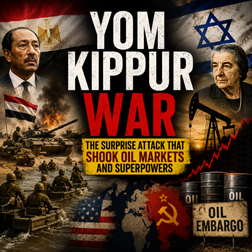
The Yom Kippur War: The Surprise Attack That Shook Oil Markets and Superpowers
IA
In October 1973, Egypt and Syria launched a surprise attack against Israel on Yom Kippur, beginning a war that would transform far more than the battlefields of Sinai and the Golan Heights. This episode explores how the conflict shattered Israel’s sense of security, restored Egyptian confidence, drew the United States and Soviet Union toward a dangerous confrontation, and turned oil into a powerful geopolitical weapon. As Arab producers reduced supplies and imposed an embargo, fuel prices surged, inflation accelerated, and economies around the world entered an era of shortages and stagflation. Discover how a short regional war reshaped global energy policy, changed Cold War diplomacy, and demonstrated that military victory, political victory, and economic power are not always the same thing.

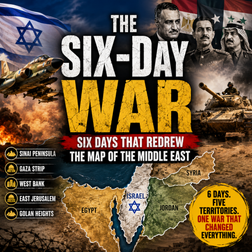
The Six-Day War: Six Days That Redrew the Map of the Middle East
IA
In June 1967, a rapidly escalating crisis erupted into one of the most decisive wars of the twentieth century. In only six days, Israel defeated the armed forces of Egypt, Jordan, and Syria, capturing the Sinai Peninsula, Gaza Strip, West Bank, East Jerusalem, and Golan Heights. This episode explores the fears, political pressures, intelligence failures, military strategies, and regional rivalries that led to the Six-Day War. It explains how Israel achieved air superiority within hours, why Arab armies collapsed so quickly, and how a stunning battlefield victory created political questions that remain unresolved today. More than a story of tanks, aircraft, and commanders, this is an examination of how six days of war reshaped borders, transformed Palestinian nationalism, weakened Arab nationalism, and changed the Middle East for generations.

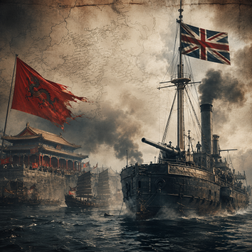
The Opium Wars How Gunboats Forced China Into the Modern World Order
IA
The Opium Wars were more than a conflict over trade. They marked the moment when Qing China, one of the world’s oldest and most powerful civilizations, was forced into a Western-led global order by industrial empire, naval firepower, and unequal treaties. This episode explores how Britain’s hunger for Chinese tea and silk turned into a destructive opium trade, why Chinese officials tried to stop it, and how British gunboats reshaped China’s future. From Lin Zexu’s crackdown to the Treaty of Nanking, Hong Kong, and the beginning of China’s “Century of Humiliation,” this is the story of how commerce, addiction, and empire collided on China’s coast.

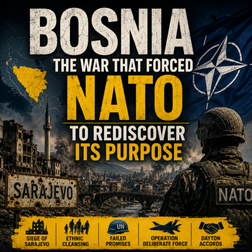
Bosnia: The War That Forced NATO to Rediscover Its Purpose
IA
When the Cold War ended, NATO appeared to have lost the enemy it had been created to confront. Then Yugoslavia collapsed, and Bosnia descended into siege warfare, ethnic cleansing, mass displacement, and genocide. This episode explores how the Bosnian War exposed the limitations of European diplomacy, United Nations peacekeeping, and NATO’s cautious post-Cold War strategy. From the siege of Sarajevo and the fall of Srebrenica to Operation Deliberate Force and the Dayton Peace Accords, we examine how military pressure, diplomacy, and political will finally brought the conflict to an end. More than a history of the war, this is the story of how Bosnia transformed NATO from a defensive Cold War alliance into an organization prepared to intervene beyond the borders of its member states.

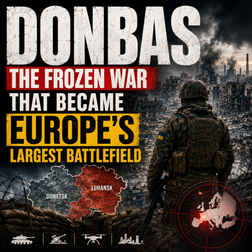
Donbas: The Frozen War That Became Europe’s Largest Battlefield
IA
For years, the war in Donbas was described as a frozen conflict—contained, distant, and manageable. But beneath the surface, trenches were deepening, armies were adapting, and political tensions were hardening. This episode explores how Donbas evolved from a Soviet industrial heartland into the center of Europe’s largest battlefield. It traces the region’s history, the political crisis of 2014, the rise of the separatist territories, the failure of the Minsk agreements, and the eight years of warfare that prepared both Russia and Ukraine for the full-scale invasion of 2022. More than a story about one region, Donbas offers a wider lesson about frozen conflicts, failed diplomacy, industrial warfare, and the danger of mistaking a ceasefire for lasting peace.

The Bangladesh Liberation War: How One Conflict Redrew South Asia
IA
The Bangladesh Liberation War was more than a regional conflict. It was a struggle over identity, language, political power, and the right of a people to decide their own future. This episode explores how East Pakistan’s fight for autonomy became a war for independence, why India intervened, how Cold War politics shaped the crisis, and how the birth of Bangladesh permanently redrew the map of South Asia.

The Sino-Indian War: The Border Conflict That Still Haunts Asia
IA
In 1962, China and India fought a short but deeply consequential war high in the Himalayas. This episode explores how unclear colonial-era borders, the question of Tibet, Aksai Chin, the McMahon Line, and rising nationalist fears pushed two post-colonial giants from friendship into conflict. We look at why the Sino-Indian War became a lasting wound in Asian geopolitics, how it reshaped India’s strategic thinking, and why the unresolved border still affects China–India relations today.

The Sino-Soviet Split: The Communist Conflict That Changed the Cold War
IA
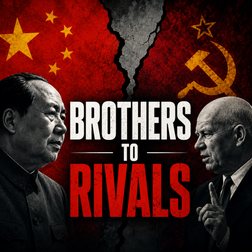
Explore the dramatic Sino-Soviet Split, the bitter communist rivalry that shattered the illusion of a united Cold War bloc. This episode explains how Mao’s China and the Soviet Union turned from revolutionary allies into strategic enemies, reshaping global power, opening the door to Nixon’s China visit, and changing the Cold War forever.

The Chinese Civil War How Mao’s Victory Reshaped Asia
IA
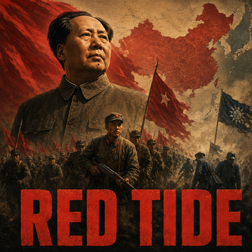
Mao Zedong’s victory in the Chinese Civil War did more than create the People’s Republic of China. It reshaped Asia’s political map, pushed Chiang Kai-shek’s Nationalists to Taiwan, transformed U.S. strategy in the Pacific, and helped turn East Asia into a major Cold War battlefield. In this episode, we explore how the Communists defeated a stronger Nationalist government, why rural China became the heart of Mao’s revolution, and how the unfinished legacy of 1949 still shapes China, Taiwan, Korea, and U.S.-China tensions today.

The Pacific War: How Islands, Carriers, and Logistics Defeated an Empire

IA
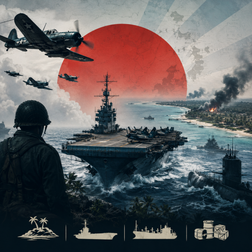
The Pacific War was fought across the largest battlefield in history, where tiny islands became stepping stones, aircraft carriers replaced battleships as the center of naval power, and logistics decided the fate of an empire. This episode explores how Japan’s early victories created a vast maritime empire that was difficult to defend, supply, and sustain. From Pearl Harbor and Midway to Guadalcanal, island hopping, submarines, and the slow collapse of Japan’s sea routes, we look at how geography, industry, fuel, carriers, and supply chains shaped the outcome of World War II in the Indo-Pacific.
2 di 9