WorldSnap – Geopolitics , Global Power Plays and International

WorldSnap – Geopolitics , Global Power Plays and International
di World Snap
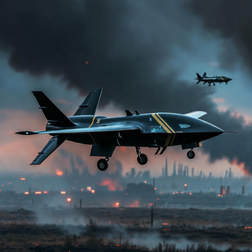
Ukraine’s Secret Drone Factories: War Turns Into Export Business
IA
In this episode we uncover a surprising story from the Ukraine war: at least ten private Ukrainian companies secretly built drone factories in other countries and sold thousands of interceptor drones abroad — while Ukraine’s own military faced critical shortages on the front lines. President Zelenskyy publicly revealed the issue, highlighting how one company alone sold 1,000 drones for $3.5 million. We explore the reasons behind these secret overseas operations, the tension between private profit and national defense, the innovation that made Ukrainian drones attractive worldwide, and the risks of technology leakage. This story reveals how modern conflicts are quietly turning into export industries and raises tough questions about balancing business incentives with wartime survival. This episode uses AI-generated voice for narration.
Myanmar The War That Never Ends… Or Is It Just That No One Wants to Lose
IA
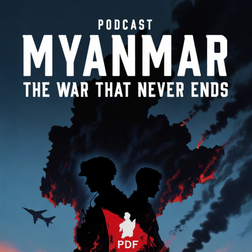
Myanmar: The War That Never Ends… Or Is It Just That No One Wants to Lose? Why has Myanmar been trapped in civil war for more than five years since the 2021 military coup — and why does this conflict actually stretch back nearly 80 years? In this episode, we take a calm, clear look at one of the world’s longest-running and most overlooked conflicts. From the ethnic tensions that began right after independence in 1948, through decades of rebellion and uneasy ceasefires, to the dramatic 2021 coup that turned peaceful protests into a full-scale civil war. We break down the current painful stalemate: • The military junta still controls the big cities and economic heartland • Resistance forces and ethnic armed groups dominate the borderlands and rural areas • Why neither side can achieve total victory You’ll also discover: • China’s clever two-sided strategy and how it keeps the war going • The role of Russia and Iran in supplying the junta • Why Western countries and ASEAN mostly stay on the sidelines • The devastating human cost — destroyed schools and hospitals, millions facing hunger, and a lost generation of young people • How this “forgotten war” directly affects Thailand and the rest of Southeast Asia through refugees, border instability, and the drug trade This is not just another news update. It’s a big-picture story about power, identity, geopolitics, and why some wars refuse to end. If you want to understand why Myanmar’s suffering continues in 2026 — and why the world should still care — this episode is for you.
The Thirty Years’ War: The Religious Conflict That Created Modern Geopolitics
IA
The Thirty Years’ War began in 1618 as a religious and political revolt inside the Holy Roman Empire. What followed was one of the most destructive conflicts in European history—a war involving Catholic and Protestant rulers, powerful dynasties, ambitious generals, and rival kingdoms fighting for survival. In this episode, we explore how the Defenestration of Prague triggered a continental crisis, why Sweden and Denmark intervened, how Catholic France ended up supporting Protestant armies, and why the struggle gradually transformed from a religious war into a geopolitical contest between Europe’s major powers. We also examine the devastation suffered by civilians, the rise of large professional armies, the political strategy of Cardinal Richelieu, and the long negotiations that produced the Peace of Westphalia in 1648. The Thirty Years’ War did not create the modern international system overnight. But it helped establish enduring ideas about sovereignty, diplomacy, alliances, the balance of power, and the right of states to pursue their own strategic interests. This is the story of how a religious conflict taught Europe the cold logic of modern
The Falklands War: Why Two Nations Fought Over Remote Islands
IA
In 1982, Britain and Argentina went to war over a remote group of islands in the South Atlantic: the Falklands, or Malvinas. But this was never just a conflict over distant land. It was a war shaped by sovereignty, nationalism, political survival, naval power, and the dangerous weight of national pride. This episode explores why two nations fought over islands so far from the world’s major centers of power, how Argentina’s military junta miscalculated Britain’s response, why Britain sent a task force across the ocean, and how a short war changed both countries forever.
The Balkan Wars: How Yugoslavia’s Collapse Reopened Europe’s Old Wounds
IA
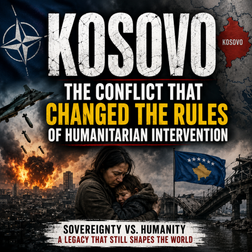
The collapse of Yugoslavia reopened Europe’s old wounds and turned neighbors into enemies. This episode explores how nationalism, economic crisis, historical trauma, and political ambition tore apart a multiethnic state, leading to war in Slovenia, Croatia, Bosnia, and Kosovo. A powerful story about identity, fear, borders, and the fragile trust that holds societies together.
The Arab–Israeli Wars: How 1948, 1967, and 1973 Still Shape the Middle East
IA
The Arab–Israeli wars of 1948, 1967, and 1973 were more than military conflicts. They created borders, memories, refugee crises, security doctrines, and diplomatic patterns that still influence the Middle East today. In this episode, we explore how 1948 created the core conflict, how 1967 changed the map, and how 1973 changed the psychology of the region — from war and occupation to diplomacy, oil politics, and the long search for peace.
Crimea 2014: The Annexation That Reopened Great Power Conflict in Europe
IA
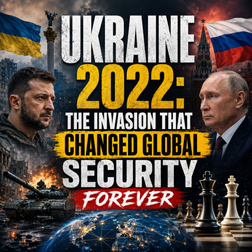
In 2014, Crimea became the flashpoint that changed Europe’s security order. What looked like a regional crisis between Russia and Ukraine quickly became a turning point in modern geopolitics — raising hard questions about borders, sovereignty, naval power, NATO, and the return of great-power rivalry. This episode explores why Crimea matters far beyond its size: its strategic position in the Black Sea, its deep historical meaning for Russia and Ukraine, the role of Sevastopol and the Black Sea Fleet, and how the annexation reshaped Europe’s view of security after the Cold War. From the Maidan protests to Russia’s rapid military move, from Ukraine’s sovereignty crisis to the wider confrontation between Moscow and the West, Crimea 2014 remains one of the most important geopolitical moments of the 21st century.
Sri Lanka’s Civil War: The Insurgency That Rewrote Counterterrorism Lessons
IA
Sri Lanka’s civil war was one of the most complex and consequential insurgencies of the modern era. For nearly three decades, the Sri Lankan state fought the LTTE, or Tamil Tigers, a militant movement that built its own army, navy, intelligence network, and shadow administration. This episode explores how ethnic grievances, political exclusion, terrorism, counterinsurgency, and state power collided on one island — and why the war’s ending in 2009 still raises difficult questions about victory, justice, and reconciliation. This is not only a story about how an insurgency was defeated. It is a deeper look at what Sri Lanka taught the world about counterterrorism, civilian cost, and the danger of winning a war without fully healing the wounds that created it.
Libya After Gaddafi: The War That Turned a State Into a Battleground
IA
After Muammar Gaddafi fell in 2011, Libya was expected to enter a new era of freedom and reconstruction. Instead, the country became divided between rival governments, militias, oil interests, foreign powers, and competing visions of authority. This episode explores how Libya’s revolution turned into a long struggle for power, why oil became both a lifeline and a prize, and how outside intervention transformed a national crisis into a regional proxy battleground. More than a story of one fallen dictator, Libya after Gaddafi is a warning about what happens when a regime collapses before a strong state is ready to replace it.
Syria’s Endless War: How a Civil War Became a Global Proxy Battlefield
IA
What began in Syria as a call for reform and dignity became one of the most complex wars of the modern era. This episode explores how a domestic uprising turned into a civil war, then into a global proxy battlefield involving regional powers, superpowers, militias, extremist groups, and millions of civilians caught in between. From the Assad regime and the Arab Spring, to Russia, Iran, Turkey, the United States, ISIS, Israel, Kurdish forces, and the refugee crisis, we unpack why Syria’s war became so difficult to end — and what it teaches us about modern conflict, foreign intervention, and the human cost of geopolitics.
1 di 7