The Money Insights Podcast

The Money Insights Podcast

di Money Insights

Financial rules we completely ignore (and why) | Episode 246

There are financial “rules” almost everyone has heard: max out retirement accounts, avoid debt at all costs, buy a house as soon as you can, keep every dollar fully invested, and trust the stock market to carry you home. In this episode, Christian Allen and Rod Zabriskie pull those rules into the light and ask a better question: what if the rule isn’t wrong because it’s evil, but because it’s incomplete? Christian and Rod walk through several of the most common pieces of financial advice they personally ignore, not because they are trying to be contrarian, but because real financial planning requires context. They unpack why liquidity matters more than most people realize, why not all debt belongs in the same category, and why blindly following retirement-account dogma can create more friction than freedom. They also dig into the difference between rules and principles. A rule says, “always do this.” Wisdom says, “look at the facts.” That shift changes everything. From Christian’s personal story of buying a house at the wrong time to Rod’s experience with retirement accounts and market-based assumptions, this conversation is a reminder that wealth is not built by memorizing slogans. It is built by understanding tradeoffs. If you have ever felt boxed in by one-size-fits-all financial advice, this episode will help you think more clearly, plan more intentionally, and make decisions that fit your actual life instead of somebody else’s script. Key Takeaways Maxing out retirement accounts is not always the best first move. Liquidity can be more valuable than being fully invested. Debt is not automatically bad; misuse of debt is the real danger. The stock market should not be treated like a guaranteed roadmap. Buying a home is not always the smartest next step. Financial rules break down when they ignore your real-life context. Money Insights is a strategic planning firm that is founded on the principle that "off-the-shelf" products and solutions often do not meet the needs of high-income earners. The Money Insights team works to collaboratively design customized financial solutions that will leave a lasting impact on each of their unique clients. To stay connected and get access inside our community, you can join the Investment Insider Series at https://www.moneyinsightsgroup.com/insideraccess As always, we'd love chat with you. You can schedule a free strategy call with us by clicking here https://www.moneyinsightsgroup.com/calendar Money Insights does not endorse or recommend specific investments. All content is for educational purposes only. Participants should conduct their own due diligence and consult with licensed financial, legal, and tax professionals before investing. Money Insights does not offer securities, investment advice, or guarantees. Past performance is not indicative of future results, and all investments carry risk. Listen to the Money Insights podcast on Spotify, Apple Podcasts, or at https://moneyinsightsgroup.com/podcast/


The Accelerated Capital Strategy: How high income earners engineer tax-free income | Episode 245

Most people think “premium financing” is either for the ultra-wealthy… or it’s a risky black box. In this episode, Rod and I open up a strategy we’ve been refining behind the scenes for years—now rebranded as the Accelerated Capital Strategy (ACS). We walk through why we moved away from the old “Capital Avalanche” name, and what the new name signals: this isn’t chaos. It’s precision—an intentionally engineered design built to create tax-free income and/or a larger legacy benefit over time. We also draw a clear line between ACS and our Investment Optimizer strategy. The Investment Optimizer is built for liquidity and deploying capital into outside investments. ACS is different: it’s a long-term, self-contained engine where the policy design and leverage mechanics are doing the heavy lifting inside the strategy. Finally, we talk candidly about who ACS is for (and who it’s not), why the timeline matters, and the key design evolutions we’ve made—like shifting toward an IUL-heavy approach, building a stronger buffer, and using more flexible lending structures to keep the strategy safer and more adaptable. Key Takeaways ACS is a precision-designed strategy to maximize tax-free income and/or death benefit over time. ACS and Investment Optimizer use a similar “chassis,” but the purpose and mechanics are fundamentally different. The strategy runs on long-term arbitrage: policy growth outpacing loan interest over time. It’s intentionally long-term (often ~10+ years before taking income). Modern ACS is more conservative than earlier versions: stronger buffer + refined structure. ACS is best for high-income earners with stable cash flow and solid outside liquidity. Money Insights is a strategic planning firm that is founded on the principle that "off-the-shelf" products and solutions often do not meet the needs of high-income earners. The Money Insights team works to collaboratively design customized financial solutions that will leave a lasting impact on each of their unique clients. To stay connected and get access inside our community, you can join the Investment Insider Series at https://www.moneyinsightsgroup.com/insideraccess As always, we'd love chat with you. You can schedule a free strategy call with us by clicking here https://www.moneyinsightsgroup.com/calendar Money Insights does not endorse or recommend specific investments. All content is for educational purposes only. Participants should conduct their own due diligence and consult with licensed financial, legal, and tax professionals before investing. Money Insights does not offer securities, investment advice, or guarantees. Past performance is not indicative of future results, and all investments carry risk. Listen to the Money Insights podcast on Spotify, Apple Podcasts, or at https://moneyinsightsgroup.com/podcast/

Best Ever Conference Podcast

Coming to you live from the Best Ever Conference 10 in Salt Lake City, Rod Zabriskie sits in the host seat with Brenyn “Babyface” McConnell for a field-report style episode: what we saw, what we learned, and what it means for everyday investors trying to build real freedom. One of the biggest surprises? There are more quality deals out there than most people think—especially when you get out of your normal circles and into the rooms where operators, sponsors, and serious investors gather. This isn’t about chasing shiny objects. It’s about widening your lens and realizing the opportunity set is bigger than your current feed. They also unpack how the alternative space has expanded far beyond “just multifamily.” Multifamily isn’t dead (far from it), but the conference spotlighted a broader menu: retail done the right way, self-storage, medical, assisted living, mobile home parks, even gas stations—and relationship-driven debt funds with shorter timelines and cash flow. Finally, Rod and Brenyn share a theme that kept showing up everywhere: community is a force multiplier. The GP world is more collaborative than you might expect, and when you plug into the right circles—conferences, webinars, and groups like the Money Insights community—you stop investing like an island and start building momentum with like-minded people. Key Takeaways There are more deals (and better operators) than most people assume. Diversification in alternatives goes way beyond multifamily. Relationship-based debt funds can offer shorter timelines and cash flow. “Co-living” can boost cash flow by renting by the room, not the house. ADUs are becoming a powerful lever as states fast-track approvals. Community accelerates your learning—and can shorten your investing timeline. Money Insights is a strategic planning firm that is founded on the principle that "off-the-shelf" products and solutions often do not meet the needs of high-income earners. The Money Insights team works to collaboratively design customized financial solutions that will leave a lasting impact on each of their unique clients. To stay connected and get access inside our community, you can join the Investment Insider Series at https://www.moneyinsightsgroup.com/insideraccess As always, we'd love chat with you. You can schedule a free strategy call with us by clicking here https://www.moneyinsightsgroup.com/calendar Money Insights does not endorse or recommend specific investments. All content is for educational purposes only. Participants should conduct their own due diligence and consult with licensed financial, legal, and tax professionals before investing. Money Insights does not offer securities, investment advice, or guarantees. Past performance is not indicative of future results, and all investments carry risk. Listen to the Money Insights podcast on Spotify, Apple Podcasts, or at https://moneyinsightsgroup.com/podcast/

Why high income earners feel broke (even at $300k+) | Episode 243

A lot of high-income earners don’t feel wealthy. They feel… tight. Like the money shows up, but somehow it never sticks. In this episode, Rod and I break down why that happens—and why it’s more common (and more fixable) than most people think. We walk through the five biggest “liquidity killers” that quietly drain cash flow even at $300k, $500k, and beyond—without turning this into a guilt trip about overspending. Because in many cases, it’s not reckless spending. It’s structural: taxes, locked-up retirement money, a personal residence that looks great on paper, and monthly obligations that compound over time. Then we shift from diagnosis to a simple playbook: liquidity first, invest intentionally, build real tax strategy (not just deferral), and operate like a “mini family office”—where you stay the quarterback, and your professionals run coordinated plays. If your income is high but your freedom feels low, this episode is a reset. The goal isn’t income alone. The goal is control. Key Takeaways High income often creates complexity before freedom—that’s normal. The five liquidity killers: taxes, lifestyle, retirement accounts, personal residence, and debt/obligations. Tax strategy takes time—and requires understanding active vs. passive deductions. Retirement accounts can reduce taxes but often increase illiquidity. Wealthy families prioritize liquidity first, then invest with intention. You should be the quarterback—not your advisor. Money Insights is a strategic planning firm that is founded on the principle that "off-the-shelf" products and solutions often do not meet the needs of high-income earners. The Money Insights team works to collaboratively design customized financial solutions that will leave a lasting impact on each of their unique clients. To stay connected and get access inside our community, you can join the Investment Insider Series at https://www.moneyinsightsgroup.com/insideraccess As always, we'd love chat with you. You can schedule a free strategy call with us by clicking here https://www.moneyinsightsgroup.com/calendar Money Insights does not endorse or recommend specific investments. All content is for educational purposes only. Participants should conduct their own due diligence and consult with licensed financial, legal, and tax professionals before investing. Money Insights does not offer securities, investment advice, or guarantees. Past performance is not indicative of future results, and all investments carry risk. Listen to the Money Insights podcast on Spotify, Apple Podcasts, or at https://moneyinsightsgroup.com/podcast/

Beyond the Roth IRA | Episode 242

If you’re a high-income earner and you’ve realized you make too much to contribute directly to a Roth IRA, you’ve probably hit what we call the “Roth wall.” And if you’ve been taught for years that the Roth is the holy grail… that wall can feel like the end of the road. In this episode, Christian Allen and Rod “the Pod” Zabriskie zoom out and reframe the question. Because wealth builders aren’t just hunting for the best tax container—they’re building a system. A Roth can be a powerful tool inside that system, but for many high-income earners, it’s often a small piece of the overall wealth equation (especially when you’re saving serious dollars every year). They break down what options actually exist—like Roth conversions, the backdoor Roth, and the mega backdoor Roth (with the real-world caveat that plan rules can limit what’s possible). Then they go deeper: the bigger win is designing a capital system built for liquidity, optionality, smart deployment, and consistent principles—so you can invest well beyond the defaults of “IRA then brokerage” and into opportunities that match your goals. This is a conversation about moving from rules to strategy—about using tax optimization as one part of a bigger framework that also includes leverage, velocity, cash flow, estate maximization, and asset protection. And for many investors, that system is anchored by an “opportunity fund” approach—often using high cash value life insurance as a liquidity base to deploy into real estate and other alternative investments. Key Takeaways The Roth IRA is a tool, not a strategy—and it’s often a small tool for high-income earners. There are ways around the “Roth wall” (conversions, backdoor, mega backdoor), but they come with rules and limitations. Wealth builders focus on systems, not containers—prioritizing liquidity, optionality, and smart deployment. Tax optimization isn’t one silver bullet; it’s about diversifying tax treatment across assets and time. Many successful investors use an opportunity fund model to deploy capital into real estate and other alternatives. Money Insights is a strategic planning firm that is founded on the principle that "off-the-shelf" products and solutions often do not meet the needs of high-income earners. The Money Insights team works to collaboratively design customized financial solutions that will leave a lasting impact on each of their unique clients. To stay connected and get access inside our community, you can join the Investment Insider Series at https://www.moneyinsightsgroup.com/insideraccess As always, we'd love chat with you. You can schedule a free strategy call with us by clicking here https://www.moneyinsightsgroup.com/calendar Money Insights does not endorse or recommend specific investments. All content is for educational purposes only. Participants should conduct their own due diligence and consult with licensed financial, legal, and tax professionals before investing. Money Insights does not offer securities, investment advice, or guarantees. Past performance is not indicative of future results, and all investments carry risk.

How to Spot Bad Financial Advice | Episode 241

Most bad financial advice doesn’t sound “bad” at first. It sounds normal. Familiar. Like something everyone repeats—so you stop questioning it. In this episode, Rod and I walk through a simple framework for spotting advice that looks polished on paper but breaks down in real life. We talk about the “just do this” statements, the backyard-barbecue confidence, and the kind of guidance that quietly trains you to disengage. We also hit the deeper issue underneath all of it: the real danger isn’t that bad advice exists—it’s that people outsource their thinking for 25 years and hope it all works out at retirement. If your plan only works when you never ask questions… it’s not a plan. By the end, you’ll have a practical checklist you can use to evaluate any strategy, any pitch, and any “expert”—without becoming a full-time finance nerd. Key Takeaways If “everyone’s doing it,” pause—popularity isn’t proof. “Barbecue advice” (confident + casual + oversimplified) is a red flag. Beware any strategy that starts with “just…”—one-size-fits-all usually fits nobody. If you’re made to feel difficult for asking questions, walk away. If it doesn’t pass a real-life practicality test, it’s not ready for your money. A good plan requires your engagement—understanding beats outsourcing. Money Insights is a strategic planning firm that is founded on the principle that "off-the-shelf" products and solutions often do not meet the needs of high-income earners. The Money Insights team works to collaboratively design customized financial solutions that will leave a lasting impact on each of their unique clients. To stay connected and get access inside our community, you can join the Investment Insider Series at https://www.moneyinsightsgroup.com/insideraccess As always, we'd love chat with you. You can schedule a free strategy call with us by clicking here https://www.moneyinsightsgroup.com/calendar Money Insights does not endorse or recommend specific investments. All content is for educational purposes only. Participants should conduct their own due diligence and consult with licensed financial, legal, and tax professionals before investing. Money Insights does not offer securities, investment advice, or guarantees. Past performance is not indicative of future results, and all investments carry risk.

The most common private credit mistakes high income earners make | Episode 240

Private credit is hot right now — and for good reason. It can feel steady, cash-flow friendly, and simpler than other alternative investments. But when something feels “easy,” that’s exactly when investors start letting their guard down. In this episode, Rod breaks down what private credit actually is (and how it’s different from bonds), then we walk through five common mistakes we see high-income investors make when they step into this space. From liquidity blind spots, to yield-chasing, to misaligned incentives and over-concentration, the thread is the same: private credit can be powerful — if you use it inside a plan instead of letting comfort make decisions for you. Key Takeaways Private credit often means investing in a portfolio of loans, not a single loan. Liquidity needs to be intentional — “cash-flowing” doesn’t automatically mean “safe.” Don’t chase yield without understanding the underlying loans and structure. Know exactly who gets paid, when, and for what. Avoid over-concentration and “set it and forget it” investing — markets have cycles. Money Insights is a strategic planning firm that is founded on the principle that "off-the-shelf" products and solutions often do not meet the needs of high-income earners. The Money Insights team works to collaboratively design customized financial solutions that will leave a lasting impact on each of their unique clients. To stay connected and get access inside our community, you can join the Investment Insider Series at https://www.moneyinsightsgroup.com/insideraccess As always, we'd love chat with you. You can schedule a free strategy call with us by clicking here https://www.moneyinsightsgroup.com/calendar Money Insights does not endorse or recommend specific investments. All content is for educational purposes only. Participants should conduct their own due diligence and consult with licensed financial, legal, and tax professionals before investing. Money Insights does not offer securities, investment advice, or guarantees. Past performance is not indicative of future results, and all investments carry risk.

Why every high-income earner should consider private banking | Episode 239

If you’ve ever felt like your bank is slowing you down—this episode is for you. Christian and Rod unpack why private banking can be a legit upgrade for high-income earners and business owners who are tired of friction, phone trees, and “rules-first” lending that doesn’t reflect real-life complexity. Christian shares the exact pain points that pushed them to make the switch: a two-and-a-half-hour wire transfer on vacation that still got botched, limited lending options despite meaningful liquidity at the bank, and the constant restart button that comes with calling a generic support line where no one knows you. Then they define what private banking actually is (and what it isn’t). It’s not infinite banking, and it’s not necessarily the bank’s wealth management pitch—this is about leveled-up, real-world banking: dedicated relationship bankers, proactive support, better tools, and underwriting that evaluates your full financial picture—especially when your income is complex. Bottom line: if time is your most valuable asset, private banking can be a way to buy back time, reduce operational headaches, and unlock more flexible lending—without overcomplicating your life. Key Takeaways Private banking isn’t “replacing the bank”—it’s upgrading the banking relationship with dedicated, relationship-driven service. The biggest win is less friction: faster wires/ACH, fewer hoops, and proactive support from someone who actually knows your situation. Private banks often underwrite lending more holistically—especially valuable for business owners with complex income and cash flow. One potential downside: banks may encourage you to consolidate assets into their traditional wealth management platform. If you’re a high-income earner—or your finances don’t fit neatly into a simple box—it’s worth exploring. The simplest action step: look around, ask questions, and see what private banking options fit your situation. To stay connected and get access inside our community, you can join the Investment Insider Series at https://www.moneyinsightsgroup.com/insideraccess Money Insights is a strategic planning firm that is founded on the principle that "off-the-shelf" products and solutions often do not meet the needs of high-income earners. The Money Insights team works to collaboratively design customized financial solutions that will leave a lasting impact on each of their unique clients. Visit Money Insights and take the Investor Quiz at https://moneyinsightsgroup.com! Listen to the Money Insights podcast on Spotify, Apple Podcasts, or at https://moneyinsightsgroup.com/podcast/

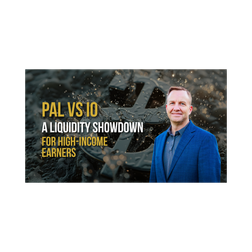
PAL vs IO: A liquidity showdown for high-income earners | Episode 238

A physician listener reached out with a sharp question: If a pledged asset line (PAL) lets you borrow against your investments, why use the Investment Optimizer strategy at all? That question opens a bigger conversation—because on the surface, both tools can create liquidity without selling the underlying asset. In this episode, Rod breaks down what a PAL actually is (and why it feels similar to borrowing against cash value). Then Christian and Rod zoom out to the real distinction: a PAL can be a strong transactional tool, but the Investment Optimizer is designed as infrastructure—something that touches everything else you’re doing financially. They walk through the practical differences that matter most in real life: call risk and collateral volatility, how much you can borrow, repayment flexibility, tax treatment, and what happens when you die with a loan outstanding. Along the way, they highlight why predictability and optionality aren’t nice-to-haves—they’re the difference between a strategy that holds up under pressure and one that can squeeze you at the worst possible time. Key Takeaways A PAL and the Investment Optimizer share a core mechanic: borrowing against an asset so it can keep compounding. Collateral volatility creates call risk with a PAL; whole life cash value is more predictable and stable. Borrowing capacity is typically higher with policy cash value (roughly 95% vs. 50–60% for a PAL). Life insurance can turn tax deferral into tax-free access through loans. At death, life insurance provides built-in liquidity via the death benefit to repay outstanding loans. Policy loan repayment flexibility is dramatically different from monthly PAL interest requirements. Money Insights is a strategic planning firm that is founded on the principle that "off-the-shelf" products and solutions often do not meet the needs of high-income earners. The Money Insights team works to collaboratively design customized financial solutions that will leave a lasting impact on each of their unique clients.Visit Money Insights and take the Investor Quiz at https://moneyinsightsgroup.com!Listen to the Money Insights podcast on Spotify, Apple Podcasts, or at https://moneyinsightsgroup.com/podcast/

Rapid fire with the Money Insights team | Episode 237

To kick off 2026, Christian Allen brings in the full Money Insights team—Rod “the Pod” Zabriskie, Blake “Never Takes a Break” Brogan, and Brenyn “Baby Face” McConnell—for a rapid-fire debate on 12 wealth-building statements that high-income earners run into all the time. This episode isn’t theory—it’s how the team actually thinks when real money is on the line: index funds vs. alternatives, whether real estate is truly “the best,” why liquidity can matter more than return, and how leverage (used wisely) changes the game. They also hit the sacred cows: the tax-deferral “trap,” why many traditional advisors don’t understand wealthy clients, and how whole life insurance fits (and doesn’t fit) in a wealth-building plan. And they land the plane on a deeper principle—building wealth isn’t just about chasing numbers… it’s about designing control over your time, money, and freedom. Key Takeaways Index funds can be “enough,” but the answer depends on your goal—and what income you’re trying to replace. Real estate is powerful, but business/income is often the true “engine” of wealth creation. Tax deferral can help in specific cases, but it often comes with hidden traps: liquidity limits, penalties, and uncertain future tax rates. Liquidity is a core survival principle—returns don’t help if you can’t access cash when life hits. Leverage is a defining wealth principle, but it should match your stage and capacity. The real goal isn’t just return—it’s control: of your money, your time, and your freedom. Money Insights is a strategic planning firm that is founded on the principle that "off-the-shelf" products and solutions often do not meet the needs of high-income earners. The Money Insights team works to collaboratively design customized financial solutions that will leave a lasting impact on each of their unique clients. Visit Money Insights and take the Investor Quiz at https://moneyinsightsgroup.com! Listen to the Money Insights podcast on Spotify, Apple Podcasts, or at https://moneyinsightsgroup.com/podcast/

4 di 28