The Education Commute
di The Education CommuterStagione 1
188 Studies On Talk: Five Minutes A Pupil, Worth 6 Months

One pupil, four words, in five minutes of an ordinary lesson — a real transcript, timestamped. That's not a bad lesson, it's most lessons. EEF's Oral language interventions strand — 188 studies, high security — says structured talk adds six months of progress on average, and it works hardest for the pupils who need it most. Not "let them chat more." Something much more specific. Printable one-pager for this episode, free: https://theeducationcommute.co.uk/#newsletter-staff Two free newsletters, one for staff and one for parents and carers, same evidence written for the person reading it. Sources: • EEF Teaching & Learning Toolkit — Oral language interventions strand: https://educationendowmentfoundation.org.uk/education-evidence/teaching-learning-toolkit/oral-language-interventions What's covered: • The Number: +6 months, 188 studies, High security (4/5 padlocks — one lost for lack of independent evaluation) • What "structured talk" actually means vs the CPD-slide version of "build in more talk" • The honest cost trade-off: curriculum time is finite, and the evidence doesn't tell you which five minutes to cut • The disadvantage finding: the more disadvantaged pupils taking part, the more effective the intervention appeared • Same idea, three rooms: paired talk before hands go up in primary, secondary and a structured choice-board approach in a specialist setting • Try it today: one question this week, forty-five seconds of paired talk before taking an answer Actions for consideration: • Pick one lesson this week and put forty-five seconds of paired talk in front of one question before taking hands up. • Check whether "talk" in your school means structured, curriculum-tied discussion, or just informal chat time — the evidence is specific to the former. • Where you're chasing a disadvantage gap, treat structured talk as a targeted lever, not a nice-to-have. • Don't rewrite your scheme of work — the ask is one question a week, not a curriculum overhaul. • If cost is a barrier, know the base intervention is very low cost — training pushes it toward moderate, not the approach itself. Disclosure: Both voices on this show are synthesised (NotebookLM, Google); the research, reading and editorial judgement are done by a serving practitioner. Strand: Teachers
5:1 Isn't Proven: The Small-Scale Study Behind The Ratio
Five specific bits of praise for every one criticism. It comes from a real classroom study — small-scale, and the EEF calls it "promising" rather than proven — and this episode translates it for home, across four very different evenings: Early Years, Primary, Secondary, and SEN as a full setting rather than a footnote. The first episode of Parents Commute, our strand written for parents and carers rather than staff. Sources EEF guidance report — Improving Behaviour in Schools (7 June 2019), Box 6: https://educationendowmentfoundation.org.uk/education-evidence/guidance-reports/behaviour - EEF Teaching & Learning Toolkit — Behaviour interventions strand (brief context only): https://educationendowmentfoundation.org.uk/education-evidence/teaching-learning-toolkit/behaviour-interventions - Printable one-pagers for every episode, free: https://theeducationcommute.co.uk What's covered The Number: 5:1 — five specific praise statements for every one criticism, with its small-scale caveat attached every time it's said - Early Years: catch it on the spot, name exactly what they did, and don't let the correction repeat more often than the praise - Primary: why "you waited your turn without me asking" does work that "well done" doesn't - Secondary: shifting from "well done" to "I noticed" — observation lands where evaluation grates - SEN: why we refuse to invent a SEND-adjusted ratio, and why consistency matters more than the number - The positive-greeting finding, and what it looks like at your own front door at half three Actions for consideration Tonight, before the first correction leaves your mouth, find one genuinely specific thing to praise. Just one. - Make the first thing they hear coming through the door a real greeting, not the first correction of the evening. - If you can't name what you were praising, it isn't doing the job the study describes. - Give it a week before deciding whether it's working. Small-scale and promising is not the same as instant. Disclosure Both voices on this show are synthesised (NotebookLM, Google); the research, reading and editorial judgement are done by a serving practitioner. Said aloud in the episode, and repeated here. Strand: Parents
£20 Billion A Year: What Low Literacy Really Costs
£20 billion a year — what EEF's own guidance report says low literacy costs the UK economy. Not an English department line item. A science teacher and a literacy coordinator work out why "disciplinary literacy" means every subject already has its own reading practice, whether anyone's ever named it or not — and what one lesson this week could look like once it is. Printable one-pager for this episode, free: https://theeducationcommute.co.uk/#newsletter-staff Two free newsletters, one for staff and one for parents and carers, same evidence written for the person reading it. Sources: • EEF, Improving Literacy in Secondary Schools guidance report (first edition, 2018) • EEF blog, "Growing the disciplinary literacy tree" • Full fact-check available on request What's covered: • The Number: £20 billion a year — the report's own estimate of what low literacy costs the UK economy • What "disciplinary literacy" actually means: general and subject-specific reading practices at once, not an English-only skill • Recommendation 1 (disciplinary literacy) and Recommendation 2 (targeted vocabulary instruction) — the other five are named and pointed to in the show notes • The honest caveat: the report's foreword figures (120,000 pupils, 25%, 1-in-5) are from 2018, not this year — said as such, not passed off as current • Same idea, three rooms: naming the reading practice in primary, secondary science and a specialist setting • Try it today: name your subject's own reading practice out loud, once, in one lesson this week Actions for consideration: • Pick one lesson this week and say out loud, once, how your subject expects a pupil to read — a graph, a source, a method, a word problem. • Check whether "literacy" in your school is treated as an English department job or a whole-curriculum one — the evidence says the latter. • When teaching subject vocabulary, pick the two or three words that unlock the topic rather than a long keyword list. • Don't treat the 2018 foreword figures as this year's data when quoting them to staff or governors — flag the date. • Look at the EEF's "disciplinary literacy tree" resource with your department before assuming literacy strategy sits with English alone. Disclosure: Both voices on this show are synthesised (NotebookLM, Google); the research, reading and editorial judgement are done by a serving practitioner. Strand: Teachers
0.4% Vacancy Rate, 38,600 Gone: The Workforce Census
This week's the workforce census — the same count behind the numbers everyone half-remembers. Vacancy rate: 0.4%, genuinely low. Teachers who left last year: 38,600. Both true, both from the same DfE release, describing the same system from two different angles. Four numbers, one staffroom feeling, and the figure that's quietly the most revealing of all. What's covered • The Number: 38,600 — teachers who left the sector in one year, against a reassuring 0.4% national vacancy rate • Four pillars: vacancy rate, leavers, the 4,654-vs-6,500 recruitment shortfall, and the pupil:teacher ratio that barely moved • Why a low vacancy rate and a high leaver figure aren't a contradiction — they measure different things • The honest concession: nothing in this dataset explains how the pupil:teacher ratio stayed stable despite the churn • Same idea, three rooms: what workforce strain looks like in primary, secondary and a specialist setting • The ~7-month lag between the census date (Nov 2025) and its publication (June 2026), and what that means for reading this year's own census week Printable one-pager for this episode, free: https://theeducationcommute.co.uk/#newsletter-staff Two free newsletters, one for staff and one for parents and carers, same evidence written for the person reading it. Sources • DfE / gov.uk official statistics, School workforce in England: November 2025 (published 4 June 2026) • Full fact-check available on request Both voices on this show are synthesised (NotebookLM, Google); the research, reading and editorial judgement are done by a serving practitioner. Strand: Leaders
Arts Participation Is Worth +3 Months, Yet Cut For Maths
Music lost two lessons a fortnight in March, reallocated to maths intervention — the kind of curriculum-review call most schools make without much of a fight. An SLT member who made exactly that call and an arts lead who has to defend what's left test whether the evidence actually backs it. Plus three months, honestly caveated — and a stronger case that isn't about months at all. What's covered • The Number: +3 months, 80 studies, "moderate evidence" — with EEF's own caveat that some evaluations are run by organisations connected to the approach being tested • Where the academic effect actually lands: higher for writing and maths than reading • The stronger, non-academic case: consistently reported gains in attitudes to learning and wellbeing • The disadvantage-access framing: arts participation matters most for pupils least likely to get it elsewhere — and EEF's own instruction to check that access is real, not assumed • Same idea, three rooms: who's actually in the room in primary, secondary and a specialist setting • Try it today: pull this week's arts-provision register and check it against the disadvantaged-pupil list Printable one-pager for this episode, free: https://theeducationcommute.co.uk/#newsletter-staff Two free newsletters, one for staff and one for parents and carers, same evidence written for the person reading it. Sources • EEF Teaching & Learning Toolkit, Arts participation strand • Full fact-check available on request Both voices on this show are synthesised (NotebookLM, Google); the research, reading and editorial judgement are done by a serving practitioner. Strand: Teachers
4.02 vs 3.72: Suspensions Track The Calendar, Not Darkness
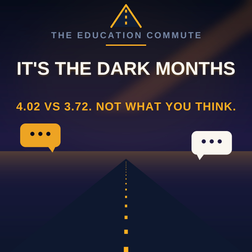
Every November, the staffroom says the same thing: it's the dark months, that's why behaviour's worse. DfE's own termly data says the autumn suspension rate really is higher than spring — 4.02 per 100 pupils vs 3.72. But DfE's own explanation isn't darkness. It's day count: autumn is simply the longest term of the year. We separate the real (but modest) gap from the mystical story built on top of it — and cover what's actually changed in the statutory suspension and exclusion guidance, in force from July this year. What's covered: The Number: 4.02 vs 3.72 suspensions per 100 pupils, autumn vs spring 2024/25 (DfE) - DfE's own structural explanation: term length, not season - The difference between advice ("should") and statutory guidance ("must") - What changed in the suspension/exclusion guidance in force from 26 July 2026 - Practical takeaways for primary, secondary and specialist settings Sources: DfE, Behaviour in schools: advice for headteachers and school staff (19 Feb 2024) - DfE, Suspension and permanent exclusion statutory guidance, in force 26 July 2026 - DfE / Explore Education Statistics, Suspensions and permanent exclusions in England, spring term 2024/25 release A printable one-pager for this episode is available at theeducationcommute.co.uk. Strand: Leaders
937 To 1,420: Ofsted's Own Annual Report

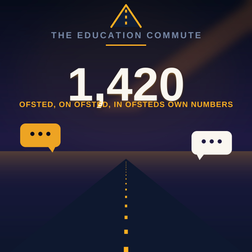
1,420 schools inspected since the renewed framework launched — up from the 937 we reported back in March. Ofsted's own annual report, published in July, also covers early years notifications up 24%, a real crackdown on unregistered schools, and — the honest surprise — Ofsted's own staff turnover improving in the same year everyone else's was under pressure. Four numbers, taken one at a time. What's covered: The Number: 1,420 schools inspected — an honest update to Ep20's own March figure of 937 - Early years notifications up 24% (~14,800 from ~9,440 providers) — and the honest admission that the report doesn't say why - The crackdown on unregistered/illegal schools: 260 investigations, 130 inspections, 23 warning notices - Ofsted's own workforce: turnover improved, engagement above the Civil Service benchmark — a mirror of Ep24's school workforce census - Same idea, three rooms: what each pillar means in primary, secondary and a specialist setting Printable one-pager for this episode, free: https://theeducationcommute.co.uk/#newsletter-staff Two free newsletters, one for staff and one for parents and carers, same evidence written for the person reading it. Sources: Ofsted annual report and accounts 2025 to 2026, published 14 July 2026 Actions for consideration: Read Ofsted's own annual report at least once — it's written for Parliament, but it says more about the sector than the inspection handbook alone. - Don't treat the 1,420 inspection figure as a national picture yet — the same coverage caveat from Ep20 still applies, just less severely. - If a pupil disappears off roll into unclear "home education," know the unregistered-schools investigation route exists. Disclosure: Both voices on this show are synthesised (NotebookLM, Google); the research, reading and editorial judgement are done by a serving practitioner. Strand: Leaders
Draft, Not Law: 3 Package Categories, Zero Expert Panel
575 against 492 — Singapore's PISA maths score against England's, both carrying real caveats. "We should just teach maths like Singapore" gets tested against the Ministry's own syllabus: a five-part framework most staffrooms have only heard one-fifth of. What's already transferred, what genuinely hasn't, and the real, homegrown story of DfE's five-year exchange — with Shanghai, not Singapore. The first episode of Global Commute, our international strand. Printable one-pager for this episode, free: https://theeducationcommute.co.uk/#newsletter-staff Two free newsletters, one for staff and one for parents and carers, same evidence written for the person reading it. Sources Singapore Ministry of Education — Primary Mathematics Syllabus (the pentagon framework and the Concrete-Pictorial-Abstract sequence, in their own words) - OECD — PISA 2022 Results, Country Note: Singapore: https://www.oecd.org/en/publications/pisa-2022-results-volume-i-and-ii-country-notes_ed6fbcc5-en/singapore_2f72624e-en.html - Schools Week on England's PISA 2022 figures and their participation caveat: https://schoolsweek.co.uk/pisa-2022-rise-in-maths-but-warning-over-inflated-results/ - NCETM — Background to the Maths Hubs Programme, including the England–Shanghai exchange: https://www.ncetm.org.uk/maths-hubs/about-maths-hubs/background-to-the-maths-hubs-programme/ What's covered The Number: 575 — Singapore's PISA 2022 maths score, 1st of 81, against England's 492 in 11th, both reported with their own caveats - Singapore's actual framework: five components around Mathematical Problem Solving — Concepts, Skills, Processes, Attitudes, Metacognition — not just the manipulatives - Why Concrete-Pictorial-Abstract has already partly transferred: it's EEF's own UK guidance, no import required - What genuinely hasn't transferred — system-wide consistency, not any single technique - The real story of DfE's five-year teacher exchange, which was with Shanghai rather than Singapore, and what it became Actions for consideration Before repeating "teach maths like Singapore", be able to name which of the five components you actually mean. - Check whether your department applies Concrete-Pictorial-Abstract consistently across every class, or whether it depends on the teacher. - Ask whether attitudes and metacognition are taught on purpose in maths lessons, or left to chance. - Read up on DfE's own Shanghai exchange before assuming a "borrowed" approach came from Singapore. Disclosure Both voices on this show are synthesised (NotebookLM, Google); the research, reading and editorial judgement are done by a serving practitioner. Said aloud in the episode, and repeated here. Strand: Global
No Holiday Clause: KCSiE Paragraph 59 On Safeguarding Cover
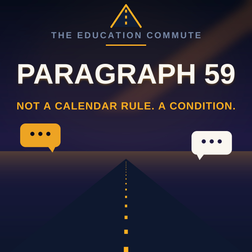
"There's definitely a holiday section in KCSiE" — said confidently at the gate on the last day of term. There isn't. What actually exists is paragraph 59: DSL cover for any exceptional absence, not written around a calendar at all. A DSL and a newer teacher find out what the guidance really says, and the one question it genuinely doesn't answer for you. What's covered: • The Number: paragraph 59 — the DSL-cover provision, quoted exactly • Why there's no dedicated "school holidays" section in KCSiE, and why that's a more useful design than it first sounds • The genuine gap the guidance doesn't answer: knowing who to escalate to vs actually being able to reach them • Same idea, three rooms: a named cover person in primary, whole-staff awareness in secondary, continuity for known families in a specialist setting • The readiness check: can you actually name who covers the DSL role over the coming break? Sources: • Keeping children safe in education 2026, Part One (gov.uk) • Printable one-pager for this episode: theeducationcommute.co.uk Actions for consideration: • Check whether your school's DSL-cover plan names an actual person for the coming break, not just "probably the head." • Make sure all staff — not just pastoral leads — know the para 59 escalation route exists at all. • Don't claim KCSiE has a dedicated holiday section when it doesn't — the principle is continuous cover, not a calendar-based rule. • For families already known to services, check the cover plan actually reflects that continuity, not a one-size approach. • Test your own cover plan's reachability, not just its existence — a name on paper isn't the same as someone who can actually be contacted. Disclosure: Both voices on this show are synthesised (NotebookLM, Google); the research, reading and editorial judgement are done by a serving practitioner. Strand: Leaders
8.75 Hours A Week Judged Unnecessary: DfE's Workload Toolkit
Box of books in the boot, term just finished, and DfE's own toolkit says 8.75 hours a week of that is self-judged unnecessary — bringable down to 7.07 with the right choices, not all of them. A three-strand term report connects the toolkit's actual menu back to the workforce census and Ofsted's own numbers already covered on this show, and asks the one question worth taking into the break. What's covered: • The Number: 1.5 hours a week — the gap between 8.75 and 7.07, honestly framed as achievable, not universally measured • Strand two: the toolkit's actual named menu (data drops, verbal feedback, whole-class marking, shared schemes, centralised detentions, fewer comms) — pick two, properly • Strand three: workload as the other half of the workforce census story (Ep24) and a mirror of Ofsted's own workforce numbers (Ep27) • Why workload conversations landing only in January solve the wrong term's problem Printable one-pager for this episode, free: https://theeducationcommute.co.uk/#newsletter-staff Two free newsletters, one for staff and one for parents and carers, same evidence written for the person reading it. Sources: • DfE, Workload Reduction Toolkit (July 2023, current guidance) Actions for consideration: • Audit your own school's workload against the toolkit's checklist rather than assuming a wellbeing policy alone covers it. • Pick two strategies from the toolkit's menu and actually stop doing the thing they replace — half-measures don't save the time. • Connect workload directly to retention conversations, not as a separate wellbeing add-on. • Raise workload at the point it's actually landing (end of term), not only in the January review cycle. • If asked, be able to name which toolkit strategies your school picked and why — not just that a policy exists. Disclosure: Both voices on this show are synthesised (NotebookLM, Google); the research, reading and editorial judgement are done by a serving practitioner. Strand: Leaders