The Confident Server: English for Restaurant Workers

The Confident Server: English for Restaurant Workers

di The Esl Room
Stagione 3

Your First 30 Days as a Server

Day one. The dining room feels like chaos. The POS system might as well be written in code. You're certain everyone can see you're lost—and you're right. The first 30 days will either break you or build you into a server the team trusts. This comprehensive framework guides new restaurant servers through their first month successfully. Learn the phased training timeline from initial observation and layout memorization to supervised practice and eventual independence. Master the POS system "golden rule" that prevents service disasters, and discover why your relationship with kitchen staff determines your survival. You'll master: The phased training timeline: observation → supervised practice → independence POS system golden rule: report technical errors immediately (avoid disasters) Building respectful kitchen relationships for smooth workflow Communication strategies for ESL employees handling language barriers Layout memorization techniques that prevent rookie mistakes Why reliability and positive attitude matter more than speed The critical first impressions that determine long-term career success Your first 30 days set your reputation. Navigate them right. Resources: 📖 Full framework with training timeline and communication strategies: https://theeslroom.com/your-first-30-days-as-a-server-how-to-succeed-in-your-new-restaurant-job/ 🎓 Complete course: https://learn.theeslroom.com/english-for-waiters Career Growth Series | ~12 minutes

How to Get Hired as a Server

"Tell me about yourself." Your mind goes blank. You've served hundreds of tables, but this interview question freezes you completely. This comprehensive guide provides practical strategies for getting hired as a restaurant server, with particular focus on non-native English speakers. Learn why preparation and attitude matter more than extensive experience, as restaurant interviews follow highly predictable patterns you can master. You'll master: Specific templates for answering common interview questions The three-step method for explaining how you resolve customer conflicts Professional attire guidelines that signal "hire me" Follow-up protocols that set you apart from other candidates Red flags to watch for in potential employers (protect yourself) Why clear communication beats perfect experience How to transform interview anxiety into confidence Restaurant interviews are predictable. Preparation is everything. Resources: 📖 Full guide with question templates and answer scripts: https://theeslroom.com/how-to-get-hired-server-interview-guide/ 🎓 Complete course: https://learn.theeslroom.com/english-for-waiters Career Growth Series | ~12 minutes
Stagione 2

Recovering from Mistakes

You spilled wine on a guest's jacket. Your heart sinks. The next 60 seconds will either end your shift in shame—or prove you're a professional who turns disasters into displays of excellence. This episode provides a comprehensive guide to mastering service recovery when inevitable errors occur. Learn the L.A.S.T. method (Listen, Apologize, Solve, Thank)—a professional framework for handling any mistake. Discover how avoiding blame and taking full responsibility activates the service recovery paradox: guests who experience perfect recovery become more loyal than those who never had a problem. You'll master: The L.A.S.T. method: Listen, Apologize, Solve, Thank (in that exact order) How the service recovery paradox increases loyalty after mistakes Taking full responsibility without the blame game Response scripts for common errors (wrong orders, spills, delays) Prevention checklists that stop mistakes before they happen Manager escalation protocols (when to get help vs. handle it yourself) Why sincere apology + swift solution = professional excellence Human error is unavoidable. How you manage the aftermath determines your reputation. Resources: 📖 Full guide with L.A.S.T. framework and response scripts: https://theeslroom.com/recovering-from-mistakes-restaurant-service-errors/ 🎓 Complete course: https://learn.theeslroom.com/english-for-waiters Confidence Workshop Series | ~12 minutes
Phone & Reservations: Taking Calls and Booking Tables in Professional English

The phone rings. Your heart races. You can handle face-to-face service perfectly, but answering without visual cues—just your voice and English skills—feels like stepping onto a stage unprepared. This episode provides a structured framework for mastering professional phone etiquette and reservation management. Learn the four-part greeting formula, follow the seven-step booking checklist (party size, dietary needs, contact info), and gain scripted responses for fully booked nights and difficult callers. You'll master: Four-part greeting formula for instant professionalism Seven-step reservation checklist preventing errors Why smiling while speaking changes your vocal tone Reconfirming details without sounding uncertain Handling difficult situations: full bookings, rude callers Vocal confidence without visual cues Real call scenarios with scripted responses. Resources: 📖 Full guide with formula and checklist: https://theeslroom.com/phone-reservations-restaurant-english-booking-calls/ 🎓 Complete course: https://learn.theeslroom.com/english-for-waiters Confidence Workshop Series | ~12 minutes
Numbers & Money in Restaurant English

"Your total is forty-two thirty-three." You say it perfectly. But the guest looks confused. The problem? You're using numbers like a textbook, not like a native speaker. This episode provides practical language strategies for navigating every financial interaction effectively. Master how native speakers say prices, learn vocabulary for payment methods and split checks, gain mental math shortcuts, and discover diplomatic phrases for declined cards and billing errors. You'll master: Natural price pronunciation: "fourteen fifty" not "fourteen point five zero" Payment vocabulary and split check clarity Mental math for tips, tax, and splits Diplomatic phrases for sensitive financial situations American tipping etiquette communication Financial transparency that increases tips Real scenarios: pricing inquiries, declined cards, complex splits, billing errors. Resources: 📖 Full guide with vocabulary and math shortcuts: https://theeslroom.com/numbers-money-restaurant-english-bills-tips/ 🎓 Complete course: https://learn.theeslroom.com/english-for-waiters Confidence Workshop Series | ~12 minutes
Speaking to Managers & Coworkers

You've mastered guest language. But the moment you turn to the kitchen, you need something completely different: direct, efficient coordination that keeps high-pressure shifts running smoothly. This episode provides a comprehensive framework for workplace English in restaurants—the behind-the-scenes language with managers, chefs, and coworkers. Learn essential industry terminology ("86," "in the weeds," "on the fly"), practical phrases for scheduling and kitchen coordination, and how active listening and professional brevity build team confidence. You'll master: The distinction between guest language (polished) and workplace language (efficient) Essential restaurant terminology and industry shorthand Kitchen coordination without conflict Professional scheduling requests and conflict resolution Transitioning from language student to capable team player Real scenarios in fast-paced kitchen environments. Resources: 📖 Full framework with terminology guide: https://theeslroom.com/peaking-to-managers-coworkers-restaurant-english/ 🎓 Complete course: https://learn.theeslroom.com/english-for-waiters Confidence Workshop Series | ~12 minutes
Formal vs Casual Restaurant English

Same job. Same language. Completely different restaurants. Using casual language in a fine dining restaurant makes you sound unprofessional. Using formal language in a casual diner makes customers uncomfortable. The difference between these communication styles can be the difference between fitting in or standing out—for the wrong reasons. In this episode, we break down exactly when to use formal versus casual English in restaurants, and give you the complete phrase bank for both styles. You'll learn why "What can I get you?" works perfectly in a sports bar but fails in an upscale steakhouse, and discover how to read restaurant cues so you always match the expected communication level. You'll Learn: The three restaurant types and their expected communication styles (casual, mid-range, fine dining) Side-by-side phrase comparisons: "Hey guys!" vs "Good evening, welcome" How to read restaurant cues (menu prices, dress code, atmosphere) to determine the right style Why using the wrong style damages tips even when your service is perfect The specific words that signal "formal" vs "casual" to English speakers How to switch between styles when you work multiple restaurant types Regional differences: American casual vs British formal Common Mistakes Covered: Why "No problem!" sounds unprofessional in fine dining (say this instead) Using "you guys" in upscale restaurants (this kills your tip) The danger of being too formal in casual settings (customers feel uncomfortable) Why first-person language ("I'll get that for you") works everywhere How mixing formal and casual in the same sentence confuses customers Follow side-by-side scenarios as we compare how the same situation (taking a drink order, presenting the check, handling a complaint) sounds in casual versus fine dining restaurants. You'll hear exactly which words change and why. Perfect for: Servers who work in different restaurant types, ESL workers learning natural English registers, and anyone who wants to sound appropriately professional for their restaurant level. Here's the key insight: Native English speakers don't think about formal vs casual—they feel it. This episode makes the invisible rules visible so you can match customer expectations naturally. Resources: 📖 Read the full blog post with 50+ formal and casual phrase comparisons: https://theeslroom.com/formal-vs-casual-restaurant-english/ 🎓 Master both communication styles and all restaurant English situations: Get the complete English for Waiters course at https://learn.theeslroom.com/english-for-waiters Episode from: Confidence Workshop Series Duration: ~12 minutes
Stagione 1

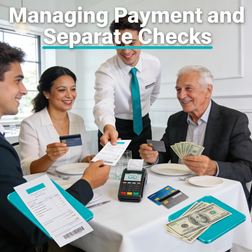
Managing Payment and Separate Checks

"Can we split this six ways?" "Wait, she's paying for his meal but not mine." "I'll cover the appetizers, he's got the drinks, and we're splitting the mains." It's the end of the meal, you're slammed, and the payment chaos is about to cost you 15 minutes and probably your tip. Unless you know the system. In this episode, we reveal the professional payment management system that turns the most complicated check situations into smooth, error-free transactions. You'll learn why the best servers prevent payment confusion before it starts, discover the exact questions to ask when seating a table, and master the techniques that save time while increasing your tips. You'll Learn: The one question to ask when seating that prevents 90% of payment problems The seat numbering system that eliminates "Who had the salmon?" forever How to handle split checks without slowing down your service Professional phrases for managing shared items (appetizers, bottles, desserts) The psychology of payment timing that increases tips Why presenting the check too early or too late costs you money How to process separate cards efficiently without multiple trips Common Mistakes Covered: Why waiting until the end to ask about separate checks creates chaos The danger of not writing down who ordered what (memory fails under pressure) How confusion about the bill destroys tips even when service was perfect Why saying "The system can't split that" makes you look incompetent The biggest mistake: not clarifying shared items before they're ordered Follow real scenarios as a professional server manages everything from a simple two-way split to a complex business dinner with seven people, multiple payment methods, and shared appetizers—all without confusion or delays. Perfect for: Servers who want to eliminate payment stress, speed up table turnover without rushing guests, and protect their tips when handling complex bills. Here's the reality: Payment is the last interaction customers have with you. Confusion here erases the memory of perfect service. Smooth checkout? They remember you as a professional and tip accordingly. Resources: 📖 Read the full blog post with all payment scripts: https://theeslroom.com/managing-payment-separate-checks-restaurant-server-guide/ 🎓 Master all payment situations and checkout procedures: Get the complete English for Waiters course at https://learn.theeslroom.com/english-for-waiters Episode from: Deep Dive Series Duration: ~12 minutes

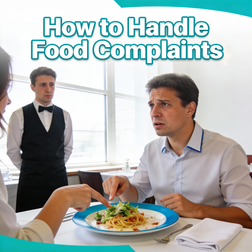
How to Handle Food Complaints

The steak is overcooked. The pasta is cold. The customer is upset. In the next 60 seconds, you'll either lose this table forever—or turn them into your most loyal guests. Here's the truth professional servers know: complaints aren't failures. They're opportunities. When handled correctly, a guest who complains becomes more loyal than one who never had a problem in the first place. This is the service recovery paradox—and it can transform your tip average. In this episode, we break down the proven three-step recovery system that turns food complaints into customer loyalty. You'll learn why your instinct to explain what went wrong actually makes things worse, discover the exact apology phrases that rebuild trust, and master the follow-up technique that guarantees they'll come back. You'll Learn: The three-step recovery system: Listen, Apologize, Solve (in that exact order) Why letting them finish complaining completely is crucial (even when you already know the solution) The "apologize for the experience" technique that works even when it's not your fault Specific solution phrases that show ownership without making promises you can't keep The 2-minute follow-up that most servers skip (this guarantees loyalty) How to communicate with the kitchen during recovery without throwing them under the bus Common Mistakes Covered: Why saying "That's the kitchen's fault" destroys your tip and your reputation The danger of offering solutions before the customer finishes explaining How defensive body language undermines even perfect words Why asking "What do you want me to do?" makes you look incompetent The biggest mistake: not following up after the replacement dish arrives Follow a real scenario as a professional server handles an overcooked steak complaint—from the initial response through kitchen communication to the final follow-up that earns a generous tip despite the problem. Perfect for: Servers who want to turn mistakes into opportunities, protect their income when things go wrong, and build a reputation for exceptional service recovery. Here's the reality: Every restaurant has problems. The difference between average and exceptional servers isn't avoiding complaints—it's handling them so well that customers trust you more, not less. Resources: 📖 Read the full blog post with 50+ recovery phrases: https://theeslroom.com/handle-food-complaints-restaurant-server-script/ 🎓 Master all difficult customer situations and service recovery techniques: Get the complete English for Waiters course at https://learn.theeslroom.com/english-for-waiters Episode from: Deep Dive Series Duration: ~12 minutes

How to Upsell Without Being Pushy

Most servers think upselling means being pushy. They're wrong—and it's costing them hundreds of dollars in tips every month. The secret? Professional servers don't "sell." They guide customers to better choices. This subtle shift in approach transforms upselling from an uncomfortable pitch into a natural part of excellent service—and it can add $1000+ to your monthly income. In this episode, we reveal the psychology behind why certain phrases make customers say yes while others trigger resistance. You'll learn the exact words that position you as a trusted advisor rather than a salesperson, and discover why the best upselling happens before customers even look at the menu. You'll Learn: The "advisor mindset" that makes upselling feel natural (not pushy) Why saying "Would you like dessert?" kills your sales The three perfect moments to upsell (most servers miss #2) Power phrases that increase dessert sales by 40% How to read customer cues so you never pressure the wrong table The psychology of menu language that triggers buying decisions Common Mistakes Covered: Why asking "anything else?" at the wrong time loses sales The danger of listing options instead of making recommendations How uncertainty in your voice destroys trust and sales Why servers who "don't want to be pushy" actually provide worse service Follow real scenarios as professional servers guide customers toward premium appetizers, wine pairings, and desserts—using natural language that feels helpful, not sales-y. You'll hear the exact timing, phrasing, and body language that separates high-earning servers from average ones. Perfect for: Servers who want to increase their income without feeling uncomfortable, build customer trust, and master the art of guiding (not selling). Think of it like this: A sommelier doesn't ask "Do you want wine?" They say, "I'd recommend pairing this with our Pinot Noir—it brings out the mushroom notes beautifully." Same technique, different product. Resources: 📖 Read the full blog post: https://theeslroom.com/upsell-restaurant-server-natural-techniques/ 🎓 Master all upselling techniques and increase your tips: Get the complete English for Waiters course at https://learn.theeslroom.com/english-for-waiters Episode from: Deep Dive Series Duration: ~12 minutes
2 di 3