Registrati gratis
Funzionalità
Risorse
Prezzi
Podcasts
Registrati gratis
Accedi
The 24 Frames Cast
di Thomas Jennings
TV e Film
Feed RSS
Sito web
Ascolta su
Condividi
Episodi
Dettagli
Stagione 2
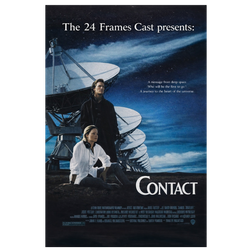
Contact
In this episode, I explore the themes of science, faith, and belief through the lens of the film Contact. The discussion looks at how the story challenges the divide between evidence and personal experience, particularly when the film’s scientist protagonist finds herself defending something she cannot prove. Along the way, the episode reflects on how people understand scientific knowledge, why debates about design and evolution persist, and how both believers and non-believers search for meaning in the universe.
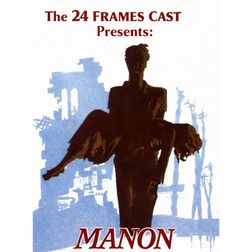
Henri-Georges Clouzot's Manon
This episode explores Manon as both a tragic love story and a sharp portrait of postwar France. We examine how Henri-Georges Clouzot adapts an 18th-century novel into a study of moral ambiguity in the shadow of Liberation and the trial of Philippe Pétain. The discussion focuses on Manon as a socially marked woman shaped by poverty, sexuality, and public judgment, and on Robert as a dislocated Resistance fighter whose devotion masks instability rather than heroism. We consider how Clouzot crafts a distinctly unsentimental “woman’s picture,” how his visual style reflects a climate of suspicion and exhaustion, and how the film anticipates the psychological pressure of later works like The Wages of Fear and Les Diaboliques. Subscribe here
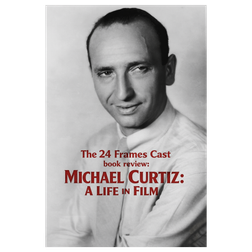
Book review: Michael Curtiz: A Life in Film
I love books about films so I thought it would be nice to share a recent recommendation. Michael Curtiz: A Life in Film is more than just a biography; it's a journey through the history of Hollywood in the Golden Age and an absolute must read. Buy here Subscribe to The 24 Frames Cast here
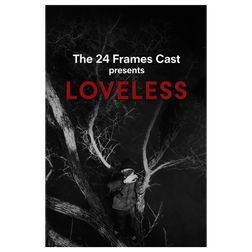
Loveless
Loveless is Andrey Zvyagintsev’s chilling portrait of a family — and a society — defined by emotional absence. Framed around the disappearance of a child, the film refuses the comforts of mystery or redemption, instead observing how indifference, distraction, and self-interest quietly shape everyday life. Through its restrained style and unflinching gaze, Loveless becomes less a story about loss than a study of what happens when care itself erodes — in private relationships and in the world beyond them.
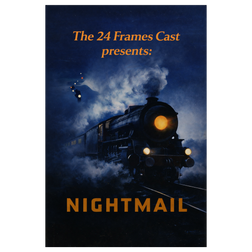
Night Mail
This episode explores Night Mail (1936) as both a defining work of British documentary cinema and a carefully constructed piece of modernist art. Through close discussion, the podcast examines how the film presents work not as glamorous or heroic, but as essential, collective labour that underpins modern life. It considers the historical context of the GPO Film Unit and John Grierson’s vision of documentary as a civic tool, alongside the film’s innovative production methods and stylistic choices. The episode pays particular attention to Night Mail’s formal design: its rhythmic editing, overtly composed soundscape, and the way image, music, and narration are tightly integrated. Central to this discussion is W. H. Auden’s poem, analysed as the film’s aesthetic and thematic climax, where industrial process, human connection, and national identity converge. By treating Night Mail as both a social document and a work of art, the podcast asks why the film still matters today—what it reveals about attitudes to labour, infrastructure, and collective responsibility, and what it continues to teach us about the expressive possibilities of documentary filmmaking. The film: https://www.youtube.com/watch?v=qLkvPG-iYHM Where to buy: Amazon
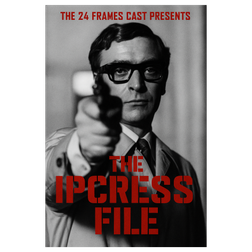
The Ipcress File
Britain in the 1960s liked to imagine itself as a global saviour. James Bond told us we still ran the world. But The Ipcress File told a very different story. In this episode of Celluloid Underground, we take a deep dive into one of the most quietly radical spy films ever made — a Cold War thriller that strips espionage of glamour and replaces it with paranoia, paperwork, and psychological warfare. We explore how a fading post-imperial Britain is reflected in cramped offices, petty bureaucratic rivalries, and a hero who shops for groceries instead of saving the world. We examine Sidney J. Furie’s disorienting visual style, John Barry’s unsettling score, and how the film creates an atmosphere where no one — not even your superiors — can be trusted. This is not a story about power. It’s a story about uncertainty. About loyalty under pressure. And about what happens when the Cold War moves inside the human mind. If you think spy films are about gadgets and glamour, The Ipcress File will change your mind. Subscribe here: https://media.rss.com/the-24-frames-cast/feed.xml https://x.com/thomas24fc https://www.youtube.com/@tomjay1979
APP Review - PBS
In this episode, we take a closer look at the PBS App—what it offers and whether it’s worth adding to your streaming lineup. From award-winning documentaries to trusted news and thoughtful storytelling, I also spend a little time with Ken Burns, one of PBS’s most iconic voices. Known for his deeply human approach to American history, Burns has shaped how generations experience documentaries—through powerful stories, unforgettable narration, and a style that invites you to slow down and really listen. All music licensed through Music Bed
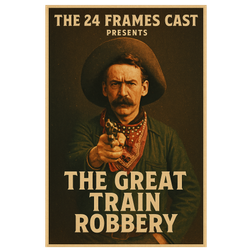
The Great Train Robbery
In this episode, we travel back to 1903 to explore the film that helped define American cinema long before Hollywood found its voice. The Great Train Robbery isn’t just an early Western—it’s a landmark collision of myth, modernity, and narrative invention. Released while real outlaws were still roaming the frontier, the film stands at a pivotal moment when the American West was fading into history but rising into legend. We examine how Edwin S. Porter’s short, violent, technically daring film transformed cinema from a novelty into a storytelling medium. From its startling alignment with the outlaws to its groundbreaking use of action, movement, and editing, The Great Train Robbery shaped the themes that would dominate American film for the next century: frontier justice, charismatic violence, technological change, and the thin line between spectator and participant. We also unpack the film’s iconic final shot—a bandit firing directly into the camera—and why it remains one of the most provocative gestures in film history. If you’ve ever wondered how the Western became myth, how cinema learned to tell stories, or why American film has always been fascinated with outlaws, this deep dive uncovers the origins of it all. A revisionist Western before revisionism existed. A myth created in real time. And a twelve-minute film that changed everything. Where to watch: https://www.youtube.com/watch?v=In3mRDX0uqk All music licensed through Music Bed
The History of the 70mm Blow Up
In this episode, The 24 Frames Cast dives deep into one of cinema’s most fascinating and overlooked revolutions: the rise of the 70mm blow-up. Beginning with Otto Preminger’s The Cardinal in 1963—an ordinary 35mm film that stunned audiences when projected in 70mm—the episode explores how Panavision, Eastman Kodak, and Technicolor worked together to create a process so convincing that even seasoned projectionists mistook it for true 65mm photography. From the widescreen arms race of the 1950s to the golden era of roadshow presentations, we trace how exhibitors’ demand for spectacle drove the development of blow-up technology. The episode examines the birth of Dolby 70mm six-track magnetic sound, the introduction of the famous “baby boom” bass channels, and how these innovations laid the foundation for the 5.1 and 7.1 systems we use in home cinemas today. The Movie Collector You Tube Channel: https://www.youtube.com/watch?v=KBss6hGjKeM In 70mm Website: https://www.in70mm.com Music: https://www.musicbed.com
Stagione 1
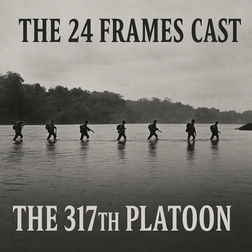
The 317th Platoon
In this deep-dive episode of The 24 Frames Cast, we journey into the dense Cambodian jungles to explore one of the most haunting and overlooked war films ever made: The 317th Platoon (1965). Directed by former Indochina War veteran Pierre Schoendoerffer, this stark, unflinching portrayal of a French platoon’s doomed retreat reveals the final gasps of France’s colonial ambitions and eerily anticipates America’s later tragedy in Vietnam. I will examine the film’s astonishing on-location production, its quasi-documentary realism, and the powerful dynamic between the young idealistic lieutenant and the hardened career soldier L’adjudant Willsdorf, whose lifetime of fighting France’s colonial battles becomes a symbol of a collapsing empire. Through scene analysis, historical context, and cinematic insight, this episode unpacks the film’s place in world cinema and why its quiet, devastating truth still resonates today.
2 di 5