Simply Science

Simply Science

di EnolaSays
Stagione 2

Muon Tomography Explained

Welcome to Simply Science, where we uncover complex science in simple terms. In this episode, we dive into muon tomography, a groundbreaking imaging technique that uses cosmic particles to "see" inside massive objects like volcanoes, ancient pyramids, and even nuclear reactors. Unlike traditional X-rays, muon tomography is safe, passive, and ideal for visualizing dense materials. Join us as we explore how scientists harness naturally occurring muons to create 3D images of hidden structures and what this technology could mean for archaeology, geology, and beyond. Tune in to discover the power of cosmic rays right beneath our feet! Let us know if you’re ready to learn about this cosmic imaging method that’s transforming the way we look at the world—one particle at a time.
Stagione 1

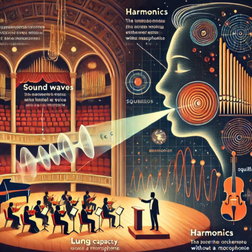
Science of Human Voice in Opera Explained

Welcome to Simply Science, the podcast where we break down complex scientific phenomena into simple, fascinating insights. Today, we're stepping into the world of music—specifically, the power and mystery of the human voice in opera. Have you ever wondered how opera singers, without any microphones, can fill an entire concert hall with their voices, projecting over a full orchestra? How do they make their voices carry so far and so clearly? Well, the answer lies not just in talent, but in some incredible science. In this episode, we’ll explore how opera singers use advanced vocal techniques to manipulate sound and make their voices soar. We’ll break down the physics behind this feat, from the concept of harmonics to the precise control of breath and airflow. Opera singing is not just an art form, it’s also a masterclass in vocal science, and we’re here to explain how it all works.

Atomic Clocks Explained

In this episode of Simply Science, we take a deep dive into the world of atomic clocks—the most precise timekeeping devices ever invented. Although this episode begins with a request to explain atomic clocks in simple terms, we use it as a starting point for an educational journey into the fascinating science that powers these ultra-accurate timepieces. We’ll explore how atomic clocks work, why they are so important for technologies like GPS and telecommunications, and how they have revolutionized our ability to measure time with unparalleled precision. We also delve into the history of timekeeping, from early mechanical clocks to the atomic age, and explain the physics behind how atoms, lasers, and microwaves come together to keep time ticking perfectly. Tune in to learn about the incredible technology behind the devices that help synchronize the world down to the nanosecond!

Nonlinear Dynamics Explained

In this episode of Simply Science, we break down the concept of nonlinear dynamics in a way that's easy to understand, even for those without a background in science. Nonlinear dynamics is all about systems that don’t follow straightforward, predictable rules—instead, they behave in ways that can seem chaotic and complex, with small changes sometimes leading to big consequences. We’ll explore examples of nonlinear systems from nature, like weather patterns, ecosystems, and even the human brain. Along the way, we’ll explain why these systems are so hard to predict and how scientists study them to find hidden patterns in the chaos. If you’ve ever wondered how something as simple as a flap of a butterfly’s wings could theoretically change the course of a hurricane, this episode is for you.

Random Walk Explained

Welcome to Simply Science, the show where we break down complex ideas and make them… well, simply fascinating! I’m your host, and today we’re diving into the intriguing world of random walks. Don’t worry—this isn’t just about taking a stroll in the park! Imagine you’re walking in the woods and, bump into the same couple over and over again. Strange, right? Well, it’s an example mathematician George Polya used to illustrate the concept of a random walk—a series of unpredictable steps that can take you anywhere, sometimes even back to where you started. In today’s episode, we’ll explore how these random walks behave, their quirky mathematical properties, and why they often resemble those classic bell curves. We’ll also dig into the difference between recurrent random walks, where you can end up revisiting your starting point, and transient ones, where you never come back. And, finally, we’ll take a look at biased random walks, where some directions are more likely than others—and how this simple idea is applied to everything from computer algorithms to financial modeling and even gambling! So stick around, and get ready to discover the randomness behind the steps we take, here on Simply Science.

The Hidden Paths of Attraction Explained

Ever wondered why systems—from weather patterns to financial markets—settle into certain predictable behaviors while remaining highly sensitive to initial conditions? In this episode of Simply Science, we explore the concept of the basin of attraction. Learn how dynamic systems, whether in nature or, in technology, are pulled toward specific outcomes, known as attractors, and how tiny variations in starting points can lead to vastly different results. We’ll unpack real-world examples, from climate science to economics, to explain how understanding these basins can help predict the unpredictable. Join us to discover the hidden forces guiding complex systems and their seemingly chaotic behaviors!

The Math Behind the Gamble Explained

In this episode of Simply Science, we explore the exciting intersection of gambling and mathematics to better understand probability and decision-making. Through the lens of games of chance, we’ll break down complex mathematical concepts like dynamic programming, Bayesian statistics, and stochastic processes, showing how they apply not only to gambling but also to broader real-world scenarios. We begin by introducing the gambler's problem, a mathematical framework used to describe a gambler's choices, resources, and desired outcomes. From here, we dive into the world of casino games, exploring how casinos maintain a statistical advantage through subfairness—designing games that appear fair, but actually tip the scales in their favor. We'll also explore how gamblers use various strategies and how mathematical tools can optimize decision-making in uncertain environments.

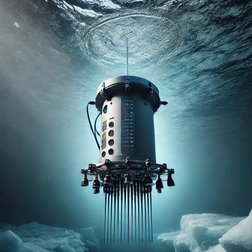
Listening to the Ice, Acoustic Tomography Explained

In this episode of Simply Science, we delve deep into the fascinating world of acoustic thermometry research in the Arctic Ocean. With its rapidly changing environment, the Arctic serves as a crucial focal point for understanding climate change and ocean dynamics. We explore how scientists are using sound to measure ocean temperature and track changes in water mass structure and sound speed profiles in response to thinning ice, warmer waters, and human activities. We’ll also discuss the challenges researchers face, from harsh ice conditions to logistical hurdles, as well as the technological advancements that are making this critical work possible. From impacts on climate models and ocean circulation to the broader ecological consequences, join us as we uncover why the Arctic is more than just a frozen frontier—it's a key to our understanding of Earth's future climate.


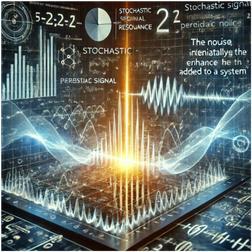
Stochastic Resonance Explained

In Simple Science, we break down complex ideas into something you can easily understand. In this episode, we explore the fascinating concept of stochastic resonance—a surprising phenomenon where a little bit of noise can actually help make weak signals clearer! Whether it's helping animals hear better in noisy environments or improving medical devices, you'll learn how randomness can sometimes be a good thing. No complicated math or jargon, just clear explanations and fun examples that show how this quirky part of science plays a role in our everyday lives.
3 di 3