Simply Science

Simply Science

di EnolaSays
Stagione 3

Brownian Motion Explained - Part 2

In this episode of Simply Science, we are getting ready to uncover how Albert Einstein proved atoms are real with the unexpected help of dancing pollen! In this episode, we explore the curious mystery of Brownian Motion—first spotted by botanist Robert Brown in 1827, who watched pollen grains jitter in water. Scientists scratched their heads for decades, wondering what caused this strange dance. Enter Einstein! In 1905, he connected these wiggles to invisible collisions with molecules, using math to finally prove atoms exist. French physicist Jean Perrin later put Einstein’s theory to the test, sealing the deal on atomic reality and winning a Nobel Prize:) Join us as we trace this epic journey from curious pollen to scientific proof, showing how Einstein’s clever calculations made the invisible, visible.

Brownian Motion Explained - Part I

In this episode of Simply Science, we are getting ready to uncover how Albert Einstein proved atoms are real with the unexpected help of dancing pollen! In this episode, we explore the curious mystery of Brownian Motion—first spotted by botanist Robert Brown in 1827, who watched pollen grains jitter in water. Scientists scratched their heads for decades, wondering what caused this strange dance. Enter Einstein! In 1905, he connected these wiggles to invisible collisions with molecules, using math to finally prove atoms exist. French physicist Jean Perrin later put Einstein’s theory to the test, sealing the deal on atomic reality and winning a Nobel Prize:) Join us as we trace this epic journey from curious pollen to scientific proof, showing how Einstein’s clever calculations made the invisible, visible.

Reinforcement Learning Explained

In this episode of Simply Science, we unpack Reinforcement Learning (RL) and how it’s being used to control complex systems where even tiny changes can lead to big impacts. Imagine controlling a robot or a vehicle that needs to adapt to unpredictable environments—that's where RL shines. Through trial and error, RL algorithms can learn to make smart decisions, even without knowing all the details about how a system works. But there’s a catch -training these algorithms is data-hungry and computationally heavy, and even small tweaks in setup, or hyperparameters can greatly affect their performance. Still, RL holds huge promise for advancing technology in fields like robotics and autonomous systems. Whether you're a tech enthusiast or just curious about the science behind smart systems, tune in for a clear and simple look at how RL is shaping the future!
Stagione 2

Supernatural Sensations Explained

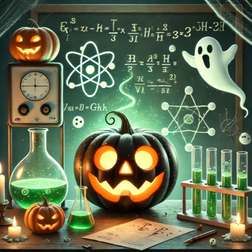
In this spine-tingling episode, we dive into the science behind the paranormal, exploring whether “hauntings” could be explained by natural phenomena. From the eerie effects of infrasound to the unsettling sensations from electromagnetic fields, we’re looking at the research that sheds light on the science behind ghostly encounters. You’ll learn how carbon monoxide poisoning, sleep paralysis, and even the power of suggestion can play tricks on the mind, creating sensations that many interpret as supernatural. With real-life examples and intriguing research, we break down each phenomenon, discussing how our bodies and minds can lead us to see—or hear—things that aren’t there. Join us as we uncover the science behind the supernatural and find out if ghosts might just have an explanation grounded in physics, biology, and psychology. Get ready for a rational yet eerie exploration into what might be behind those bumps in the night!

Hydrophones Explained

Ever wanted to know what the ocean is talking about? Grab your headphones and get ready to dive deep—Simply Science is tuning into the underwater world with hydrophones! In this episode, we’re uncovering the hidden lives of marine creatures and exploring how scientists use these underwater microphones to “eavesdrop” on everything from whale love songs to territorial fishy arguments. We’ll start with the basics: how do hydrophones work? Capturing the soft clicks of dolphins and the low rumbles of deep-sea giants isn’t easy, but these clever devices are up to the task. Once you understand how they work, we’ll dive into the ocean’s soundscapes, where you’ll hear some unexpected underwater voices, from snapping shrimp to the haunting calls of whales.

Nature Inspired Radars Explained

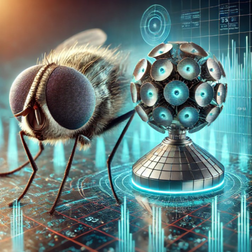
Get ready to see the world through a fly’s eyes—literally! In this episode of Simply Science, we’re diving into a mind-bending new tech inspired by the compound eyes of flies. Imagine an antenna array with superpowers: dozens of tiny “eyes” (aka antennas) working together to give wide-area coverage and laser-precise direction-finding. We’ll break down how this “fly’s-eye” tech lets us spot, track, and analyze anything in its path with insane speed, catching details down to an object’s shape, using something called phase-shift magic. But it doesn’t stop there. This tech can operate across different frequency bands, detect signals from miles away, and might even end up on fleets of robotic carriers—hello, sci-fi surveillance! Whether you’re into high-speed radar, next-level navigation, or just love seeing nature inspire cool new tech, this episode has it all. Buckle up and join us for a peek at a world where science fiction meets real life!

Gravitational Waves Explained

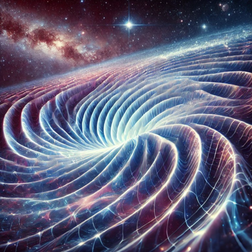
Join us through the cosmos in this episode of Simply Science! We dive into the intriguing world of gravitational waves—ripples in spacetime caused by the acceleration of massive objects like colliding black holes or neutron stars. Discover how these elusive waves were first predicted by Einstein's theory of general relativity and the groundbreaking technology behind their detection. We'll break down complex concepts into bite-sized pieces, making them accessible for everyone, regardless of their scientific background. Hear from experts in the field, listen to captivating stories from recent discoveries, and explore what gravitational waves can tell us about the universe's most violent events. Whether you’re a science enthusiast or just curious about the universe, this episode promises to enlighten and inspire. Tune in and let’s ride the waves of discovery together!

Quantum Computing Explained

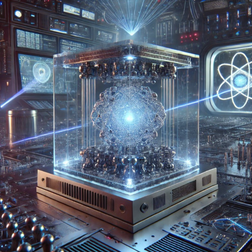
In this episode of Simply Science where we break down the cutting-edge world of quantum computing and explore its massive potential to reshape technology and tackle global challenges. The UK has just unveiled its first National Quantum Computing Centre (NQCC), sparking new interest in the powerful future of quantum technology. But what makes quantum computing different from the computers we use daily? And why could it soon become essential across industries from finance to healthcare? Join us as we demystify quantum computing’s fascinating principles—from qubits and superposition to entanglement—and reveal how this technology, with only six operational quantum computers currently in the UK, is gearing up to be a trillion-pound powerhouse by 2035. We’ll dive into the mind-bending physics behind qubits, explore how quantum computers solve problems faster than ever imagined, and discuss real-world applications, like rapid drug discovery and climate modeling.

Science of AI Nobel Prize Explained

Buckle up, science fans! In this episode of SimplyScience, we're diving into a mash-up that’s changing the world: physics meets machine learning! This year’s Nobel Prize in Physics went to two rockstars, John Hopfield and Geoffrey Hinton, whose work decades ago set the stage for today’s AI revolution. Ever wonder how machines “learn”? Well, it all started with these guys taking inspiration from magnetic spins, brainy neurons, and good old physics principles. We’ll break down how their groundbreaking models, the Hopfield network and Boltzmann machine, use energy levels and "temperature" to help computers make decisions. It’s like watching AI perform a dance choreographed by physics—and trust us, it’s got some moves!
Colors of the Noise Explained

In this episode of Simply Science, we dive into the intriguing spectrum of noise "colors," uncovering the unique qualities and uses of each. From white and pink to brown, violet, and blue noise, we'll explain how these sounds differ in frequency patterns and why each resonates with us in distinct ways. Using real-world examples, we'll explore their applications in audio engineering, sleep aids, and tinnitus therapy, shedding light on how sound influences our brain and body. Wrapping up with a playful look at "black noise," we invite you to join the conversation and share your questions and ideas for future topics!
2 di 3