Philosophy for Better Humans.

Philosophy for Better Humans.

di Joey Caster

What if everything you’ve been told about self-improvement is wrong?

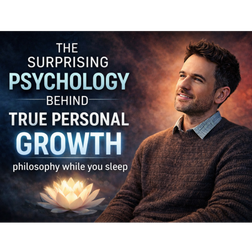
The Surprising Psychology Behind True Personal Growth SEO Description: What if everything you’ve been told about self-improvement is wrong? In this powerful, cinematic episode of Philosophy for Better Humans, narrator Charles Sebastian Whitby guides you through the hidden truth behind genuine personal growth. This isn’t about morning routines or hustle culture. It’s about confronting your deepest discomforts, embracing vulnerability, and stripping away illusions to become who you were truly meant to be. Blending timeless philosophy with cutting-edge psychology, this episode explores the works of Viktor Frankl, Carl Jung, the Stoics, Joseph Campbell, and modern neuroscience to reveal why real transformation comes not from adding more—but from letting go. With vivid storytelling, emotional depth, and soul-stirring metaphors, this long-form audio experience is designed to help you reflect, reset, and reconnect with what matters most. 🎧 Perfect for deep thinkers, creatives, and seekers—and calming enough to listen while falling asleep. Whether you're facing burnout, struggling with direction, or simply ready to grow beyond the surface, this episode will challenge and inspire you to begin your real journey. Keywords: true personal growth, psychology of self-improvement, Viktor Frankl meaning, Jungian shadow, Stoic resilience, philosophy podcast sleep, long-form podcast personal development, Joseph Campbell hero’s journey, Philosophy for Better Humans

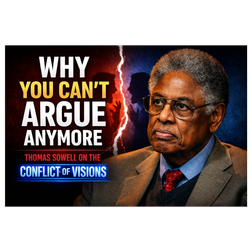
Thomas Sowell and the Conflict of Visions: Why You Can't Argue Anymore

Episode Title: Thomas Sowell and the Conflict of Visions: Why We See the World So Different. Description: Why do intelligent, well-meaning people disagree so deeply about justice, equality, and progress? In this cinematic episode of Philosophy for Better Humans, narrator Charles Sebastian Whitby explores the groundbreaking ideas of economist and philosopher Thomas Sowell. Drawing from A Conflict of Visions, The Vision of the Anointed, and Intellectuals and Society, this episode unpacks the two worldviews—constrained and unconstrained—that shape our politics, culture wars, identity debates, and personal lives. Whether you lean left or right, Sowell’s framework offers profound insight into modern polarization, identity politics, AI ethics, education reform, and leadership. This deeply human, story-rich episode is perfect for listeners seeking clarity, wisdom, and practical tools to navigate today’s divided world. Keywords: Thomas Sowell philosophy, A Conflict of Visions summary, constrained vs unconstrained vision, modern polarization, identity politics debate, Sowell podcast, conservative vs progressive worldview, political psychology, Vision of the Anointed, philosophy podcast, Charles Sebastian Whitby

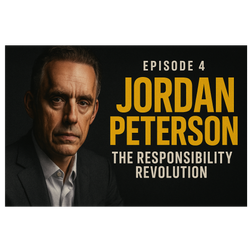
Jordan Peters and his Responsibility Revolution

Jordan Peterson: The Responsibility Revolution Why does Jordan Peterson say that meaning isn’t found in happiness… but in responsibility? In this episode of Philosophy for Better Humans, we explore the core philosophy behind Peterson’s work: the belief that taking responsibility — for your life, your habits, your future, and your character — is the path to strength, purpose, and self-respect. We break down why this idea resonates with millions of people today, especially those searching for direction, clarity, and a sense of identity in a chaotic world. This episode looks beyond the headlines and controversies. We focus on the ideas: discipline, meaning, sacrifice, personal truth, order vs. chaos, and the quiet revolution that begins when you decide to carry a heavier load. If you want to rebuild yourself… If you want to aim higher… If you want to stop feeling lost and start feeling responsible… This episode will speak directly to your soul. ✨ What You’ll Learn in This Episode Peterson’s core concept: responsibility as the antidote to chaos Why meaning is earned, not found The psychological importance of order, discipline, and daily structure How taking ownership builds confidence and competence Why avoiding responsibility leads to anxiety, resentment, and purposelessness The connection between truth-telling and personal strength How small daily improvements reshape your identity Practical ways to take responsibility for your life starting today Jordan Peterson podcast, Jordan Peterson philosophy, Jordan Peterson responsibility, self-improvement podcast, meaning and purpose, discipline and mindset, take responsibility for your life, personal growth for men, how to improve your life, Philosophy for Better Humans, betterment podcast, psychological growth tools, Jordan Peterson analysis, identity and responsibility. 💬 If this episode inspired you: ✓ Like the video ✓ Subscribe for weekly philosophy deep dives ✓ Drop a comment on how taking responsibility has changed your life 🎙 About the Podcast: Philosophy for Better Humans A weekly exploration of the world’s greatest thinkers — from philosophers to psychologists to world leaders — revealing how their ideas can help you build character, meaning, and a more intentional life.

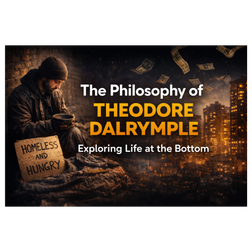
Theodore Dalrymple — Life at the Bottom: The Worldview That Shapes Destiny

Theodore Dalrymple — Life at the Bottom: The Worldview That Shapes Destiny In this episode, we explore the provocative and powerful ideas of Theodore Dalrymple, a physician and writer who spent decades working with people living on society’s margins. Dalrymple argues that poverty today is not only financial—it’s philosophical. The stories we tell about our lives can limit us or liberate us. We examine: how language shapes agency why responsibility can feel painful but freeing what discipline offers the human spirit how compassion and accountability must work together how meaning is built through structure, sacrifice, and commitment This is not an episode about blame. It’s an episode about dignity, authorship, and the fragile but powerful possibility of change. New episodes drop regularly. Follow Philosophy for Better Humans on Spotify to stay inspired and challenged.

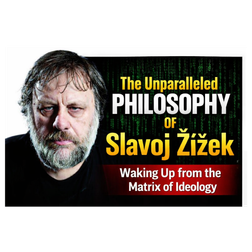
The Philosophy of Slavoj Žižek: Waking Up From the Matrix of Ideology

Do you ever feel like you’re awake… but something still isn’t real? In this episode of Philosophy for Better Humans, narrator Charles Sebastian Whitby takes you deep into the thought of Slavoj Žižek, the philosopher who insists that ideology is not what we believe — but what gives structure to belief itself. Together we explore: the illusions that protect us the pain of confronting the Real why we repeat habits we hate the invisible audience shaping our choices capitalism’s cage disguised as playground the digital world’s capture of desire how to live awake without becoming cold or hopeless This is not philosophy as abstraction — but philosophy as liberation. By the end, you’ll understand not only how ideology works… but how to walk through the world with clearer eyes and a freer heart. If you’re looking for growth, depth, and an honest confrontation with meaning — press play. ✨ Themes Self understanding | freedom | awareness | ideology | modern life | technology | meaning | growth | change | awakening 💬 Reflection Prompt What unexamined story shapes your life — and who would you be without it? ❤️ If this moved you Follow, rate, and share with someone who’s ready to wake up.

The Resolutions That Make Us — A Philosophical Guide to Your 2026 New Year

The Resolutions That Make Us — A Philosophical Guide to Your 2026 New Year New Year’s resolutions aren’t just goals. They’re identity commitments. In this episode of Philosophy for Better Humans, we explore how to create resolutions that don’t just change your calendar—they change who you are becoming. We talk about: the myth of January 1st desire vs. resolve how identity (“I am someone who…”) anchors habit choosing fewer, deeper goals for 2026 the “floor and ceiling” method for sustainable progress discipline as an act of love toward your future self building systems and environments that support change accountability, witnesses, and why you shouldn’t do this alone the art of returning after you break your resolution 10 practical tools to apply immediately This episode isn’t about perfection. It’s about returning—again and again—to the person you’ve decided to become. Follow Philosophy for Better Humans for more long-form episodes on meaning, responsibility, virtue, and the quiet work of becoming a better human.

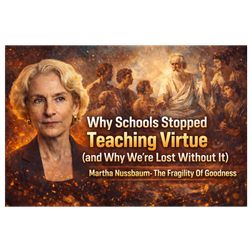
Why Schools Stopped Teaching Virtue (and Why We’re Lost Without It). Martha Nussbaum: The Fragility Of Goodness. Why we need a renascence of Virtue

Why Schools Stopped Teaching Virtue (and Why We’re Lost Without It). Martha Nussbaum: The Fragility Of Goodness. Why we need a Renaissance of Virtue. What if true virtue isn’t about strength… but softness? In this cinematic and soul-stirring episode of Philosophy for Better Humans, Charles Sebastian Whitby explores the powerful ideas of philosopher Martha Nussbaum and her landmark work The Fragility of Goodness. Drawing from Greek tragedy, Aristotle’s ethics, and modern psychology, Nussbaum reveals a radical truth: the good life is inherently vulnerable. We explore how emotion, tragedy, and moral luck shape our ability to be good—and why modern culture is starving for the moral clarity we’ve lost. With vivid storytelling and timely insight, this episode shows why the courage to love what can be lost may be the highest virtue of all. Perfect for anyone grappling with grief, uncertainty, or the challenge of staying kind in a harsh world.
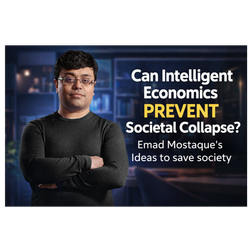
The Last Economy: Can Intelligent Economics Prevent Collapse? | Emad Mostaque’s Bold AI Vision

The Last Economy: Can Intelligent Economics Prevent Societal Collapse? In this cinematic deep-dive, Charles Sebastian Whitby unpacks the bold ideas in Emad Mostaque’s The Last Economy—a groundbreaking vision of a world reshaped by artificial intelligence, where traditional capitalism no longer holds, labor is optional, and value is redefined. Is a collapse coming—or a transformation? From “free intelligence” and universal basic income to decentralized platforms and AI-powered abundance, we explore how AI is dismantling the economic playbook and forcing us to rethink the meaning of work, worth, and wealth. Alongside insights from Sam Altman, Demis Hassabis, and Bill Gates, we uncover the philosophical and practical questions shaping the next five years. This isn’t just about tech. It’s about how we live—and how we must adapt. Topics Covered: – The collapse of labor-based capitalism – Mostaque’s “intelligent economics” vision – AI’s impact on jobs, value, and creativity – UBI, post-scarcity, and data ownership – What you can do to thrive in the coming shift — Subscribe to Philosophy for Better Humans for weekly episodes exploring timeless ideas, modern dilemmas, and the future of human flourishing.
4 di 4