Philosophy for Better Humans.

Philosophy for Better Humans.

di Joey Caster

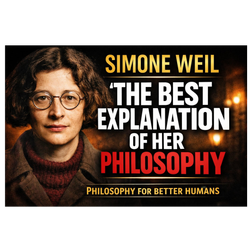
The best explanation of Simone Weil's philosophy

Simone Weil Target Keywords: Simone Weil, Gravity and Grace, Mindfulness, Attention, Modern Anxiety, Philosophy of Love, Self-Improvement, Mental Clarity. Description: Are you living your life on "autopilot"? Simone Weil was a philosopher, activist, and mystic who believed that two forces rule our lives: Gravity and Grace. Gravity is the downward pull of our ego, our impulses, and our habit of reacting without thinking. Grace is the silent force that lifts us up—but it can only enter when we learn the rarest skill in the modern world: Attention. In an age of digital confetti and constant outrage, Weil’s philosophy is a radical toolkit for reclaiming your mind and your heart. In this episode, we explore: Gravity: Why we are addicted to outrage and ego-protection. Grace: How to find clarity in a world designed to distract you. The Art of Attention: Why truly "seeing" someone is the highest form of love. The Slow Yes: How to stop overcommitting and start living with integrity. Timestamps: 0:00 - The woman who lived her philosophy 3:21 - Gravity vs. Grace: The two forces of the universe 6:02 - Why your ego is like physical gravity 10:35 - How to let Grace into your life 14:24 - Why Attention is the same thing as prayer 18:52 - Seeing the person behind the label 27:32 - The sacrifice of clarity 37:37 - Summary: How to practice Grace today If you're feeling overwhelmed by the noise of modern life, this episode is your guide to finding the silence that saves.

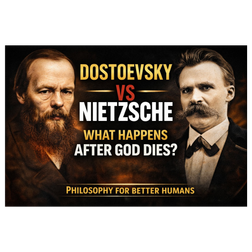
Nietzsche vs Dostoevsky - When God Dies, who was right?

What happens to humanity after God dies? Over a century ago, Friedrich Nietzsche and Fyodor Dostoevsky stood at the same historical crossroads—and saw the same crisis coming. Meaning was collapsing. Faith was eroding. Moral certainty was dissolving. But they gave radically different answers to the same terrifying question. Nietzsche believed humanity would have to become strong enough to create its own meaning—to rise beyond good and evil through power, will, and self-overcoming. Dostoevsky believed that without transcendent meaning, humans wouldn’t rise at all—they would fracture, justify cruelty, and destroy one another in the name of ideology. In this long-form episode of Philosophy for Better Humans, Joey Caster walks you through: What Nietzsche really meant by “God is dead” Why Dostoevsky warned that “everything becomes permissible” How power, meaning, and morality collide in the modern world Why anxiety, nihilism, and identity crises are exploding today And what this 19th-century debate reveals about your life right now This is not an academic lecture. It’s a cinematic, emotionally grounded exploration of meaning, suffering, strength, love, and responsibility—and why the future of civilization may depend on how we answer this question. 🎧 Listen if you’ve ever asked: “Why does modern life feel empty?” “Can we really create our own meaning?” “Is compassion weakness—or the deepest form of strength?” “What actually holds a society together?” 📌 Listen to the full episode 🎙️ Philosophy for Better Humans Hosted by Joey Caster Keywords / SEO Tags: Nietzsche vs Dostoevsky, God is dead meaning, philosophy podcast, existentialism explained, nihilism modern life, meaning of suffering, philosophy for beginners, moral philosophy, power vs compassion, Friedrich Nietzsche philosophy, Dostoevsky philosophy, long form philosophy podcast

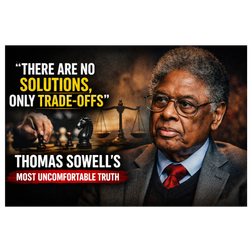
"There Are No Solutions, Only Trade-Offs": Thomas Sowell’s Most Uncomfortable Truth

Here is a high-converting, SEO-optimized description for this episode, tailored for platforms like Apple Podcasts, Spotify, and YouTube. Episode Title "There Are No Solutions, Only Trade-Offs": Thomas Sowell’s Most Uncomfortable Truth Episode Summary What if the "solutions" you are chasing—in politics, in your career, and in your love life—are actually making things worse? In this cinematic deep-dive, narrator Joey Caster walks you through the mind of legendary economist Thomas Sowell to reveal the one concept that explains why good intentions so often lead to disastrous results. From the rubble of rent-controlled cities to the existential risks of Artificial Intelligence, we explore why maturity means accepting that there are no solutions—only trade-offs. Show Notes & Key Takeaways In a culture obsessed with "fixing" everything, Thomas Sowell offers a sobering, liberating reality check. We dismantle the Unconstrained Vision (the utopian belief that we can engineer a perfect world) and replace it with the Constrained Vision (the tragic realization that we must choose what to sacrifice). In this episode, you will learn: The River Paradox: Why the "hero" who tries to save everyone often destroys the bridge. The Architecture of Ruin: How Rent Control destroyed housing markets more effectively than bombing, and why the War on Poverty dismantled the nuclear family. The 1948 Mystery: The shocking data showing why black teen unemployment was lower in Jim Crow America than it is today. Modern Battlefields: Applying Sowell’s lens to 2026 crises:AI vs. Safety: The existential gamble of the "Accelerationists." The Anxious Generation: How "Safetyism" traded broken bones for broken minds. Modern Dating: Why algorithms and the "Paradox of Choice" are keeping you single. Ozempic & The Body: The biological trade-off between weight loss and the loss of pleasure. The Philosophy of the Camera: How the technical constraints of photography explain the limits of the human condition. Featured Thinkers & Concepts: Thomas Sowell (A Conflict of Visions, The Vision of the Anointed) Jonathan Haidt (The Anxious Generation) Barry Schwartz (The Paradox of Choice) Reinhold Niebuhr (The Irony of American History) The McNamara Fallacy Memorable Quote: "The tragedy is not that we have to choose. The tragedy is believing we don't." Listen to this if: You are tired of empty political promises, you are struggling with perfectionism in your own life, or you want to understand the hidden mechanics of how the world actually works. SEO Keywords / Tags Thomas Sowell, Economics, Philosophy, Personal Growth, Unconstrained Vision, Social Justice, AI Ethics, Modern Dating, Mental Health, Rent Control, Minimum Wage, Libertarian Philosophy, Stoicism, Realism, History, The Anxious Generation, Decision Making.

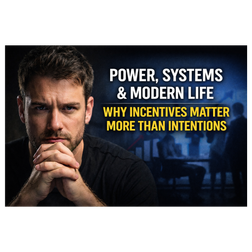
Power, Systems & Modern Life: Why Incentives Matter More Than Intentions. (The System doesn't care what you meant)

Power, Systems & Modern Life | Why Incentives Matter More Than Intentions Why do well-intentioned policies so often lead to disastrous outcomes? In this episode of Philosophy for Better Humans, Joey Caster takes you on a deep, non-partisan philosophical journey through power, systems, and unintended consequences—and why incentives shape behavior more than intentions ever could. Drawing on history’s greatest thinkers—Friedrich Hayek, Edmund Burke, G.K. Chesterton, Karl Marx, Hannah Arendt, Thomas Sowell, and more—this episode explores how compassionate ideas, centralized planning, and market forces can quietly produce outcomes no one intended. We examine real historical case studies like: Prohibition in the United States The Great Leap Forward in China Urban renewal and welfare systems Financial incentives behind the 2008 crisis And connect them to modern life, including: Social media algorithms and outrage culture ESG metrics and moral signaling AI alignment and incentive design Corporate culture and performance metrics This episode is not about left vs right. It’s about how systems actually work—and how good people can unknowingly participate in harmful outcomes when incentives are misaligned. If you’re interested in: Political philosophy without partisan bait Incentives vs intentions Power, systems, and modern society Ethics, capitalism, progressivism, and technology Thinking clearly in a complex world This episode is for you. 🎧 Listen, reflect, and share with someone who values truth over slogans. Subscribe for more long-form philosophical conversations on becoming better humans. 📌 CHAPTER KEYWORDS power and systems unintended consequences incentives vs intentions political philosophy podcast capitalism and progressivism philosophy of power AI ethics and incentives social media algorithms ESG criticism philosophy for better humans
Should ICE Deport Undocumented Immigrants? | A Deep Philosophical Debate

Should ICE Deport Illegal Immigrants? | A Deep Philosophical Debate 🎙️ Philosophy for Better Humans | Narrated by Charles Sebastian Whitby What happens when the law and compassion collide? In this powerful, long-form episode, we explore the deeply human and controversial question: Should U.S. Immigration and Customs Enforcement (ICE) arrest and deport undocumented immigrants? With vivid storytelling, philosophical insight, and emotional depth, narrator Charles Sebastian Whitby guides you through the moral and legal crossroads that define one of America’s most divisive issues. You’ll journey through: – Heart-wrenching real stories from immigrants, ICE agents, and American families – A philosophical showdown: Socrates vs. Dr. Martin Luther King Jr. on justice and law – Ethical frameworks from modern thinkers like Joseph Carens, Michael Walzer, and David Miller – The rule of law vs. the cry for mercy – National security, fairness, and the human cost of enforcement – Real-world policy implications and personal reflections This isn’t a political rant — it’s a timeless, soul-stirring debate that invites you to pause, reflect, and engage. Whether you lean left, right, or somewhere in between, this episode offers a space for deeper understanding, critical thought, and meaningful conversation. 🔔 Subscribe to the channel for more philosophical deep dives that make us all better humans. 💬 Share your thoughts in the comments — What do YOU believe justice looks like in this debate? 👉 Listen now and explore the law not just as a system… but as a reflection of who we are. #PhilosophyForBetterHumans #ImmigrationDebate #ICE #Ethics #PhilosophyPodcast #Justice #UndocumentedImmigrants #LawAndMorality #BetterHumans

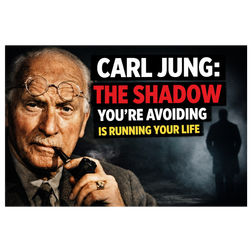
Carl Jung: The Shadow You’re Avoiding Is Running Your Life

In this episode of Philosophy for Better Humans, we dive deep into the psychology and philosophy of Carl Jung — one of the most influential and misunderstood thinkers of the modern age. Why do we judge others so harshly? Why do we sabotage ourselves right when things are going well? Why do we feel divided, restless, or empty even when life looks “successful” from the outside? Jung believed the answer lies in the Shadow — the hidden parts of ourselves we repress, deny, or refuse to face. And he warned that what we don’t make conscious doesn’t disappear… it controls us. In this long-form episode, we explore: • Jung’s theory of the Shadow Self and how it secretly runs our behavior • Projection — why the traits you hate most in others may live inside you • Individuation — Jung’s idea of becoming whole instead of perfect • The Collective Unconscious and the ancient patterns shaping modern life • Why ignoring your shadow makes you dangerous — personally and socially • How Jung’s ideas apply today to relationships, leadership, technology, AI, and meaning • Practical ways to integrate your shadow without destroying your life This episode isn’t about positivity or self-esteem. It’s about self-knowledge, responsibility, and becoming a more conscious human being in an unconscious world. If you’ve ever felt like: – You don’t fully understand yourself – You keep repeating the same emotional patterns – You’re “doing everything right” but still feel lost – Modern life feels empty, chaotic, or divided This episode is for you. 🎙️ Narrated by Joey Caster 🎧 Philosophy for Better Humans Subscribe for long-form conversations on psychology, meaning, culture, and becoming whole — not perfect.

Soft Totalitarianism: Control Without Chains | Philosophy for Better Humans

Soft Totalitarianism: Control Without Chains | Philosophy for Better Humans We’re told we’re freer than ever. No dictators. No chains. No prison camps. So why does it feel harder to speak honestly? In this episode of Philosophy for Better Humans, we explore soft totalitarianism — a modern form of control that doesn’t rely on force, but on comfort, fear of exclusion, social pressure, and algorithmic influence. Drawing from the warnings of Hannah Arendt, Aldous Huxley, Alexis de Tocqueville, Aleksandr Solzhenitsyn, and Václav Havel, this episode reveals how freedom can quietly erode inside democratic societies — not through violence, but through conformity, distraction, and moral outsourcing. We discuss: • What soft totalitarianism actually is (and why it’s so effective) • How social pressure replaces censorship • Why people self-censor long before they’re told to • The role of technology, AI, media, and bureaucracy • How language is used to shape thought • Why good people become instruments of control • What “living in truth” means today • How to resist without becoming extreme or bitter This episode isn’t about left vs right. It’s about truth vs comfort. Courage vs convenience. Freedom vs illusion. If you’ve ever felt pressure to stay silent, to edit yourself, or to go along just to get along — this episode is for you. 🎙️ Hosted by Joey Caster 📘 Podcast: Philosophy for Better Humans Listen with intention. Share with someone you trust. 🔍 Tags / Keywords soft totalitarianism, philosophy podcast, freedom of speech, social pressure, modern tyranny, AI and control, Hannah Arendt, Aldous Huxley, Solzhenitsyn, Vaclav Havel, cultural conformity, censorship without censorship, psychology of power, moral courage, free thinking, Philosophy for Better Humans

Zohran Mamdani vs Thomas Sowell - Conflicting Visions for a better America

What happens when democratic socialism meets free-market realism? In this long-form episode of Philosophy for Better Humans, we explore one of the most important ideological clashes of our time: Zohran Mamdani vs Thomas Sowell. Two thinkers. Two worldviews. One fundamental question: How should a society balance justice, freedom, and responsibility? 🎙️ In This Episode, We Explore: Zohran Mamdani’s democratic socialist vision for housing, wages, public services, and economic justice Thomas Sowell’s critiques of government intervention, redistribution, and centralized power Rent control vs market housing Minimum wage laws vs job creation Government-run services vs free markets Taxing the wealthy vs economic incentives Rights as guarantees vs rights as freedoms This episode is not a debate and does not tell you what to think. Instead, it walks you carefully through both philosophies, using real-world examples, historical insight, and clear reasoning—so you can decide for yourself. 🧠 Why This Matters Right Now As cities face rising costs, inequality, automation, and political polarization, these ideas are no longer theoretical. They shape: Housing affordability Wages and work Taxes and public services Freedom, dignity, and opportunity Understanding these competing visions helps us think more clearly—and disagree more humanely. ⏱️ Episode Structure: Philosophical foundations of Mamdani and Sowell Five socialist ideas and Sowell’s critiques Five free-market ideas and Mamdani’s critiques Real-life applications in work, leadership, technology, and everyday life A balanced, reflective conclusion on how to disagree without fear or violence 🎧 About the Podcast Philosophy for Better Humans is a long-form podcast exploring the ideas that shape our world—without shouting, tribalism, or cheap outrage. If you enjoy deep conversations similar to: The Diary of a CEO Joe Rogan Experience (long-form idea exploration) Philosophical and economic deep dives You’ll feel right at home here. 🔔 If You Found This Episode Valuable: 👍 Like the video 📩 Share it with someone who disagrees with you (respectfully) 🔔 Subscribe for future long-form philosophy episodes 🏷️ Keywords / Topics: Zohran Mamdani Thomas Sowell Socialism vs Capitalism Democratic Socialism Free Market Economics Economic Philosophy Political Philosophy Rent Control Minimum Wage Debate Taxation and Inequality Government vs Free Markets Philosophy Podcast Long-Form Podcast Ideas That Shape Society

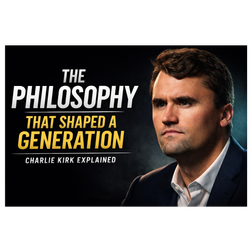
The Philosophy That Shaped a Generation — Charlie Kirk Explained

What happens when certainty meets chaos? Why do some philosophies resonate so deeply with a generation searching for meaning? In this long-form episode of Philosophy for Better Humans, we take a deep, thoughtful exploration of the philosophy, ideas, and worldview of Charlie Kirk — not as a headline, not as a caricature, but as a serious philosophical force that shaped millions of young minds. This episode is not about outrage or tribalism. It is about ideas. We examine: The philosophical foundations behind Kirk’s worldview Moral realism, natural law, responsibility, and order Why his ideas resonated so strongly with young people The psychological appeal of certainty in an age of confusion Where critics raised legitimate concerns — and where accusations lacked merit How disagreement must be met with dialogue, not fear Why open conversation is essential for a healthy society In the final section, we reflect carefully on how Kirk’s death intensified an urgent cultural question: Can we still disagree without violence? This episode is narrated in a cinematic, story-driven style by Charles Sebastian Whitby — blending philosophy, psychology, history, and real-world insight to help listeners think more clearly, speak more honestly, and live more intentionally. This is not a political endorsement. It is a philosophical examination. 🎙️ Philosophy for Better Humans is a long-form podcast dedicated to exploring big ideas, moral clarity, and the habits of thought that help us become wiser, stronger, and more humane people. If you value: • Free thought • Open dialogue • Intellectual honesty • Civil disagreement • Deep philosophy without shouting Then this episode is for you. 🧠 Topics Covered Charlie Kirk philosophy Moral realism explained Free speech and open dialogue Political violence and discourse Conservatism and youth culture Philosophy of responsibility Natural law philosophy Meaning in modern society Civil disagreement Ideas vs ideology 🎧 Listen. Reflect. Share. If this episode challenged you or clarified something you’ve been wrestling with, consider sharing it with someone you trust. Subscribe for more long-form conversations that go deeper than headlines. Philosophy for Better Humans — because thinking well is a moral act.

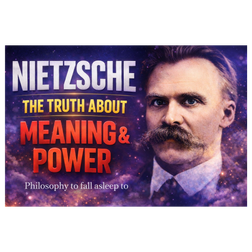
Why Nietzsche Is Still So Dangerous (And So Necessary)

What if Friedrich Nietzsche wasn’t the dark, nihilistic philosopher you were warned about—but one of humanity’s greatest guides to meaning, courage, and self-overcoming? In this deep, cinematic long-form episode of Philosophy for Better Humans, we explore the complete philosophy of Friedrich Nietzsche—his biggest ideas, his most misunderstood concepts, and why modern philosophers, psychologists, and cultural thinkers still return to him today. This episode walks through Nietzsche’s core ideas, including: The death of God and the crisis of meaning Nihilism and how to overcome it The will to power (and what it really means) Master vs. slave morality and resentment culture The Übermensch as an ideal of self-overcoming Eternal recurrence as a psychological test of your life Amor fati — learning to love your fate Truth, perspectivism, and power Why Nietzsche was misused by the Nazis and misunderstood by pop culture How thinkers like Foucault, Deleuze, Paglia, and Jordan Peterson engage with Nietzsche How Nietzsche’s ideas apply to modern life, identity, technology, AI, and personal growth Told as a fireside conversation with a wise philosophical guide, this episode blends storytelling, psychology, history, and timeless insight—designed to be both intellectually rich and emotionally grounding. 🎧 Perfect for listening while falling asleep This episode is intentionally paced with a calm, reflective tone, making it ideal for: Falling asleep to philosophy Late-night listening Deep focus or quiet reflection Long drives or background listening If you enjoy philosophy while you sleep, thoughtful long-form content, or deep conversations about meaning, suffering, and becoming a better human—this episode was made for you. 🔔 Subscribe for more long-form philosophy episodes 👍 Like & share if this helped you see Nietzsche—and yourself—more clearly 🧠 Philosophy for Better Humans Where timeless ideas meet the struggles of modern life.
3 di 4