Neuroscience Perspectives

Neuroscience Perspectives

di Del Monte Institute for Neuroscience at the University of Rochester

Recovering From Stroke - How Physical Therapy & Neuroscience are Advancing Care

The intersection of stroke rehabilitation & neuroscience research is transforming our understanding of the brain and recovery after a stroke. Catherine Lang, PT, PhD, Barbara J Norton Professor of Physical Therapy, Professor of Neurology and Occupational Therapy, and Associate Director of the Movement Science Program at the University of Washington in St. Louis, shares expert insights into stroke therapy, the challenges of regaining motor function, and how personal and environmental factors impact rehabilitation outcomes. Dr. Lang is a WashU graduate who completed her postdoctoral studies in a neuroscience lab at the University of Rochester School of Medicine and Dentistry. She shares how the education and mentorship she received played a role in the mentor she is today. She also gives insight into how growing up in rural Vermont influenced her interest in movement. Join Dr. Lang, and guest host, Jeff Koslofsky, host of The Next Steps Podcast from the University of Rochester School of Medicine and Dentistry, for this enlightening conversation. Don’t forget to like, comment, and follow! #neuroscience #stroke #réhabilitation #brain #motorcontrol #neuroplasticity #therapy #strokerecovery 🧠Stay Connected Subscribe: https://www.youtube.com/@URNeuroscience X: https://x.com/URNeuroscience BlueSky: https://bsky.app/profile/urneuroscience.bsky.social 🧠Check out The Next Steps Podcast: https://www.youtube.com/playlist?list=PLhIRpvrMLisrZXbvS3wDHGp_Ke9NE167u 🧠Experts in this Episode Catherine Lang, PT, PhD: https://pt.wustl.edu/people/catherine-lang-pt-phd-fapta/ Lang Research Profile: https://profiles.wustl.edu/en/persons/catherine-lang

What Happens When You Combine AI and Neuroscience?

Can we predict brain health across a lifetime? Just as a knee injury at 20 might cause problems later, researchers are exploring how early brain experiences shape future brain health. In this episode of Neuroscience Perspectives, Dr. Randy McIntosh, Professor and Director at the Institute for Neuroscience and Neurotechnology at Simon Fraser University, discusses groundbreaking insights into brain health, neuroscience, and AI with Dr. John Foxe, Director of the Del Monte Institute for Neuroscience. Learn about the Virtual Brain, an open-source neuroscience platform that simulates human brain function, offering new ways to understand conditions like stroke, epilepsy, and neurodegenerative diseases. Discover how technology, artificial intelligence, and neuroscience are converging to unlock the secrets of the human brain. Virtual Brain: https://www.thevirtualbrain.org/tvb/zwei 🧠Stay Connected Subscribe: https://www.youtube.com/@URNeuroscience X: https://x.com/URNeuroscience BlueSky: https://bsky.app/profile/urneuroscience.bsky.social 🧠 Experts in this Episode John Foxe, PhD: https://www.urmc.rochester.edu/people/112360965-john-j-foxe Randy McIntosh, PhD: https://www.sfu.ca/bpk/about/people/faculty/randy-mcintosh.html 🧠Labs Mentioned Frederick J. and Marion A. Schindler Cognitive Neurophysiology Lab: https://urmc.info/1RG McIntosh Lab: https://www.armcintosh.com/home #brain #science #podcast

Unlocking the Brain's Communication Hub: The Power of the Thalamus with Dr. S. Murray Sherman

In this special episode of Neuroscience Perspectives, host John Foxe, PhD, director of the Del Monte Institute for Neuroscience at the University of Rochester, sits down with S. Murray Sherman, PhD, Maurice Goldblatt Professor of Neurobiology at the University of Chicago, in Chicago at the annual Society for Neuroscience (SfN) conference. Sherman is a neuroscientist known for his groundbreaking work on the thalamus. Dive into a compelling conversation that unravels how the thalamus plays a pivotal role as the brain's relay center, transforming sensory input into meaningful perceptions and actions. Discover how Dr. Sherman's research sheds light on the thalamus's intricate connections to cortical regions, revealing its role in shaping critical cognitive functions. From vision to decision-making, his work was integral in informing the understanding of the visual pathway from the retina through the thalamus to the cortex, and it also revealed other cortical areas organized in parallel to direct connections. Learn how mentors and a bit of luck played critical roles in his journey, including Nobel laureates Richard Feynman, PhD, Roger Sperry, PhD, and Ray Guillery, PhD, who would become Sherman's longtime collaborator. Link to Sherman's SfN profile piece. Whether you're a neuroscientist or just interested in the brain —listen, learn, and subscribe to Neuroscience Perspectives today!

Exploring the Genetic Dance of Neurons: What Roundworms Reveal About Behavior

In this episode of Neuroscience Perspectives, we dive into the microscopic world of C. elegans—tiny roundworms that are revolutionizing our understanding of genetics and behavior. Join host John Foxe, PhD, director of the Del Monte Institute for Neuroscience at the University of Rochester as he chats with Doug Portman, PhD, the Donald M. Foster Professor of Biomedical Genetics, Biology, and Neuroscience, at URMC. Portman’s research unravels the intriguing ways that biological sex shapes neural development and influences behaviors, like the eternal quest for food versus the search for a mate. Discover how these unassuming creatures serve as a powerful model for understanding complex questions about the brain. What happens in the male C. elegans brain when the urge to find a mate overrides the basic need to eat? And how can these insights inform our understanding of sex differences in human health and disease susceptibility? Whether you’re a neuroscience enthusiast or just curious about how tiny organisms can help answer big questions—listen, learn, and subscribe to Neuroscience Perspectives today!

How a quest to find solutions for vision loss- turned a clinician into a scientist

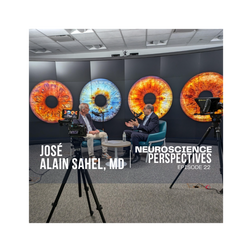
José Alain Sahel, MD, is a distinguished professor, eye and ear foundation professor, and chair of the Department of Ophthalmology at the University of Pittsburgh School of Medicine. He is also the director of the UPMC Vision Institute. Dr. Sahel is a leading expert in retinal diseases and vision restoration research and is a pioneer in optogenetic vision restoration. This therapeutic technique uses genetically modified cells in the retina to express light-sensitive proteins and could help patients who are blind or visually impaired because of a genetic defect. His research has also helped to develop several other interventions for vision impairment—including stem cell implantation, gene therapy, innovative pharmacologic approaches, and the artificial retina. Dr. Sahel was the keynote speaker at the 33rd Biennial Center for Visual Science Symposium at the University of Rochester. He joins John Foxe, PhD, for this episode of Neuroscience Perspectives.

What helped launch leaders in neuroscience into a lifetime of learning

Is there a defining moment that set you on your current path? In this episode of Neuroscience Perspectives, we’re revisiting origin stories – what launched leading neuroscientists into a lifetime of learning and interest in the brain. Host: John Foxe, PhD, director of the Del Monte Institute for Neuroscience Guests (in order of appearance): Nathan A. Smith, PhD, associate dean for Equity & Inclusion for Research and Research Education and associate professor of Neuroscience at the University of Rochester School of Medicine School of Medicine and Dentistry, Full Episode: https://urmc.info/1G5 Fan Wang, PhD, professor, Brain and Cognitive Sciences, McGovern Institute, MIT, Full Episode: https://urmc.info/1G7 Takao Hensch, PhD, professor of Neurology at Harvard Medical School at Boston Children’s Hospital and of Molecular and Cellular Biology at Harvard’s Center for Brain Science, Full Episode: https://urmc.info/1G4 Jessica Cardin, PhD, associate professor, and vice chair of the Neuroscience Department at Yale School of Medicine, Full Episode: https://urmc.info/1G6 Kia Nobre, PhD, director of the Center for Neurocognition and Behavior at the Wu Tsai Institute at Yale University, Full Episode: https://urmc.info/1G3

Neuroscience insights: How to steer toward success in science

How often do you think about science fits into your life and how you fit into the field? For our 20th episode we are looking back at some of the advice that’s been shared by our guests on Neuroscience Perspectives. Host: John Foxe, PhD, director of the Del Monte Institute for Neuroscience Guests (in order of appearance): Katalin Gothard, PhD, professor of Physiology and Neuroscience at the University of Arizona Nathan A. Smith, PhD, associate dean for Equity & Inclusion for Research and Research Education and associate professor of Neuroscience at the University of Rochester School of Medicine School of Medicine and Dentistry Ed Callaway, PhD, professor and Audrey Geisel chair in the systems neurobiology laboratories at the Salk Institute for Biological Studies Kia Nobre, PhD, director of the Center for Neurocognition and Behavior at the Wu Tsai Institute at Yale University Takao Hensch, PhD, professor of Neurology at Harvard Medical School at Boston Children’s Hospital and of Molecular and Cellular Biology at Harvard’s Center for Brain Science Lucina Uddin, PhD, professor of Psychiatry and Biobehavioral Sciences at UCLA Yoland Smith, PhD, Division Chief, Neuropharmacology and Neurologic Diseases, Emory National Primate Research Center Jessica Cardin, PhD, associate professor, and vice chair of the Neuroscience Department at Yale School of Medicine Brian Boyd, PhD, William C. Friday Distinguished professor of Education and interim director of the Frank Porter Graham Child Development Institute at the University of North Carolina (UNC) Jeffrey Macklis, MD, Max and Anne Wien professor of Life Sciences, in the Department of Stem Cell and Regenerative Biology and Center for Brain Science at Harvard University

How are the brain systems that support adaptive human cognition and behavior organized?

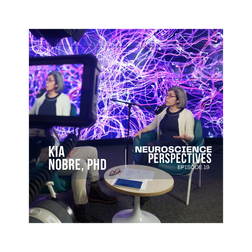
Kia Nobre, PhD, is the director of the Center for Neurocognition and Behavior at the Wu Tsai Institute at Yale University. Her discoveries have revolutionized our scientific understanding of the human mind and #brain. She tells John Foxe, PhD, director of the Del Monte Institute for Neuroscience, about the great gift she acquired as a child that leveraged her education at an early age. Nobre recently returned to her alma mater after spending most of her career at Oxford University where she held several leadership roles, including the director of the Oxford Centre for Human Brain Activity. #podcast #brain #neuroscience #humanbrain #humanbehavior #understanding #behaviour #behavior #yaleuniversity #oxford

How do early life experiences shape brain function and critical periods of brain development?

Takao Hensch, PhD, is a professor of Neurology at Harvard Medical School at Boston Children’s Hospital and a professor of Molecular and Cellular Biology at Harvard’s Center for Brain Science. He leads the National Institute of Mental Health Silvio Conte Center on Mental Health Research at Harvard and the International Research Center for Neurointelligence. Dr. Hensch joins John Foxe, PhD, director of the Del Monte Institute for Neuroscience at the University of Rochester, on NeURoscience Perspectives to discuss the critical periods of brain development and whether plasticity can be reopened to target and treat disease. He also shares how being multilingual first piqued his interest in how the brain works.

How are injury and illness monitored in the brain? And how can scientists diversify the bench?

How are injury and illness monitored in the brain? Once thought of as the glue of the brain, glia cells have been proven to play a key role in brain health with astrocytes acting as important messengers. These star-like cells are at the center of the research of Nathan A. Smith, PhD, associate dean for Equity & Inclusion for Research and Research Education and associate professor of Neuroscience at the University of Rochester Medical Center and School of Medicine, who joins John Foxe, PhD, director of the Del Monte Institute for Neuroscience at the University of Rochester, on NeURoscience Perspectives. They explore Smith’s journey into science that started with the gift of a microscope from his mother, how research experience shaped his academic career, and why he is steadfast on wearing two hats to transform the future of the field.
3 di 5