Getting to "Hell Yes!".

Getting to "Hell Yes!".

di Guillermo Salazar
Stagione 3

Getting to Hell Yes! Live with Peter Yoder from Series Homes

The 75% Rule: How to Double Your Home Buying Power (That 97% of People Don't Know) | Getting to Hell Yes What if you could double your purchasing power when buying a home, using the same income? Peter Yoder, Founder of Series Homes, reveals the hidden federal lending policy that's been around since the 1960s but almost nobody knows exists: The 75% Rule for two-to-four unit properties. "Your purchasing power in a six cap market for a two-to-four unit building is double what it would be for a single-family home. And you can do that with three and a half percent down through FHA." 🎯 IN THIS EPISODE: → The 75% Rule Explained: How buying a duplex/triplex/fourplex as your primary residence lets you count 75% of rental income when qualifying for your mortgage → The Math That Changes Everything: $100K salary → $600K home vs. $1.2M duplex with the same income → The Three Gaps Series Homes Is Closing: Search (MLS data is broken), Financing (most brokers don't know this exists), Management (first-time landlords are overwhelmed) → Why Two-to-Four Unit Properties Are Built at 1% of What They Should Be → The Missing Middle Problem: The most naturally occurring affordable housing nobody's building → Why Institutional Players Can't Touch This Space (and why that's your opportunity) → The Sequencing Failure: Why policy exists but the infrastructure doesn't 💡 KEY INSIGHTS: "Two-to-four is perhaps the most naturally occurring affordable housing typology out there. If it's on a single-family zoned lot, it's large enough for the rental units to cover much if not most of the owner's mortgage. But it's built at one percent of the rate of single-family and large multifamily combined." "If you call ten mortgage brokers and ask if you can count rental income on a property you're buying as a primary residence, eight will tell you no. They don't understand the policy." "People think real estate investing is for rich people. But this strategy was literally designed by federal policy to help first-time buyers build wealth. It's been in place since the 1960s. We're just making it accessible." 📊 PETER'S BACKGROUND: • Second hire at Flock (property management tech) • Financial analyst at Progress Residential (institutional single-family) • Studied housing policy in grad school • Founded Series Homes to close the gap between policy intention and market reality 🔥 WHY THIS MATTERS: 97% of the rental market is mom-and-pop investors. This is how most people build wealth through real estate. But the infrastructure to support owner-occupied investing in two-to-four unit properties doesn't exist. Series Homes is building that infrastructure: ✅ Clean MLS data that actually surfaces qualifying properties ✅ Lender partnerships with brokers who know the 75% rule ✅ Management support for first-time landlords ✅ End-to-end experience from search to closing to operations THE ECONOMICS: • Double purchasing power (same income) • Cash flow from day one • Near-zero housing costs • Equity building in appreciating asset • 3.5% down payment (FHA) • Conventional, FHA, and VA all support this 🎙️ ABOUT GETTING TO HELL YES: Getting to Hell Yes explores how the best operators and founders identify high-intent buyers, build differentiation that matters, and create winning strategies. Hosted by Guillermo from IrisCX. #RealEstateInvesting #SeriesHomes #PeterYoder #The75PercentRule #TwoToFourUnit #MissingMiddle #WealthBuilding #RealEstate #HousingPolicy #AffordableHousing #GettingToHellYes #MortgageFinancing #PropertyManagement #SmallMultifamily #OwnerOccupied #FirstTimeInvestor #HousingAffordability #RealEstateStrategy #Duplex #Triplex #Fourplex #FHA #Conventional #PropertyInvesting #IrisCX #GTHY

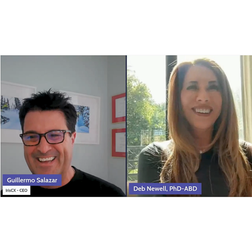
Getting to Hell Yes! Live with Deb Newell

The Same Problems for 20 Years: Why We're Still Complaining Instead of Solving | Getting to Hell Yes "Revenue is growing, but margins aren't. Teams are busy, but results aren't consistent. Leadership's reactive instead of strategic." Deb Newell, founder of Real-Time Consulting, reveals why property management has faced the exact same operational problems for 20 years and why we're still choosing to endure them instead of solving them. 🎯 IN THIS EPISODE: → Why SFR, multifamily, affordable, and commercial all face the same core problems → The Resident Expectations Cop-Out: Stop blaming Amazon, it's our inability to set expectations → The No Pickles Rule: Why exceptions kill operations (and how to charge for them) → "Consistency builds trust. Inconsistency builds online reviews." → How to create service menus that simplify operations and improve margins → The three pillars: Structure, People, Financial Performance → Choose to solve it or choose to endure it 💡 KEY INSIGHTS: "The same operational misalignments I had in the early 2000s are the same today. For 15-17 years, nothing changed, no metrics, no KPIs, just door growth. We just accepted it." "All of this is a symptom of unclear expectations set by the company. Residents expect fast response, clear communication, fair enforcement. If your policies aren't standardized, it becomes a personality thing." "When you make exceptions for clients, that's hard on the team. Why would it be okay to throw it onto them? Either don't offer it, or charge for it." 📊 DEB'S BACKGROUND: • Built, operated, and exited her own property management company • Consulting since 2013 • Strategic advisor and "operational architect" • Works exclusively in PM: SFR, multifamily, affordable, commercial 🎙️ ABOUT GETTING TO HELL YES: Conversations with property management leaders who are solving problems instead of enduring them. Hosted by Guillermo from IrisCX. THE NO PICKLES RULE: If you're going to offer exceptions, charge for the complexity. Don't accept custom requests to win business, then dump the operational chaos on your team. 🔔 SUBSCRIBE for more operational excellence insights from PM leaders. #PropertyManagement #DebNewell #RealTimeConsulting #OperationalExcellence #GettingToHellYes #ResidentExperience #PropertyTech #Multifamily #SFR #Leadership #Operations #ProcessImprovement #TeamAlignment #Consistency #Transparency #PropertyManagementConsulting #RealEstateOperations #Margins #TrustBuilding #IrisCX #GTHY

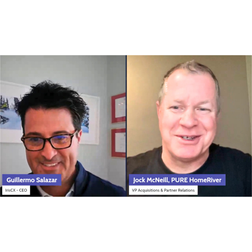
Getting to Hell Yes! Live with Jock McNeill from PURE

What Makes a Property Management Company Worth Buying? M&A Insider Jock McNeill Explains | Getting to Hell Yes "Mamas love their babies. People are emotionally invested in their companies and rightfully so, because it's an extension of you." Jock McNeill has a unique perspective in property management M&A: he's been both buyer and seller. He's made 11+ acquisitions, sold his own company, and now leads corporate development at PURE (post-merger with Home River). In this conversation, Jock reveals what actually makes deals happen and what kills them. 🎯 IN THIS EPISODE: → Why building a business worth buying is easier to run than one that's not → The seller's hierarchy of needs: Price, terms, exit, people → Why 99% of sellers think they're ready but aren't → "Time kills deals"—how to move fast without breaking trust → The psychological complexity of selling your life's work → What acquirers look for beyond EBITDA → How PURE became a consolidation powerhouse in 5 years → Lessons from 11+ acquisitions: what Jock would do differently 💡 KEY INSIGHTS: "The things you have to do to make something interesting to a buyer are the same things that make it long-term sustainable and not burn you out." "If I had to do it over, I would have bought more. I had restraints like capital and time but they weren't really restraints. I could have found more capital. I could have changed my schedule." "Sellers think about price and terms first. But then it's their people—employees and clients. They want continuity. The last thing they want is to run into a former client and hear how poorly something went post-acquisition." "Time kills deals. Once you decide to move on something, get it done." THE SELLER'S PERSPECTIVE: "It's rare that someone's selling because they need to get out tomorrow. Usually they're getting to the point where they want to do something. They want to be ready." Sellers care about: 1. Price and terms 2. Clean exit (can I actually walk away?) 3. Employee continuity (will my team be taken care of?) 4. Client service (will my customers be served well?) 5. Reputation (I still live in this community) WHAT MAKES A COMPANY WORTH BUYING: "Building a business worth buying is actually easier to run than one that's not." Jock looks for: - Clean financials and operations - Documented processes and systems - Strong employee retention - Client satisfaction metrics - Growth trajectory (organic + strategic) - Cultural alignment with PURE's values "Our confidence is the most important thing as entrepreneurs. When that becomes damaged, there's a whole raft of things that can happen. We're mindful and exceptionally attuned to that." The key: moving from opinion-based risk assessment to fact-based understanding of risk. 🔔 SUBSCRIBE for more conversations with property management leaders building valuable, sustainable businesses. #PropertyManagement #MandA #Acquisitions #PURE #HomeRiver #JockMcNeill #GettingToHellYes #RealEstate #BusinessExit #PropertyTech #SFR #Multifamily #Consolidation #CorporateDevelopment #ExitStrategy #BusinessGrowth #PropertyManagementSoftware #RealEstateInvesting #Entrepreneurship #IrisCX #GTHY

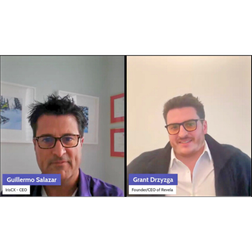
Getting to Hell Yes! Live with Grant Drzyzga

The Hairdryer Story: How a Broken HVAC Led to 12 Years of Building Property Management Software | Getting to Hell Yes Grant Drzyzga slept with a hairdryer under his blankets because his property management company couldn't fix his heat. Most people would've gotten a hotel room. Grant spent a semester figuring out why the system failed—then spent 12 years building something better. Today he's the founder and CEO of Ravella, a property management platform so essential that job descriptions require it and prospects ask: "Do you integrate with Ravella?" 🎯 IN THIS EPISODE: → The hairdryer moment: Why a freezing apartment became a 12-year mission → "Understand your customer's customer"— the principle that changes everything → The cottage industry signal: Property managers buying Mac minis with personal money → Why the experimentation window must shrink after product-market fit → How to think about AI thoughtfully (not just AI washing) → The continuity problem: "It's never a hundred percent handoff" 💡 KEY INSIGHTS: "If you understand how your customer's customer thinks, what they care about, what levers you can pull to make your client look like a hero that creates value for everybody in the chain." "People are buying servers with their own money. They're processing data on their own machines. There's no greater indication of a gap in the marketplace than that." "When you find product-market fit, the experimentation window has to shrink. You have to get laser-focused. No more side quests." 📊 GRANT'S BACKGROUND: • Started Ravella in 2014 after shadowing a PM company as a Brown senior • Spent 3 years rewriting accounting logic with major CPA firms • 12 years as founder/CEO ("durable, not just resilient") • Built Yardi-level complexity meets AppFolio ease of use 🎙️ ABOUT GETTING TO HELL YES: Conversations with property management leaders building valuable, sustainable businesses. Hosted by Guillermo from IrisCX. 🔔 SUBSCRIBE*for more founder stories from property management. #PropertyManagement #PropTech #Ravella #GrantDrzyzga #GettingToHellYes #FounderStory #SaaS #PropertyTech #AI #Innovation #GTHY #IrisCX

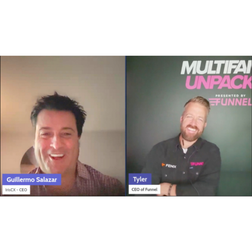
Getting to Hell Yes! Live with Tyler Christiansen from Funnel Leasing

The AI Reckoning in Multifamily: Tyler Christiansen on Centralization, CRM Adoption & What Operators Actually Need | Getting to Hell Yes Tyler Christiansen built Funnel into one of the most strategic platforms in multifamily by solving a problem the industry didn't want to admit: CRM adoption is the dirty secret nobody talks about. In this conversation, Tyler breaks down the shift from property-centric to renter-centric operations, why centralization is the unlock for AI, and how operators are rethinking lead quality over lead volume. 🎯 IN THIS EPISODE: → The CRM adoption crisis: Why most platforms don't get used → Centralization as the foundation for AI (not the other way around) → From property-centric to renter-centric: What changes operationally → Lead quality vs. lead volume: The death of spray-and-pray marketing → Why AI won't replace leasing agents, it gives them superpowers → The customer's customer principle: Understanding asset managers, not just operators → How Funnel landed 4 REITs by building community, not pitching 💡 KEY INSIGHTS: "Nobody buys Funnel because of my pitch. They need customer stories. Once you have the story, you're just making it safer for them." "Centralization isn't a nice-to-have anymore. It's table stakes for AI to work. You can't automate chaos." "AI will unlock ten agents doing the work of fifty, not replace them. The question is: what do those ten agents do with their time?" "Your customer's customer matters. We sell to operators, but their bosses, asset managers, investors, care about different things. If you don't understand that, you'll miss the deal." THE NESTIO-TO-FUNNEL PIVOT: In 2018, Tyler joined Nestio, a NYC broker management tool for StreetEasy. Great tech, wrong market. The TAM was too small. The problems didn't translate outside NYC. "New York runs completely different than anybody else. Canada is closer to multifamily than New York is." Tyler led the pivot: same talented team, different problem. They repositioned entirely from broker tool to operator platform, from NYC-only to national scale. The result? Funnel now serves the largest multifamily operators in America. ADVICE TO HIS YOUNGER SELF: "Stay humble. Know there's something to learn at every stage. Every time you think you've made it, you get a gut punch on something you weren't expecting." "Understand your customer's business. I've never run a multifamily portfolio, but I get to consult with the largest operators in America. That's through osmosis, learning, studying." 🎙️ ABOUT GETTING TO HELL YES: Conversations with multifamily and PropTech leaders on building value, creating alignment, and achieving confident commitments. 🔔 SUBSCRIBE for more insights from multifamily sales and tech leaders. #Multifamily #PropTech #Funnel #TylerChristiansen #AI #Centralization #CRM #LeasingTech #RealEstate #PropertyManagement #GettingToHellYes #SaaS #Leadership #Community #IrisCX #GTHY

Getting to Hell Yes! Live with Daniel Cunningham

Is property management really a "people business"? Daniel Cunningham says it's not — and he has 20+ years of receipts to prove it. From running his own property management company in LA to founding Leonardo247 to serving as President of Vendoroo, Daniel has lived this industry from every angle. And what he's learned about maintenance, AI, and the workforce carrying the heaviest operational burden is uncomfortable, specific, and worth every minute. In this episode of Getting to Hell Yes, Guillermo and Daniel go deep on the ideas nobody wants to say out loud: → Why maintenance is the hardest AI problem in multifamily, not the least important one → The context-switching crisis destroying on-site teams (half-painted walls, flood calls, impossible job descriptions) → Why "we pay them the least we can to get them not to quit" is the real people-first policy in most operations → The 98% reliable vs. 65% unpredictable framework and why human-in-the-loop AI isn't a weakness, it's the standard → How AI changes the wage math and why some of those efficiency gains should actually go back to the people doing the work This one will make you think differently about where your greatest operational risk lives and who's carrying it. 🎧 Listen now wherever you get your podcasts. #GettingToHellYes #GTHY #IrisCX #MultifamilyHousing #PropertyManagement #PropTech #MaintenanceManagement #AIinRealEstate #MultifamilyOperations #Vendoroo #OperationalExcellence #Proptech2025 #RealEstateTech #WorkforceInnovation #MultifamilyLeadership #FutureOfWork #ArtificialIntelligence #ResidentRetention #MultifamilyTech #MaintenanceTech

Getting to Hell Yes! Live with Dave Marcinkowski

What happens when a 11,000-unit operator sells to Greystar and doubles down on PropTech? In this episode of Getting to Hell Yes, host sits down with Dave Marcinkowski, co-founder of Madeira Residential and founder of Quext Smart Apartment Solutions, for a high-energy conversation about the future of multifamily operations, technology adoption, and what it really means to let go of something you built. Dave's journey from bookkeeper to co-founder is remarkable on its own but what's even more compelling is what happened after he sold Madeira's management company to Greystar. Freed from day-to-day operations, Dave is now all-in on the tech revolution reshaping multifamily and he's got a front-row seat, a sandbox of 11,000 units, and zero patience for legacy systems that don't play nice with each other. This episode is a masterclass in operator-to-owner evolution, the PropTech buy cycle, and why the next wave of innovation won't come from the top down, it'll come from the maintenance tech with a better idea. 💡 If you're an operator, asset manager, or PropTech founder trying to crack the multifamily market, Dave's perspective is the inside lane you've been looking for. 🎙️ Topics covered: Selling to Greystar: what prompted the decision & what came next Why the "data moat" is dead and free data flow is the future Smart apartments, managed Wi-Fi, and owning a retail electric provider How AI is being built from the grassroots up not the boardroom down Why operators can't get their ideas funded (and how to fix it) "Growth occurs in the hard spaces" advice from 20+ years in the trenches #IrisCX #GTHY #MultifamilyRealEstate #PropTech #SmartApartments #ApartmentOperations #AIinRealEstate #PropertyManagement #RealEstateTech #AssetManagement #MultifamilyInvesting #Quext #MadeiraResidential #PropertyManagerLife #RealEstatePodcast #FutureOfWork #OperatorMindset #TechAdoption #RealEstateInnovation #Entrepreneurship

Getting to Hell Yes! Live with Jess Tierney from Verifast

From leasing agent to CIO, what does it take to climb every rung of the multifamily ladder? In this episode of Getting to Hell Yes, host sits down with Jess Tierney, CIO of Verifast, for one of the most wide-ranging, eye-opening conversations the show has ever had. Jess didn't just work in multifamily, she lived it across 14 markets, every asset type, and every operational pain point imaginable. From lease-ups to renovations to fraud prevention, she's seen it all. But this isn't just a career story. It's a masterclass in what happens when an operator's mind meets a technology leader's role. In under two years at Verifast, Jess went from Director of Integrations to VP of Product to CIO and she's brought that same relentless "touch everything, question everything" energy to tackling one of multifamily's fastest-escalating challenges: fraud. With fraud detection becoming an arms race between operators and bad actors, Jess unpacks how Verifast is using biometric identity verification to fight back and why the answer to smarter leasing starts with cleaner data, better integrations, and getting out of the "that's just how we do it" mindset. 💡 Whether you're in operations, tech, or leadership if you're trying to close gaps, kill manual processes, and future-proof your portfolio, this conversation is essential listening. 🎙️ Topics covered: Jess's journey: leasing agent → regional → Chadwell Supply → CIO at Verifast The fraud escalation battle — why it's only getting harder Biometric identity verification and the future of leasing Tool adoption: going from 9% to 50% at Chadwell Supply Managing up: how to sell ideas, budget & capital internally The black box of AI — what operators actually need to know The balance sheet gap between renovations, vendors & banks "Touch everything, question everything" career advice from 20+ years in the trenches #IrisCX #GTHY #MultifamilyRealEstate #FraudPrevention #PropTech #BiometricTechnology #PropertyManagement #ApartmentLeasing #AIinRealEstate #RealEstateTech #MultifamilyInvesting #Verifast #IdentityVerification #DataIntegration #OperatorMindset #WomenInTech #WomenInRealEstate #PropertyManagerLife #RealEstatePodcast #TechAdoption #FutureOfLeasing

Getting to Hell Yes! Live with Peter Lohmann

What does an electrical engineer, 750 rental doors, a newsletter empire, and an exclusive property management community have in common? Peter Lohmann. In this episode of Getting to Hell Yes, host sits down with Peter Lohmann, founder of RL Property Management in Columbus, Ohio and creator of Crane, the invite-only professional community that's become one of the most talked-about developments in the property management industry. Peter's journey from control systems engineer to one of the most respected voices in property management is as methodical as it is inspiring and every step of it was by design. This conversation goes deep on the strategy behind Peter's content flywheel: the newsletter, the podcast, the LinkedIn presence, and how years of "compounding in the dark" eventually unlocked inbound demand that now fills Crane cohorts and drives thousands of newsletter subscribers. But it's not just a content story, it's a masterclass in patience, intentionality, and building businesses that serve two completely different audiences at the same time. If you've ever wondered whether writing your ideas down, staying consistent, and trusting the long game actually works, Peter is living proof. 💡 For property managers, operators, and entrepreneurs who are in the "middle slog" and wondering if it's all worth it, this one's for you. 🎙️ Topics covered: From electrical engineer to property management founder, the unconventional origin story Building RL Property Management from zero doors to 750 - slow, steady, and sustainable How the newsletter started, why it worked, and what "compounding" really means Why the property management audience and the newsletter audience don't overlap and why that's fine The intentional architecture behind Crane, an exclusive cohort-based community for serious PM operators Selling sponsorships, building community, and monetizing content without selling out The "middle slog" years, why the hardest stretch only looks like the middle in hindsight Giving yourself grace: the leadership lesson Peter wishes he'd learned sooner #IrisCX #GTHY #PropertyManagement #ContentMarketing #PropertyManagerLife #RealEstatePodcast #PropTech #Entrepreneurship #CommunityBuilding #NewsletterMarketing #CompoundGrowth #RealEstateInvesting #SingleFamilyRental #SmallMultifamily #PMBusiness #NARPMember #BusinessGrowth #OperatorMindset #Crane #TheLongGame

Getting to Hell Yes! Live with Carrie Tuttle from Team Mojo!

What if your sales team's performance problem isn't a people problem at all? Carrie Tuttle, founder of Team Mojo and sales leadership coach with eight years of experience working with technical founders and B2B sales organizations joins Guillermo Salazar on Getting to Hell Yes to challenge one of the most persistent myths in sales management: that when a team isn't performing, the answer is better reps. It rarely is. It's almost always a better system. Carrie knows this from the inside. Thrown into sales leadership at twenty-seven with minimal training, she built her career across marketing, market research, and pure B2B sales before transitioning into coaching driven by the conviction that most organizations are measuring the wrong things, holding the wrong people accountable, and losing good salespeople to cultures that treat humans like machines. In this episode, Guillermo and Carrie dig into: — The technical founder trapped in the weeds: what they're actually struggling with, why the sales function goes soft, and what a structured intervention actually looks like from day one — Accountability redefined: why it starts at the leadership level with clear expectations, not at the rep level with outcome measurements and what happens when leaders model the behaviours they say they want — The 4x exit multiple story: nine sellers, two hitting target, a coaching engagement that got seven of them over target within months, and a twenty percent revenue lift that changed the valuation conversation entirely — Why better sales conversations upstream produce calmer, more successful operations downstream and why almost nobody measures this connection even though everybody feels it — The quarter as a forcing function: how ninety-day cycles create the reflection, recalibration, and celebration rhythm that accelerates seller development faster than any training program — Values alignment as a client selection filter: how Carrie identifies the engagements she can genuinely serve versus the ones that look great on paper and compromise everything in practice — CRM as a database of experience, not just a pipeline tracker and how building that database over time produces the pattern recognition that makes every subsequent sales conversation more calibrated — The objection she hears most: "We can do it ourselves." And what she says back. — Her advice to her younger self: slow down, ask first, then pause. "The pause is magical." Whether you're a founder who needs to build a sales function, a sales leader wondering why accountability conversations never stick, or a seller trying to understand why the numbers feel hollow even when they're good — this conversation is for you. #GTHY #GettingToHellYes #IrisCX #Vendoroo #SalesLeadership #SalesCoaching #TeamMojo #B2BSales #AccountabilityInSales #SalesPerformance #LeadershipDevelopment #TechnicalFounders #SalesCulture #CoachingAndMentoring #PropertyManagement #PropTech #MultifamilyHousing #Proptech2025 #GrowthMindset #RevenueGrowth #SalesEnablement #B2BMarketing #EntrepreneurMindset #OperationalExcellence #PeopleFirst
12 di 14