Campus Podcast @ Metro State University

Campus Podcast @ Metro State University

di Mr. Lucky — Educator, MAPL, M.S. Urban Education Student
Stagione 18

BLACK SOCIAL WORKERS: Legacy Built Through Service
Click into the webpage and use one of the codes to redeem my book Relationships: The Power of Illusion. Hurry and claim a code before someone else does. Please do not use more than one code. www.iuniverse.com/en/redeem 10600000441446 10600000441447 10600000441448 10600000441449 10600000441450 10600000441451 10600000441452 10600000441453 Thesis Statement: Black social workers from 2000–2026 reshaped child welfare, mental health, and justice systems through culturally grounded, equity‑centered practice. Learning Objectives (with examples) Objective 1: Students will explain how Black social workers influenced child welfare reform. Example: A student describes how Joyce James’ disproportionality model changed CPS decision‑making. Objective 2: Students will identify major areas where Black social workers expanded mental health equity. Example: A student explains how Black clinicians increased access to culturally competent therapy during COVID‑19. Learning Outcomes (with examples) Outcome 1: Students will summarize one policy or practice change led by Black social workers between 2000–2026. Example: A student writes a short paragraph on the rise of kinship care advocacy. Outcome 2: Students will connect a modern social issue to a contribution made by Black social workers. Example: A student links school‑based trauma programs to post‑2016 racial justice work. 5E Learning Model Engage Show a brief scenario: “A Black family is involved with CPS. What factors should a culturally competent social worker consider?” Students share quick reactions. Explore Students review short profiles of leaders (e.g., Joyce James, Mit Joyner, NABSW). Small groups identify patterns in their work: equity, cultural grounding, policy reform. Explain Teacher clarifies key contributions from 2000–2026: Child welfare disproportionality work Mental health equity expansion Reentry and justice reform COVID‑19 community response Students connect these to their earlier observations. Elaborate Students choose one contribution and apply it to a modern issue (school trauma, policing, mental health access, foster care). They explain how the contribution improves outcomes for Black families. Evaluate Students complete a short written reflection: “What is one lasting impact Black social workers made between 2000–2026, and why does it matter today?” Formative Assessment Quick Check (Exit Ticket): Students answer two prompts: 1. Name one Black social worker or organization and describe their contribution. 2. Explain how that contribution influences a current social issue. This verifies understanding of objectives, outcomes, and application. Comments and/or to be a guest call 773-809-8594

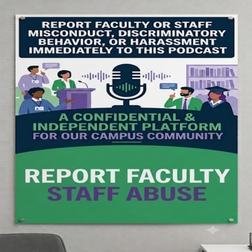
REPORT: Faculty/Staff Abuse, Harassment, and Discrimination
Share This Episode with Others. Keep It Moving Contact: radiotalklr@gmail.com Mr. Educator

Black Women: Untold Truth and Power

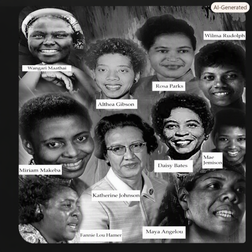
Order My Book: www.weusoursluckybooks.com Lesson Plan Segment: The Truth Liberal Faculty Hide About Black Women Learning Objectives (with examples) Students will analyze how academia sanitizes Black women’s histories Example: Students compare the textbook version of Rosa Parks (“tired seamstress”) with her actual work investigating the gang rape of Recy Taylor. Students will evaluate the impact of omitted violence on historical understanding Example: Students examine how removing Fannie Lou Hamer’s forced sterilization changes the meaning of her political activism. Learning Outcomes (with examples) Students will identify at least three ways institutions distort Black women’s stories Example: A student explains how Wangari Maathai’s beatings are erased, how Althea Gibson’s poverty is hidden, and how Miriam Makeba’s exile is reframed as a “career move.” Students will produce a written or verbal critique demonstrating the need for "unsanitized" history Example: A student writes a paragraph arguing that Wilma Rudolph’s fight against segregation is more historically significant than her Olympic medals. Four Questions Students May Ask Faculty Why are Black women’s experiences with state violence, sexual assault, and medical racism rarely included in our curriculum? Who decides which parts of Black women’s history are “appropriate” for classrooms — and why? Why do textbooks highlight Black women’s achievements but erase the brutality they survived to reach them? How does faculty discomfort shape what we learn about women like Daisy Bates, Fannie Lou Hamer, and Miriam Makeba? Contact: radiotalklr@gmail.com or 773-809-8594

White Allies Killed During the Civil Rights Movement
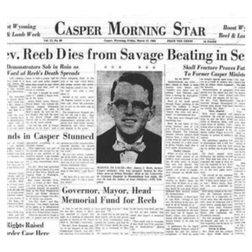
Lesson Plan: White Allies Killed During the Civil Rights Movement Brief Historical Statement Several white Americans were killed during the civil rights movement because they chose to stand publicly with Black communities in the struggle for justice. Rev. James Reeb, a white Unitarian minister from Boston, traveled to Selma after “Bloody Sunday” and was beaten by white segregationists; he died two days later. Viola Liuzzo, a white mother from Detroit, was murdered by the Ku Klux Klan while driving marchers between Selma and Montgomery. Andrew Goodman and Michael Schwerner, two young white activists from New York, were murdered alongside James Chaney, a Black activist, during Freedom Summer in Mississippi. Their deaths exposed the depth of racial hatred and showed that the fight for civil rights demanded courage across racial lines. Learning Objectives Objective 1: Students will identify key white allies who were killed during the civil rights movement and describe their roles. Example: A student explains why Rev. James Reeb went to Selma and how his death drew national attention. Example: A student describes Viola Liuzzo’s work transporting marchers and why she was targeted. Objective 2: Students will analyze why white allies were targeted and what their deaths revealed about resistance to civil rights. Example: A student explains how the murders of Goodman, Schwerner, and Chaney exposed violent opposition to Black voting rights. Example: A student connects these killings to pressure for federal civil rights legislation. Learning Outcomes Outcome 1: Students will summarize the contributions of white allies in the civil rights movement. Example: A student writes that Reeb’s death helped build momentum for the Voting Rights Act. Outcome 2: Students will evaluate the moral significance of interracial solidarity. Example: A student explains how these deaths showed that civil rights was a human struggle, not only a Black struggle. Formative Assessment: Research Idea Research Task (1 short paragraph): Students choose one person—Rev. James Reeb, Viola Liuzzo, Andrew Goodman, or Michael Schwerner—and answer: Who were they (background)? Why were they involved in the movement? What happened to them? How did their death influence public opinion or civil rights laws? Mr. Lucky-Social Studies Teacher Comments: blackfreedomofspeech@gmail.com See my book at: www.weusoursluckybooks.com

Black Women Redefined Power-With Lesson Plan/PowerPoint

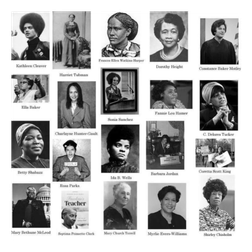
PowerPoint: For My PowerPoint Black Women Redefined Power email: radiotalklr@gmail.com Mr. Lucky-Social Studies Teacher Black women have shaped every era of history through courage, intellect, and unbreakable resilience. From Sojourner Truth to Maya Angelou, their leadership challenged systems built to silence them and created pathways for future generations. This lesson explores how thirteen extraordinary women—including Harriet Tubman, Sarah Rector, Fannie Lou Hamer, Angela Davis, Ruby Bridges, and the women of the Triple 8 Uprising—redefined power through action, advocacy, and vision. Sojourner Truth’s abolitionist voice confronted racism and sexism with unmatched clarity, while Harriet Tubman risked her life to lead enslaved people to freedom and later served as a Union spy. Sarah Rector disrupted economic stereotypes when she became one of the wealthiest Black girls in America at age eleven, and Madam C.J. Walker expanded economic independence by becoming the first, self‑made Black woman millionaire. Fannie Lou Hamer fought fearlessly for voting rights and co‑founded the Mississippi Freedom Democratic Party, reshaping national politics. Shirley Chisholm carried that torch into Congress and became the first Black woman to run for President. Claudette Colvin, at just fifteen, refused to surrender her bus seat months before Rosa Parks, sparking a legal challenge that helped end segregation. Ruby Bridges integrated an all‑white elementary school at age six, forcing the nation to confront the violence of racism. Mary McLeod Bethune built educational opportunity from the ground up, founding Bethune‑Cookman University and advising U.S. presidents. Katherine Johnson’s mathematical brilliance powered NASA’s earliest space missions, while Maya Angelou’s poetry elevated Black identity and global consciousness. Angela Davis challenged mass incarceration and state violence through scholarship and activism. The women of the Triple 8 Uprising in Burma extended this global thread, leading a pro‑democracy movement that inspired international solidarity and demonstrated how women worldwide fight for liberation. Together, these women form a lineage of resistance, creativity, and transformation. Their stories teach students that leadership is not defined by titles but by courage, conviction, and the willingness to challenge injustice. Learning Objectives Identify how Black women used personal agency to challenge systemic oppression. Analyze how their leadership shaped public policy, education, and cultural identity. Learning Outcomes Students will create a timeline mapping each woman’s contribution. Students will write a reflection on how one woman’s legacy inspires their own goals. 5E Learning Model (Condensed) Engage: Play My Portion (Jekalyn Carr) and We Fall Down (Donnie McClurkin) to frame resilience. Explore: Students research one woman and present a 90‑second impact snapshot. Explain: Discuss how these women reshaped political, economic, and cultural systems. Elaborate: Build a “Legacy Wall” with quotes and achievements. Evaluate: Students complete a written or audio reflection on leadership and legacy. Note: Of course there are other women not mentioned. I hope this motivates your desire for further research. Comments: radiotalklr@gmail.com

WANTED: Metro Students to Make $$

Order My Book: www.weusoursluckybooks.com Metro Grads: Use Your Education to Earn More Purpose This lesson guides you step‑by‑step in using your education, skills, and life experience to create income beyond your full‑time job. Your degree is more than a credential — it is a tool for independence, creativity, and financial growth. What You Will Do 1. Identify Your Skills Start by listing the skills you already have. Think about what you learned in school, at work, and through life. Include skills people often ask you for help with. This helps you see that you already possess valuable abilities that others need. 2. Identify Who Needs Your Skills Next, look at the world around you. Ask yourself who benefits from what you know. Consider students, families, coworkers, small businesses, or community members. You will begin to see how your knowledge solves real problems. 3. Turn One Skill Into One Service Choose one skill and convert it into a simple service. Use this formula: Skill → Problem → Solution → Service → Price This shows you exactly how to turn knowledge into income. Keep it small, clear, and easy to start. 4. Build Your Service Plan Create a short plan for your new service: What you will offer Who you will help What problem you solve What you deliver The first step you will take to begin This makes your idea real and ready to launch. 5. Practice Sharing Your Service Explain your service to one person you trust. Tell them what you offer, why it matters, and how your education supports it. This builds confidence and helps you refine your idea. Objectives You will identify at least three skills that can generate income. You will design one actionable service based on your education. Outcomes You will understand how your education becomes a business asset. You will walk away with a ready‑to‑launch service plan. 5E Learning Model (Personal to You) Engage: Reflect on the idea that education creates opportunity beyond employment. Explore: List your skills and experiences. Explain: Learn how degrees and experience create credibility. Elaborate: Build your service plan using the formula. Evaluate: Share your idea with one person and refine it. Closing Write one personal commitment: “This week I will use my education to earn more by…” Contact: radiotalklr@gmail.com 0r 773-809-8594 Enough Said. Do Something
Stagione 17

White Woman Murdered Herstory Ignored
https://youtu.be/7NblTUVFl_U?si=QwHyZT2NdvSVZLgU Viola Liuzzo Viola Liuzzo marched from Selma to Montgomery with thousands demanding voting rights. She was a 39‑year‑old mother of five who believed that injustice anywhere was everyone’s responsibility. After the march, she volunteered to drive tired marchers back to Selma. Riding with her was Leroy Moton, a 19‑year‑old Black civil‑rights worker. As they drove along Highway 80, a car of Ku Klux Klan members spotted them — a white woman and a Black teenager together. The Klan chased them down the dark road, pulled beside her car, and opened fire. Viola was killed instantly. Leroy survived by playing dead. One of the Klansmen was an FBI informant. Instead of defending her, the FBI spread lies about her to protect itself. Viola Liuzzo was killed first by the Klan’s bullets, then by the government’s smear campaign. Her courage endures as an example of solidarity that cost everything. Lesson Plan: Viola Liuzzo and the Cost of Solidarity Thesis: Viola Liuzzo’s murder after the Selma march shows the deadly risks of civil‑rights activism and the courage required for interracial solidarity. Learning Objectives: Students explain Liuzzo’s role in the Selma movement and the events leading to her death.Example: Describe why she transported marchers and why the KKK targeted her. Students analyze how her murder shaped national awareness of racial violence.Example: Explain how her death increased pressure for federal protection. Learning Outcomes: Students summarize the significance of Liuzzo’s sacrifice.Example: Note how her death exposed the danger faced by civil‑rights workers. Students evaluate the meaning of allyship in the civil‑rights era.Example: Explain how her actions showed that justice required cross‑racial courage. Formative Assessment: One‑paragraph inquiry answering: Who was Viola Liuzzo? What was she doing after the Selma march? What happened on Highway 80? How did her death influence public opinion or civil‑rights protections? Mr. Lucky-Social Studies Teacher. Contact: blackfreedomofspeech@gmail.com

BLACK NURSE Invented Home Security System

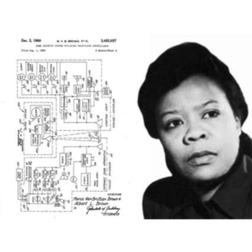
Share this with another nursing student. Keep this episode moving. Order my book: www.weusoursluckybooks.com Lesson Plan: Marie Van Brittan Brown — A Nurse Who Reimagined Safety Thesis Statement Marie Van Brittan Brown’s invention of the first home security system demonstrates that nurses are not only caregivers but also innovators whose lived experiences, critical thinking, and commitment to community safety can transform entire industries. This lesson introduces nursing students to Marie Van Brittan Brown, a Black nurse from Queens, New York, who revolutionized home safety in 1966 by inventing the first closed‑circuit home security system. Working late shifts and returning home alone to a neighborhood with rising crime, she recognized a gap in community safety and used her clinical problem‑solving skills to design a system that allowed residents to see, hear, and communicate with visitors without opening the door. Her invention—featuring cameras, monitors, two‑way communication, and remote‑controlled locks—became the blueprint for modern home security and smart‑doorbell technology. This lesson encourages nursing students to see themselves as innovators capable of shaping public health, technology, and community well‑being. Learning Objectives Students will examine how Marie Van Brittan Brown used nursing‑based reasoning to solve a community safety problem. Students will evaluate how nurses can influence innovation, technology, and public health beyond traditional clinical roles. Learning Outcomes Outcome 1: Students will describe how Brown’s invention emerged from her nursing experience and understanding of patient and personal safety. Example: A student may explain how her assessment skills—identifying risk, anticipating harm, and planning interventions—mirrored the nursing process. Outcome 2: Students will identify ways nurses today can innovate in technology, safety, and community health. Example: A student might propose a new app, workflow, or device that improves patient monitoring or enhances safety for vulnerable populations. 5E Learning Model Engage Ask students: “What everyday technology exists because a nurse imagined something better?” Explore Students review a short biography of Brown and examine images of her original patent. Explain Instructor connects Brown’s invention to nursing competencies: assessment, safety, advocacy, and systems thinking. Elaborate Students brainstorm modern healthcare challenges that could benefit from nurse‑driven innovation. Evaluate Students write a brief reflection: “What problem in healthcare would you redesign if you had the chance?” Encouragement for Nursing Students Marie Van Brittan Brown proves that nurses are architects of safety, designers of solutions, and protectors of community well‑being. Her legacy challenges every nursing student to look at the world with a problem‑solver’s eye and to trust that their ideas—born from compassion, observation, and lived experience—can change lives far beyond the bedside. PLEASE HELP with my audience research. Call 773-809-8594 and leave your name and the city and state that you are listening from.

Music: The Metropolitan Male Chorus

Order My Book: www.weusoursluckybooks.com Ro be a guest on the podcast call 773-8909-8594

WEDDINGS=Discount for College Students

Order My Book: www.weusoursluckybooks.com Email: radiotalklr@gmail.com
2 di 12