BSPE Legal Marketing Podcast

BSPE Legal Marketing Podcast

di Viktoria Altman
Stagione 5

Can the Jury Hear That I Wasn't Wearing a Seat Belt in My Connecticut Car Accident Case? - Dan Petroskey

From DeFronzo & Petroskey, P.C. - Can the Jury Hear That I Wasn't Wearing a Seat Belt in My Connecticut Car Accident Case? breaks down how Connecticut General Statutes § 14-100a(c)(3) protects injured drivers and passengers by barring seat belt evidence in civil car accident lawsuits. Centered on Connecticut and the real-world impact this rule can have after a Waterbury car accident, this episode explains why juries cannot be told that a person was unbelted and how that rule helps keep the focus on the at-fault driver’s conduct. The episode explores the purpose behind Connecticut’s seat belt evidence rule, the legislature’s policy decision in Public Act 85-429, and the way courts have interpreted the law over time. It also examines the important appellate decision in Bower v. D'Onfro, 38 Conn. App. 685 (1995), showing how the Connecticut Appellate Court upheld the statute and reinforced that seat belt nonuse cannot be used to argue contributory negligence or reduce damages in a civil action. Listeners will also hear how this rule applies in practice, including what kinds of evidence are considered inadmissible, from police testimony and photographs to medical records referencing an unrestrained driver or unrestrained passenger. The discussion also covers child restraint systems under § 14-100a(d), the limited distinction between civil and criminal proceedings, the adult seat belt fine under § 14-100a(c)(5), and how Connecticut’s modified comparative negligence rule under § 52-572h still applies to other conduct that may have contributed to the crash. Featuring insight drawn from the experience of Waterbury car accident attorney Dan Petroskey, this episode highlights how DeFronzo & Petroskey, P.C. helps clients across Waterbury, New Haven County, and surrounding communities protect the full value of their injury claims. With references to Bank Street, insurance company tactics, trial strategy, and the importance of early legal guidance after a Connecticut car accident, this is a practical listen for anyone trying to understand their rights after a serious collision. DeFronzo & Petroskey, P.C. 255 Bank St # 2b, Waterbury, CT 06702, United States (203) 756-7408 https://www.google.com/maps?cid=2074756120617399372

How Do You File a Racial Discrimination Complaint in Florida? - BT Law Group, PLLC

From BT Law Group, PLLC - How Do You File a Racial Discrimination Complaint in Florida? walks listeners through the legal framework surrounding workplace discrimination, highlighting key protections under Title VII of the Civil Rights Act of 1964, the Florida Civil Rights Act (FCRA), and local ordinances like the Miami-Dade County Human Rights Ordinance. This episode explores how agencies such as the U.S. Equal Employment Opportunity Commission (EEOC) and the Florida Commission on Human Relations (FCHR) handle complaints and what employees in Miami and across Florida need to know before taking action. Listeners will gain clarity on what constitutes racial discrimination, from overt actions like racial slurs to more subtle patterns involving hiring, pay disparities, promotions, and workplace policies. The discussion incorporates real-world scenarios involving retaliation, unequal treatment, and hostile work environments, while referencing legal statutes like 42 U.S.C. § 1981 and Chapter 760 of the Florida Statutes. The episode also explains how employer size impacts eligibility under federal, state, and county laws, including thresholds affecting coverage in Miami-Dade County. The podcast dives into the step-by-step process of filing a Charge of Discrimination with the EEOC or submitting a complaint to the FCHR, including deadlines such as the 300-day EEOC filing window and the 365-day limit under Florida law. It outlines what to include in a complaint, what happens during investigations, and how mediation through agencies or entities like the Miami District Office at Miami Tower may play a role. Listeners will also learn how documentation—emails, performance reviews, and witness statements—can strengthen a claim. Featuring insights from Jason D. Berkowitz and Anisley Tarragona of BT Law Group, PLLC, this episode highlights the legal pathways available after filing, including litigation in the U.S. District Court and potential recovery such as back pay, front pay, compensatory damages, and punitive damages. With references to institutions like the University of Miami School of Law, Tufts University, and the American Arbitration Association, the conversation emphasizes informed decision-making, protecting against retaliation, and navigating the complexities of employment law in Florida. BT Law Group, PLLC 3050 Biscayne Blvd STE 205, Miami, FL 33137 (305) 507-8506 https://www.google.com/maps?cid=1652198006057542154

What Is Leandra's Law and How Does It Affect DWI Charges? - Jason Bassett

From Law Offices of Jason Bassett, P.C. - What Is Leandra's Law and How Does It Affect DWI Charges? breaks down how New York’s Child Passenger Protection Act transformed DWI enforcement by elevating certain offenses to felonies and mandating ignition interlock devices. Centered on Leandra's Law, the episode explores its origins following the tragic death of Leandra Rosado on the Henry Hudson Parkway in New York City, and how Governor David Paterson’s 2009 legislation reshaped Vehicle and Traffic Law § 1192. Listeners are guided through who can be charged under VTL § 1192(2-a)(b), including drivers in Suffolk County and across New York facing felony aggravated DWI for having a child age 15 or younger in the vehicle. The discussion highlights how even first-time offenders—regardless of BAC level or relationship to the child—can face serious criminal exposure, with cases often moving between Suffolk County District Court and County Court. The episode also examines the steep penalties tied to Leandra's Law, from Class E felony charges to more severe Class B and C felonies when injury or death occurs. It explains the long-term consequences, including prison time, fines, license revocation, ignition interlock requirements enforced by the New York State Department of Motor Vehicles, and the impact of a permanent record—even in light of the Clean Slate Act. The role of Child Protective Services and mandatory reporting to the Statewide Central Register is also unpacked, especially for parents and guardians. Finally, Jason Bassett shares insights from his background as a former Assistant District Attorney and Special Assistant Attorney General, outlining common defense strategies such as challenging traffic stops, BAC evidence, and field sobriety tests. The episode walks through how Suffolk County courts handle these cases—from arraignment at Cohalan Court Complex to grand jury proceedings—and emphasizes the importance of early legal action when facing DWI charges under Leandra’s Law. Law Offices of Jason Bassett, P.C. 320 Carleton Ave # 4200, Central Islip, NY 11722, United States (631) 259-6060 https://www.google.com/maps?cid=695024758410642184

Manhattan Real Estate Statistics: Sales Data, Market Trends, and Transaction Analysis - Peter Zinkovetsky

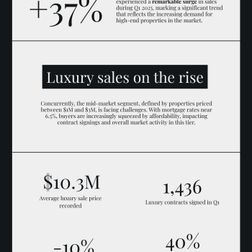
From Avenue Law Firm - Manhattan Real Estate Statistics: Sales Data, Market Trends, and Transaction Analysis breaks down the forces reshaping the Manhattan real estate market in 2025, from record-setting luxury sales and all-cash transactions to tightening inventory and shifting buyer behavior. This episode explores how Manhattan recorded one of its strongest sustained sales paces since before the pandemic, with luxury prices reaching all-time highs, new development closings surging, and properties above $10 million dramatically outperforming the mid-market. The conversation highlights the growing divide across Manhattan neighborhoods and price points, with Tribeca, West Village, Greenwich Village, Billionaires' Row, Hudson Yards, Chelsea, the Upper East Side, the Financial District, the Upper West Side, and Midtown all reflecting different pricing dynamics and demand patterns. Listeners will hear how signed contracts, median sale prices, price per square foot, and days on market reveal a two-speed market shaped by mortgage rates near 6.5%, cash-heavy competition, and a for-sale inventory that remains well below historical averages. The episode also examines the surge in office-to-residential conversions across New York City, including major projects near Grand Central Terminal, 5 Times Square, and Tower 57, and explains what those changes could mean for housing supply in Manhattan. It covers the role of tax incentives like 467-m, the Office Conversion Accelerator Program, elevated office vacancy rates, and why most new conversion projects are adding rental units rather than condominiums, leaving the condo and townhome market structurally constrained. Avenue Law Firm also brings in the legal and transactional side through the perspective of Peter Zinkovetsky, Esq., a Manhattan real estate lawyer representing buyers and sellers of condominiums, co-ops, townhomes, brownstones, houses, commercial properties, and new development units throughout New York City. The episode closes with practical insight into Manhattan closing costs, including the mansion tax, mortgage recording tax, title insurance, transfer taxes, contract negotiation, title review, residential closings, and commercial transactions, giving buyers, sellers, investors, and international purchasers a clearer view of what it takes to navigate the Manhattan market. Avenue Law Firm 505 Park Ave Suite 202, New York, NY 10022, United States (212) 729-4090 https://www.google.com/maps?cid=14223199020890935024


What Makes a Domestic Violence Assault First-Degree Under NY Penal Law § 120.10? - David Mejia Colgan, Esq.

From David Mejia Colgan, Esq. - What Makes a Domestic Violence Assault First-Degree Under NY Penal Law § 120.10? explains what qualifies as first-degree domestic violence assault under New York Penal Law § 120.10 and how these serious charges are prosecuted in New York. The discussion outlines how allegations involving serious physical injury, deadly weapons, dangerous instruments, and depraved indifference to human life can elevate a case to the most severe assault classification. With insight grounded in Bronx court experience, the content emphasizes the legal thresholds prosecutors must meet and the high stakes involved in a Class B violent felony. The article breaks down the four distinct pathways under New York Penal Law § 120.10, including intent to cause serious physical injury, intent to permanently disfigure, reckless conduct showing depraved indifference to human life, and injuries caused during the commission of another felony. It clarifies how each subsection requires a different mental state and level of proof, while highlighting that domestic violence context can influence case handling in Bronx and New York City courts. Legal definitions from statutes such as New York Penal Law § 10.00(10) and § 10.00(9) are used to distinguish between physical injury and serious physical injury. Further explanation focuses on how New York law defines deadly weapons under § 10.00(12) and dangerous instruments under § 10.00(13), illustrating how everyday objects can become central to felony charges depending on their use. The article also examines the concept of depraved indifference to human life under § 120.10(3), a standard that goes beyond ordinary recklessness and requires proof of extreme disregard for human safety. These distinctions are critical in determining whether the prosecution can sustain a first-degree assault charge or whether the case may be reduced. Drawing on experience from the Bronx County District Attorney's Office and a background that includes work with the Kings County District Attorney's Office and education from New York University School of Law, David Mejia Colgan, Esq. provides perspective on how these cases are built and challenged. The content also outlines potential defenses under New York Penal Law § 35.15, including self-defense, lack of intent, and challenges to the classification of injuries or weapons. With penalties governed by § 70.02 carrying mandatory prison sentences and long-term consequences, the article underscores the importance of building a strong defense when facing first-degree domestic violence assault charges. David Mejia Colgan, Esq 910 Grand Concourse Suite 1F, Bronx, NY 10451, United States (718) 484-8820 https://www.google.com/maps?cid=10458568621536558650

Could Your Child's Playground Injury in Arkansas Be Grounds for a Legal Claim? - Joseph Gates

From Gates Law Firm PLLC - Could Your Child's Playground Injury in Arkansas Be Grounds for a Legal Claim? explores how families in Little Rock and across Arkansas can determine whether a playground accident rises to the level of a legal case. Joseph Gates breaks down the critical factors that influence liability, including negligent supervision, unsafe property conditions, and defective playground equipment, while guiding listeners through what makes an injury legally actionable. Listeners will gain a clear understanding of the most common causes of playground injuries, from poor maintenance and lack of supervision to dangerous playground layouts and product defects. Drawing on standards like ASTM F1487-25 and guidance from the U.S. Consumer Product Safety Commission (CPSC), the episode highlights how safety benchmarks are used to evaluate whether property owners, schools, or daycare providers acted responsibly. The discussion also examines who may be held accountable under Arkansas law, including private property owners, public entities, childcare providers, and equipment manufacturers. Joseph Gates explains how statutes such as Ark. Code § 21-9-301 and Ark. Code § 18-11-305 shape claims involving sovereign immunity and recreational use immunity, and why these rules can significantly impact a family’s ability to recover compensation. Finally, the episode outlines what families should do immediately after a playground injury, from seeking care at facilities like Arkansas Children's Hospital to documenting evidence and preparing for potential legal action. With insight into the claims process and proceedings in venues like Pulaski County Circuit Court, this podcast provides a practical roadmap for parents navigating the aftermath of a child’s injury and considering their legal options. Gates Law Firm PLLC 2725 Cantrell Rd Ste 200, Little Rock, AR 72202 (501) 779-8091 https://www.google.com/maps?cid=4114337096292287489

What Should You Know About Nursing Home Neglect Cases in Massachusetts? - Colucci, Colucci & Marcus, P.C.

From Colucci, Colucci & Marcus, P.C. - What Should You Know About Nursing Home Neglect Cases in Massachusetts? explores how nursing home neglect in Boston and across Massachusetts can impact families, outlining critical legal standards under M.G.L. c. 111 and 105 CMR 150.000 while explaining how facilities are regulated and held accountable. This episode introduces listeners to the realities of inadequate care in long-term care facilities and the role of the Massachusetts Department of Public Health (DPH) and its Division of Health Care Facility Licensure and Certification in enforcing compliance. Listeners will learn how neglect differs from abuse, with insights into common forms such as medical neglect, basic care neglect, environmental neglect, and supervision failures. The discussion highlights warning signs like bedsores, dehydration, infections, and behavioral changes, while emphasizing the importance of recognizing red flags during visits. The episode also explores how families can proactively monitor conditions, conduct unannounced visits, and assess facility cleanliness, staffing attentiveness, and resident well-being. Featuring the work of Dino Colucci, Darin Colucci, and Matthew J. Marcus, the podcast dives into the legal pathways available when neglect occurs. It explains reporting options through the DPH hotline, Executive Office of Elder Affairs, Long-Term Care Ombudsman Program, and even local law enforcement, while also breaking down protections under the Nursing Home Reform Act of 1987 and Massachusetts Patient Abuse Law. Listeners gain clarity on filing claims, understanding the three-year statute of limitations under M.G.L. c. 260, Section 4, and the required 182-day notice under M.G.L. c. 231, Section 60L before initiating a lawsuit. The episode concludes by examining compensation in nursing home neglect cases, including economic and non-economic damages, as well as the litigation process in courts like Suffolk County Superior Court. It also provides guidance on choosing safe nursing homes using tools like CMS Care Compare and DPH inspection reports. Through real legal insight and practical steps, Colucci, Colucci & Marcus, P.C. equips families with the knowledge to protect loved ones, pursue accountability, and navigate the complexities of elder care law in Massachusetts. Colucci, Colucci & Marcus, P.C. 424 Adams St #101, Milton, MA 02186, United States (617) 698-6000 https://www.google.com/maps?cid=6757336485323234120

When Does a Domestic Violence Assault Become a Class D Felony Under NY Penal Law § 120.05? - David Mejia Colgan, Esq.

From David Mejia Colgan, Esq. - When Does a Domestic Violence Assault Become a Class D Felony Under NY Penal Law § 120.05? explores how domestic violence cases in New York can escalate into serious felony charges and what legal standards determine that shift. Centered on New York Penal Law § 120.05, the episode walks through how Assault in the Second Degree is defined and prosecuted, particularly in the Bronx and across New York City, where these cases are handled with heightened scrutiny. Listeners will gain a clear understanding of the legal distinctions between misdemeanor and felony assault under statutes like New York Penal Law § 120.00 and § 120.10, including how “physical injury” and “serious physical injury” are interpreted under § 10.00(9) and § 10.00(10). The discussion highlights how prosecutors in the Bronx County District Attorney's Office evaluate evidence, including medical documentation from institutions like Lincoln Medical Center and BronxCare Health System, to determine whether a case meets the felony threshold. The episode also breaks down key subsections of § 120.05, including cases involving intent to cause serious harm and those involving a “dangerous instrument” as defined under § 10.00(13). Through real-world context, it explains how everyday objects can become central to felony charges and how domestic relationships—defined under New York Family Court Act § 812 and Criminal Procedure Law § 530.11—impact how cases are prosecuted in courts like Bronx Criminal Court. Finally, the podcast examines the consequences of a Class D violent felony under § 70.02, including prison sentences, orders of protection, and long-term impacts on employment, immigration, and family life. It also explores potential defense strategies such as challenging injury severity, disputing intent, and asserting self-defense. With insight drawn from experience in both the Bronx County District Attorney's Office and courts throughout New York, this episode offers a comprehensive look at the legal realities surrounding domestic violence assault charges. David Mejia Colgan, Esq. 910 Grand Concourse Suite 1F, Bronx, NY 10451, United States (718) 484-8820 https://www.google.com/maps?cid=10458568621536558650

Multi-Vehicle Collision in Queens - Keetick L. Sanchez

From K L Sanchez Law Office, P.C. - Multi-Vehicle Collision in Queens explores the complex realities of chain-reaction crashes across New York City, particularly in high-traffic areas like Queens, Jackson Heights, and major corridors such as the Long Island Expressway (I-495), Brooklyn-Queens Expressway (BQE), Van Wyck Expressway, Queens Boulevard, Northern Boulevard, Roosevelt Avenue, Woodhaven Boulevard, and Grand Central Parkway. This episode breaks down how these collisions occur, from rear-end chain reactions and unsafe lane changes to weather-related incidents and construction zone hazards. Listeners are guided through the serious injuries that often result from multi-vehicle collisions, including traumatic brain injuries (TBIs), spinal cord damage, fractures, internal bleeding, and catastrophic outcomes such as paralysis or wrongful death. Drawing on real-world legal experience, Keetick L. Sanchez shares insights into how these injuries develop through multiple impacts and why immediate medical attention and documentation are critical after a crash. The episode also explains how New York Insurance Law Sections 5102, 5103, and 5104 shape the claims process, including the role of Personal Injury Protection (PIP), the $50,000 coverage limit, and the “serious injury” threshold required to pursue additional compensation. It further explores how liability is determined under Civil Practice Law and Rules Section 1411, including the concept of pure comparative negligence and how multiple drivers, insurance companies, and evidence such as NYPD reports, dashcams, and accident reconstruction all factor into a claim. Finally, Keetick L. Sanchez walks listeners through what to do after a crash, from filing an NF-2 form within 30 days to preserving evidence and understanding the statute of limitations under Section 214. With references to institutions like Touro College Jacob D. Fuchsberg Law School, Nassau County District Attorney’s Office, and the International Refugee Assistance Project (I.R.A.P.), this episode provides a comprehensive, practical look at navigating the aftermath of a multi-vehicle collision in Queens and securing the compensation you may be entitled to. K L Sanchez Law Office, P.C. 37-06 82nd St #304, Jackson Heights, NY 11372, United States (646) 701-7990 https://www.google.com/maps?cid=2729652254808699760

What Is Aggravated Driving While Intoxicated in New York State? - Randall F. Inniss

From The Inniss Firm, PLLC - What Is Aggravated Driving While Intoxicated in New York State? breaks down what drivers need to know about enhanced DWI charges under New York Vehicle and Traffic Law, including the critical 0.18% BAC threshold and how these cases differ from standard DWI offenses. The episode explores how Aggravated Driving While Intoxicated is charged, when it rises to the level of a misdemeanor or felony, and the serious implications tied to Leandra’s Law and child passenger cases. Listeners will gain a clear understanding of the penalties associated with Aggravated DWI in New York, including fines, license revocation, ignition interlock requirements, and potential jail time. The discussion highlights how laws enforced across Middletown, Orange County, Rockland County, and the broader Hudson Valley can impact both residents and out-of-state drivers, including consequences tied to the National Driver Register and Problem Driver Pointer System (PDPS). The episode also draws on the background of Randall F. Inniss, founder of The Inniss Firm, PLLC, whose experience with the New York State Police and training through the National Highway Traffic Safety Administration (NHTSA) provides valuable perspective on how DWI investigations and arrests are conducted. His education from Binghamton University and the University at Buffalo School of Law, along with involvement in NYSACDL and the American Association of Premier DUI Attorneys, informs a detailed look at how cases are evaluated and defended. Finally, the podcast examines common defense strategies in Aggravated DWI cases, from challenging traffic stops to questioning breath test accuracy and field sobriety procedures. It emphasizes how factors like medical conditions, testing timelines, and officer conduct can shape the outcome of a case, offering listeners practical insight into navigating charges in New York and understanding the legal process ahead. The Inniss Firm, PLLC 280 NY-211 Suite 203, Middletown, NY 10940, United States (845) 533-0265 https://www.google.com/maps?cid=9803142138284851286
32 di 178