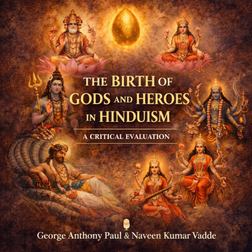
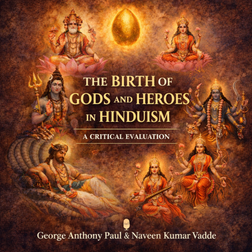
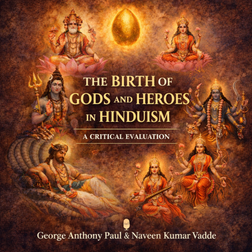
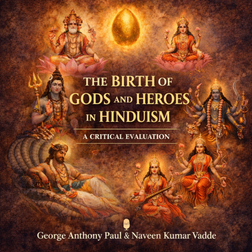
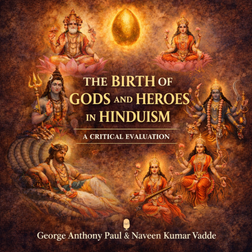
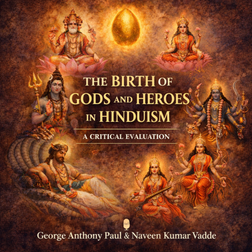
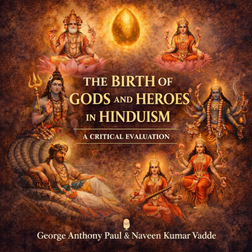
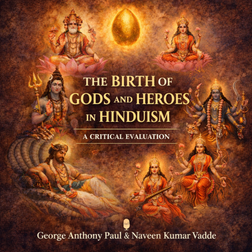
The Birth of Gods and Heroes in Hinduism: A Critical Evaluation

The Birth of Gods and Heroes in Hinduism: A Critical Evaluation

por George and Naveen
Temporada 1
Birth 1: Brahma from the Navel
Explícito
Birth 1: Brahma from the Navel Episode Summary: In this episode, we tackle one of the most famous images in Eastern mythology: the emergence of the "Creator" god, Brahma, from a lotus sprouting from Lord Vishnu’s navel. While traditionally viewed as a beautiful poetic allegory, we subject this account to the rigors of biological science, logical consistency, and theological scrutiny. From the "Mystery of the Divine Scar" (the navel) to the "Amnesia of the Lotus-Born," we ask the hard questions: Can a creator be confused about his own identity? Why does an eternal being possess a navel—a biological marker of prior birth and a mother? We contrast the dependent, bewildered Brahma of the Puranas with the self-existent "I AM" of the Bible, exploring why the nature of a god’s birth determines the nature of the salvation they offer. Key Topics Covered: The Scriptural Basis: A look at the Srimad-Bhagavatam, Brahma Purana, and Matsya Purana accounts of the Padma-sarga (Lotus Creation). The Biological Prosecution: * The Umbilical Paradox: Why Vishnu’s navel implies he was once a fetus in a womb, undermining his claim to be the "Unborn."Genetic Impossibilities: The missing Mitochondrial DNA and the "Photosynthetic Placenta." The God Who Forgets: Analyzing Srimad Bhagavatam 3.8.17, where a bewildered Brahma has an existential crisis, proving he lacks omniscience. Logical Contradictions: Why "self-creation" is a philosophical impossibility—an entity must exist before it can act to bring itself into existence. The Caste Connection: How Brahma’s "architectural" role in the Varna (caste) system contrasts with the message of Jesus. The Biblical Contrast: Comparing the "Lotus-Born" god, who sits above the world, with Jesus, who entered a manger to reach the "unclean" and the outcast. References in this Episode: Hindu Scriptures: Srimad-Bhagavatam (Canto 3), Brahma Purana (Ch. 71), Matsya Purana (Ch. 168). Biblical Verses: Exodus 3:14 (The Self-Existent God); The Gospels (The Virgin Birth and the Manger). Key Terms: Pralaya (Dissolution), Isnad (Chain of Transmission), Tapasya (Penance), Varna (Caste).
Birth 2: The Cosmic Omelet—Brahma from the Golden Egg (Hiranyagarbha)
Explícito
Episode Notes: Birth 2: The Cosmic Omelet—Brahma from the Golden Egg Episode Summary: In this episode, we investigate the second major creation narrative of Brahma: his emergence from the Hiranyagarbha, or the primordial Golden Egg. According to the Manusmṛti and the Rig Veda, the "Self-existent Lord" placed a seed in the causal waters that became a glowing egg, from which Brahma was born after a divine year. We subject this "Cosmic Omelet" to a rigorous scientific and logical prosecution. How can an egg exist without a mother to provide calcium and nutrients? How did an embryo survive submerged in water without oxygen? Furthermore, we explore the internal contradictions of Hindu mythology—if Brahma is born from an egg in one story and a navel-lotus in another, which one is true, and why do they negate each other’s claims to supremacy? Key Topics Covered: The Hiranyagarbha Narrative: Examining the scriptural basis in Manusmṛti 1.9–12 and the famous Rig Veda hymn. The Biological Prosecution:The Maternal Void: Why an egg without a mother violates the fundamental laws of biogenesis and mass conservation. Mitochondrial Impotence: The scientific impossibility of a complex organism existing without maternal Mitochondrial DNA (mDNA). The Atmosphere of the Egg: Applying Fick's Law of Diffusion to show why a "Creator" would have asphyxiated in a submerged cosmic shell. Mechanical Impossibilities: The sheer physical force required for a newborn to shatter a "cosmic" shell and separate the heavens from the earth. The Logical Trap of Self-Creation: The "pre-existence paradox"—how can a being place a seed to cause its own birth if it doesn't already exist? The Mythic Conflict: How the "Golden Egg" story and the "Navel-Lotus" story represent a direct conflict in divine hierarchy between Brahma and Vishnu. The Biblical Contrast: Comparing the "Shell-Born" god to the "Uncreated Eternal" (Exodus 3:14) who does not "become" God but eternally is God. References in this Episode: Hindu Scriptures: Manusmṛti, Matsya Purāṇa, Ṛg Veda (Maṇḍala 10, Hymn 121). Scientific Principles: Biogenesis, Mitochondrial inheritance, Laws of Thermodynamics, Fick's Law of Diffusion. Biblical Verses: Exodus 3:14 (The Self-Existent "I AM"), The Incarnation of Christ.
Birth 3: The Frontal Lobe Fury—Shiva from the Eyebrows
Episode Notes: Birth 3: The Frontal Lobe Fury—Shiva from the Eyebrows Episode Summary: In this final installment of our "Births of the Gods" series, we examine one of the most bizarre origin stories in the Puranic tradition: the birth of Rudra (Shiva) from the furrowed brow of a frustrated Brahma. According to the Śrīmad-Bhāgavatam and the Viṣṇu Purāṇa, when Brahma's "mind-born" sons refused to procreate, his cosmic rage manifested physically between his eyebrows, resulting in the emergence of a howling, blue-red child. We put this "cranial parturition" under the microscope of modern science and logic. How does a multi-limbed deity exit a skull without a birth canal? Can adrenaline and cortisol transmute into skeletal-muscular tissue? We explore the biological farce of a god born without a mother and the theological implications of a "Supreme Being" who is merely the byproduct of another god’s temper tantrum. Key Topics Covered: The Rudra Manifestation: Analyzing the scriptural accounts in the Śrīmad-Bhāgavatam, Viṣṇu Purāṇa, and Brahmāṇḍa Purāṇa. The Biological Prosecution:The Neuro-Vascular Nightmare: The anatomical impossibility of a "glabella birth" (birth from the space between the eyebrows). The Biochemistry of Rage: Why a surge of neurotransmitters cannot spontaneously generate 16,569 base pairs of mitochondrial DNA. The Species Barrier: The genetic paradox of a four-headed father producing a five-headed son through a sweat gland. The Logical Failure: Why an entity that "emerges" from a forehead is a dependent effect, not a sovereign, eternal cause. The "Howler" vs. The Savior: Contemplating a god born of rage (Rudra) versus a God who is the definition of Love. The Biblical Contrast: Comparing the "Forehead-Born" deity to the Logos (The Word) of John 1:1—the Uncreated Light who has no beginning and no biological "loophole" birth. References in this Episode: Hindu Scriptures: Śrīmad-Bhāgavatam (Canto 3, Ch. 12), Viṣṇu Purāṇa (Book 1, Ch. 7), Brahmāṇḍa Purāṇa. Biblical Verses: John 1:1 (The Eternal Word), The Gospel of Luke (The Birth of Christ). Scientific Concepts: Mitochondrial inheritance, Neurochemistry of anger, Cranial anatomy.
Birth 4: The Lateral Liquor—Vishnu from the Side of Shiva
Episode Notes: Birth 4: The Lateral Liquor—Vishnu from the Side of Shiva The Hindu "Trinity" is often presented as a unified front, but the Puranic scriptures tell a much more chaotic story of competition and biological absurdity. In this episode, we explore the Shaiva narrative from the Shiva Purana and Skanda Purana, where Vishnu—the great Preserver—is described as being "secreted" from the left side of Shiva as a "liquorine essence of nectar." We subject this "liquid manifestation" to a rigorous scientific prosecution. From the impossibility of spontaneous cellular synthesis from skin secretions to the logical "circularity" of the Hindu gods (where each god seems to give birth to the other in a never-ending loop), we expose the instability of these myths. We contrast this dependent, "secreted" version of Vishnu with the eternal, self-existent nature of the Biblical God, who requires no biological loophole to exist. Key Topics Covered: The Liquid Manifestation: Examining the Shiva Purana and Skanda Purana accounts of Vishnu emerging from Shiva’s side. The Secretion Fallacy: A biological critique of "dermal-liquid synthesis." How can sweat or "nectar" reorganize into complex, multi-cellular protein-based life? The mDNA Dead End: Revisiting the mitochondrial DNA paradox—if Vishnu is an emanation of Shiva’s side, where is the maternal line required for cellular energy? The Logical Circle: Deconstructing the "divine musical chairs" of the Puranas. If Brahma comes from Vishnu, Shiva from Brahma, and Vishnu from Shiva, who is the actual First Cause? Theological Subordination: How these birth myths were used as propaganda in historical conflicts between Shaivites and Vaishnavites. The Biblical Contrast: Comparing the "Liquid Derivative" to the "Eternal I AM." Why the God of the Bible is never a byproduct of anatomy but the Sovereign Creator of all matter. References in this Episode: Hindu Scriptures: Shiva Purana (Rudra-samhita), Skanda Purana, Linga Purana. Biblical Verses: Psalm 90:2 (Everlasting to Everlasting), John 6:35 (The Bread of Life). Scientific Principles: Organic chemistry, ATP production, Genetic blueprints, Cellular differentiation.
Birth 5: The Dextral Derivative—Brahma from the Right Side of Shiva
Birth 5: The Dextral Derivative—Brahma from the Right Side of Shiva In the final installment of our "Births of the Gods" series, we examine a narrative that turns the Hindu hierarchy on its head. In the Shaiva Puranas, Brahma—the purported Creator—is demoted to a mere "dextral derivative." According to the Shiva Purana and Linga Purana, after producing Vishnu from his left side, Shiva secreted a "nectar" from his right side, from which Brahma manifested as a subordinate assistant. We subject this "thoracic parturition" to a devastating biological and logical prosecution. If the Shudra is marginalized for being born from the "feet," what does it say about a god born from a skin secretion—the physiological equivalent of sweat or waste? We explore the chromosomal chaos of this motherless birth and contrast the dependent, "secreted" Brahma with the self-existent "I AM" of the Bible. Key Topics Covered: The Right-Side Emanation: Analyzing the scriptural hierarchy in the Śiva Purāṇa, Liṅga Purāṇa, and Skanda Purāṇa. The Biological Prosecution: * The Dextral Asymmetry: The anatomical impossibility of the right thoracic region (containing the liver and lungs) functioning as a reproductive organ.The Secretion Scandal: Why, in physiological terms, Brahma's birth from a "nectar" or "essence" makes him a byproduct of bodily waste, lower than the limbs he uses to categorize the caste system. The mDNA Dead End: How a motherless birth creates a "biological zombie" devoid of mitochondrial DNA and cellular respiration. The Nutrition & Waste Paradox: Examining the lack of a placental exchange or life-support system for a god manifesting on the surface of another's skin. Sectarian Propaganda: How these birth myths were used as theological weapons in the historical (and often violent) conflicts between Shaivites and Vaishnavites. The Biblical Contrast: Comparing the "Secreted Derivative" to the "Uncreated King." Why the God of the Bible has no beginning, no "side," and no anatomical origin. References in this Episode: Hindu Scriptures: Śiva Purāṇa (Rudra-saṃhitā), Liṅga Purāṇa (Book 1), Skanda Purāṇa. Biblical Verses: Exodus 3:14 (The Self-Existent One), Galatians 3:28 (No hierarchy in Christ). Scientific Concepts: Thoracic anatomy, mDNA inheritance, Dermal secretions (Sweat/Sebum), Chromosomal stability.
Birth 6: The Luminous Nothing—Adi Parashakti and the Shoonya Bindu
he Luminous Nothing—Adi Parashakti and the Shoonya Bindu Episode Summary: In this episode, we reach the pinnacle of the Shaktism tradition to examine the origin of Adi Parashakti, the "Primordial Power." According to the Devi Bhagavata Purana, before the universe began, there was a total void (Shoonya), from which a singular point of light (Bindu) emerged to manifest as the Goddess. While she is hailed as the "Mother of All" who assigns roles to Brahma, Vishnu, and Shiva, we subject this "emergence from nothing" to a rigorous scientific, logical, and theological prosecution. How can a carbon-based, multi-limbed biological entity—described in the Lalita Sahasranama with thousands of heads and arms—be synthesized from a massless photon? We explore the massive genetic information gap in this narrative, the "Mitochondrial Dead End," and the internal scriptural wars where Vaishnavites and Shaivites claim the Goddess is merely a subordinate byproduct of their own male deities. We contrast this "Luminous Accident" with the self-existent "I AM" of the Bible. Key Topics Covered: The Scriptural Basis: Analyzing the Devi Bhagavata Purana and the Brahmanda Purana’s account of the Goddess emerging from the Shoonya (void). The Physics of the "Zero-Point": * Thermodynamics vs. Mythology: Why energy and matter cannot be created ex nihilo from a natural vacuum.The Molecular Gap: The impossibility of a phase transition from a "point of light" into complex human anatomy. The Genetic Information Void: * The Genome Trap: If the Goddess has thousands of heads, she has physical anatomy. Where was the genetic code for this complex biology stored in a void?Cellular Ghosts: Why a motherless goddess lacks the Mitochondrial DNA (mDNA) required to power her thousands of cellular "batteries." The Logical Suicide of Self-Manifestation: Deconstructing the paradox—if an entity did not exist, it could not act to bring itself into existence. Sectarian Contradictions: How the Vishnu Purana and Shiva Purana negate the Goddess’s supremacy by claiming she is merely a "dependent power" (Sakti) of a prior male Absolute. The Biblical Contrast: Comparing the "Void-Born" goddess to the "Rock of Ages." Why Jesus Christ didn't manifest as a terrifying multi-armed Bindu, but as a historical man born to redeem the broken. References in this Episode: Hindu Scriptures: Devi Bhagavata Purana (Skandha 3), Lalita Sahasranama, Vishnu Purana, Shiva Purana. Scientific Concepts: First and Second Laws of Thermodynamics, Fick's Law of Diffusion, Mitochondrial inheritance, Information Entropy. Biblical Verses: 1 John 1:5 (God is Light), Exodus 3:14 (The Self-Existent "I AM").
Birth 7: The Daughter‑Wife — Sarasvatī/Gāyatrī from Brahmā’s Body
The Daughter‑Wife — Sarasvatī/Gāyatrī from Brahmā’s Body Episode Summary: In the final and perhaps most controversial installment of our "Births of the Gods" series, we examine the narrative of "Auto-Bifurcation." According to the Manusmṛti, Matsya Purāṇa, and Śrīmad‑Bhāgavatam, Brahmā—feeling lonely and desiring to populate the world—literally split his own body in half to create a female counterpart, variously identified as Sarasvatī, Gāyatrī, or Satārūpā. This episode explores the disturbing scriptural accounts of Brahmā becoming sexually captivated by his own "daughter" (the female half of his own substance), resulting in the sprout of multiple heads to keep her in his lustful gaze. We subject this narrative to a biological and genetic prosecution, investigating the "Genetic Clone Trap" and the "mDNA Void." We also discuss the internal moral rebuke found within the Hindu texts themselves and contrast this lust-driven "split" with the holy, purposeful Incarnation of Jesus Christ. Key Topics Covered: The Scriptural Basis: A deep dive into Manusmṛti 1.32 and Matsya Purāṇa Ch. 3, detailing the physical division of the Creator. The Biological Prosecution:The Cellular-Splitting Paradox: How a complex multi-cellular organism could "unzip" its nervous and skeletal systems into two viable bodies without immediate collapse. The Genetic Clone Trap: Analyzing the chromosomal alchemy required for a male genotype to produce a fertile female clone without a maternal source. The mDNA Void: Why a "self-split" deity lacks the maternal mitochondrial DNA necessary for cellular life. The Physics of Lust: The morphological instability of a deity who sprouts new skulls and brains based on transient emotional states. The Moral Failure: Why even Brahmā’s sons, according to the Bhāgavatam, rebuked their father for this "grotesque" behavior. The Body-Part Hierarchy: The severe irony of a deity who stigmatizes the "foot-born" while engaging in auto-incestuous desire. The Biblical Contrast: Comparing the sexual generation of the Puranas with the Holy Incarnation of the Logos. How Christ’s sacrifice provides universal dignity that transcends the "body-part" hierarchy of the caste system. References in this Episode: Hindu Scriptures: Manusmṛti (Ch. 1), Matsya Purāṇa (Ch. 3), Śrīmad‑Bhāgavatam (3.12). Scientific Principles: Binary fission vs. Multi-cellular biology, Chromosomal Sex (XX/XY), Mitochondrial inheritance, Inbreeding depression. Biblical Verses: John 1 (The Eternal Logos), Luke 1 (The Virgin Birth), Genesis 1 (The Imago Dei).
Birth 8: The Intellectual Emanation — Mahāsarasvatī from the Sattva Guṇa
Birth 8: The Intellectual Emanation — Mahāsarasvatī from the Sattva Guṇa In this episode, we investigate a birth narrative that is as abstract as it is scientifically baffling. According to the Devi Māhātmya and the Devi Bhāgavata Purāṇa, the goddess Mahāsarasvatī is not a self-existent creator, but a "metaphysical secretion"—an emanation of the sattva guṇa (the quality of purity and light) from the primordial Mahālakṣmī. We subject this "Biochemistry of an Attribute" to a rigorous prosecution. How does a non-material quality like "purity" condense into a multi-limbed, carbon-based organism capable of playing a lute? We explore the massive genetic and thermodynamic gap between a psychological category and a functioning biological genome. We also discuss the theological implications of a "fragmented" deity and contrast this "Intellectual Emanation" with the personal, unified, and accessible Wisdom of God found in Jesus Christ. Key Topics Covered: The Scriptural Basis: Examining the Pradhānika Rahasya and the division of the guṇas in the Mārkaṇḍeya Purāṇa. The "Scientific" Prosecution:The Matter–Energy Gap: Why there is no "periodic table of qualities" and how concepts cannot form neurons or muscle. The Genetic Code of a Thought: If Mahāsarasvatī has physical skin, hair, and nervous systems, where was the DNA code stored in an abstract "quality"? The mDNA Void: Why a "guna-emanation" lacks the maternal mitochondrial DNA required for cellular energy metabolism. The Species Barrier: The anatomical impossibility of an eight-armed skeletal structure manifesting without an embryological process. The Dependent "Goddess": Why a being that is merely a "portion" or "slice" of a higher power fails the definition of a self-subsistent, absolute God. The Instrumentalization of Knowledge: How Mahāsarasvatī functions as a "functional secretion" or tool of the system rather than a sovereign subject. The Biblical Contrast: Comparing the fragmented "Goddess of Learning" (historically restricted to the upper castes) with Jesus Christ—the Wisdom of God who offers "living water" to the lowly and the "untouchable." References in this Episode: Hindu Scriptures: Mārkaṇḍeya Purāṇa (Devi Māhātmya), Devi Bhāgavata Purāṇa (9th Skandha). Scientific Principles: The Second Law of Thermodynamics (Entropy), Mitochondrial Inheritance (mtDNA), Skeletal-muscular anatomy. Biblical Verses: 1 Corinthians 1:24 (Christ the Wisdom of God), John 1 (The Logos), Exodus 3:14 (Divine Simplicity).
Birth 9: The Crimson Commodity — Mahālakṣmī from the Rajas Guṇa
Birth 9: The Crimson Commodity — Mahālakṣmī from the Rajas Guṇa n this episode, we investigate the origins of Mahālakṣmī, often hailed as the goddess of wealth and beauty. According to the Devī‑Māhātmya and Devī‑Bhāgavata Purāṇa, she is not an absolute first cause, but a "rajasic emanation"—a personified slice of the primordial Great Goddess's quality of passion, desire, and activity (rajas-guṇa). We subject this "biological alchemy" to a rigorous scientific and theological prosecution. How can a non-material psychological tendency like "passion" solidify into a carbon-based, four-armed organism? We explore the massive genetic information gap, the "Mitochondrial Dead End," and the profound theological tension of worshiping a deity born from the very quality (rajas) that many Eastern traditions claim keeps the soul trapped in the cycle of suffering and attachment. Key Topics Covered: The Scriptural Basis: Examining the Prādhānika Rahasya and the manifestation of Mahālakṣmī as the "passion-portion" of the Divine Mother. The Information-System Problem: Why a philosophical disposition cannot store or transmit the billions of base pairs of DNA required for a humanoid body. The Mitochondrial Dead End: How a spontaneous manifestation from a guṇa lacks the maternal line required for the mtDNA and ATP production necessary to wield weapons or bestow boons. Anatomy of an Attribute: The skeletal and neurological impossibility of a four-armed vertebrate arising from an abstract temperament without an embryological history. Sanctified Temptation?: A theological critique—if rajas is associated with bondage and restlessness, does Mahālakṣmī function as a savior or as a religiously endorsed distraction from spiritual freedom? The Biblical Contrast: Comparing the fragmented "Goddess of Wealth" with the unified, self-existent God of the Bible. Why Jesus Christ—the King who embraced poverty—offers a more compelling path for those seeking liberation from greed and status. References in this Episode: Hindu Scriptures: Mārkaṇḍeya Purāṇa (Devī‑Māhātmya), Devī‑Bhāgavata Purāṇa (Book 9). Scientific Principles: DNA information systems, Mitochondrial inheritance (mtDNA), Laws of Thermodynamics, Vertebrate anatomy. Biblical Verses: Matthew 6:24 (God and Money), Psalm 24:1 (The Earth is the Lord’s), Philippians 2:5-8 (The Humility of Christ).
Birth 10: The Obsidian Abomination — Mahākālī from the Tamas Guṇa
Birth 10: The Obsidian Abomination — Mahākālī from the Tamas Guṇa Episode Summary: In this episode, we investigate the darkest chapter of the Shaktism tradition: the manifestation of Mahākālī. According to the Devī‑Māhātmya and Devī Bhāgavata Purāṇa, Mahākālī is the personification of the tamas-guṇa—the quality of darkness, inertia, ignorance, and destruction. Described as "black like collyrium" with lolling tongues, fangs, and garlands of severed heads, she represents the "lowest" mode of nature raised to a divine status. We subject this "Obsidian Abomination" to a rigorous scientific and theological prosecution. How can an abstract philosophical category like "darkness" or "ignorance" generate the complex genomic information required for a multi-headed, multi-armed biological organism? We explore the "Mitochondrial Dead End" of her motherless emergence and the anatomical impossibilities of her terrifying form. Finally, we contrast this deified personification of terror with the Biblical God, who is "Light, and in Him is no darkness at all." Key Topics Covered: The Scriptural Basis: Analyzing the Prādhānika Rahasya and the Devī Bhāgavata Purāṇa’s account of Kālī emerging from the tamasic portion of the Divine Mother. The "Scientific" Prosecution: * Genomic Impossibility: Why an abstract quality like "dullness" cannot encode the DNA sequences for multiple brains, nerves, and skin pigments.The Mitochondrial Dead End: How a goddess described as "vigorously active" on the battlefield can exist without maternal mtDNA to power her cellular metabolism. Anatomical Nightmares: The biomechanical and circulatory failure of multi-headed humanoid forms. How many hearts would it take to pump blood to ten heads? The Biochemistry of "Collyrium": How "metaphysical darkness" would have to interact with the electromagnetic spectrum to be visible, subjecting it to the laws of physics. Sacralizing the Abject: A theological critique—can the "lowest" mode of nature (ignorance and lethargy) truly be a morally perfect, self-consistent God? The Biblical Contrast: Comparing the "Tamasic Terror" with Jesus Christ—the "Light of the World" (John 1:9). Why the Savior who kneels to wash feet offers a more stable foundation for human dignity than a goddess who stands on the bodies of the fallen. References in this Episode: Hindu Scriptures: Mārkaṇḍeya Purāṇa (Devī‑Māhātmya), Devī Bhāgavata Purāṇa (Skandha 9), Bhagavad Gītā (14.8). Scientific Principles: DNA Coding, Mitochondrial Inheritance (mtDNA), ATP Production, Vertebrate Anatomy, Melanocyte Biology. Biblical Verses: 1 John 1:5 (God is Light), John 1:9 (The True Light), John 13:5 (Jesus washing feet).
1 de 2