Campus Podcast @ Metro State University

Campus Podcast @ Metro State University

por Mr. Lucky — Educator, MAPL, M.S. Urban Education Student
Temporada 14

Honorable: Student Justin

To be a guest on the podcast email: radiotalklr@gmail.com

Ms. Talia: BBA

To be a guest on the podcast email: radiotalklr@gmail.com

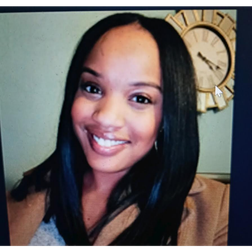
Ms. Yasmin-Starting Strong to Finishing Strong

Queen Yasmin A student with until 2029 to graduate with a business degree carries a journey of endurance and purpose; like Harriet Tubman on the Underground Railroad, she keeps moving forward, refuses to turn back, and will one day lead others toward their own freedom, opportunity, and success. See my book at www.weusoursluckybooks.com To be a guest on the podcast and/or to help with my audience research, call and let me know what area you are listening from. 773-809-8594

Student: Venessa

To be a guest on the podcast email radiotalklr@gmail.com

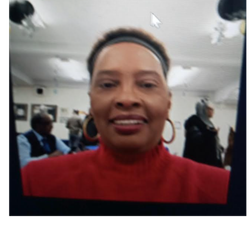
Ms. Kanisha: Major-Alcohol and Drug Counseling

Contact Kanisha at: sqs.inquiries@gmail.com A mother of three young boys, rising through college to study Alcohol and Drug Counseling, stands as proof that healing begins with courage. Her education is not just a degree—it is a generational breakthrough, showing her sons that strength, service, and purpose can rewrite any story. To be a guest on the podcast call 773-809-8594 Mr. Lucky

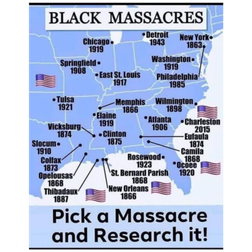
Black Massacres and White Fragility: Classroom Avoidance

"“Avoiding Black massacres fuels campus fragility, deepens division, and blocks the honest dialogue required for real unity and justice, making a mockery of the college mission, vision, and anti‑racism page in courses dealing with race, psychology, education, social work, and other social studies.” Mr. Lucky Ask For My PowerPoint: radiotalklr@gmail.com Classroom avoidance of Black massacres reflects a broader pattern of fragility that prioritizes emotional comfort over historical truth, ultimately undermining students’ right to an honest and complete American history. Short Lesson Plan: Truth, Fragility, and Historical Accountability Lesson Focus: How “colorblindness,” fragility, and historical denial prevent unity — using Black Massacres = Today’s Unity as the anchor text. Learning Objective 1 Students will analyze how claims of “colorblindness” function as a form of fragility rather than unity. Example: A student explains how ignoring race on campus erases lived Black experiences and protects the comfort of those who avoid discussing racism. Learning Objective 2 Students will evaluate why confronting historical events such as Black massacres is essential for genuine unity. Example: A student connects a specific massacre (e.g., Tulsa 1921) to modern conversations about racial justice and community healing. Learning Outcome 1 Students will be able to explain why “truth is not divisive” using evidence from historical events. Example: A student states, “Discussing the Colfax Massacre doesn’t divide us — it exposes the roots of inequality so we can address it together.” Learning Outcome 2 Students will compare the ‘stop talking about racism’ mindset to the cancer analogy and articulate why silence is harmful. Example: A student writes, “Ignoring racism is like ignoring cancer — silence allows it to spread.” Discussion‑Based Assessment Prompt: In small groups, discuss the following: “How does acknowledging painful historical truths create more unity than pretending we are colorblind?” Students must reference: one massacre from the map, the fragility/colorblindness concept, and the cancer analogy. The assessment is complete when each student contributes a spoken or written response demonstrating understanding of the lesson’s objectives and outcomes. To be a guest on this podcast email: radiotalklr@gmail.com Mr. Lucky — Social Studies Teacher, currently completing my second master’s degree in Urban Education
AI Says: You're Fired. Now What?

Comments to: radiotalklr@gmail.com Artificial intelligence is no longer just a tool—it’s a force reshaping the very structure of employment. From streamlining operations to replacing entire departments, AI is driving layoffs and workforce reductions across major industries. In this episode, I try to provide how employees can respond strategically. Guests Wanted: Students are welcomed to share on this podcast. Call 773-809-859 Mr. Lucky, Master of Advocacy and Political Leadership (M.A., MAPL) Graduate Student, M.S., School of Urban Education Host, Metro State Black College Achievers Podcast

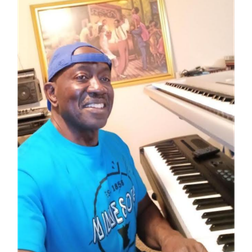
Mr. Lucky "Live Show" Original Music

Order My Book: weusoursluckybooks.com To Be A Guest On This Podcast Call; 773-809-8594

I Earned My Degrees Before AI

Order My Book: www.weusoursluckybooks.com Mr. Lucky, Master of Advocacy and Political Leadership (M.A., MAPL) Graduate Student, M.S., School of Urban Education Host, Metro State Black College Achievers Podcast Guests Wanted: Students are welcomed to share on this podcast. Call 773-809-8594
Temporada 4

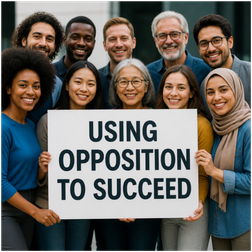
Using Opposition to Succeed

Order My Book: weusoursluckybooks.com LOGIC MODEL: Using Opposition to Succeed Program Goal: Equip students, graduates, and emerging leaders to convert opposition—negative people, “isms,” doubt, and resistance—into motivation, strategy, and personal advancement. Inputs Personal experiences with opposition Supportive peers and mentors Leadership frameworks (task, transformational, servant, adaptive) Historical examples (Tubman, Hamer, Malcolm X, Dr. King) Self‑reflection and discipline Awareness of haters, prejudices, and systemic barriers Activities Identify sources of opposition and categorize them (ignore vs. use) Reframe negative messages into action questions (“What CAN I do?”) Practice leadership strategies that anticipate resistance Study historical leaders who turned pressure into purpose Convert critics’ words, jealousy, and actions into strategic fuel Teach students to transform discouragement into momentum Outputs Examples showing how opposition becomes usable Student‑created strategies for responding to haters and “isms” Leadership plans built around resistance Reflection statements on how opposition reveals potential Tools for turning negativity into progress Short‑Term Outcomes Students recognize opposition as material, not a barrier Increased confidence when facing discouragement Ability to ignore unproductive critics Ability to convert negative messages into strategic action Long‑Term Outcomes Stronger leadership identity Greater resilience in college, career, and entrepreneurship Ability to build more from opposition than from agreement Strategic use of resistance to amplify goals and message Transformation of opposers into unintentional contributors to success Impact Learners adopt the mindset that opposition is not the enemy—it is the material. Motivation is the builder. Strategy is the result. They grow from supporters but rise by converting resistance into power. Assumption This model assumes that students and leaders are willing to reflect honestly, confront discomfort, and apply disciplined action. It also assumes that opposition—whether rooted in jealousy, prejudice, or fear—can be reframed and repurposed into constructive energy when guided by intentional leadership. Contact: 773-809-8594 0r radiotalklr@gmail.com
7 de 12