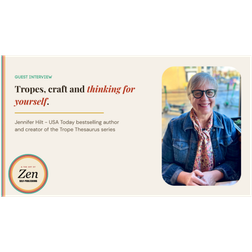
What Are You Actually Building? Tropes, Story, & the Art of Thinking for Yourself with JENNIFER HILT
Jennifer Hilt — USA Today bestselling author and creator of the Trope Thesaurus series — joins Janet to talk about story structure, creative identity, and why understanding tropes is really about understanding what makes us human. They cover how tropes got a bad reputation (and why that's changed), the difference between a trope and a cliché, why motivation is the secret sauce of any story that actually works, and what happens when authors hand over their creative judgment — to AI, to trends, or to anyone else. If you've ever felt ashamed of writing "commercial" fiction, lost momentum mid-draft, or wondered whether AI tools are helping or quietly hollowing out your voice — this one's for you. What we talk about: Why Jennifer's students reacted with shame when she mentioned tropes — and what that revealed about the indie author world's relationship with commercial storytelling Tropes vs. clichés: the distinction that changes how you think about craft Why tropes are fundamentally about human relationships, not genre formulas Mystery vs. thriller — and why the line between them keeps blurring What keeps readers coming back to a series (hint: it's an identity question) The problem with promoting secondary characters to leads How to think about tropes as a discoverability and marketing tool AI, critical thinking, and why "handing over your power" is the real risk Kate Atkinson's spiral drafting method — and why it might save your writing life Guest links: Jennifer Hilt: jenniferhilt.com Free Substack: available at her website Books mentioned: The Trope Thesaurus series (multiple volumes), A is for Alibi by Sue Grafton, Department Q series (book and Netflix)