WorldSnap - Economy & Financial

WorldSnap - Economy & Financial

by World Snap
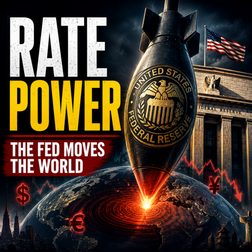
The Weaponization of Interest Rates: How the Fed Moves the Whole World.
AI
In this episode, we explore how Federal Reserve interest rate decisions move far beyond the United States, shaping currencies, debt, capital flows, and financial pressure across the world. From stronger dollars to emerging-market stress, we break down why one central bank in Washington can influence governments, investors, and ordinary people thousands of miles away. This is the quiet power of money, markets, and the global dollar system.
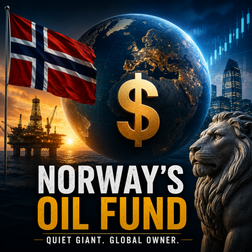
Norway’s Oil Fund: The Quiet Giant That Owns the World
AI
Norway’s Oil Fund is one of the most powerful financial forces on Earth — yet it operates quietly in the background of the global economy. Built from North Sea oil and gas revenue, the fund transformed a temporary natural resource into long-term national wealth, making Norway a shareholder in thousands of companies around the world. In this episode, we explore how Norway avoided the resource curse, why it invests its oil wealth abroad, and how discipline, trust, and strong institutions turned petroleum money into a global financial machine. We also examine the deeper paradox behind the fund: a country known for clean governance and environmental responsibility built one of the world’s largest investment funds from fossil fuel wealth. This is the story of patience, power, and the quiet giant that owns a piece of the world.
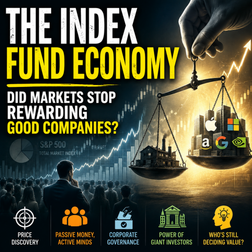
The Index Fund Economy — Did Markets Stop Rewarding Good Companies?
AI
Index funds transformed investing by making it cheaper, simpler, and more diversified. But as trillions of dollars flow automatically into market indexes, a deeper question emerges: if fewer investors are choosing individual companies, who is still deciding what those companies are worth? In this episode, we explore how passive investing affects price discovery, capital allocation, corporate governance, market concentration, index providers, and the growing power of giant asset managers. We also examine the paradox at the heart of modern finance: passive investing works because active investors are still doing the research, challenging valuations, and correcting market mistakes. Did index funds weaken the market’s ability to reward good companies and punish bad ones, or did they simply create a more efficient division of labor between ordinary investors and professional price setters?
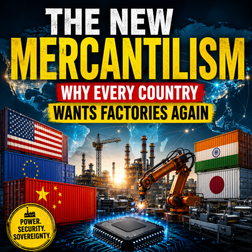
The New Mercantilism: Why Every Country Wants Factories Again
AI
After decades of globalization, outsourcing, and just-in-time supply chains, governments around the world are racing to rebuild domestic manufacturing. In this episode, we explore why factories have become symbols of economic security, political stability, technological power, and national independence. From semiconductors and batteries to pharmaceuticals, steel, and critical minerals, countries are spending billions to attract strategic industries and reduce their dependence on foreign suppliers. But can industrial policy truly rebuild lost manufacturing ecosystems, or will the new factory race become an expensive global subsidy war? This episode explains the return of mercantilist thinking, the political consequences of deindustrialization, the hidden value of manufacturing, and why the future of globalization may be shaped less by efficiency and more by resilience, alliances, and national power.
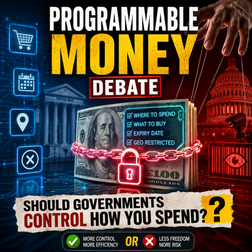
The Programmable Money Debate — Should Governments Control How Currency Can Be Spent?
AI
What if money could decide where, when, and how you were allowed to spend it? Programmable money could make payments faster, automate welfare programs, improve disaster relief, and give governments powerful new economic tools. But the same technology could also allow restrictions on purchases, expiration dates, geographic limits, and unprecedented levels of financial oversight. In this episode, we explore the difference between digital money and programmable money, the rise of central bank digital currencies, the benefits of programmable payments, the risks to privacy and financial freedom, and the deeper question at the center of the debate: who should have the power to write rules into money itself?
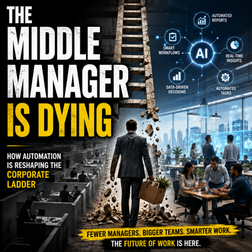
The Death of the Middle Manager — How Automation Is Reshaping the Corporate Ladder
AI
For decades, middle managers formed the backbone of the modern corporation, passing information upward, coordinating teams, monitoring performance, and turning executive strategy into everyday work. But automation, digital platforms, and artificial intelligence are changing that structure. Companies can now track projects, generate reports, coordinate workflows, and communicate across entire organizations with fewer layers of management. In this episode, we explore why middle management became so important, why corporations are becoming flatter, how AI is reshaping managerial work, and what fewer management positions could mean for promotions, career growth, workplace power, and the future of the corporate ladder.
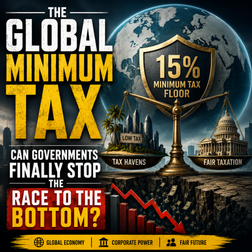
The Global Minimum Tax — Can Governments Finally Stop the Race to the Bottom?
AI
For decades, countries have competed to attract multinational corporations by lowering corporate tax rates, offering special exemptions, and creating increasingly generous incentives. But as companies became global and profits became easier to shift across borders, governments began asking whether tax competition had gone too far. In this episode, we explore the rise of the global minimum tax, why multinational profit shifting became such a major issue, how tax havens fit into the global economy, and why governments are trying to establish a minimum floor beneath corporate taxation. We also examine the deeper consequences: whether tax competition will truly decline, whether subsidies will replace tax cuts, how developing countries could be affected, and what this experiment tells us about sovereignty in a globalized economy. Can governments finally stop the race to the bottom, or will international competition simply take a new form?
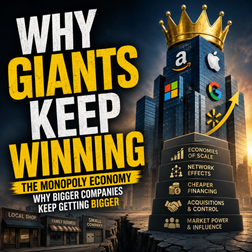
The Monopoly Economy — Why Bigger Companies Keep Getting Bigger
AI
Why do the biggest companies seem to keep getting bigger? In this episode, we explore the economic forces behind corporate concentration and the rise of dominant firms. From economies of scale and network effects to cheaper financing, data advantages, acquisitions, distribution power, and brand loyalty, we examine why size itself can become a powerful competitive advantage. We also look at the difficult question facing modern economies: when does corporate scale create efficiency, and when does it begin to weaken competition? This episode explains why some industries naturally drift toward a handful of giants, how dominant companies can become increasingly difficult to challenge, and why keeping markets competitive is much more complicated than simply breaking large companies apart.
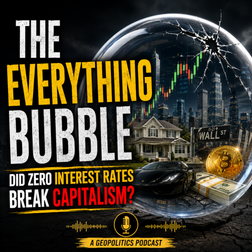
The Everything Bubble: Did Zero Interest Rates Break Capitalism?

AI
A thoughtful deep dive into how zero interest rates fueled the rise of the Everything Bubble, inflated asset prices, widened inequality, and reshaped modern capitalism. This episode explores the hidden cost of cheap money, from housing and stocks to startups, debt, and central bank power — and asks what happens when the era of easy money finally ends.
George Soros vs the Bank of England: The Trade That Broke a Currency
AI
In 1992, George Soros made one of the most famous trades in financial history: a massive bet against the British pound. This episode explains how Britain’s attempt to defend its currency inside Europe’s Exchange Rate Mechanism turned into Black Wednesday, why the Bank of England was forced to surrender, and what this crisis reveals about central banks, market power, and the limits of government control over money.
1 of 7