Whispers From The Dark

Whispers From The Dark

by Fuzzy Life Entertainment
129: The Billionaire Escape Plan — Why the Ultra-Rich Are Building Underground Cities
There is a particular kind of door you will never see. It is not marked on any map. It is not guarded by visible security. It is buried — beneath estates, beneath mountains, beneath fields where no structure is visible for miles in any direction. Behind it are rooms stocked for decades. Water systems independent of municipal infrastructure. Air filtration rated for nuclear fallout. Medical facilities. Hydroponic farms. Artificial sunlight cycling on a programmed clock. And someone very wealthy is already holding the key. In this episode of Whispers From the Dark, host Raven Vale investigates the billionaire bunker phenomenon — the documented, large-scale movement among the world's ultra-wealthy to build survival infrastructure at a scale human history has never seen before. This is not speculation assembled from anonymous sources. Former intercontinental ballistic missile silos in the American Midwest have been purchased and converted into luxury survival condominiums, their reinforced concrete walls now protecting million-dollar residential units. Remote estates in New Zealand — chosen specifically for geographic isolation and political stability — have attracted public attention when their strategic purpose became apparent. Silicon Valley executives have acquired land in regions identified by analysts as geopolitically stable. Private islands have been outfitted with independent power generation, desalination systems, satellite communication, and agricultural infrastructure sufficient to sustain their inhabitants indefinitely. Raven opens with the history of fortress psychology — the consistent, cross-cultural pattern by which power has always built walls when uncertainty rises — and traces that impulse from medieval castles and mountain monasteries directly into the present, where the same psychology expresses itself in biometric entry systems and underground swimming pools. She examines the psychology of extreme preparation: why people with access to sophisticated global risk analysis think differently about low-probability, high-consequence scenarios than the rest of us do, and how that thinking produces what looks, from the outside, like either extraordinary rationality or extraordinary anxiety — or both simultaneously. The episode investigates what luxury bunkers actually look like — the hydroponic farms and surgical suites and behavioral psychology-informed architectural choices and simulated skylines — and asks what it reveals about human values when survival is engineered not merely to preserve biological function but to preserve a specific quality of life. Raven examines the industry that has grown up around elite survival preparation: the security consultants, crisis forecasters, and subterranean architects who profit from sustained anxiety, and the way resilience has become a new form of status competition among people whose previous competitive landscape was yachts and private jets. The episode confronts the social contract problem at the center of bunker culture: the implicit lifeboat mentality revealed by a class of people who have quietly built exits while the general population they share civilization with has not been offered the same option. The existence of the plan — not its execution, but its existence — is what erodes the social trust that complex societies depend on. It draws historical parallels to Cold War command bunkers, plague-era noble retreats, and revolutionary-era capital flights — and notes that what is different now is not the impulse but the technology, which makes the option genuinely permanent rather than temporary. And it closes with the question that survives all the economics and psychology and history: when the door closes, and the air systems engage, and the screens switch on to simulate a sunrise over a coast you selected from a catalog — is that safety? Or is it exile from the one thing that cannot be engineered underground? This episode is for anyone who has ever: — Read about bil
128: Digital Doppelgängers — Who Owns Your Identity in the Age of AI?
In German legend, the doppelgänger was not a monster. It was something more disturbing: a perfect double of a living person, walking the world without permission, wearing your face, doing things you never did. The old stories called it an omen. A signal that the boundary between you and your copy had become permeable. We no longer need legends to imagine this. In this episode of Whispers From the Dark, host Raven Vale investigates the technological reality that the doppelgänger myth anticipated: AI systems capable of replicating your face, cloning your voice, simulating your personality, and deploying your digital likeness in ways you never consented to and may never know about. Raven opens by tracing the deep, cross-cultural human anxiety about duplication — the indigenous fear of photography as soul extraction, the Eastern European folklore that warned a sighting of your double meant death — and follows that thread directly into the present, where the things our ancestors feared have become infrastructure. The episode investigates AI voice cloning in forensic detail: how modern synthesis tools can replicate a person's specific vocal signature from just minutes of audio, producing results precise enough to deceive family members, and how that capability is already being deployed in fraud, manipulation, and unauthorized commercial use. The voice, once the most intimate proof of a person's presence, has become separable from the body that produces it. It examines deepfake technology — the acceleration of video generation capabilities that allow AI to produce hyper-realistic footage of real people doing things they never did — and the cascading consequences for trust in visual evidence, political information, personal reputation, and the legal systems built around the assumption that recordings reflect reality. Raven explores the emerging industry of digital resurrection: companies that build interactive AI simulations of deceased individuals from their archived digital data, offering grieving families continued access to something that sounds, responds, and reasons like the person they lost. The compassion of the intent does not resolve the ethical complexity of the practice — or the question of who owns the result. The episode turns to the economy of identity: the documented, systematic process by which faces train facial recognition models, voices train speech synthesis, behavioral patterns train predictive algorithms, and data brokers compile and sell profiles of real individuals — all largely without meaningful consent, and all producing systems that carry something derived from specific people without those people having any rights over what is done with what was taken. It confronts the concept of modern digital possession: the scenario in which your likeness acts independently of you in the world — making statements you did not make, appearing in contexts you did not choose, generating consequences you must live with — while your body remains entirely innocent and entirely uninvolved. And it closes with the questions that matter most: who legally owns your digital double, what happens to trust when nothing digital can be reliably verified, and whether identity is something that can be owned at all — or merely something that can be borrowed, without asking, without returning, without ever announcing that the borrowing began. This episode is for anyone who has ever: — Wondered what AI companies are actually doing with the data they collect — Been unsettled by how convincing deepfake videos have become — Asked what rights they have over their own voice and likeness online — Thought about what digital resurrection technology means for grief and memory — Wanted to understand AI identity theft beyond the headlines — Sensed that the digital world is accumulating versions of them they have never seen The copy does not ask permission. And it does not stop when you do. Whispers From the Dark — available wherever you listen to podca
127: The Psychology of Secrecy — Why Hidden Groups Always Rise to Power
There is something magnetic about a closed door. Not because of what you know is behind it. Because of what you don't. In this episode of Whispers From the Dark, host Raven Vale examines one of the most durable and recurring patterns in human civilization: the rise of secret societies, hidden networks, and exclusive groups — and the psychological architecture that makes secrecy, in and of itself, a mechanism for generating authority. This is not a conspiracy theory episode. It is something more difficult to dismiss: a careful, evidence-based investigation into why the human brain responds to concealment the way it does, and what that response has produced across thousands of years of history. Raven opens with the information gap theory — the documented cognitive phenomenon in which the mere awareness of missing knowledge intensifies curiosity and elevates perceived value. Secrecy, she argues, is a machine for manufacturing that gap. The vault does not make the gold more valuable. It makes it feel more valuable. And feeling, in the architecture of human psychology, often matters more than fact. The episode moves through the evolutionary origins of exclusion — why the tribal brain responds to restricted access with heightened desire rather than indifference — and traces the consistent historical pattern by which priesthoods, royal courts, guilds, fraternal societies, and modern elite networks have all leveraged the same fundamental dynamic: restrict access, and the thing being restricted becomes desirable; make it desirable, and the group holding it acquires authority. Raven examines initiation rituals through the lens of effort justification — the psychological phenomenon in which investment increases perceived value — and explores how shared struggle and shared secrets build the kind of relational trust that produces extraordinary group cohesion and loyalty. She traces the function of hidden knowledge as currency through history, from the restricted literacy of medieval religious institutions to the closely guarded trade secrets of Renaissance guilds to the alchemists who held enormous cultural authority on the basis of a secret that was almost certainly false — but remained unverified long enough to shape the behavior of kings. The episode confronts the paradox of trust: how secrecy, which withholds information, can actually increase the confidence outsiders place in a group by suggesting selectivity, discretion, and hidden competence. And it examines the modern incarnation of all of this — the invitation-only conference, the private forum, the encrypted channel, the off-the-record dinner — where the psychology is identical to what it was in the lodges of eighteenth-century Freemasons, even if the aesthetics have changed entirely. The episode closes with the hardest question: is hidden knowledge inherently powerful, or does power reside not in the secret but in the belief surrounding it? And if the latter — if the belief is the amplifier and secrecy only the spark — what does that mean for the way we understand influence, authority, and the persistent human conviction that somewhere, behind a closed door, the people who really run things are meeting right now? This episode is for anyone who has ever: — Wondered why exclusive groups seem more powerful than open ones — Asked what Skull and Bones, Freemasonry, or the Bilderberg Group actually do — Sensed that the most important decisions are made in rooms you'll never enter — Wanted to understand the psychology behind conspiracy thinking without endorsing it — Been drawn to a closed door and wanted to know why The secret doesn't have to be real. It only has to stay hidden. Whispers From the Dark — available wherever you listen to podcasts. secret societies psychology why secret groups rise to power psychology of secrecy hidden power structures secret society explained exclusive groups and authority information gap theory Freemasons Skull and Bones psychology hidden kn
126: The Cult of the Screen: Has Social Media Secretly Replaced Religion?
There was a time when people gathered at dawn to face east. They knelt in stone temples. They whispered prayers into candlelit silence. They listened to a single voice elevated above the crowd and believed it carried something beyond the merely human. Now we rise from sleep and reach for a glowing rectangle. In this episode of Whispers From the Dark, host Raven Vale asks the question that has been building for a decade of digital life: has media replaced religion? And the answer — documented, uncomfortable, and impossible to unsee — is more complex than either yes or no. Media has not replaced religion. It has absorbed its structure. The human impulses that built cathedrals and synagogues and mosques and temples — the hunger for ritual, for belonging, for shared myth, for a story that makes sense of suffering — have not disappeared. They have migrated. They have found new architecture. And that new architecture glows, updates in real time, and learns your preferences with an intimacy no priest or pastor ever could. Raven opens by tracing the structural parallels between ancient temples and modern digital platforms — both centered in culture, both organizing time and morality and identity for the communities that inhabit them. She moves through the daily rituals of the scroll — the morning check, the commute check, the last check before sleep — and examines how repetition creates devotion and devotion creates identity. The episode's most disturbing territory is the algorithm as invisible priest: an entity that mediates between you and the information world, deciding what you see and what disappears, operating behind a veil of proprietary secrecy, optimizing not for truth but for engagement — and in doing so, manufacturing the texture of myth. Raven examines celebrity culture as modern mythology — the rise and fall narratives, the public confession rituals, the cycles of sin and redemption that play out across social media in structures recognizable from every religious tradition humanity has produced. She investigates mass synchronization — the way livestreamed events create genuine physiological experiences of communion across billions of simultaneous viewers — and asks what it means that this scale of shared experience exists without any shared creed. The episode confronts the shadow side honestly: the way algorithms reward emotional intensity over wisdom, amplify extremes over moderation, and produce outrage cycles that function as ritual without producing the reconciliation that gave ancient rituals their social value. And it closes with the hardest question: if we are both the worshippers and the architects of this system — if the invisible priests only amplify what we feed them — then what responsibility do we carry for the temple we are building? This episode is for anyone who has ever: — Reached for a phone before being fully awake and wondered why — Felt genuine grief over the fall of a celebrity they never met — Experienced the particular electricity of watching something live alongside millions of strangers — Sensed that the digital world is organized around something that functions like belief, without knowing what to call it — Asked whether the loss of traditional religion has left a void — and what has rushed in to fill it No conspiracy. No easy answers. Just the pattern, laid out clearly enough that you cannot look away. Whispers From the Dark — available wherever you listen to podcasts. has media replaced religion social media as religion algorithm as priest digital rituals psychology media and religion comparison cult of social media technology and spirituality screen addiction psychology social media and belief digital age religion celebrity worship culture algorithm and human behavior social media ritual behavior digital tribes psychology outrage cycle social media livestream as communal ritual media and myth making screen time and mental health hostile architecture social media confes
125: The Architecture of Control: Are Cities Secretly Designed to Shape Human Behavior?
Your city is not a backdrop. It is an instrument — and it is playing you. Are cities designed for convenience or control? Raven Vale investigates the hidden psychology behind urban design, surveillance architecture, and behavioral engineering. There is a moment that happens in every city. You step off a train, or out of your car, or emerge from underground into open air — and something shifts inside you. Your pace changes. Your posture adjusts. Your voice drops without thinking. No one told you to do any of that. The design did. In this episode of Whispers From the Dark, host Raven Vale takes a deep, unsettling look at the hidden science of urban design — the deliberate, documented, and often invisible ways that cities engineer human behavior at scale. This is not a theory. It is environmental psychology, and it has been shaping your daily experience your entire life. What you'll discover in this episode: Raven opens with the contrast between the financial canyons of Lower Manhattan — where strangers walk faster, speak less, and keep their eyes forward — and the deliberately open, chamfered intersections of Barcelona's Eixample district, where the same human beings breathe differently, move more slowly, and feel, inexplicably, more at ease. The difference is not culture. It is geometry. From there, the episode moves into the documented psychology of architectural design: how sharp angles and vertical dominance communicate authority and induce compliance, how ceiling height literally alters human cognition, and why the most powerful institutions in every city are built to make you feel small. Raven examines the maze effect of suburban cul-de-sac design — how winding, non-linear neighborhoods create territorial exclusion through spatial confusion — and contrasts it with the surveillance properties of the urban grid. She then traces the lineage of modern urban surveillance directly to Jeremy Bentham's eighteenth-century Panopticon: the prison in which behavior was controlled not by chains, but by the constant possibility of being watched. A design principle that now appears in open plazas, glass lobbies, elevated highways, and camera poles on every major street. The episode investigates lighting as emotional manipulation — the documented physiological differences between cool blue commercial lighting and warm amber residential hues — and how cities choose their light not for beauty, but for behavioral effect. We examine crowd flow engineering in retail corridors and airports, the emotional temperature of cities as a product of material choice, and the openly debated but rarely discussed practice of hostile architecture — the spikes, the angled benches, the sloped ledges that exclude specific populations from public space without passing a single law. Finally, Raven turns to the future: smart cities, adaptive lighting, real-time behavioral surveillance, and crowd prediction algorithms that allow governments and developers to shape behavior before it even occurs. The architecture of control is becoming more precise. The invisible hands are multiplying. This episode does not claim a conspiracy. It makes something harder to dismiss: a documented, evidence-based argument that the built world around you is not neutral, that it was designed, and that it is working on you right now. This episode is for anyone who has ever: — Felt inexplicably anxious in a modern financial district — Wondered why some neighborhoods feel welcoming and others feel hostile — Sensed they were being watched without seeing a camera — Asked why public spaces feel less and less like they belong to the public Once you hear it, you cannot unhear it. Whispers From the Dark — new episodes available wherever you listen to podcasts. urban design psychology city behavior control psychological architecture architecture and human behavior how cities control people urban surveillance design city design and mental health environmental psychology behavioral a
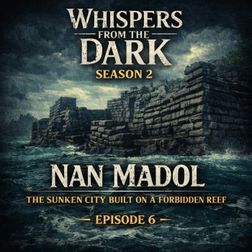
124: Nan Madol: The Sunken City Built on a Forbidden Reef Whispers from the Dark — Season 2, Episode 6
Nan Madol is one of the most baffling archaeological mysteries on Earth. Built directly on a living coral reef off the coast of Pohnpei in Micronesia, this ancient stone city defies logic, engineering, and geography. Massive basalt columns weighing up to fifty tons were stacked without mortar to form nearly one hundred artificial islets, creating a sprawling city that should never have been able to exist on unstable reef foundations. In Whispers from the Dark Season 2, Episode 6, host Raven Vale explores the forbidden ruins of Nan Madol, a place long avoided by locals and shrouded in legends of powerful rulers, unseen forces, and ancient beings believed to dwell beneath the sea. Oral histories describe Nan Madol as the ceremonial and political center of the Saudeleur Dynasty, rulers said to govern through fear, ritual, and a connection to something beyond the human world. This episode examines how Nan Madol was constructed without metal tools, wheeled transport, or clear access to quarry sites, and why modern archaeology still cannot explain how its stones were moved across miles of jungle and ocean. It explores reports from explorers and researchers who describe intense unease, sudden illness, and a sense of presence while inside the ruins, as well as why excavation efforts have been limited and often abandoned. By comparing Nan Madol to other submerged and coastal megalithic sites around the world, this episode asks whether the city was built as a capital, a ritual center, or a boundary between worlds. Was Nan Madol meant to harness power, communicate with something beneath the water, or serve as a place humans were never meant to remain for long? Blending documented history, indigenous lore, and unresolved scientific questions, this episode investigates whether Nan Madol was a city that sank into the ocean, or a structure deliberately built where land ends and something else begins. Primary SEO Keywords Nan Madol Nan Madol ruins Nan Madol Micronesia Whispers from the Dark podcast Raven Vale podcast Sunken stone city Ancient megalithic cities Lost civilizations Secondary SEO Keywords Nan Madol Saudeleur Dynasty Forbidden reef Micronesia Basalt stone city Ancient Pacific civilizations Unexplained archaeological sites Submerged ancient cities Megalithic stone construction Long-Tail SEO & AEO Phrases What is Nan Madol and why was it built on a coral reef How was Nan Madol constructed without modern technology Is Nan Madol a lost or sunken city Why is Nan Madol considered forbidden Who built Nan Madol in Micronesia Ancient stone cities built on water Megalithic sites in the Pacific Ocean Unexplained ancient engineering at Nan Madol Legends of Nan Madol and the Saudeleur rulers Why Nan Madol was abandoned Short-Tail SEO Phrases Nan Madol Sunken city Lost city Ancient ruins Megalithic city Forbidden city Stone city Ancient mysteries Voice Search and AEO Query Targets What is Nan Madol Where is Nan Madol located Why was Nan Madol built on a reef Is Nan Madol underwater Who built Nan Madol What is the mystery of Nan Madol See Privacy Policy at https://art19.com/privacy and California Privacy Notice at https://art19.com/privacy#do-not-sell-my-info.This has been a Fuzzy LIfe Production

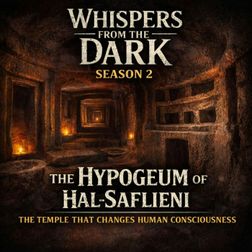
123: The Hypogeum of Ħal-Saflieni: The Ancient Temple That Rewires the Human Mind
Hidden beneath the streets of modern Malta lies one of the most restricted and scientifically disturbing ancient structures on Earth — The Hypogeum of Ħal-Saflieni. Carved entirely underground more than 5,000 years ago, this prehistoric temple is not simply an archaeological wonder, but a site proven to alter human consciousness through sound and resonance. In this episode of Whispers from the Dark — Season 2, host Raven Vale descends into the Hypogeum to uncover how ancient builders engineered a structure that manipulates the human brain using precise acoustic frequencies. At the heart of the temple lies the famous Oracle Room, a chamber that amplifies sound at approximately 110 hertz — a frequency shown in modern studies to suppress logical processing while enhancing emotional and subconscious response. Archaeologists uncovered the remains of over 7,000 individuals inside the Hypogeum, along with carefully arranged bones, ritual artifacts, and symbolic figurines like the Sleeping Lady, suggesting this was not merely a burial site but a place of intentional psychological and spiritual transformation. Visitors and researchers report intense physical and emotional reactions, including altered perception, vivid imagery, disorientation, and a profound sense of presence. This episode explores whether the Hypogeum was an ancient consciousness-alteration device, a ritual initiation center, or a forgotten form of neurological technology — and why access to the site remains strictly limited today. By examining global parallels such as Göbekli Tepe, Newgrange, and the Great Pyramid, the episode reveals a chilling possibility: that ancient civilizations once possessed a sophisticated understanding of the human mind that has since been lost. Blending verified archaeological research, neuroscience, acoustics, and ancient history, this episode challenges everything we think we know about early human intelligence and spiritual practice. PRIMARY SEO KEYWORDS Hypogeum of Ħal-Saflieni Hypogeum Malta Whispers from the Dark podcast Raven Vale podcast Ancient underground temples Consciousness altering structures Acoustic archaeology Prehistoric temples SECONDARY SEO KEYWORDS Oracle Room Hypogeum 110 hertz frequency Ancient sound technology Stone age temples Malta ancient history Underground ritual sites Altered states of consciousness Ancient civilizations technology LONG-TAIL SEO & AEO PHRASES (HIGH-INTENT) What is the Hypogeum of Ħal-Saflieni Does the Hypogeum change human consciousness Why is the Hypogeum of Malta restricted Ancient temples that use sound Oracle Room acoustic frequency explained Hypogeum underground chambers meaning How ancient civilizations used sound to alter the mind Prehistoric consciousness technology Why visitors feel strange inside the Hypogeum Is the Hypogeum a burial site or a temple SHORT-TAIL SEO PHRASES Hypogeum Hypogeum Malta Ancient temple Underground temple Consciousness temple Acoustic chamber Prehistoric structure Ancient sound VOICE SEARCH / AEO OPTIMIZED QUESTIONS What is the Hypogeum of Ħal-Saflieni? Why is the Hypogeum closed to the public? Can sound change human consciousness? What is the Oracle Room in the Hypogeum? Did ancient civilizations understand brain frequencies? What is the strangest ancient temple in the world? PODCAST PLATFORM TAGS Ancient Mysteries Forbidden History Lost Civilizations Consciousness Studies Dark Archaeology Hidden Worlds Prehistoric Technology See Privacy Policy at https://art19.com/privacy and California Privacy Notice at https://art19.com/privacy#do-not-sell-my-info.This has been a Fuzzy LIfe Production

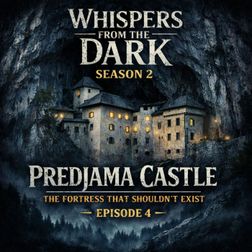
122: Predjama Castle: The Fortress Built Into a Cave That Shouldn’t Exist
Predjama Castle is one of the most mysterious and unsettling structures in Europe — a medieval fortress built directly into the mouth of a massive cave, fused into a sheer limestone cliff in present-day Slovenia. Unlike traditional castles that dominate their surroundings, Predjama disappears into the mountain itself, raising an unsettling question: why was this place built here at all? In Whispers from the Dark — Season 2, Episode 4, host Raven Vale takes listeners deep inside the stone walls and hidden tunnels of Predjama Castle to uncover the truth behind the fortress that should not exist. From its origins in the 13th century to the legendary knight Erasmus of Lueg, who used the cave system to survive an impossible siege, Predjama stands as a testament to engineering brilliance — and something far more disturbing beneath the surface. This episode explores the vast underground cave network hidden behind the castle, including secret escape tunnels, unexplored chambers, and ancient spaces used long before the fortress was ever built. Archaeological evidence suggests humans entered these caves tens of thousands of years ago, long before medieval knights — leading to chilling theories that Predjama Castle was not simply a defensive structure, but a guard post, containment site, or watchtower over something ancient. Listeners will hear accounts of unexplained sounds, missing animals, sudden temperature shifts, and reports from cavers and visitors who describe the unsettling feeling of being watched from within the rock itself. The episode examines whether Predjama was designed to protect those inside… or to protect the world from what lies beneath the mountain. Blending documented history, folklore, architectural mystery, and unsettling modern encounters, this episode asks a haunting question: Was Predjama Castle built to defend against enemies — or to seal something away forever? If you’re drawn to haunted castles, underground cities, forbidden history, ancient structures, and places that blur the line between legend and reality, this episode will stay with you long after the final whisper fades. PRIMARY SEO KEYWORDS Predjama Castle Predjama Castle mystery Whispers from the Dark podcast Raven Vale podcast Castle built into a cave Haunted castles in Europe Ancient underground structures Medieval fortress mystery SECONDARY SEO KEYWORDS Predjama Castle Slovenia Erasmus of Lueg Medieval siege legends Hidden tunnel castles Cave castles Europe Haunted historical locations Underground cave systems Europe Dark history podcasts LONG-TAIL SEO & AEO PHRASES (HIGH-INTENT SEARCHES) What is Predjama Castle and why was it built into a cave Is Predjama Castle haunted Predjama Castle underground tunnels explained Fortress built inside a mountain Medieval castles built into caves Strange history of Predjama Castle Why Predjama Castle could not be conquered Ancient cave structures beneath castles Unexplained phenomena at Predjama Castle Hidden chambers under Predjama Castle SHORT-TAIL SEO PHRASES Predjama Castle Cave castle Haunted castle Underground fortress Medieval mystery Dark history Ancient caves Hidden tunnels VOICE SEARCH / AEO OPTIMIZED QUESTIONS What is the castle built into a cave in Slovenia? Why was Predjama Castle impossible to conquer? Is Predjama Castle really haunted? Who was Erasmus of Lueg? Are there tunnels under Predjama Castle? What is the strangest castle in Europe? OPTIONAL PODCAST PLATFORM TAGS Haunted History Dark Places Ancient Mysteries Hidden Worlds Forbidden History Underground Civilizations Unexplained Locations See Privacy Policy at https://art19.com/privacy and California Privacy Notice at https://art19.com/privacy#do-not-sell-my-info.This has been a Fuzzy LIfe Production
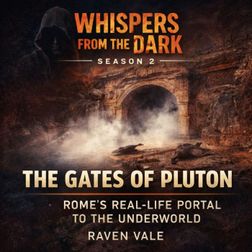
121: The Gates of Pluton: Rome’s Real-Life Portal to the Underworld
In ancient Rome, there was a place where death was not symbolic. Birds fell from the sky mid-flight. Animals collapsed without wounds. And the ground itself exhaled something invisible—and lethal. The Romans did not deny it. They did not explain it away. They named it. The Gates of Pluton. In Season 2, Episode 3 of Whispers from the Dark, host Raven Vale investigates the Ploutonion of Hierapolis, an ancient site believed by Roman historians to be a literal portal to the underworld. Documented by writers like Strabo and Pliny the Elder, the Gates of Pluton were known to kill living beings instantly—yet priests of Pluto could enter and exit unharmed, performing ritual sacrifices before crowds. This episode explores: Why ancient Romans believed the Gates of Pluton were real, not metaphorical How animals died instantly while priests survived inside the cave Modern scientific explanations involving carbon dioxide—and why they don’t tell the whole story Why this location became sacred instead of exploited How the Ploutonion fits a global pattern of sealed or avoided sites like Houska Castle and Derinkuyu Why ancient civilizations treated certain locations as boundaries rather than resources Modern archaeology confirms the danger still exists today. The gas still rises. Animals still die. Which raises a disturbing question: What if ancient people didn’t imagine the underworld… but encountered it? This episode examines where myth, geology, and forbidden knowledge intersect—and why some doors were never meant to be closed… or opened. PRIMARY SEO KEYWORDS (SHORT-TAIL) Gates of Pluton Ploutonion Roman underworld portal to the underworld ancient Roman mysteries Whispers from the Dark Raven Vale podcast SECONDARY SEO KEYWORDS (MID-TAIL) Gates of Pluton Hierapolis Roman gate to hell ancient death caves Ploutonion Turkey Roman sacrifice sites ancient dangerous places forbidden ancient locations LONG-TAIL SEO & AEO PHRASES (VOICE SEARCH OPTIMIZED) what were the Gates of Pluton in ancient Rome is the Gates of Pluton a real place why did Romans believe the Ploutonion was a gate to hell what kills animals at the Gates of Pluton how did priests survive the Gates of Pluton is the Ploutonion still dangerous today what ancient sites were believed to be portals to the underworld are there real entrances to the underworld in history AEO / AI ANSWER ENGINE TARGET QUESTIONS What is the Gates of Pluton? Where is the Ploutonion located? Did ancient Romans believe in a physical underworld? Why is the Gates of Pluton considered real? Is the Ploutonion still lethal today? PODCAST PLATFORM TAGS (OPTIONAL) Ancient Mysteries Forbidden History Dark Archaeology Roman Mythology Underworld Legends Unexplained Phenomena See Privacy Policy at https://art19.com/privacy and California Privacy Notice at https://art19.com/privacy#do-not-sell-my-info.This has been a Fuzzy LIfe Production

120: Derinkuyu: The Underground City Built to Hide from Something
Beneath the quiet town of Derinkuyu in modern-day Turkey lies one of the most disturbing ancient structures ever discovered—an underground city capable of housing over 20,000 people, sealed behind massive stone doors, engineered for long-term survival far below the surface. In Season 2, Episode 2 of Whispers from the Dark, host Raven Vale descends into the depths of Derinkuyu, exploring why ancient civilizations across Cappadocia carved entire cities underground—and what they may have been hiding from. This episode examines: The architectural design of Derinkuyu and why it suggests containment, not comfort Rolling stone doors, choke points, ventilation shafts, and sealed passages Why the “invading armies” explanation fails to explain long-term underground habitation Ancient myths describing surface threats and non-human watchers Evidence suggesting Derinkuyu was used repeatedly over thousands of years Why similar underground cities exist across the world with the same defensive logic Modern reports of disorientation, dread, electronic failures, and unexplained sensations Rather than dismissing Derinkuyu as a response to war, this episode asks a darker question: What if ancient humans went underground because the surface world was no longer safe? And if something once forced humanity to hide beneath the earth… What made them believe it was gone? This is not a story about fear. It is a story about survival—and a warning carved into stone. PRIMARY SEO KEYWORDS (Short-Tail) Derinkuyu Derinkuyu underground city underground cities ancient underground civilizations Whispers from the Dark Raven Vale podcast ancient hidden cities SECONDARY SEO KEYWORDS (Mid-Tail) Derinkuyu Cappadocia ancient underground shelters mysterious underground cities ancient people living underground unexplained ancient architecture subterranean cities history ancient survival structures LONG-TAIL SEO & AEO PHRASES (Voice Search Optimized) why was Derinkuyu built underground what were people hiding from in Derinkuyu how many people lived in Derinkuyu is Derinkuyu connected to ancient myths were ancient underground cities built for protection why did ancient civilizations go underground is Derinkuyu evidence of a lost threat what caused ancient people to live underground AEO / AI ANSWER ENGINE TARGET QUESTIONS What is Derinkuyu and why is it important? Why did ancient people build underground cities? Is Derinkuyu older than recorded history? What evidence suggests Derinkuyu was built to hide from something non-human? Are there other underground cities like Derinkuyu? PODCAST PLATFORM TAGS (Optional) Ancient Mysteries Lost Civilizations Forbidden History Unexplained Phenomena Underground Worlds Dark Archaeology See Privacy Policy at https://art19.com/privacy and California Privacy Notice at https://art19.com/privacy#do-not-sell-my-info.This has been a Fuzzy LIfe Production
1 of 14