Advanced Nuclear, the Official Podcast of UCAN Power

Advanced Nuclear, the Official Podcast of UCAN Power

by UCAN Power
Season 1
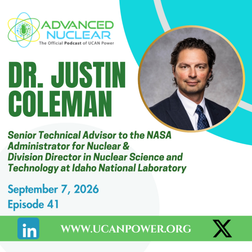
41 - Dr. Justin Coleman: The reactor program changing how America powers space and defense
NASA, DOE, and the Department of War are all pulling in the same direction - and the result could reshape how America powers the moon, Mars, and beyond. Dr. Justin Coleman sits inside the programs making it happen, and he breaks down how we get from today’s reactor work to a real nuclear future in space. From the fuel line at Idaho National Lab to the launch path for SR1 Freedom and Skyfall, this conversation goes deep on the engineering, regulation, and mission design behind the next era of nuclear. If you want to understand why mobile microreactors, space reactors, and nuclear electric propulsion suddenly matter more than ever, this episode is packed with answers. Justin shares how years of work on spent fuel, structural dynamics, and reactor testing built the foundation for the programs he leads now. He also explains why the space nuclear conversation is moving from “can we do it?” to “how fast can we scale it?” and why the answer depends on supply chains, mass constraints, shielding, and the right engineering team. We also break down the role of AI in reactor development, what autonomous operation could look like on Earth and eventually off-world, and why the future of nuclear is not just about electricity - it’s about mobility, resilience, and exploration. Dr. Justin Coleman is a licensed Professional Engineer and currently serves as the Senior Technical Advisor to the NASA Administrator for Nuclear. In this role, he provides expert technical and strategic guidance on space nuclear technologies to NASA’s top leadership. He is also the Division Director in Nuclear Science and Technology at Idaho National Laboratory (INL), focused on delivering reactor prototypes, and mission driven research and development. In his previous role, Coleman was manager for the Special Reactor Concepts organization at INL. In that role, he advised and managed the U.S. Department of Defense’s Strategic Capability Office on its mobile microreactor program. In other roles, Coleman developed international collaborations and worked on U.S. bi-lateral agreements with Japan and India. Coleman has a Ph.D. in earthquake engineering from the University of Buffalo and more than 22 years of experience in nuclear reactor research, facility design, operations, construction, and decommissioning and demolition. Coleman has served on the American Society of Civil Engineers Nuclear Standards committee. In his free time, he enjoys mountain biking and skiing with his family. www.ucanpower.org
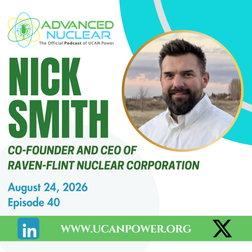
40 - Nick Smith - The Fuel Behind the Future at Raven-Flint
This episode tackles one of the least understood but most critical links in the nuclear fuel cycle: uranium conversion. As demand for nuclear energy grows, the United States faces significant challenges in securing a reliable domestic fuel supply. Dominique sits down with Nick Smith, founder of Raven-Flint Nuclear, to discuss how his company is working to strengthen America's nuclear fuel infrastructure and reduce dependence on foreign sources. Nick explains the uranium conversion process, why it is essential to nuclear power generation, and how supply chain bottlenecks have become a strategic vulnerability for the United States. He shares Raven-Flint's vision for building new conversion capacity, developing a skilled workforce, and leveraging advanced technologies, including artificial intelligence, to improve efficiency across the nuclear industry. The conversation also explores the future demand for nuclear energy, the rise of innovative nuclear startups, and policy measures that could help secure America's energy future. Whether you're a nuclear industry professional, policymaker, investor, or energy enthusiast, this episode provides valuable insight into one of the most important challenges facing advanced nuclear today. Nick Smith is the Co-Founder and CEO of Raven-Flint Nuclear Corporation, a company focused on modernizing uranium conversion technology to address a critical gap in the nuclear fuel supply chain LinkedIn. With over 15 years of experience in nuclear engineering and energy systems, he has worked in high-profile roles at Radiant, Idaho National Laboratory (INL), and Southern Company, where he directed major projects such as the Molten Chloride Reactor Experiment (MCRE). www.ucanpower.org
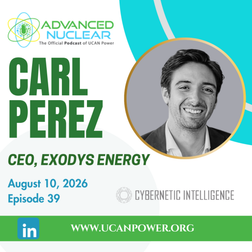
39 - Carl Perez - How Exodys Energy Turns Cold War Waste into Clean Power
In this episode, we sit down with Carl Perez, co-founder of Exodys Energy, to explore how his team is working to recycle surplus plutonium into advanced nuclear fuel. Drawing on his experience leading cutting-edge nuclear technology companies and advising industry and government initiatives, Carl explains why nuclear fuel recycling could play a critical role in strengthening America's energy security, reducing stockpiles of excess plutonium, and advancing the next generation of clean energy. Together, we examine the history of the U.S. surplus plutonium program, how modern recycling technologies can improve proliferation resistance and safety, and the economic and geopolitical implications of closing the nuclear fuel cycle. Carl also shares his perspective on building the next generation of nuclear professionals and why the industry offers opportunities for talent from a wide range of backgrounds. www.ucanpower.org
38 - Amy Roma - The Regulatory Roadmap for Advanced Nuclear
In this episode of Advanced Nuclear, Dominique sits down with Amy Roma, one of the nation's leading nuclear regulatory attorneys, for a wide-ranging conversation on the future of nuclear energy. Amy shares her path into the nuclear industry and offers expert insight into the evolving regulatory frameworks that will shape the deployment of advanced reactors in the United States and abroad. The discussion explores the complexities of nuclear licensing, including the strengths and challenges of regulatory pathways such as Parts 50, 52, 53, and 57, and why many developers continue to seek certainty in an evolving regulatory environment. Amy also examines the growing role of nuclear energy in powering data centers, enabling space exploration, supporting maritime applications, and competing in an increasingly dynamic global energy market. From workforce development and supply chain challenges to the strategic competition between the United States and China, this conversation highlights the opportunities and obstacles facing the nuclear industry as it works to deliver reliable, scalable, and innovative energy solutions for the decades ahead. Amy Roma, JD, MBA is a partner at Orrick and one of the nation's leading attorneys in nuclear energy, infrastructure, and regulatory law. She advises developers, investors, technology companies, and government stakeholders on advanced nuclear technologies, fusion energy, licensing, and large-scale energy projects. Recognized for her expertise in navigating complex regulatory frameworks, Amy is helping shape the future of nuclear innovation in the United States and around the world. www.ucanpower.org
37 - Pat O'Brien: Restarting Palisades, A New Chapter for Nuclear Energy
In this episode of Advanced Nuclear, host Dominique Cooper sits down with Pat O'Brien of Holtec International to discuss the groundbreaking restart of the Palisades Nuclear Plant and what it means for the future of clean, reliable energy in the United States. Pat shares insights into the technical and regulatory challenges of restarting a nuclear facility, the importance of transparent communication with local communities, and the critical role trust plays in the success of nuclear energy projects. The conversation explores how industry leaders are engaging the public, addressing concerns about safety and waste, and creating opportunities for the next generation of nuclear professionals. The discussion also looks ahead to the promise of Small Modular Reactors (SMRs) and how innovation, workforce development, and public engagement will shape the future of the nuclear industry. Whether you're a nuclear professional, energy enthusiast, or simply curious about the future of American energy, this episode offers a compelling look at one of the most significant developments in modern nuclear power. Key Takeaways: The historic restart of the Palisades Nuclear Plant Building and maintaining community trust through transparency Effective communication strategies for nuclear safety Workforce development and career opportunities in nuclear energy The future role of Small Modular Reactors in the energy landscape www.ucanpower.org Thank you to our sponsor, Cybernetic Intelligence - https://www.cyberintel.tech/
36 - Ed McGinnis - Unlocking America’s Nuclear Potential: The Future of Fuel Recycling
In this episode of Advanced Nuclear, the official podcast of UCAN Power, host Dominique Cooper sits down with Ed McGinnis, CEO of Curio, to explore how used nuclear fuel—often considered waste—can become a powerful resource for America’s energy future. With more than 30 years of leadership across the U.S. government and nuclear industry, McGinnis shares insights on how fuel recycling technologies can reduce nuclear waste, strengthen energy security, and support climate goals. He also addresses one of the most critical challenges facing nuclear innovation today: balancing advanced technologies with global nonproliferation and security concerns. From Curio’s groundbreaking “New Cycle” approach to workforce development and community engagement, this conversation highlights how innovation, policy, and public trust must come together to unlock the full potential of nuclear energy. Subscribe to Advanced Nuclear for conversations at the forefront of energy innovation. www.ucanpower.org
35 - Brett Rampal: The Future of Nuclear, 2026 Milestones, and the Road to 2030
In this episode of Advanced Nuclear, host Dominique sits down with nuclear engineer Brett Rampal to examine the momentum behind today’s nuclear resurgence and what lies ahead. From recent reactor design approvals and pilot programs accelerating deployment to the policy challenges of nuclear waste management, Brett offers a clear look at the industry’s most pressing issues. The conversation also highlights workforce development and the wide range of career opportunities shaping the nuclear industry’s future. Brett Rampal is a nuclear energy expert with over 20 years of experience across industry, policy, and investment. He has held engineering and leadership roles at GE Hitachi, Westinghouse, NuScale, and Clean Air Task Force, contributing to reactor design, safety analysis, and major U.S. nuclear policy initiatives. He currently serves as Senior Director of Nuclear and Power Strategy at Veriten, advising energy companies, utilities, and investors on nuclear development and deployment. www.ucanpower.org
34 - Staff Sheehan: Revolutionizing Nuclear Waste, Project Omega’s Breakthroughs
In this episode of Advanced Nuclear, we sit down with Staff Sheehan of Project Omega to explore how cutting-edge innovation is transforming the future of nuclear energy. From breakthrough approaches to recycling spent nuclear fuel to the development of long-lasting power sources like Strontium-90 batteries, Sheehan explains how advanced fuel cycle technologies can turn nuclear waste into a strategic asset. We dive into the science behind molten salt electrochemistry, the “picks and shovels” enabling the next generation of nuclear systems, and Project Omega’s recent DARPA recognition—highlighting the growing importance of these capabilities for both defense and civilian energy applications. Listen now to learn how innovation is reshaping the nuclear fuel cycle—and why it matters for national security and energy resilience. https://ucanpower.org/
33 - Rod Baltzer: Deep Isolation and the Future of Nuclear Waste
In this episode of the Advanced Nuclear Podcast, UCAN Power welcomes Rod Baltzer, CEO of Deep Isolation, for an in‑depth discussion on how deep borehole technology could transform nuclear waste disposal in the United States. Baltzer explains why traditional mined repositories have struggled to deliver timely solutions and how Deep Isolation’s approach—placing nuclear waste deep underground in stable geologic formations—offers a faster, more flexible, and potentially more publicly acceptable alternative. The conversation explores the geological advantages of deep boreholes, the role of existing oil and gas technologies in monitoring and verification, and how deeper disposal expands the number of viable sites while reducing surface‑level impacts. The episode also highlights recent milestones, including ARPA‑E Scale Up funding and groundbreaking at Deep Isolation’s Texas demonstration site, marking a key step toward commercial deployment. Beyond technology, Baltzer discusses the importance of community trust, transparent monitoring, and the potential value of establishing an independent nuclear waste management organization outside the Department of Energy to accelerate progress. From policy implications to long‑term vision, this episode offers a clear look at how innovation, geology, and governance can converge to address one of nuclear energy’s most persistent challenges.
32 - Yasir Arafat: Aalo Powering the AI Era
Artificial intelligence is transforming the world—but powering it is becoming one of the greatest energy challenges of our time. From training massive AI models to running data centers that demand reliable, 24/7 electricity, the future of computing is colliding head‑on with the limits of today’s energy systems. In this episode of Advanced Nuclear, host Dominique Cooper sits down with Yasir Arafat, Co‑Founder, CTO, and President of Aalo Atomics, to explore how factory‑built, advanced nuclear microreactors could unlock abundant, dependable power for the AI era and beyond. Yasir shares his personal journey—from growing up with energy scarcity to leading pioneering reactor programs at Westinghouse and Idaho National Laboratory, including the MARVEL microreactor project—and how those experiences shaped Aalo Atomics’ mission. The conversation dives into Aalo’s bold focus on AI data centers as its first customer, the decision to use sodium‑cooled reactor technology, and the company’s race toward a historic milestone: achieving criticality on the Aalo X experimental reactor at INL, which would mark the first new sodium‑cooled reactor to operate in the U.S. in over 40 years. 🎧 Subscribe to Advanced Nuclear for more conversations with the leaders shaping the future of energy. 🔗 Learn more about U.S. Advanced Nuclear and UCAN Power at ucanpower.org
1 of 5