The Hotel Business

The Hotel Business

by Ludan Zhang
Where Did the Money Go?
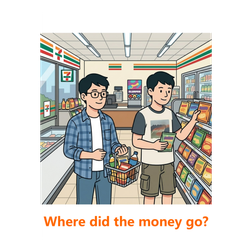
Episode Description Many hotels see weaker business and immediately blame the property next door. But the guest may not have booked another hotel at all. In this episode of The Hotel Business, Ludan starts with 7-Eleven’s store closures in North America and uses it as a warning for hotels: when an old advantage gets split apart by new formats, customer spending can move somewhere else. We look at scene leakage, why family demand may move to camping, why long-stay demand may move to serviced apartments, and why local short-break demand may move to leisure venues. The episode also explains why a low-volume OTA lead-in rate can damage the whole pricing structure, and why franchising may bring system power but not automatically property-level profit. Timeline 00:00 Opening: 7-Eleven and shifting convenience 02:17 Three losses: booking, scene, and profit 04:04 Why cheaper rates cannot fix scene leakage 06:22 How to build a scene leakage table 08:37 Changed hotels, or changed formats? 11:19 Why the OTA lead-in rate can break pricing structure 14:54 How hotels can borrow demand scenes 17:04 Franchising: system power versus property profit Written Version If you prefer to read, search for Ludan Zhang on LinkedIn. I share selected written versions and practical notes there.

Peak Season Is Not a Safety Net
Episode Description Peak season used to feel like a safety net. But for many hotels, that assumption is becoming dangerous. In this episode of The Hotel Business, Ludan starts with a real Labour Day observation from Phuket: a Patong hotel that reported around 60% occupancy during a period many operators would expect to sell strongly. The episode looks at why this is not just a Phuket story. Flights, airfares, fuel prices, exchange rates, safety concerns, booking windows, and new supply can all reshape demand before guests ever reach your booking engine. It also explains why a simple rate cut may not solve the problem when guests are worried about access, total trip cost, cancellation risk, or value. Demand has not disappeared; it has been redistributed. For hotels preparing summer strategy, the real question is: are you still waiting for last year’s guests? Timeline 00:00 Opening: peak season is no longer a safety net 00:25 Phuket Labour Day: why 60% occupancy matters 01:23 Chinese New Year signal: guests are spending differently 02:28 External risk: flights as the entrance to hotel demand 03:43 Fuel prices, total trip cost, and the rate-cut trap 06:02 Rising supply: hotels competing with villas, apartments, and rentals 07:19 Redistributed demand: rail, self-drive, and short-haul trips 08:43 Summer strategy and the harder questions hotels should ask Written Version If you prefer to read, search for Ludan Zhang on LinkedIn. I share selected written versions and practical notes there.

Full House, Empty Revenue
A full hotel does not always mean full revenue. In this episode of The Hotel Business, I share a real holiday stay at an island resort in Indonesia during Chinese New Year. The hotel was almost full, the lobby was busy, and families were everywhere. But inside the guest journey, several revenue opportunities were quietly missed. We talk about why free room upgrades can weaken room-type value, why a closed resort environment needs stronger retail design, what hotels can learn from Atour’s sleep-product retail logic, and why restricting outside food delivery does not automatically improve F&B revenue. The main question is simple: once the guest is already inside the hotel, does the hotel know how to convert that demand into better revenue? Timeline: 00:00 Opening: why full hotels can still leak revenue 00:43 The Indonesia resort stay and the revenue conversion question 01:50 Room upgrades: when premium inventory becomes a free gift 03:08 Why room types should be treated as revenue products 04:22 Resort retail: guest needs after arrival 06:00 Atour example: turning hotel experience into retail 07:33 F&B restrictions: blocking choice does not create value 10:00 Revenue design across the whole guest journey 11:49 Takeaway: full occupancy is only the starting point If you prefer to read, search for Ludan Zhang on LinkedIn. I share selected written versions and practical notes there.

Are You Pricing Against the Wrong Hotels?
Your hotel may not be competing where you think it is. In this episode of The Hotel Business, Ludan shares a real competitor analysis where a hotel saw itself as a stylish five-star lifestyle property — but OTA business-loss data suggested guests were comparing it with four-star alternatives. This episode looks at why internal positioning can mislead pricing, how OTA data reveals the hotels guests actually choose, and why a competitor set should not be built only from what the owner, brand, or meeting room believes. The key question is simple: are you pricing against the hotels you admire, or the hotels your guests actually choose? Timeline: 00:00 Opening: why competitor selection can break hotel pricing 00:39 A real competitor analysis behind this episode 01:24 OTA business-loss data and the uncomfortable comparison 02:10 When a five-star hotel looks like an expensive four-star alternative 03:44 Why meeting-room positioning is not market reality 05:22 Three types of competitors hotels should separate 06:46 The real question: did this hotel take business away from us? 07:17 Why the wrong comp set distorts pricing, promotions, inventory, and forecast 08:03 What to check in OTA data before changing rates 08:33 Closing question: who are you really pricing against? If you prefer to read, search for Ludan Zhang on LinkedIn. I share selected written versions and practical notes there.

The F&B Profit Black Hole
【Episode Description】 Your guest is eating — just not with you. In this episode of The Hotel Business, Ludan looks at why city hotel F&B revenue often depends less on menu pricing and more on how many spend moments the hotel captures during one stay. Many hotels focus on average check, discounts, or another set menu. But the bigger issue is often the guest journey. Does breakfast lead to coffee? Does the bar lead to dinner? Does the room stay lead to in-room dining? This episode explains why average check improves one transaction, but dining frequency changes the business, and why city hotels are not only competing with other hotels — they are competing with cafés, restaurants, malls, delivery apps, and the whole city outside. The question is simple: is your hotel feeding the guest once, or designing a journey that makes them stay? 【Timeline】 00:00 Opening: the F&B profit black hole 00:48 Why price, menu, and promotions may be the wrong questions 01:10 The real question: how many spend moments one guest creates 02:01 Hotel A vs. Hotel B: one breakfast versus a full-day journey 03:18 Why outlet reports miss the guest journey 05:13 City hotels compete with the whole city 06:07 Dining frequency and different guest needs 07:29 Final takeaway: F&B is a journey business 【Written Version】 If you prefer to read, search for Ludan Zhang on LinkedIn. I share selected written versions and practical notes there.