
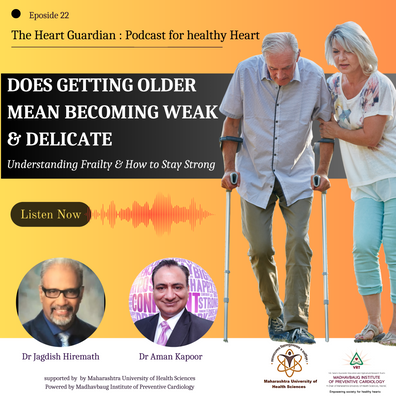
Does Getting Older Mean Becoming Weak? Understanding Frailty and How to Stay Strong
Episode notes
Welcome back to The Heart Guardian Podcast! I’m your host, Dr. Aman Kapoor. Today, we address a critical yet overlooked condition affecting the elderly—frailty. Joining us is Dr. Jagdish Hiremath, a leading expert in preventive cardiology, to help us understand frailty and how to manage it.
What is Frailty?
Frailty is a condition characterized by weakness, reduced strength, and diminished energy in older adults. It often involves sarcopenia (loss of muscle mass) and osteoporosis (brittle bones), making individuals vulnerable to health complications like falls, infections, and chronic illnesses.
In India, frailty is frequently mistaken as normal aging, but it significantly impacts the elderly and their families. Men weighing less than 60 kg and women under 50 kg with reduced physical or mental capabilities could be at risk.
Signs of Frailty:
- Unintentional Weight Loss: Losing weight without trying.
- Slower Movements: Walking more than five seconds to cover 4 meters.
- Loss of Strength: Weak grip and reduced muscle mass.
- Fatigue: Persistent tiredness and low energy.
- Mental Decline: Difficulty in focusing or performing daily tasks.
Why Frailty is Dangerous:
Frailty affects quality of life, increasing the risk of:
- Falls and Injuries: Weakened muscles and bones.
- Chronic Conditions: Higher susceptibility to heart attacks, strokes, and infections.
- Dependency: Loss of independence, requiring caregiver support.
- Social Withdrawal: Depression and isolation due to reduced physical and mental activity.
Prevention and Management:
Frailty is preventable and manageable with timely action:
- Nutrition: Focus on protein-rich foods like eggs, dairy, and lean meats. Include healthy fats such as ghee and butter to combat muscle loss.
- Physical Activity: Encourage regular movement, like walking 15–20 steps every 30 minutes, and light exercises like soleus push-ups.
- Social Engagement: Promote family meals and social activities to reduce isolation.
- Home Safety: Install anti-skid flooring and support bars to prevent falls.
Role of Family:
Family members play a crucial role in managing frailty by:
- Monitoring weight and behavior changes.
- Encouraging regular physical activity.
- Ensuring medical checkups and adherence to treatments.
Frailty is not an inevitable part of aging. With early detection and proactive care, elderly individuals can lead healthier and more independent lives.