Tepperspectives

Tepperspectives

by the Tepper School of Business
Season 1
Business In the Second Quantum Revolution
How can the behavior of tiny, subatomic particles completely revolutionize everyday business operations like inventory management, delivery schedules, and investment strategies? In this interview, Dr. Sridhar Tayur, Ford Distinguished Research Chair and University Professor of Operations Management at Carnegie Mellon University’s Tepper School of Business, breaks down the Second Quantum Revolution and explains how the imperceptible universe of quantum physics is creating massive, real-world advantages for logistics, commerce, finance, and health care. Visit Tepperspectives Learn more about the Tepper School’s Quantum Technologies Group Made possible in part by the MBA Class of 2016 Technology Fund
Does A Company's Mission Matter To Job Seekers?
Purpose claims, mission statements, vision statements, and other indicators of company values, ideals, and belief systems have become increasingly common in the practice of recruitment and talent acquisition. These claims intend to galvanize applicants and stakeholders by articulating the reasons companies exist, going beyond selling products, providing services, and making a profit. In “The Authenticity of Purpose Claims: Firm Capacity and Job Seeker Responses to Recruitment Efforts,“ Oliver Hahl and his co-authors point out that these proclamations often suffer from a perception of cheap talk, or non-binding statements such as “we will change the world” that lack inherent credibility. The study concludes that, for any ambitious claims to land with any degree of authenticity, the audience must believe the company possesses the capacity to achieve it. In the corporate context, capacity is the knowledge and resources required to turn one of these aspirational statements into a reality. To test this, Hahl et al., performed a reverse engineering of thousands of job postings using topic modeling, which is a statistical method of word co-occurrence. The impact of corporate purpose on recruitment relies on a firm’s perceived capacity to achieve its stated goals. While large organizations with over one thousand employees experience a 50 percent increase in job applications when making bold purpose claims, smaller firms with fewer than 50 employees see only a marginal 10 percent gain, as their grander ambitions are often dismissed as inauthentic. This skepticism stems from the belief that more capacity is necessary to drive significant social impact; however, small firms can overcome this authenticity gap by signaling their competence through high-status affiliations. When small companies partner with prestigious entities like Harvard or the United Nations, they effectively borrow legitimacy, leading candidates to view their mission as credible and increasing their likelihood of applying. The paper suggests that authenticity is not just a matter of willingness or pure intention. Even a firm dedicated to the greater good will appear inauthentic if its ambitions exceed its means. For the practitioner, the lesson is one of alignment. A firm must pair its moral aspirations with tangible evidence of its power to act. Read the full paper: León Valdés, Trevor Young-Hyman, Evan Gilbertson, C. B. Bhattacharya, Oliver Hahl (2025) The Authenticity of Purpose Claims: Firm Capacity and Job Seeker Responses to Recruitment Efforts. Management Science 0(0). https://doi.org/10.1287/mnsc.2023.03931
"Who Knows What" in Emergency Teams Can Improve Outcomes for Trauma Patients
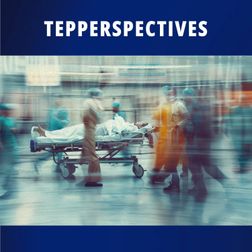
In trauma bays, a team’s collective mind often matters more than individual skill. A recent study by Tepper School Professor Linda Argote and colleagues from the University of Pittsburgh, the Virginia Hospital Center, the Frankfurt School of Finance and Management, and Washington University in St. Louis found that teams with a strong transactive memory system, which is a shared understanding of each member's expertise, significantly improve patient outcomes. By analyzing emergency video recordings, researchers discovered that teams accustomed to working together function as a synchronized unit, anticipating moves to reduce ICU stays by nearly two days and overall hospitalization by more than three. In short, knowing "who knows what" saves lives and speeds recovery. Read the full paper, "Transactive Memory Systems and Hospital Trauma Team Performance: Shared Experience in Action Teams," in Organization Science Read the press release: Shared Experience in Trauma Teams Links Directly to Improved Patient Outcomes Visit Tepperspectives for more thought leadership. ### The Tepperspectives Podcast received generous support from the MBA Class of 2016 Technology Fund.
Can AI Really Transform Supply Chains?
Tepper School Professor Sridhar Tayur and Tinglong Dai, Tepper School graduate and Johns Hopkins professor, join Emily DeJeu to discuss how AI can help improve supply chains, but also why it can't solve every problem.
Grok, Ethics, and Generative AI
What should users consider when using generative AI to create or manipulate images of other people? What policies should companies adopt to ensure that their products don't cause harm? Ethicist Derek Leben joins the Tepperspectives podcast to discuss. Links to news, ideas, and concepts in the episode: Derek Leben's book, AI Fairness: Designing Equal Opportunity Algorithms from MIT Press: https://mitpress.mit.edu/9780262552363/ai-fairness/ Center for Countering Digital Hate report: https://counterhate.com/research/grok-floods-x-with-sexualized-images/ Utilitarianism: https://plato.stanford.edu/entries/utilitarianism-history/ Liberitarianism: https://plato.stanford.edu/entries/libertarianism/ The Nash Equilibrium: https://www.investopedia.com/terms/n/nash-equilibrium.asp Parteto Efficiency/Optimality: https://en.wikipedia.org/wiki/Pareto_efficiency
AI and Transactive Memory Systems
Tepper School doctoral student Pim Assavabhokhin speaks with Professor Emily DeJeu about how AI can enhance short-term decision accuracy and transactive memory systems to improve team speed, but over-reliance on technology can create a dependency. tepperspetives.cmu.edu cmu.edu/tepper
What is Responsible AI Use?
Tepper School researchers Taya Cohen and Sofía Rodríguez Chaves look at how ethics and moral character influence responsible AI use in the absence of policy or regulations. To learn more about the Center for Intelligent Business, please visit: https://www.cmu.edu/intelligentbusiness/ For more thought leadership from the Tepper School of Business at Carnegie Mellon University, please visit: https://tepperspectives.cmu.edu
Is AI Taking Jobs or Making Them Easier?
Emily DeJeu, Assistant Teaching Professor of Business Communication, speaks with Brandy Aven, Associate Professor of Organizational Behavior and Theory, about the evolving role of artificial intelligence in business and the workplace. In the past few months, several companies and company leaders have floated the idea of reducing the workforce and giving those jobs to AI. What are the positive and negative aspects of this? What are the advantages and disadvantages of incorporating AI into the workplace? Also, what are the conversations that we should be having about AI that we’re not?
Changing The Game With NIL
We can use this as the description: Professor Tim Derdenger joins the Tepperspectives Podcast to discuss the impact that name, image, and likeness (NIL) have on college sports. In "Does Personalized Pricing Increase Competition? Evidence from NIL in College Football," Derdenger and his co-author Ivan Li examine how the results from NIL deals have done the opposite of expectations by dispersing talent and increasing competition in college football.
Tariffs and Consequences
Tariffs have become a household word in the last few months, but the situation and questions around tariffs is getting more complex. Associate professor of economics Ali Shourideh discusses the current situation with US tariffs and their effect on businesses, consumers, and international trade.
1 of 2