Classroom Narratives: Healing in Education

Classroom Narratives: Healing in Education

by Joseph Weisler
Season 4
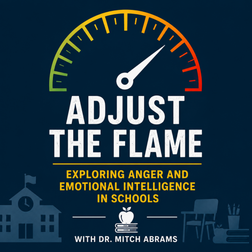
Adjust the Flame: Exploring Anger and Emotional Intelligence in Schools with Dr. Mitch Abrams
📝 Episodic Synopsis ‼️ PROFANITY LANGUAGE ALERT in this episode ‼️ What if anger itself isn’t the problem? In this powerful episode of Classroom Narratives: Healing in Education, Dr. Joey Weisler speaks with psychologist and anger specialist Dr. Mitch Abrams to unpack one of the most misunderstood emotions in education and society. Drawing from his book I’m Not Fcking Angry: Adjust the Flame to Get What You Want and Need*, Dr. Abrams challenges the idea that anger should simply be suppressed or feared. Instead, he explores the critical distinction between anger and aggression, the relationship between trauma and emotional dysregulation, and why emotional intelligence must be intentionally taught—not assumed. Together, Joey and Dr. Abrams examine classroom power dynamics, teacher burnout, school violence, emotional validation, and the hidden psychological realities shaping student behavior. From Parkland to Sandy Hook, from prisons to classrooms, this conversation confronts the difficult truths educators quietly carry while offering practical strategies for emotional regulation and healthier school culture. This episode is not about “staying calm at all costs.” It is about learning how to recognize emotion before it reaches the breaking point—and understanding what happens when people feel unseen for too long 🔗 Show Notes and Resources 📌 I’m Not F*cking Angry!: Adjust the Flame to Get What You Want and Need (Book by Dr. Mitch Abrams) 📌 Dr. Mitch Abrams website 📌 For Dr. Abrams' Beach scene Imagery & Visualization script + PMR Muscle Relaxation Script, please email mitchabramspsyd@gmail.com
When Presence Becomes Prevention: School Safety, Trauma, and Educator Voice with Abbey Clements
‼️DISCLAIMER‼️ This segment discusses themes of violence within communities, significantly around Sandy Hook Elementary School (2012). Please take care of yourself while listening. In this deeply moving episode of Classroom Narratives: Healing in Education, Dr. Joey Weisler sits down with Abbey Clements, a second-grade teacher at Sandy Hook Elementary School during the tragedy of December 14, 2012. Drawing from the anthology If I Don’t Make It, I Love You, Abbey reflects on survival, grief, educator presence, and the invisible emotional labor teachers carry in the aftermath of collective trauma. Together, Joey and Abbey explore what it means to “show up” for students when there are no perfect words, why educators are often excluded from conversations about school safety, and how teacher advocacy itself can become an act of prevention. The conversation also highlights the work of Teachers Unify to End Gun Violence, the national organization Abbey co-founded alongside Sarah Lerner to amplify educator voices, support impacted communities, and advocate for trauma-informed prevention efforts nationwide. From Sandy Hook to Parkland and beyond, this episode is a powerful reminder that sometimes the most important thing a teacher can do is simply remain present. 🔗 Show Links and Resources 📌 If I Don't Make It, I Love You: Survivors in the Aftermath of School Shootings (anthology edited by Amye Archer and Loren Klineman) 📌 Teachers Unify to End Gun Violence (also check out their sign-up page here) 📌 Teachers Unify podcast 📌 Classroom Narratives: Sarah Lerner, Paula Reed, Adam Wolfsdorf
"The Pie Just Gets Bigger”: Parenting, Identity, and Emotional Survival in Schools with Dr. Julie Davelman
What happens when parents, teachers, and students all feel pressure to “get it right” — but nobody was ever given the manual? In this deeply reflective episode of Classroom Narratives, Dr. Joey Weisler sits down with clinical psychologist Dr. Julie Davelman to explore the emotional realities underneath modern education: parent burnout, frustration tolerance, identity formation, perfectionism, divorce, college transition, and the overwhelming pressure families carry while trying to support children “correctly.” Together, they unpack why so many students struggle not because they lack ability, but because they lack space to fail, recover, and develop resilience. The conversation moves beyond surface-level conversations about achievement and instead asks what children, teachers, and parents actually need in order to function, grow, and feel emotionally safe. From “good enough parenting” to the myth of work-life balance, Dr. Davelman offers a compassionate but grounded perspective that reminds listeners something essential: Humans are far more complicated than the manual ever promised. 🔗 Show Resources 📌 Dr. Julie Davelman profile with Abrams Psychological Services 📌 BLOG: Can this help you? – Learn psych tips and techniques that can help you in everyday life 📌 The Emotional Lives of Teenagers: Raising Connected, Capable, and Compassionate Adolescents by Lisa Damour, PhD 📌 Facebook and Linkedin Dr. Julie Davelman 📌 Classroom Narratives segments: ~From Teacher to Attorney: Frances Shefter on Advocacy, Equity, and the Stress-Free IEP ~The Pooped-Out Teacher in Loco Parentis: Dr. Dre on Presence, Consistency & Care ~Meeting Your Inner-Hero and Healing Your Inner-Child: with Ron Yap @mentalhealthceo ~Empathy Without Self-Abandonment: Unhooking from Survival Mode in Leadership and Teaching with Leila Boutaleb Brousse
Listening as Witness: How Art, Community, and Invitation Create Space for Healing with Rosa McAllister and Tieshka K. Smith
📝 Episodic Synopsis What does it mean to truly listen—not just hear, but witness? In this powerful panel conversation, Dr. Joey Weisler is joined by Rosa McAllister and Tieshka K Smith to explore how intentional listening can transform communities. Drawing from their work on the Listening Loom project and their contributions to Restorative Practices in Education Through the Arts, they unpack how art, storytelling, and human connection create space for healing across cultures, identities, and lived experiences. From classrooms to community spaces, this episode challenges educators and leaders to rethink participation, redefine safety, and embrace the role of witness—with boundaries. Through stories of displacement, trauma, and resilience, Rosa and Tieshka reveal how healing doesn’t happen in isolation—it happens between people, in the courage to listen, and in the spaces we intentionally create for others to be seen. 🔗 Show Links and Resources 📌 Kathryn Pannepacker's Classroom Narratives segment on creating spaces of presence 📌 Restorative Practices in Education Through the Arts (Book) 📌 ROSA MCALLISTER: networksfortraining.org Artists For Artists Global (AA4G) 📌 TIESHKA SMITH tieshkasmith.com
Listening Isn’t Fixing: Creating Space for Presence in the Classroom with Kathryn Pannepacker
📝 Show Synopsis What if listening wasn’t about responding—but about being present? In this episode, Dr. Joey Weisler speaks with artist Kathryn Pannepacker about “intentional listening” as a practice of care, not correction. Through her Listening Loom project, Kathryn creates spaces where people are asked two simple questions: How are you doing? and What do you need? Together, they explore how educators can foster connection without becoming “fixers,” why presence matters more than performance, and how small moments of attention can reshape classroom culture. 🔗 Links and Resources 📌 Lisa Kay on the Classroom Narratives 📌 Bev Johns on the Classroom Narratives 📌 Restorative Practices in Education Through the Arts (Book) 📌 Kathryn’s website 📌 Kathryn’s listening loom: Eyewitness News ABC-7 📌 “I Saved A Chair For You”: work by Kathryn Pannepacker
Meeting Your Inner-Hero and Healing Your Inner-Child: with Ron Yap @mentalhealthceo
📝 Show Notes (Key Ideas & Takeaways) What if healing isn’t just about looking back—but also about learning to listen forward? In this episode of Classroom Narratives, Dr. Joey Weisler sits down with Ron Yap (@mentalhealthceo) to explore the dual work of healing the inner child while also meeting the inner hero—the future version of ourselves who has already found meaning, clarity, and direction. Drawing from his work in Finding Meaning in Life When It Feels Like There Is None, Ron unpacks how people lose their sense of purpose through survival mode, identity disruption, and living stories that were never truly theirs. For educators especially, this conversation hits close to home—where caring for others can quietly lead to losing yourself. Together, they examine anxiety, OCD, the survival mode, imposter syndrome, and the emotional weight educators carry, while offering a grounded way forward: reconnecting to values, separating internalized voices from your own, and creating a vision of who you’re becoming—not just who you’ve been. This episode is both reflective and practical—a reminder that healing doesn’t stop with the past. It continues when we allow our future self—the inner hero—to guide us forward. 🔗 Show Resources and Links 📌 Ron Yap's website 📌 Ron Yap's instagram: @mentalhealthceo 📌 The Inner-Hero's Journey Newsletter 📌 The Inner-Hero Workbook 📌 Beyond Behavior: Bev Johns
Empathy Without Self-Abandonment: Unhooking from Survival Mode in Leadership and Teaching with Leila Boutaleb Brousse
🧭 Episodic Synopsis What if burnout isn’t coming from the workload—but from disconnection? In this episode of Classroom Narratives, Dr. Joey Weisler sits down with leadership expert Leila Boutaleb Brousse, founder of Eyelee Growth and creator of the Unhooked Leadership Method, to explore what it really means to operate in “survival mode”—and why so many educators and leaders feel stuck there. Leila challenges the idea that empathy alone is enough, introducing a critical distinction: empathy without boundaries isn’t leadership—it’s self-sacrifice. Together, they unpack how people-pleasing, decision fatigue, and chronic overextension quietly erode both performance and identity over time. From emotional regulation to boundary-setting, this conversation offers a grounded, practical lens on how to reconnect with your “why,” reclaim your energy, and lead without losing yourself in the process. If you’ve ever felt like you’re constantly giving but slowly disappearing in the work—this one is for you. 🧩 Show Notes (Key Ideas & Takeaways) Survival mode isn’t about workload—it’s about disconnection. Burnout often stems from losing connection to purpose, meaning, and identity—not just being “too busy.” Decision fatigue is quietly draining educators. Thousands of daily micro-decisions—academic, behavioral, emotional—leave teachers mentally and physically depleted. Empathy without boundaries is not empathy—it’s self-sacrifice. What many educators call “empathy” is often unregulated people-pleasing that leads to burnout. People-pleasing starts as care—but becomes a self-sabotager. When driven by fear, validation, or approval, it erodes confidence, leadership presence, and self-trust. Working at 120% becomes the expectation—not the exception. Overperforming consistently resets the baseline, making sustainable effort appear like underperformance. Emotional regulation is a leadership skill—not a luxury. Suppressing emotions leads to delayed reactions, inconsistency, and breakdowns in trust. Naming emotions reduces their intensity. Simply identifying what you’re feeling can decrease emotional intensity by up to 50%, creating space for intentional response. Authenticity is not “acting however you feel.” True authentic leadership is grounded in values, clarity, and intentional action—not emotional reactivity. Boundaries are not selfish—they are protective. They allow educators and leaders to sustain their energy, align with their values, and show up consistently. A simple framework for growth: Awareness → Intention → Action Real change begins with self-awareness, followed by intentional choices, and sustained through consistent action. 🔗 Show Links and Resources Leila's website: EYELEE Growth Leila's linkedin Leila Instagram: @leilaboutalebbrousse Supriya Budhiraja podcast Brené Brown on sympathy vs empathy
Invitation Over Compliance: Design Thinking in Classrooms with Dr. Fred Estes
📝 Episodic Synopsis What happens when learning stops being about information—and starts becoming about invention? In this episode of Classroom Narratives: Healing in Education, Dr. Joey Weisler sits down with educator, author, and innovation specialist Dr. Fred Estes to explore how design thinking can transform the classroom into a space of agency, creativity, and real-world impact. Drawing from decades of experience across K–12 and higher education, Dr. Estes introduces the “ABCs of learning”—Agency, Belonging, and Competence—and challenges educators to move beyond traditional models of instruction that prioritize memorization over meaning. Together, Joey and Fred examine what it means to create classrooms rooted in invitation rather than force, where students are empowered to solve real problems, design for others, and reconnect with their own capacity for creativity. From working with marginalized students to redefining the role of play, this conversation reminds us that the most powerful learning environments are not the ones that demand engagement—but the ones students choose to enter. 📌 Show Notes and Resources Design Thinking: A Guide to Innovation (Dr. Fred Estes) Fred Estes website The Education Talk Show With Jeremy Brooks
“Changing the Narrative: Identity, Power, and the Weight Educators Carry” with Dr. Dwight “Kofi” Rogers
📝 Episode synopsis What happens when the world writes your story before you even begin? In this deeply honest and urgent conversation, Dr. Dwight “Kofi” Rogers—district leader, author of Change the Narrative, Don’t Let the Narrative Change You, and 2025 ACSA Administrator of the Year—joins Dr. Joey Weisler to explore the lived realities of identity, perception, and power in education. From growing up navigating isolation and racialized narratives in school to leading transformative conversations around equity and belonging, Dr. Rogers unpacks how societal narratives shape both students and educators—and what it takes to actively resist them. Together, they examine the myth of neutrality in teaching, the emotional weight educators carry, the loneliness of leadership, and the responsibility teachers hold in shaping not just academic outcomes, but human lives. This episode is not just about education—it’s about who gets to define the story, and what it means to take that power back. 🔗 Show Links 📌 Dr. Rogers instagram: @ dr_kofi_rogers 📌 Change the Narrative: Don't Let the Narrative Change You (Rogers) 📌 More Than Just Principals (Hinchcliffe) 📌 The Education Talk Show (Jeremy Brooks)
“We’re Never Doing Too Much for Kids”: Rethinking Resilience with Dr. Rob Martinez
🎧 Episode Synopsis (for notes/description) What if resilience isn’t something you “have”…but something that’s built—moment by moment, relationship by relationship? In this episode of Classroom Narratives, Dr. Joey Weisler sits down with Dr. Rob Martinez—educator, former superintendent, and author of Recipes for Resilience—to challenge everything we think we know about resilience in schools. From losing his mother at 13 to rebuilding his life through connection, mentorship, and education, Rob shares a deeply personal story that reshapes resilience as a process rooted in safety, care, and community—not grit alone. Together, Joey and Rob explore the tension between transactional education vs. human-centered learning, the dangers of toxic school cultures, and what it truly means to create classrooms where students feel safe enough to grow. This is a conversation about what schools get wrong, what great educators do differently, and why—at the end of the day—we’re never doing too much for kids.. 📌 Episodic show notes and resources ✏️ Rob's website (@ResiliencyGuy) and link to social medias ✏️ Recipes For Resilience ✏️ The Story of Sparkle and Shine ✏️ Dave Burgess: Teach Like a Pirate
1 of 9