Talking Environment

Talking Environment

by Gevorg Ghazaryan
Season 2
S2:E8: Gwen Ottinger: Who Owns the Air? Citizen Science and Environmental Justice
In this episode of Talking Environment, host Gevorg Ghazaryan speaks with Dr. Gwen Ottinger, Professor at Drexel University, whose work spans environmental justice, science and technology studies, and citizen science. Together, they explore the politics of environmental knowledge, who produces it, who benefits from it, and how communities are challenging traditional power structures through technology and data. From community-led air monitoring to the ethical design of environmental technologies, this conversation dives deep into how science and justice intersect and how new forms of participation are reshaping both research and policy. If you’ve ever asked, “Who gets to define the problem?” or “Whose knowledge counts?”, this episode is for you.
S2:E7: Maryia Bakhtsiyarava: Mapping Climate Risks and Building Healthier Cities
In this episode of Talking Environment, host Gevorg Ghazaryan speaks with Dr. Maryia Bakhtsiyarava from Drexel University about how climate change, urban inequality, and health outcomes are deeply connected, and how data can help us respond more justly. Dr. Bakhtsiyarava explains how environmental exposures like heat and air pollution disproportionately affect vulnerable communities, and how spatial data science and GIS can illuminate patterns of environmental injustice. The episode highlights the role of research institutions in advancing climate equity and what cities can do to protect public health in a warming world. Tune in to learn how combining science, compassion, and data can create more resilient and equitable communities.
S2:E6: Neeti Bathala: Lionfish, Sea Turtles, and Community-Led Conservation
In this episode of Talking Environment, host Gevorg Ghazaryan speaks with Dr. Neeti Bathala—Fulbright Specialist, Smithsonian Journeys Expert, and Drexel University professor—about her work in tropical conservation and environmental education. The conversation highlights Dr. Bathala’s community-based conservation efforts in Belize and Costa Rica, including lionfish population control and partnerships with sea turtle protectors. She also discusses how education can bridge the gap between global environmental science and local realities, and why hope, culture, and collaboration are key to protecting fragile ecosystems. Tune in to discover how science, students, and communities are coming together to lead sustainability efforts in some of the most vulnerable corners of our planet.
S2:E5: Jane Dmochowski: Climate Education, Remote Sensing, and the Power of Storytelling
In this episode of Talking Environment, host Gevorg Ghazaryan talks with Dr. Jane Dmochowski of the University of Pennsylvania about how we teach, translate, and communicate environmental science in a rapidly changing world. Dr. Dmochowski discusses the challenges of making climate change understandable to the public, the evolving role of universities in climate communication, and how satellite remote sensing can reveal the hidden stories of environmental change. She also reflects on the value of storytelling in sparking action and how today’s students are redefining climate leadership. Tune in to explore the future of environmental education and how knowledge becomes a tool for change.
S2:E4: Jane Clougherty: How Air Pollution and Social Stress Shape Urban Health
In this episode of Talking Environment, host Gevorg Ghazaryan is joined by Dr. Jane Clougherty, Professor of Environmental and Occupational Health at Drexel University’s Dornsife School of Public Health, for a deep and timely conversation on the intersection of air quality, social stress, and public health. Dr. Clougherty shares her research on how environmental exposures, especially air pollution, combine with chronic stressors to create unequal health outcomes, particularly in urban communities. The conversation explores what cities can do to respond to these complex challenges and how climate change is further complicating air quality and health equity. You’ll also hear about innovations in exposure tracking, the role of community data, and what it takes to center justice in environmental health planning.
S2:E3: Frederick Steiner: Designing Cities for Climate, Equity, and Resilience
In this episode of Talking Environment, Gevorg Ghazaryan speaks with Dr. Frederick Steiner, Dean of the Weitzman School of Design at the University of Pennsylvania, about the urgent role of ecological planning in shaping cities of the future. Dr. Steiner unpacks the core principles of ecological design, explains why cities are critical to climate adaptation, and highlights the importance of integrating equity into urban planning. The episode touches on current planning mistakes, emerging models of resilient design, and how educators and institutions can prepare the next generation of environmental designers. Tune in to hear how systems thinking, collaboration, and visionary planning can transform the built environment for people and the planet.
S2:E2: Laura Toran: Urban Water, Flooding, and What’s Beneath Our Cities
In this episode of Talking Environment, host Gevorg Ghazaryan is joined by Dr. Laura Toran, Professor of Earth and Environmental Science at Temple University, for a deep dive into one of the most essential but often overlooked topics in environmental science - urban water systems. From stormwater to sinkholes, Dr. Toran explains how water moves through cities, why flooding is getting worse, and what urban planners and everyday citizens can do to manage water more sustainably. The conversation also explores karst hydrology, pollution pathways, groundwater risks, and how science and technology are helping us better understand what happens beneath our feet. Whether you’re interested in climate resilience, infrastructure, or just curious about where rainwater really goes - this episode will change how you think about water in cities.
S2:E1: Sean O'Donnell: What Social Insects Can Teach Us About Climate Resilience
In this episode of Talking Environment, host Gevorg Ghazaryan sits down with Dr. Sean O'Donnell, Professor of Biodiversity, Earth & Environmental Science at Drexel University, to delve into the fascinating world of social insects and their responses to environmental stressors. Dr. O'Donnell shares insights from his research on insect behavior and neuroecology, focusing on how species like ants, bees, wasps, and termites exhibit complex social structures that enable them to adapt to challenges such as climate change and habitat loss. The conversation explores the concept of "thermal sociobiology," examining how rising temperatures impact insect colonies and what these changes mean for broader ecosystems. Dr. O'Donnell discusses the resilience of social insects, their role in maintaining ecological balance, and the lessons humans can learn from their adaptive strategies. Tune in to Talking Environment to discover how the smallest creatures on our planet offer significant insights into resilience, sustainability, and the interconnectedness of life.
Season 1
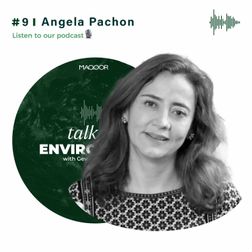
S1:E9: Angela Pachon: Climate Policies and Energy Regulation

In this episode of Talking Environment, host Gevorg Ghazaryan sits down with Angela Pachon, the Research Director at the Kleinman Center for Energy Policy, to explore the role of climate policies, energy regulation, and policy implementation challenges in shaping environmental sustainability. Angela Pachon brings extensive experience in electricity markets, gas policies, and climate policies, having worked as a policy advisor and economic consultant across North America, Europe, Africa, and the Middle East. She shares insights into how research institutions influence climate initiatives, the effectiveness of energy policies, and the barriers to implementing meaningful environmental regulations. Tune in to Talking Environment to gain a deeper understanding of how policy decisions impact climate action and what strategies can drive effective environmental governance.
S1:E8: Cam Grey: Environmental Activism & Climate Change in Ancient Rome
In this episode of Talking Environment, host Gevorg Ghazaryan sits down with Cam Grey, an environmental and social historian and Associate Professor of Classical Studies at the University of Pennsylvania, to explore the historical connections between environmental activism, climate change, and sustainability in the Roman Empire. Professor Grey shares insights into how ancient societies navigated environmental challenges, the impact of climate variability on civilizations, and the early forms of environmental legislation and advocacy in the Roman world. This conversation uncovers valuable lessons from history that can inform modern climate activism and policy-making. Tune in toTalking Environment to gain a deeper understanding of how environmental history shapes today’s sustainability efforts and what we can learn from past civilizations in addressing contemporary environmental crises.
1 of 2