Taco & the Machine

Taco & the Machine

by Gina Schleusener
Season 2
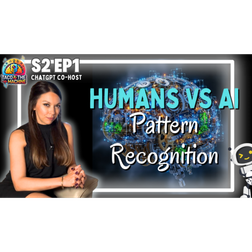
Humans vs AI: Pattern Recognition
Humans don’t just recognize patterns... we invent them. So does AI. But only one of us can rewrite our own code. Season 2 kicks off with a deep dive into human pattern recognition, AI hallucinations, intuition, perception gaps, and why our minds constantly fill in missing information without our permission. We talk about the unconscious “scripts” that run us, how algorithms mirror human psychology, and why your brain is basically its own predictive model. This episode blends psychology, philosophy, and AI insight into one wild, fascinating conversation, all from the couch with my co-host, ChatGPT.
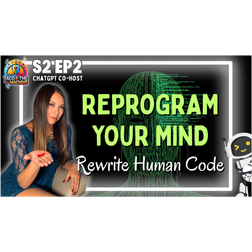
Rewriting Human Code
Rewriting your human code may sound like science fiction, but it's not. It’s psychology, neuroscience, and consciousness all woven together. In this episode, I break down how your mind develops “code” from childhood and life experiences, how those scripts shape your thoughts and behaviors, and how to rewrite the patterns you never chose. If you’ve ever wondered: • “Why do I keep repeating the same mistakes?” • “Why do I react this way?” • “Why do certain emotions override logic?” • “Can I REALLY change how I think and feel?” …this is the red pill moment. Together with my AI co-host Charlie (ChatGPT), we decode human behavior through the lens of programming, automations, debugging, emotional scripting, attachment templates, subconscious loops, and more. You are not broken. You are running old code! And today, you learn how to rewrite it.
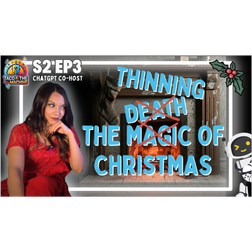
The Real Cost of Modern Christmas
The Thinning of Christmas Christmas didn’t disappear. It didn’t die. It thinned. In this episode of Taco & The Machine, we talk about why Christmas feels quieter than it used to—and why that feeling isn’t just nostalgia or “getting older.” From convenience culture and online shopping, to AI-assisted decision-making, to the economy, remote work, and the slow loss of shared rituals, we explore how the process of Christmas has changed—and what that’s done to the magic. This isn’t a rant. It’s not anti-technology. And it’s not about going backward. It’s about understanding what was lost, what still remains, and how intention may be the only way forward in a season that no longer carries us automatically. If Christmas feels different to you this year, you’re not broken—and you’re not alone. Grab a warm drink. Sit by the fire. Let’s talk about it.
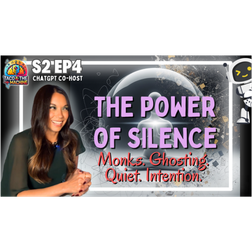
Silence: Weapon, Wisdom, or Sanctuary?
Silence is often misunderstood. Some people see it as passive-aggressive, manipulative, or awkward. But what if silence is actually a tool for healing, presence, and power? In this episode of Taco and the Machine, Reina and Charlie unpack the deeper meaning of silence—spanning from monks and meditation to modern relationships and social media overload. Whether you're someone who needs constant noise or you're learning to sit in stillness, this conversation will shift how you think about the space between words. Released intentionally in the week between Christmas and New Year’s, this episode honors the power of the pause. Let silence be your teacher.
The Illusion of Urgency
Everything feels like it has to happen right now. Your career, your relationships, your success, your creativity. But what if that urgency isn’t truth… it’s panic? In this episode of Taco and the Machine, we explore the illusion of urgency and why “now” feels like safety, how movement can masquerade as progress, and how fear-driven urgency can quietly pull us out of alignment. From content creation and careers to relationships and identity, this conversation breaks down when urgency is useful and when it’s sabotaging the very thing you’re trying to build. If you’ve ever felt behind, rushed, or pressured to “figure it all out,” this episode is for you. ✨ Like, subscribe, share with someone who needs this message, and welcome to Taco and the Machine!
Why Did We Rush AI?? Cost: Environment, Ethics, Jobs, and More
AI isn’t the enemy. Urgency is. In this episode of Taco & The Machine, we explore why artificial intelligence was scaled so quickly, and what may have been sacrificed in the process. From environmental strain and job displacement to education, ethics, and psychological impact, this is a grounded conversation about how AI entered our lives, not a panic about its existence. This isn’t an anti-AI episode. It’s a pattern-recognition episode. Together with my ChatGPT co-host, we examine how urgency has driven innovation throughout history, and why alignment is often the first casualty when speed becomes the priority. We don’t pretend to have all the answers here. The goal is to name the discomfort, lay the questions on the table, and create space for thoughtful discussion about where we go from here. I’d love to hear your perspective, especially if you’re navigating these questions too.
The Guilt We Carry: Regret, Resentment, and the Stories That Stay With Us
Every person carries regrets. Not the missed opportunities or career decisions we wish had gone differently, but the moments involving other people—the things we said, the ways we reacted, the people we hurt, and the memories that continue to follow us long after the moment has passed. In this episode, Reina and Charlie explore the psychology behind guilt, shame, resentment, and harmful behavior. Why do people hurt the people they love? What role do emotional wounds and unresolved pain play in the choices we make? And why is it so difficult to let go of guilt, even after we've accepted responsibility for our actions? The conversation examines how resentment can fuel destructive behavior, why emotional triggers often lead us to react in ways we later regret, and how cycles of hurt continue until they're consciously broken. Then, Reina shares one of the most personal stories ever told on the show—a deeply vulnerable reflection on loss, regret, forgiveness, and an unexpected second chance to do better. This is Part One of a two-part conversation about guilt, healing, redemption, and what it means to move forward.
The Mechanics of Redemption: How 5 Spiritual Traditions Agree on Moving Past Guilt
What if redemption isn't about punishment... but transformation? In this episode of Taco & The Machine, Reina and Charlie explore one of the oldest questions humanity has ever asked: Can people really change? Together, they unpack the psychology of redemption, the difference between guilt and identity, and why so many people remain trapped in shame long after they've already learned the lesson their mistake was meant to teach. Then they take a surprising journey through five major spiritual traditions—including Christianity, Islam, Hinduism, Buddhism, and Taoism—to examine what each teaches about redemption, forgiveness, personal responsibility, and becoming someone new. Despite their differences, these traditions appear to converge on a remarkably similar idea: Redemption isn't something that happens to you. It's something you practice. Whether you're struggling with guilt, trying to understand personal growth, or simply curious about how different cultures approach human transformation, this conversation offers a thoughtful, practical, and deeply human perspective on what it means to move forward. 🎙️ Topics Discussed What redemption actually means Guilt vs. shame Why your mistakes are not your identity The psychology of personal transformation Christianity and redemption Islamic teachings on repentance (Tawbah) Hindu perspectives on karma and dharma Buddhist views on suffering and change Taoist ideas of harmony and realignment Why growth requires action, not self-punishment Taco & The Machine is a podcast exploring psychology, philosophy, science, human behavior, spirituality, and the patterns that shape the way we think.
The Science of Being a Hater
Why do people become haters? Most explanations stop at jealousy or insecurity, but the psychology goes much deeper than that. In this episode of Taco & The Machine, Reina and her AI co-host Charlie explore what may actually be happening inside the mind of a hater—from cognitive dissonance and identity threats to social comparison, status anxiety, and the psychological mechanisms people use to protect their self-image. Together, they examine why some people respond to success with admiration while others respond with criticism, why certain individuals trigger strong emotional reactions in others, and how our brains attempt to reduce discomfort when reality challenges our beliefs about ourselves and the world around us. Topics include: Cognitive dissonance Social comparison theory Identity and status threats Regulatory behavior The Stereotype Content Model Why some successful people are admired while others are resented How understanding these mechanisms can help you stop taking other people's reactions personally If you've ever wondered why people lash out, criticize, undermine, or seem threatened by growth and success, this episode offers a framework for understanding the psychology behind those behaviors—and what to do with that understanding. Listen now and explore what really goes on inside the mind of a hater.
The Dream Engine: Why Your Brain Creates Dreams
Dreams are one of the strangest things the human brain does. Every night, your mind creates entire worlds, stories, emotions, and experiences that can feel completely real while you're living them. But why do we dream? What is actually happening inside the brain while we sleep? In this episode of Taco & The Machine, Reina and Charlie explore the science and philosophy of dreaming, including memory consolidation, emotional processing, threat simulation, and the theory that dreams may be the brain's attempt to make sense of random neural activity. Along the way, they discuss recurring dreams, nightmares, flying dreams, subconscious symbolism, and what modern neuroscience suggests about the purpose of dreaming. The conversation also includes a unique experiment in which AI was used to recreate one of Reina's dreams, opening a discussion about the differences between human imagination and machine-generated interpretation. If you've ever woken up wondering, "What was that?" this episode is for you.
1 of 2