
Episode notes
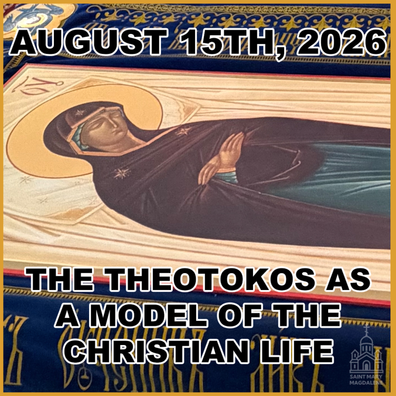
The Dormition of the Theotokos reveals something important about what it means to be truly human. In this sermon, Fr. Stephen Osburn explains why Orthodox Christians honor the Virgin Mary and why that honor does not compete with the worship that belongs to God alone. The Theotokos shows us a human life centered on God rather than on personal desire. Her Dormition also points us toward the Christian hope of resurrection and eternal life.
Orthodox Christianity calls Mary the Theotokos, meaning “God-bearer” or “Mother of God,” because the One she bore was truly God incarnate. Her response at the Annunciation, “Let it be to me according to your word,” becomes a model of faithful obedience for every Christian. She receives the will of God with humility and spends her life oriented toward Him. The Orthodox Church therefore honors her not as a goddess or replacement for God, but as the greatest example among the saints of a human being transformed by divine grace.
That example challenges the way we often live today. The world constantly encourages us to organize life around what we want, what makes us comfortable, and what satisfies our desires. The Gospel calls us instead to repentance and to a life in which our desires are gradually healed and directed toward God. Through prayer, the Eucharist, repentance, and the spiritual life of the Church, Christians learn to move away from self-centeredness and toward communion with God.
The Feast of the Dormition also reminds us that death does not have the final word. The Christian hope is resurrection, and the Theotokos gives us a beautiful picture of humanity brought into the life God intended for us. Her example asks each of us to consider what currently occupies the center of our own hearts. As we encounter her life in Orthodox Christianity, we are invited not simply to admire her holiness, but to imitate her faithfulness and allow God to become the true center of our lives.