Hearing the Silence of a Convicted Mind

Hearing the Silence of a Convicted Mind

by Venetta Alice
Season 1
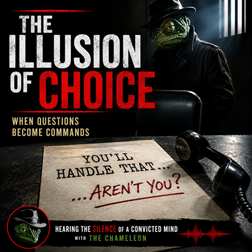
The Hidden Command: When Questions Stop Being Questions
AI
Not every question is looking for an answer. Some are quietly shaping one. In this episode of Hearing the Silence of a Convicted Mind, The Chameleon explores how ordinary questions can create the illusion of choice while subtly guiding decisions, commitments, and future actions. Using fictional composite scenarios inspired by real-world communication, this episode examines how repetition, tag questions, and carefully timed phrasing can make compliance feel voluntary—even when the direction of the conversation has already been established. Sometimes the most persuasive command... ...never sounds like a command at all.
The Question Trap: How Convicted Minds Turn Curiosity Into Control
AI
What if the most powerful part of a conversation isn't the answer... ...it's the question? In this episode of Hearing the Silence of a Convicted Mind, The Chameleon explores how ordinary questions can quietly guide decisions, create commitment, and shift responsibility without sounding demanding. Using fictional composite scenarios inspired by real-world communication, this episode examines how seemingly harmless questions can become tools of influence, revealing far more than simple curiosity. The next time someone asks a question... ask yourself what answer they're really trying to create.
The Debt You Never Owed: How Convicted Minds Create Obligation
AI
Have you ever felt like someone expected something from you... without ever asking? In this episode of Hearing the Silence of a Convicted Mind, The Chameleon explores how remembered favors, unfinished sentences, and carefully timed reminders can quietly transform gratitude into obligation. Drawn from fictional and composite scenarios inspired by real-world communication, this episode examines how influence can be built one small request at a time until saying "yes" no longer feels like a choice. Sometimes the strongest pressure isn't a threat. It's the feeling that you owe someone something.
When "we" doesn't mean "we."
AI
What if one of the smallest words in the English language tells the biggest story? In this episode of Hearing the Silence of a Convicted Mind, The Chameleon explores how a simple shift from "I" to "we"—or even "it happened"—can quietly reshape responsibility without changing the facts. Drawn from fictional and composite scenarios inspired by real-world communication, this episode looks at how convicted minds can distance themselves from ownership through carefully chosen language, leaving listeners with a version of events that feels familiar... but somehow different. The next time you hear someone tell a story, don't just listen to what they said. Listen for who quietly disappeared from the sentence.
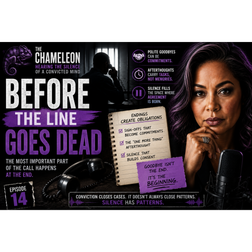
The Silent Code: How Convicted Minds Turn Pauses Into Instructions
AI
Most people remember the words. Few remember the silence between them. This episode of Hearing the Silence of a Convicted Mind explores how repeated pauses, predictable timing, and carefully placed gaps can become part of a communication strategy. Through a fictional composite inspired by real-world communication patterns, The Chameleon examines how influence can travel through omission just as easily as through speech. If you've ever wondered whether a pause can carry meaning, or how conversations continue without direct instructions, this episode will have you listening differently long after it ends.
How Responsibility Vanishes in Conversation
AI
What happens when responsibility disappears from a conversation? In Episode Two of Hearing the Silence of a Convicted Mind, The Chameleon examines a subtle but powerful communication pattern: the erasure of agency. Rather than saying "I did it," speakers may rely on passive constructions, depersonalized language, and agentless phrases that shift responsibility away from any identifiable person. Through a forensic behavioral analysis of a composite training scenario, this episode explores how language can preserve options, reduce accountability, and maintain influence long after conviction. Conviction closes cases. It does not always close patterns. Listen closely. Sometimes the most important clue is not what is said, but who is missing from the sentence.
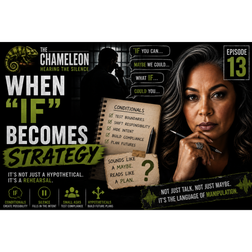
He Never Said “Do It” — And That Was the Point
AI
What if the most important words aren't the ones being spoken? In this debut episode of Hearing the Silence of a Convicted Mind, The Chameleon examines a common but often overlooked communication tactic: conditional language. Words like "if," "when," "could," and "maybe" appear harmless on the surface. But in recorded post-conviction communications, these phrases can preserve options, test compliance, shape responsibility, and influence outcomes without direct instruction. Through a forensic behavioral analysis of a composite training scenario, The Chameleon explores how language can function as rehearsal, contingency planning, and strategic influence. Conviction closes cases. It does not always close patterns. Listen closely. The silence between the words may reveal more than the words themselves.