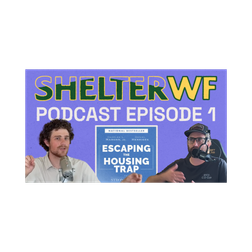
Episode 1- Escaping the Housing Trap with Nathan Dugan
In the first ShelterWF podcast episode, host Keegan Siebenaler talks with ShelterWF co-founder and Livable Flathead executive director Nathan Dugan about Strong Towns’ “housing trap,” where communities say they need both ever-rising home prices and affordable housing. They discuss how U.S. policy over decades turned housing into a financial instrument, leading government to intervene to prevent price declines, chronic underbuilding since the 1980s, and rising prices that benefit existing homeowners, local governments, and the finance sector while harming renters, first-time buyers, and the poor. The conversation critiques rigid, top-down zoning and regulatory barriers (including fire codes) that limit “missing middle” housing and encourage only single-family subdivisions or large apartments. They argue subsidized/deed-restricted housing can’t scale and often avoids lowering market prices. They review six principles from the book and emphasize incremental, neighborhood-scale development such as ADUs, duplexes, and fourplexes. 00:00 Welcome and Introductions 00:17 Livable Flathead Explained 00:54 Strong Towns and Today’s Topic 01:52 Defining the Housing Trap 03:44 Housing as a Financial Instrument 06:00 Why Prices Keep Rising 07:43 Winners, Losers, and Local Politics 13:12 From Finance to Zoning 14:08 Why Zoning Breaks Cities 18:22 Codes, Fire Rules, and Hidden Motives 22:03 Two Housing Products and Five-Over-One 26:21 Affordable Housing Doesn’t Scale 29:31 Six Principles to Fix Housing 36:23 Incremental Development Playbook 38:43 Wrap-Up and Final Thoughts