Roam School Family

Roam School Family

by Erika
Season 1
North Cascades National Park | Monkeys in the mountains?!
North Cascades has more glaciers than any other national park in the lower 48... and almost nobody goes. This episode is about the strangest, most tangled national park in the country, and the question underneath all of it: when people have already rearranged a wild place, what do we owe it now? We stand in Newhalem and feel Seattle's electricity humming in our teeth and visit three dams on the Skagit River that have been running since 1917 and still supply about 20% of the city's power. We explain the 1968 compromise that made this place a national park and a recreation area at the same time, which is why the road you drive in on isn't technically in the park at all. We tell the extremely weird story of J.D. Ross, the dam-builder who lit a waterfall in colored floodlights, hauled tropical plants indoors by hand every winter, and put actual monkeys on an island in the middle of a reservoir. We look down at Diablo Lake and explain glacial flour: why the water is that impossible chalk-blue, and what happens to the color when the glaciers finish shrinking. We find out why nobody built a fish ladder here (Ross Dam is 540 feet tall, taller than the observation deck on the Space Needle) and what they do instead: they drive the salmon upriver in a truck. Every year. Forever. Then Dad cuts the boat motor on Ross Lake to explain plate tectonics: why these mountains aren't volcanoes like most of the ones we've visited, but a pile-up of ocean floor and drowned islands that rode in from far out in the Pacific and slammed into North America. That's why you can find seashell fossils on top of the peaks. At Washington Pass we get into the mountain goats: why they lick the salt off your backpack straps, why human pee wrecks alpine plants that take decades to grow back, and how about 325 goats got blindfolded, slung under helicopters, and flown here from Olympic National Park. And we talk about the grizzlies, who were approved to come home in 2024, still not here, with no date, no money, and real disagreement between tribal nations on the same river about what it means to bring back an animal that eats already-struggling salmon. The kids end up in an argument, and neither can we: if Diablo Lake shouldn't be there, but it's the most beautiful thing we saw all day...do you drain it? Best listened to: on Highway 20 between Marblemount and Winthrop, or anywhere you've got a kid in the back seat who wants to prep for the ranger station.
Mount Rainier National Park | Who carries the load?
In this episode, we interview Lhakpa Gelu Sherpa, who has stood on top of Mount Everest fifteen times and who in 2003 climbed it faster than any human being ever had. He now runs a small restaurant a mile from the park gate because he wanted his kids to have the schooling he never got. Mount Rainier is a volcano wearing a coat of ice. This episode explains what a lahar is and why kids in the valleys below this mountain practice lahar drills. We explain how a mountain gets big enough to make its own weather, what's hidden inside the summit (miles of steam-melted ice caves and the highest lake in North America, buried under 160 feet of ice), and why the Coast Salish nations call it Tahoma: mother of waters. And we talk about what's happening right now: the glaciers on this mountain are melting six times faster than their historic rate, which means the mountain my kids climb as adults will not be the one we climbed this week. Also, Ada tries to walk six miles. She has never walked anything close to six miles. Wish us luck.
Crater Lake National Park | How do you save a lake — twice?
This episode explains how Mount Mazama collapsed into the bluest water in the world, and the native origin story of the lake. Then we tell the story of William Gladstone Steel: a fifteen-year-old kid in Kansas who read about a mysterious blue lake on his sandwich wrapper, spent fifteen years just trying to find it, and then spent seventeen more fighting to protect it — a thousand letters, one book mailed to every member of Congress, six dead bills, and finally a president willing to lean on the Speaker of the House. And we ride the trolley along Rim Drive to see what all that stubbornness bought: a lake saved, wild and beautiful, just as it was, for all future generations. Sign the kids' petition to Save the Mazama Newt: https://www.change.org/p/director-nesvik-list-the-mazama-newt-as-endangered-before-it-s-gone/ Thanks to Mac Savage (https://www.youtube.com/@MacSavage503/) a documentary filmmaker and his mother Barbara Alatorre who worked for over 40 years, writing stories and preserving the history of the Klamath tribe. We are grateful for their permission to share and amplify this history. You can hear the full oral history in this video: Klamath Tribal History & Legends Part I (2023) https://www.youtube.com/watch?v=doHIYWCxlfM Learn more about the Klamath Tribes — the Klamath, Modoc, and Yahooskin, whose homeland this has always been — at klamathtribes.org. Find every episode, our travel maps, and more at roamschoolfamily.com.
Lassen Volcanic National Park | How many rules can one park break?
Lassen gets a fraction of the visitors Yosemite does, and we think that's because nobody knows what to make of it. This park is a rule breaker and in this episode we catch it bending five rules of science, one at a time. Keep a tally with us. We explain how all four types of volcano on Earth ended up inside a single park. We stand at a lake that looks like it's boiling but is ice cold, and climb a 300-ton boulder that an avalanche carried five miles. We meet Kendall Bumpass, the cowboy who discovered and lost a leg to the hydrothermal basin that bears his name. We tell the story of Benjamin Loomis, who walked toward an erupting volcano with a box camera, and whose six photographs helped turn Lassen into a national park in 1916. And we end by talking about how life thrives in boiling acid and howNASA scientists (and actual high school students) come to this park to study life's potential in the farthest reaches of our solar system -- Jupiter and Saturn's moons. It's an odd park but we had fun. We hope you'll join us.
[Detour] The Wave | We won the permit lottery. Now what?
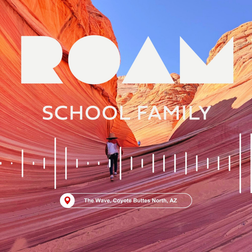
There are 64 permits available per day to get to The Wave. During peak season, 300 people compete for them. We won! …and then we realized we had an 8-year-old who had never hiked 6.5 miles in his life, a 90º & sunny weather forecast, no trail and no shade. This episode explains the geology of The Wave: Jurassic sand dunes, 200 million years old, turned to stone but caught mid-motion. We're guided by Jaron Tylock from Dreamland Safari Tours, who spent years taking people into the desert wilderness. UCLA PhD student Alana Archbold helps explain the stripes and the Moqui Marbles. We stand on actual dinosaur footprints. And we find out why geologists fly to southern Utah to study Mars — and what it means that two worlds billions of miles apart ended up looking remarkably similar. And we talk about what it actually feels like to be one of 64 people allowed into a place on a given day — and whether it lives up to the hype. Keywords: the wave, arizona, vermilion cliffs, coyote buttes, national parks, homeschool, worldschool, geology, desert, hiking, science, family travel, permit lottery
Joshua Tree National Park | How does anything survive in a desert this dry?
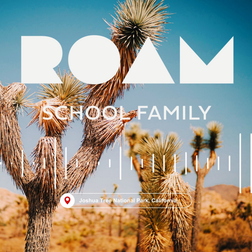
Joshua Tree isn't just about weird trees and cool rocks. This episode tells you why those "trees" are not actually trees and what a rain shadow actually does to a landscape. We explain why the Oasis of Mara—the place where Serrano and Chemehuevi people had lived peacefully for generations—got claimed by the state of California in 1875 and sold to the Southern Pacific Railroad without their consent. We meet Minerva Hamilton Hoyt, the wealthy socialite who shipped seven freight cars of desert plants across the country to convince people this place was worth saving. And we talk about what's happening right now: animals so desperate for water they're showing up in people's backyards, and what that means for the future of the desert.
Redwood National and State Parks | How do the world’s tallest trees hold each other up?
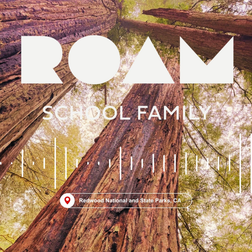
Redwood trees have roots only ten feet deep. For a tree that grows as tall as the statue of liberty, that should be a problem…This episode is about why it isn't. We explain how redwoods manufacture the fog that feeds them, what a banana slug actually does for a forest, and what the Yurok people understood about these trees long before anyone else was paying attention. And we tell the story of four women — Laura Mahan, Lady Bird Johnson, Julia Butterfly Hill, and Amy Cordalis — who have spent the last century making sure these forests survived.
[Detour] LIGO | If two black holes collide in the universe, do they make a sound?
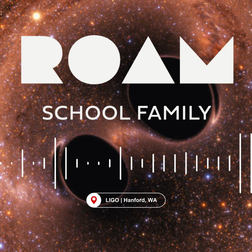
This episode explains how scientists built a machine so sensitive that your heartbeat standing next to it would ruin the experiment...and why they put it in the middle of the Washington desert. We walk through the control room where gravitational wave detections happen, with a working LIGO scientist as our guide. We explain what it means that space itself can stretch and squeeze, and why the signal they caught in 2015 had been traveling for 1.3 billion years before anyone caught it. We talk about Einstein getting fact-checked by a journal reviewer, refusing to believe it, and eventually being proven right sixty years after he died. And we look at what's coming next: a detector in space with arms two and a half million kilometers long that might — just might!!!— let us hear the echo of the Big Bang.