Real Estate Institute of Rhode Island

Real Estate Institute of Rhode Island

by Real Estate Institute of Rhode Island
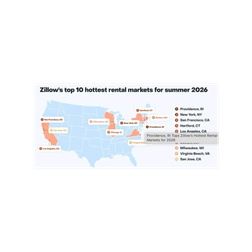
Providence, RI Tops Zillow’s Hottest Rental Markets for 2026
If you’ve been active in the Ocean State rental market recently, you already know how competitive it has become. But according to the latest nationwide data from Zillow, the rest of the country is officially finding out. Providence has just claimed the No. 1 spot on Zillow’s list of the Hottest Rental Markets for Summer 2026. Edging out massive, historically high-stakes metros like New York City (No. 2) and San Francisco (No. 3), our very own "Creative Capital" is officially the most competitive market in the nation for renters. Here is a breakdown of what the Zillow report says, what is driving this demand, and what this means for Rhode Island real estate agents, property managers, and investors.
Season 1
Rhode Island Single Family Market Report First Quarter 2026
The Q1 2026 Rhode Island Housing Paradox: Low Sales, Record Prices Description: Why are Rhode Island home sales hitting a 15-year low while prices simultaneously smash records? Welcome to the ultimate breakdown of the Ocean State’s single-family housing market for the first quarter of 2026. In this episode, we untangle the massive paradox defining the current market. We dive deep into the official Q1 2026 data—including the skyrocketing median sales price of $514,250, the 9% drop in sales volume, and the historic inventory crunch that is keeping the market on life support. Whether you are a frustrated buyer trying to navigate 2 months of housing supply, a hesitant seller trapped by the "lock-in effect" of a 3% mortgage rate, or a local real estate professional trying to advise your clients, this episode is your strategic playbook. In this episode, we cover: The Hard Data: A look at the exact numbers behind sales, median prices, and days on market. The Neighborhood Hotspots: Which RI cities and towns (like Cranston and Cumberland) are seeing the highest price jumps. The Buyer & Seller Playbook: How to win in a market where buyers are moving with more deliberation but still paying top dollar. Looking Ahead: A preview of the rest of 2026, including the upcoming luxury tax change hitting this July. Don't navigate this unprecedented market in the dark. Tune in to get the data, the context, and the clarity you need to navigate the dynamic Rhode Island single family real estate market.
April 2026 Rhode Island Real Estate Single Family Home Sales Report
In this episode, we are pulling back the curtain on the April 2026 Rhode Island housing market to explore the stark contradiction shaping our local real estate landscape. On the surface, the data presents a baffling paradox: the median price for a single-family home has shattered records to hit $529,000 (a steep 10.2% jump from last year), yet the actual number of closed sales has plummeted by 6.9%. We’ll dive deep behind these numbers to explain why fewer homes are changing hands even as prices skyrocket. The culprit? A critical inventory starvation diet. Rhode Island is currently locked into a hyper-tight 2-month supply of homes—roughly half the national average—driven by the "golden handcuffs" effect, where current homeowners refuse to give up their historically low mortgage rates. We will unpack how this severe supply shortage has widened the Affordability Gap, turning single-family homeownership into a pipe dream for everyday buyers who are now grappling not just with sticker shock, but with surging home insurance premiums and property taxes. Finally, we'll discuss the market's saving grace for current homeowners: equity gains. Featuring insights from RI Realtors President Michael Pereira, we’ll analyze how existing sellers are using their massive equity wealth to neutralize today’s high replacement costs, and how priced-out buyers are pivoting to the condo market ($395,000) just to get a foot in the door. Whether you are looking to buy, trying to sell, or just wondering when the gridlock will break—this episode breaks down the true economic forces driving Rhode Island real estate in 2026.
Rhode Island Foreclosure Rankings: May 2026

AI
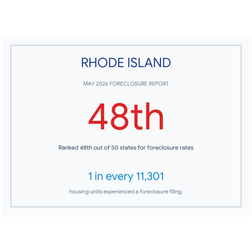
If you tune into national real estate headlines, it’s easy to get a little anxious. Across the United States, foreclosure filings have been experiencing a gradual, year-over-year upward march. Driven by persistent affordability constraints, elevated mortgage rates, and rising homeownership costs, pockets of distress are appearing across the country. But as we always say at the Real Estate Institute of Rhode Island, real estate is hyper-local. When you zoom in on the Ocean State, the picture looks radically different—and remarkably reassuring. According to the latest U.S. Foreclosure Market Reports from ATTOM, a leading national provider of property data, Rhode Island consistently boasts one of the lowest foreclosure rates in the entire country. Let's break down what the data shows and why our local market is demonstrating such incredible resilience compared to the rest of the U.S.
Rhode Island Housing Inventory Locked Down by Taxes
Why Capital Gains Reform is the Key to Increasing Housing Inventory
Rhode Island Home Prices See First Annual Decline Since Jan 2017
The Rhode Island real estate market is experiencing a significant shift as we head into the summer of 2026. For the first time since January 2017, the median price for a single-family home in Rhode Island has experienced a year-over-year decline. Driven by inflation, economic concerns, and affordability challenges, overall home sales have dropped across all property categories. While supply remains historically low, active buyers in the Ocean State are finally beginning to gain increased negotiating power. Below is our comprehensive analysis of the May 2026 Rhode Island housing market, optimized for buyers, sellers, and real estate professionals navigating these changing conditions.
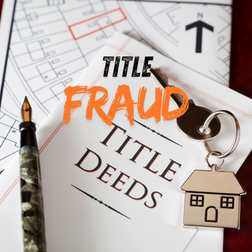
Rhode Island Homeowners Guide to Deed Fraud Prevention
Because deed fraud has evolved into a pressing threat—particularly to older Rhode Islanders and heirs of estates—the state took decisive legal action. Robert Scaralia of the Real Estate Institute of Rhode Island noted that In June 2026, Governor Dan McKee signed House Bill 7551aa and Senate Bill 2715A into law, specifically criminalizing deed theft and transforming Rhode Island's defense system through several measures: A New Felony Charge: The law establishes the explicit criminal offense of real estate title fraud. A first offense is now a felony punishable by up to 10 years in prison, a fine of up to $50,000, or both. Gatekeeping at the Municipal Level: Historically, town and city clerks were legally forced to record any document that met basic filing requirements. This new law empowers Rhode Island municipalities to refuse or temporarily delay recording "suspicious documents" from individuals who are not verified "trusted submitters" (such as licensed attorneys, title insurers, or regulated banks). Mandatory Property Fraud Alerts: The law mandates that every Rhode Island municipality establish a free property alert notification system. Property owners who sign up must be notified within 10 business days of any deed, lien, or mortgage recorded against their property. Given these new safeguards, have you checked if your specific Rhode Island city or town has already launched its free property fraud alert portal?
What the 21st Century ROAD to Housing Act Means for Rhode Island
While the 21st Century ROAD to Housing Act is a federal law, its ripples will be felt acutely right here in the Ocean State. Rhode Island faces some of the unique housing bottlenecks in the country—consistently ranking near the bottom nationwide for per-capita housing production. Here is exactly how this legislation targets our local challenges and what it means for Rhode Island agents, buyers, and sellers: 1. A Lifeline for Rhode Island's Inventory Crisis It is no secret that our state’s housing inventory is historically tight. The ROAD Act’s focus on cutting regulatory red tape is tailored perfectly for Rhode Island’s older, built-out communities. By expanding "categorical exclusions" for modest housing projects and streamlining environmental reviews, local builders can finally bypass the extensive bureaucratic delays that make small-scale infill development and property rehabilitation financially prohibitive. This should pave the way for more duplexes, accessory dwelling units (ADUs), and townhomes in our suburban and urban centers. 2. New Life for Vacant Mill Buildings and Commercial Spaces Rhode Island is rich with historic industrial history, leaving us with numerous vacant or underutilized mill buildings and commercial corridors. The RESIDE Act pilot program included in this bill provides a direct financial incentive for our cities and towns to convert these empty commercial structures into mixed-income residential housing. This could dramatically revitalize areas in Pawtucket, Providence, and Woonsocket, turning vacant eyesores into vibrant communities. 3. Leveling the Playing Field for Local Buyers In recent years, everyday Rhode Islanders have found themselves outbid by deep-pocketed, out-of-state institutional investors buying up entry-level single-family homes. By blocking mega-investors (those owning 350+ homes) from purchasing new single-family inventory, this law keeps starter homes available for local families, first-time buyers, and the clients you work with every day. 4. Direct Cash Incentives for Local Zoning Reform Rhode Island’s housing development is heavily fractured across 39 distinct municipalities, each with its own strict, often outdated zoning laws. The new $200 million annual federal grant program will act as a major carrot for local leaders. Towns that proactively update their zoning codes, allow for density bonuses near transit hubs, and streamline their local permitting processes will be rewarded with substantial federal funding. This gives local REALTORS® and housing advocates a powerful tool when urging town councils to adopt pro-housing policies. 5. Solving the Local Appraisal Bottleneck Ask any active Rhode Island agent, and they will tell you that finding an available appraiser—especially for FHA loans—can delay a closing by weeks. By expanding the appraiser workforce and letting licensed and credentialed appraisers tackle FHA-insured transactions, the ROAD Act will directly alleviate these bottlenecks. Transactions will move faster, and buyers using FHA financing will face less friction in a competitive offer situation. The Bottom Line for RI Professionals The 21st Century ROAD to Housing Act gives Rhode Island the federal tools and funding we have desperately needed to build our way out of this shortage. However, the true impact will depend on our state and local governments stepping up to claim these grants and implement these changes. As real estate professionals, our role now shifts from advocacy to execution—helping clients navigate this changing landscape and continuing to push our local communities to say "yes" to housing.
The Hidden Safety Net: Why Rhode Island Has One of the Lowest Foreclosure Rates in the Country
AI
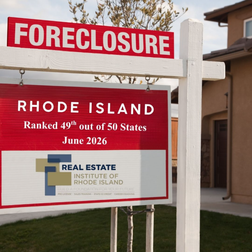
If you’ve been paying attention to national real estate headlines lately, you might notice some nervous chatter. According to the latest data from ATTOM, U.S. foreclosure activity has seen a 21% jump year-over-year. While experts call this a "normalization" of the market rather than a crisis, it’s enough to make any homeowner look at their local market with a protective eye. But if you live in the Ocean State, you can take a deep breath. While states like Florida and South Carolina are seeing foreclosures hit 1 in every 2,100 to 2,300 homes, Rhode Island is sitting comfortably at the bottom of the list. In fact, it ranks 49th out of 50 states for foreclosure activity. Notably the Ocean State rose up a from 48th in May.