Range of Change

Range of Change

by Sara Ramelb
Season 2
My say
Taylor Swift got married in the middle of Manhattan, inside the most famous arena in the country, while thousands of fans stood outside knowing they would see nothing at all. That gaudy spectacle of privacy got me thinking about the strange unwritten contract between famous people and the rest of us. In this episode I trace 70 years of fan culture, from a girl mailing a letter into the void in 1955 to a generation that can no longer tell whether the door is really open, and ask how we went from admirers to something closer to shareholders. Along the way: what the quiet comebacks of Louis CK, Scott Rudin, and Mel Gibson say about how long our outrage actually lasts, why Bill Burr's Saudi gig bothered me more than I can defend, and what the Nate Bargatze backlash reveals about the versions of people we author in our own heads. And the question to wrestle with: who told me I get a say?
My Neighbor
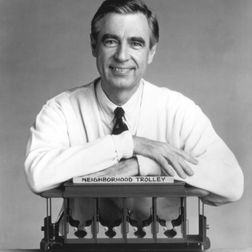
In 1978, Fred Rogers sat across from the family of Senator Heinz at WQED in Pittsburgh. Teresa Heinz was talking about the night her son André was nearly killed. It was raw, honest, the kind of moment television rarely earns and just loves. And Rogers kept cutting away from it. Back to the campaign trail. Back to safe ground. He had justly earned the title of the most patient man on American television, and he couldn't stay with the one thing that mattered. This episode is about what he did with that. After nearly two decades in children's television, Rogers spent two years trying to reach adults. He and found out, quietly and unmistakably, that it wasn't where his gift lived. What he built after that was the strongest work of his career. That's a story about examining his History of Success, understanding what he loves intrinsically, and ensuring he remains aligned to his core values in this change. That's what we'll examine in this episode.
Come out and play
In 1959, the teenagers were outside. In 1979, they were outside... just with different music and considerably less supervision. In 1999, when not at the mall, they were still outside. Starting somewhere between 2010 and 2015, the social lives of entire generations moved inside. They moved into phones, bedrooms and screens. And the data that followed on anxiety, loneliness, depression, and social disconnection is unlike anything researchers had seen before. This episode is about what happened, why it happened faster than anyone understood in the moment, and what it has to do with the way any of us navigate change in a world moving faster than our ability to see what we're trading away.
69 Feet, or, the most consequential moment of change lost to history.
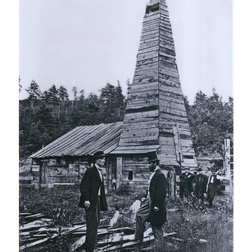
If I asked you to name the single most consequential change in the history of modern life, you might say the industrial revolution. The printing press. The internet. You'd be wrong.... Or rather, you'd be downstream. The thing that actually changed everything happened on a Saturday afternoon in 1859, at the bottom of a 69-foot hole in northwestern Pennsylvania. The man who made it happen was a retired railroad conductor with no geology training, no engineering credentials, and no particular reason to believe that anything he was doing would work. You almost certainly don't know his name. This is the story of Edwin Drake — the most consequential change agent in modern history, and the man almost nobody has heard of. And it's about what his story has to do with the thing you're waiting to try. Part 1 of 2. Range of Change is a show about what change actually requires, told through stories most people think they already understand.

Nothing Available to Be Dislodged
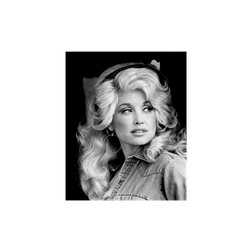
Almost nothing about Dolly Parton actually changed over six decades. And yet the world's relationship to her transformed completely. This episode asks why — because the answer has almost nothing to do with Dolly, and almost everything to do with what she was standing on. This is an episode about values clarity: not as a motivational concept, but as structural integrity. The kind that means external pressure — the skepticism, the jokes, the people invested in you staying exactly as you are — doesn't find anything loose to grab onto. Range of Change is a show about what change actually requires, told through stories most people think they already understand.
What He Saw That No One Else Could
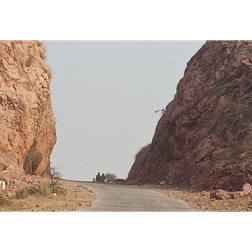
In 1960, a man in rural Bihar, India picked up a hammer and a chisel and began striking a mountain. His wife had died because there was no road to a doctor. He had no money, no machinery, no government support. Twenty-two years later, he broke through the other side. Dashrath Manjhi's story is one of the most extraordinary examples of transformational change I've ever encountered — not because of what he achieved, but because of what made it possible. This episode is about target state: what it means to hold a vision so specific and so real that it stops being a wish and starts being a direction. Range of Change is a show about what change actually requires, told through stories most people think they already understand.
Season 1
Should I Stay or Should I Go (Back) with Hank
Hank Smith is an international marketing and biz dev leader with 15+ years of experience growing brands across the US, Germany, Japan, and the UK. Currently Director of Strategy at DC-based agency SmithGifford, he leads new business and is helping position the agency for the next era of brand marketing.Before that, he spent a decade in Germany at ZDF Digital and Streamwerke, launching TV series, streaming platforms, and campaigns with major networks and streamers. A University of Colorado Boulder alum, Hank is now traveling the US in a camper with his wife Suz and their dog Ziggy, exploring National Parks, halfway decent cortados, and a place to call home (at least for a few years). He’s passionate about rock music, the horror genre, cooking, and—unironically—cleaning.
Finding Purpose and Community in Service with Tunc, Alara and Ceylin
Tunc, and his two daughters volunteer with CISV, a global organization dedicated to educating and inspiring action for a more just and peaceful world. We are active global citizens building intercultural friendship, cooperation and understanding, with chapters in over 60 countries worldwide. Available to kids as young as 10, CISV is non-political and non-denominational, evolving from a firm conviction that lasting peace is possible.
Life Design & Rethinking Retirement: Not the End, But the Beginning with Jason and Daravy
Over the last decade, the FIRE (Financial Independence, Retire Early) movement has reshaped the conversation. And it’s not just about money — though money is the mechanism. At its best, FIRE is about reclaiming time, autonomy, and alignment. It’s about front loading effort and intention so that, sooner than expected, you can step into a life that feels deeply your own. ​I recently had the chance to speak with Jason and Daravy, a couple who retired in their 30s. They didn’t do it through flashy investments or lucky breaks — they did it by making thoughtful trade-offs, living below their means, and steadily building a life that matched their values.
Group Coaching Interview
In the latest episode of the Range of Change podcast, my brilliant co-coach Alison and I went from hosts to guests. We stepped behind the mic to share something deeply personal and professionally thrilling: the new and improved group coaching experience we’re launching soon. It’s a curated, hands-on, high-impact container for women ready to design—and commit to—a meaningful change in their lives. I hope you’ll tune in tomorrow to hear all about it! And here’s the news: We’re inviting a small group of people to join the pilot cohort for free. That’s right. The full experience, no shortcuts. In return, we ask for your full presence, honest feedback, and commitment to the process. Because we’re building something extraordinary—and we want it to change your life while we refine it. Get more information here!
1 of 3