Philosophy for Better Humans.

Philosophy for Better Humans.
by Joey Caster
Aristotle and the Revival of Virtue in a Fractured Society

Aristotle and the Revival of Virtue in a Fractured Society What does it mean to live a good life—and why does no one seem to teach it anymore? In this cinematic episode, Charles Sebastian Whitby guides listeners through the enduring wisdom of Aristotle’s philosophy of virtue and ethics. Drawing from Nicomachean Ethics, Politics, and Metaphysics, this episode shows how Aristotle believed that character, not wealth or pleasure, was the key to human flourishing. We explore how virtue was once the bedrock of education—and how its disappearance has contributed to today’s moral confusion, tribalism, and aimlessness. Through vivid storytelling, modern examples, and commentary from thinkers like Alasdair MacIntyre and Martha Nussbaum, this is a journey into Aristotle’s belief that we are not just meant to live… but to become better humans. Topics Covered: – What Aristotle believed about happiness, virtue, and human potential – The “Golden Mean” and the power of habit – Why character education disappeared from schools – How we lost our cultural compass—and how we might reclaim it – A blueprint for personal and societal renewal through virtue
The most important Podcast you could listen to right now. (It's time you learn what's coming with AI.)
Episode 16: The Next Five Years of AI — A Warning, Not a Prediction Narrated by Charles Sebastian Whitby Something has changed. The people building artificial intelligence — the researchers, CEOs, and engineers closest to the technology — have stopped celebrating. They’ve started warning. In this long-form episode of Philosophy for Better Humans, Charles Sebastian Whitby explores why so many AI insiders believe the next five years may be the most dangerous and consequential period in human history since the invention of nuclear weapons. This is not a tech hype episode. And it is not science fiction. It is a sober philosophical examination of acceleration, power, work, meaning, and the human psyche as artificial intelligence begins to outperform us in domains once central to identity and dignity. This episode explores: Why AI timelines are collapsing faster than expected The coming automation cliff and the disappearance of entry-level work How culture, truth, and meaning may no longer be primarily human-generated The geopolitical race that makes slowing down nearly impossible The psychological cost of feeling unnecessary How to prepare without false optimism or despair This is an episode about responsibility — not fear. About orientation — not prediction. The future is not yet decided. But the choices we make quietly, right now, will echo for decades.
Gravity vs. Grace in the Age of Algorithms Attention, Ego, and the Battle for the Human Soul
Gravity vs. Grace in the Age of Algorithms Attention, Ego, and the Battle for the Human Soul Narrated by Charles Sebastian Whitby Why does modern life feel so effortless… and yet so empty? In this long-form episode of Philosophy for Better Humans, Charles Sebastian Whitby explores the hauntingly relevant philosophy of Simone Weil through one of the defining questions of our time: What happens to the human soul in a world governed by algorithms, speed, and automatic behavior? Simone Weil believed that human life is governed by two opposing forces. Gravity — the pull of ego, habit, power, comfort, and momentum — moves automatically. Grace, by contrast, does not move by itself. It arrives only where attention, humility, and waiting make room. As artificial intelligence accelerates convenience, prediction, and optimization, this episode asks whether something essential is being quietly eroded: our capacity for attention, silence, and seeing one another as irreducible human beings. This episode is a cinematic, story-driven exploration of: Gravity vs. grace as forces shaping human life Algorithms as engines of automatic behavior Attention as a moral and spiritual act Why speed and convenience weaken the soul Silence, waiting, and resistance in a technological world How grace can still survive in ordinary life This is not an episode about rejecting technology. It is an episode about protecting what technology cannot create.
How The Next Five Years of AI Will Change Humanity Forever. - (And how to prepare yourself)
The Next Five Years of AI — A Warning, Not a Prediction Narrated by Charles Sebastian Whitby Something has changed. The people building artificial intelligence — the researchers, CEOs, and engineers closest to the technology — have stopped celebrating. They’ve started warning. In this long-form episode of Philosophy for Better Humans, Charles Sebastian Whitby explores why so many AI insiders believe the next five years may be the most dangerous and consequential period in human history since the invention of nuclear weapons. This is not a tech hype episode. And it is not science fiction. It is a sober philosophical examination of acceleration, power, work, meaning, and the human psyche as artificial intelligence begins to outperform us in domains once central to identity and dignity. This episode explores: Why AI timelines are collapsing faster than expected The coming automation cliff and the disappearance of entry-level work How culture, truth, and meaning may no longer be primarily human-generated The geopolitical race that makes slowing down nearly impossible The psychological cost of feeling unnecessary How to prepare without false optimism or despair This is an episode about responsibility — not fear. About orientation — not prediction. The future is not yet decided. But the choices we make quietly, right now, will echo for decades.
Man’s Search for Meaning in the Age of Machines Work, Worth, and the Human Soul After Productivity
What happens to meaning when work disappears? In this long-form episode of Philosophy for Better Humans, Charles Sebastian Whitby explores the philosophy of Viktor Frankl through one of the defining questions of our time: What gives a human life meaning in an age of artificial intelligence and automation? Frankl survived the concentration camps having lost everything society uses to define worth — profession, productivity, status, usefulness. And yet, he discovered something radical: meaning does not come from what we produce, but from how we respond to life itself. As AI reshapes work, identity, and usefulness, this episode brings Frankl’s wisdom into the modern world — exploring why anxiety rises when productivity fades, why freedom without meaning becomes emptiness, and why the future may need meaning more than intelligence. This episode is a cinematic, story-driven exploration of: Meaning beyond work and productivity AI, automation, and the crisis of human worth Frankl’s insights from Man’s Search for Meaning The existential vacuum of modern life Responsibility, dignity, and the “last human freedom” What remains when usefulness disappears This is not an episode about technology. It is an episode about being human — when the old answers no longer hold.
Episode 12 — Ernest Becker: The Denial of Death Anxiety, Meaning, and the Fear Beneath Modern Life
Why do people cling so fiercely to identity, success, ideology, and recognition? Why does modern life feel anxious even when it appears comfortable? And what if much of human behavior is driven by a fear we rarely name? In this long-form episode of Philosophy for Better Humans, Charles Sebastian Whitby explores the philosophy of Ernest Becker and his groundbreaking work The Denial of Death. Becker argued that human beings are uniquely burdened by the knowledge of mortality — and that much of culture, ambition, conflict, and ego exists to protect us from facing it directly. To manage this fear, we create “immortality projects”: symbolic ways to feel heroic, significant, and enduring. This episode explores: Death anxiety as the hidden driver of human behavior Self-esteem and identity as defenses against mortality Love, work, and success as modern hero systems Why outrage and ideology escalate so quickly How denial of death fuels cruelty and conflict What real courage looks like without illusions How accepting finitude can make people calmer, kinder, and more humane This episode is not about despair — it is about honesty, humility, and learning how to live fully without pretending we are immortal.
Episode 11 — C. S. Lewis: The Abolition of Man & The Great Divorce Truth, Meaning, and the Choice That Defines a Soul
Episode 11 — C. S. Lewis: The Abolition of Man & The Great Divorce Truth, Meaning, and the Choice That Defines a Soul Narrated by Charles Sebastian Whitby What if modern humanity isn’t progressing — but quietly unmaking itself? In this long-form episode of Philosophy for Better Humans, Charles Sebastian Whitby explores the profound moral philosophy of C. S. Lewis, focusing on two of his most powerful works: The Abolition of Man and The Great Divorce. Lewis warned that when societies abandon the idea of objective truth and goodness, they don’t become more free — they become more controllable. Through sharp philosophical argument and unforgettable storytelling, Lewis shows how moral relativism, technocratic thinking, and the loss of virtue slowly hollow out the human soul. This episode explores: Why Lewis believed modern education produces “men without chests” How rejecting objective value leads to power replacing virtue The meaning of The Abolition of Man and why it matters today The Great Divorce as a psychological map of pride, illusion, and surrender Why souls cling to resentment, self-justification, and comfort The danger of cleverness without wisdom AI, behavioral engineering, and the modern risk of the “abolition” of humanity How to remain human in an age of distraction, outrage, and moral confusion This is not a religious episode. It is a philosophical meditation on truth, formation, humility, and courage — and what it means to live a meaningful human life in the modern world.
Episode 10 — Earl Nightingale: You Become What You Think About Meaning, Direction, and the Quiet Laws That Shape a Life
Episode 10 — Earl Nightingale: You Become What You Think About Meaning, Direction, and the Quiet Laws That Shape a Life Narrated by Charles Sebastian Whitby Why do so many people feel restless even when life seems “fine”? Why does success often feel empty without meaning? And what actually determines the direction of a human life? In this long-form episode of Philosophy for Better Humans, Charles Sebastian Whitby explores the philosophy of Earl Nightingale, one of the most influential thinkers on purpose, responsibility, and intentional living. Nightingale believed that human lives are shaped not by luck or circumstance alone, but by consistent thought, clear direction, and disciplined attention. Long before the age of algorithms and AI, he warned that a drifting mind is easy to control — and that meaning begins with choosing a worthy aim. This episode explores: The philosophy behind The Strangest Secret Why most people drift instead of choosing direction How attention quietly shapes destiny Why responsibility restores dignity Nightingale’s definition of true success Fear as misdirected imagination Meaning in an age of abundance and distraction How to live deliberately without hype or pressure This is a calm, thoughtful, and deeply practical episode for anyone seeking clarity, purpose, and direction in modern life.
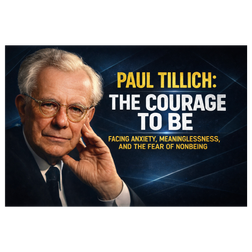
pisode 9 — The Courage to Be (Paul Tillich) Facing Anxiety, Meaninglessness, and the Fear of Nonbeing
Episode 9 — The Courage to Be (Paul Tillich) Facing Anxiety, Meaninglessness, and the Fear of Nonbeing Narrated by Charles Sebastian Whitby Why does anxiety persist even when life seems stable? Why do certainty and confidence fail to bring peace? And what does it mean to live courageously in a world with no guarantees? In this long-form episode of Philosophy for Better Humans, Charles Sebastian Whitby explores Paul Tillich’s existential masterpiece The Courage to Be — a profound meditation on anxiety, meaning, and what it truly means to exist. Tillich argues that anxiety is not a defect to be cured, but an unavoidable consequence of being human. Courage, he teaches, is not fearlessness, but the act of affirming one’s life in the face of uncertainty, guilt, and meaninglessness. This episode explores: Why anxiety is the price of awareness Tillich’s three forms of existential anxiety The collapse of modern meaning Why distraction and certainty fail us The difference between confidence and courage How to live meaningfully without guarantees Courage in work, love, creativity, and truth How to affirm existence in an uncertain world This is a quiet, honest, and deeply human episode for anyone navigating doubt, fear, or the search for meaning in modern life.
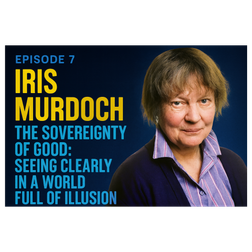
Episode 7 — Iris Murdoch: The Sovereignty of Good Seeing Clearly in a World Full of Illusion
Episode 7 — Iris Murdoch: The Sovereignty of Good Seeing Clearly in a World Full of Illusion Narrated by Charles Sebastian Whitby Philosophy for Better Humans Why is it so hard to truly see the world as it is? Why do we so often misunderstand the people we love most? And what does genuine goodness look like in an age of distraction, ego, and noise? In this profound and quietly transformative episode, Charles Sebastian Whitby explores the central insights of Iris Murdoch’s masterpiece The Sovereignty of Good — a philosophy of moral clarity, compassionate attention, and the lifelong struggle to see reality truthfully. Through vivid storytelling, psychological depth, and Murdoch’s own piercing ideas, this episode guides listeners through: The ego as a fantasy-making machine Attention as the foundation of moral life “Unselfing” — the dissolving of ego through beauty Love as the clear perception of another’s reality Why goodness is a direction, not a performance How Murdoch’s ideas can heal modern relationships Practical clarity practices for everyday life Beauty, silence, and humility as moral disciplines This is not a lecture. It is a gentle invitation to look again at the world, to see others with more depth and compassion, and to walk toward the Good — one clear moment at a time.
1 of 4