New Regional Orders

New Regional Orders

by Dr. Ivo Ganchev┃Centre for Regional Integration
Season 1
Evolution & Challenges in Latin American Regionalism | Prof. Thomas Legler
Why has Latin American regionalism repeatedly generated ambitious new organizations, yet struggled to produce deeper and more durable integration? And what do the evolution of the OAS, the rise and decline of post-hegemonic regionalism, and the persistence of U.S. influence tell us about the region’s political future? 🎙️ In this episode, Dr. Ivo Ganchev speaks with Prof. Thomas Legler (Universidad Iberoamericana), a leading scholar of Latin American regionalism, democracy promotion, and inter-American relations, to explore: · How scholars have interpreted Latin American regionalism through the perspectives of optimists, skeptics, and innovators · Why the concepts of post-hegemonic and post-liberal regionalism became influential, and whether they still help us understand the region today · How U.S. influence in Latin America has changed, and why it is important to distinguish between hegemony and domination · How the Organization of American States emerged from the long and often contradictory history of inter-American relations · Why the OAS remains important despite chronic underfunding, political tensions, and repeated questions about its effectiveness · How the OAS developed tools for democracy protection through what Prof. Legler describes as “intervention without intervening” · Why Latin America has created so many overlapping regional organizations, from the OAS and MERCOSUR to UNASUR, ALBA, CELAC, the Pacific Alliance, and others · Why Latin American regional cooperation entered a period of stagnation and fragmentation after the end of the commodity boom and the decline of the Pink Tide consensus · How weak intra-regional trade, limited cross-border social ties, and elite-driven regionalism have constrained deeper region-building · Why regionalism in Latin America has nevertheless remained persistent, even when particular organizations have declined or disappeared · How education, professional mobility, tourism, migration, and stronger societal links could help build a more durable regional community · Why presidential politics and personal relations among leaders continue to shape the success or failure of regional initiatives · What current research on informal intergovernmental organizations and Chinese-financed infrastructure may reveal about the future of regional politics in Latin America 🎧 New Regional Orders is the official podcast of the Centre for Regional Integration, hosted by Dr. Ivo Ganchev. Each season focuses on a different world region, unpacking the political, economic, social, and institutional forces that shape regional change. 🔗 Learn More: Centre for Regional Integration: https://regionalintegration.org Dr. Ivo Ganchev: https://ivoganchev.com Prof. Thomas Legler: https://unu.edu/cris/about/expert/thomas-legler
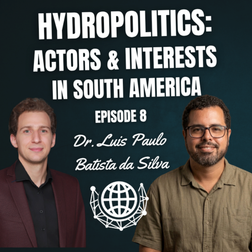
Hydropolitics: Actors & Interests in South America | Dr. Luis Paulo Batista da Silva
How does water governance shape regional politics in South America? And what happens when climate change, infrastructure, mining, agriculture, and local struggles for justice all converge around shared rivers, aquifers, and borderlands? 🎙️ In the second part of a two-part conversation, Dr. Ivo Ganchev speaks with Dr. Luis Paulo Batista da Silva (UFF), a geographer specializing in transboundary water governance, hydro-politics, and climate governance, to explore: · Why regional fragmentation matters for water governance, and why sector-specific institutions often struggle with cross-cutting environmental problems · How external actors — including China, the United States, NGOs, UN agencies, multilateral development banks, and international conservation organizations — influence water governance in Latin America · How corporate lobbying, privatization, infrastructure investment, agriculture, mining, and hydropower shape water management and water distribution · Why climate change is exposing the limits of existing governance frameworks, especially in relation to droughts, floods, and forest fires that cross national borders · What Latin America can learn from other regions, including Southeast Asia, and what other regions can learn from Latin American experiences of local water governance · Whether water is more likely to produce conflict, cooperation, or both at once · Why many struggles over water happen within states rather than between states · How local communities, indigenous knowledge, and demands for water justice can be better integrated into decision-making · How mining, agriculture, contamination, and water extraction affect rivers, aquifers, and communities across borders · Why looking closely at territory, borderlands, and everyday local practices is essential for understanding regional integration in practice 🎧 New Regional Orders is the official podcast of the Centre for Regional Integration, hosted by Dr. Ivo Ganchev. Each season focuses on a different world region, unpacking the political, economic, social, and geographic factors that drive regional change. 🔗 Learn More: Centre for Regional Integration: https://regionalintegration.org Dr. Ivo Ganchev: https://ivoganchev.com Dr. Luis Paulo Batista da Silva (Google Scholar): https://scholar.google.com/citations?user=bo13geYAAAAJ&hl=en Dr. Luis Paulo Batista da Silva’s Bio: https://bv.fapesp.br/pt/pesquisador/699379/luis-paulo-batista-da-silva/
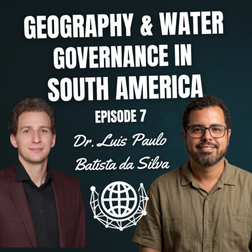
Geography & Water Governance in South America | Dr. Luis Paulo Batista da Silva
How does geography shape regional integration in South America? And what happens when shared rivers, aquifers, and environmental systems cut across the neat boundaries of nation-states? 🎙️ In the first part of a two-part conversation, Dr. Ivo Ganchev speaks with Dr. Luis Paulo Batista da Silva (UFF), a geographer specializing in transboundary water governance, hydro-politics, and climate governance, to explore: · Why geography offers a distinct lens on regional integration, especially through territory, border regions, and material interdependence · What transboundary water governance means in practice, and why it matters so much in South America · The strategic importance of the Amazon River Basin, the La Plata Basin, and the Guarani Aquifer System · The successes and limits of treaties and institutions designed to govern shared water resources · Why implementing agreements is often far harder than signing them · How governance operates across multiple levels, from local stakeholders and subnational actors to national governments and regional organizations · The emerging significance of “flying rivers” and why atmospheric water flows may become a bigger part of regional debate · How power asymmetries shape hydro-diplomacy, especially in negotiations involving Brazil and smaller neighbours · What the Itaipu Dam reveals about bargaining power, treaty renegotiation, and the unresolved politics of shared infrastructure · Whether Brazil sees water governance as a real strategic priority, and how this connects to broader questions of regional leadership 🎧 New Regional Orders is the official podcast of the Centre for Regional Integration, hosted by Dr. Ivo Ganchev. Each season focuses on a different world region, unpacking the political, economic, social, and geographic factors that drive regional change. 🔗 Learn More: Centre for Regional Integration: https://regionalintegration.org Dr. Ivo Ganchev: https://ivoganchev.com Dr. Luis Paulo Batista da Silva (Google Scholar): https://scholar.google.com/citations?user=bo13geYAAAAJ&hl=en Dr. Luis Paulo Batista da Silva’s Bio: https://bv.fapesp.br/pt/pesquisador/699379/luis-paulo-batista-da-silva/
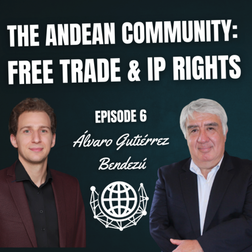
Free Trade, IP Rights & the Andean Community (En Español) | Alvaro Gutiérrez Bendezú
What does regional integration look like when it actually works, quietly, through courts, shared rules, and constant dispute management? And how do trade negotiations, bureaucracy, and AI-driven authorship challenges reshape the legal foundations of integration in Latin America? 🎙️ Dr. Ivo Ganchev speaks with Álvaro Gutiérrez Bendezú, a leading Peruvian lawyer specializing in Intellectual Property, Life Sciences, and International Trade, and a former official at the General Secretariat of the Andean Community (CAN), This episode is in Spanish. ¿Cómo se ve la integración regional cuando sí funciona—de manera silenciosa, a través de tribunales, normas comunes y gestión constante de disputas? ¿Y cómo se cruzan hoy la negociación comercial, la burocracia y los desafíos de autoría en la era de la IA con los cimientos jurídicos de la integración en América Latina? 🎙️ El Dr. Ivo Ganchev conversa con Álvaro Gutiérrez Bendezú, abogado peruano destacado especializado en propiedad intelectual, ciencias de la vida y comercio internacional, y ex funcionario de la Secretaría General de la Comunidad Andina (CAN), sobre: · Los “años dorados” del sistema andino: por qué el litigio y el conflicto pueden ser señales de vitalidad institucional · Por qué la CAN resiste cuando otras iniciativas regionales se debilitan: el poder de las normas comunes, los tribunales y una gobernanza “low profile” · Negociar en bloque vs negociar país por país: cuándo conviene, cuándo falla y por qué la flexibilidad suele superar el dogma · El “bowl de fideo” de marcos comerciales del Perú (TLCs, APEC, Alianza del Pacífico, ALADI) y lo que revela sobre estrategia y fragmentación · Lecciones desde dentro de las negociaciones del capítulo de PI de Perú con Estados Unidos, la Unión Europea y el ALCA · El futuro del libre comercio bajo los giros de la política comercial estadounidense—y por qué las instituciones, no los presidentes, sostienen la gobernanza comercial · Propiedad intelectual en la era de la IA: autoría, originalidad y qué ocurre cuando “ChatGPT puede escribir el libro” · Una lección práctica de gobernanza para la región: transparencia, tecnología y reglas claras · Lo que aprenden rápido las empresas extranjeras en América Latina: burocracia, predictibilidad y por qué “en el sector público la hora tiene 600 minutos” 🔗 Más información: • The Centre for Regional Integration: https://regionalintegration.org • Dr. Ivo Ganchev: https://ivoganchev.com • Alvaro Gutiérrez Bendezú: https://intrinsecus.pe/alvaro-gutierrez/
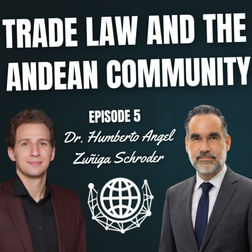
The Andean Community (CAN) & International Trade Law | Dr. Humberto Zuñiga Schroder
How does a regional organization function in practice when legal deadlines collide with political realities? And why does Latin America keep producing overlapping trade blocs, without converging into one unified project? 🎙️ Dr. Ivo Ganchev speaks with Dr. Humberto Zuñiga Schroder (Universidad del Pacífico, Lima), an international trade lawyer and former official in the Legal Service of the General Secretariat of the Andean Community (CAN), to explore: · What it’s like working inside the Andean Community: procedures, negotiation space, and real-world constraints · How theory differs from practice—and how practitioner experience changes how we understand compliance and disputes · CAN’s resilience, key achievements, and the hard question of how to measure success · Institutional design and reform debates, including the limits of the Andean Parliament · Legal and institutional borrowing from Europe: when it does and doesn’t translate · Free movement, security concerns, and why judicial cooperation in criminal matters remains underdeveloped · Trade integration across Latin America: why there are so many blocs, and why “convergence” is so difficult · CAN–MERCOSUR relations, Bolivia’s position, and the prospects (or limits) of deeper bloc-to-bloc integration · The WTO’s dispute-settlement crisis, alternative pathways (including interim appeal arbitration), and what this means for the region · How U.S. tariff politics and China’s economic weight shape trade dynamics—without necessarily transforming regionalism 🎧 New Regional Orders is the official podcast of the Centre for Regional Integration, hosted by Dr. Ivo Ganchev. Each season focuses on a different world region, unpacking the political, economic, social, and geographic factors that drive regional change. 🔗 Learn More: Centre for Regional Integration: https://regionalintegration.org Dr. Ivo Ganchev: https://ivoganchev.com Dr. Humberto Zuñiga Schroder: https://faculty.up.edu.pe/en/persons/humberto-angel-zuñiga-schroder/
Mexico’s Judicial Reform, US Relations & Regionalism | Dr. Octavio Segovia
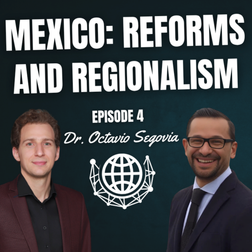
How do domestic reforms in Mexico spill over into regional politics? And what role does Mexico play as a bridge between North America, Latin America, and the wider world? 🎙️ Dr. Ivo Ganchev continues his conversation with Dr. Octavio Gonzalez Segovia (FLACSO-México) to explore: Why Latin America develops its own models of integration instead of copying the EU Intra-regional learning and the spread of innovations like Curitiba’s transport system Mexico’s geopolitical position between North America, Latin America, and the Global South The impact of Trump-era U.S. policies on Mexican nationalism and regional cooperation The unprecedented judiciary reform in Mexico and its possible ripple effects across the region Recommended films and literature to better understand Latin American politics and society 🎧 New Regional Orders is the official podcast of the Centre for Regional Integration, hosted by Dr. Ivo Ganchev. Each season focuses on a different world region, unpacking the political, economic, social, and geographic factors that drive regional change. 🔗 Learn More: Centre for Regional Integration: www.regionalintegration.org Dr. Ivo Ganchev: www.ivoganchev.com Dr. Octavio Gonzalez Segovia: https://fminvestiga.flacso.edu.mx/investigadores-invitados
Transgovernmental Networks & Health Cooperation | Dr. Octavio Segovia
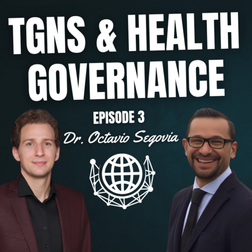
How are flexible networks reshaping regionalism in the Americas—and what can we learn from them in times of crisis? 🎙️ Dr. Ivo Ganchev speaks with Dr. Octavio González Miguel Segovia (FLACSO-México) in the first of a two-part conversation to explore: The rise of transgovernmental networks (TGNs) and how they differ from traditional intergovernmental organizations Case studies like the Global Health Security Initiative (GHSI) and their role in regional cooperation Institutional factors that shape regional responses to health crises The push and pull between ideology and interests in North vs. South American regionalism Lessons from BRICS for flexible, interest-driven collaboration in Latin America This episode examines how TGNs offer a more adaptable, pragmatic model of regional integration—particularly in public health—and how divergent approaches across the Americas are shaping the future of cooperation. 🎧 New Regional Orders is the official podcast of the Centre for Regional Integration, hosted by Dr. Ivo Ganchev. Each season focuses on a different world region, unpacking the political, economic, social, and geographic factors that drive regional change. 🔗 Learn More: Centre for Regional Integration: www.regionalintegration.org Dr. Ivo Ganchev: www.ivoganchev.com Dr. Octavio González Segovia: https://fminvestiga.flacso.edu.mx/investigadores-invitados
Mexico’s Strategic Dilemmas & Mesoamerican Integration | Dr. Alina Combs
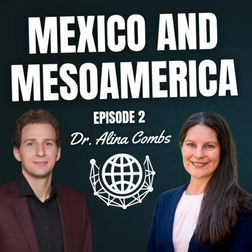
How does Mexico navigate its identity between North America, Latin America, and the Global South? And what makes Mesoamerican regionalism unique? 🎙️ Dr. Ivo Ganchev speaks with Dr. Alina Gamboa Combs (Universidad Anáhuac) to explore: The evolution of regional integration from Plan Puebla Panama to Proyecto Mesoamérica Overlapping initiatives such as SICA and the Mesoamerican Biological Corridor Mexico’s geopolitical identity across three regions The impact of U.S. tariffs and Trump-era policies on Mexico’s regional role Innovative approaches to teaching theory through classroom games 🎧 New Regional Orders is the official podcast of the Centre for Regional Integration, hosted by Dr. Ivo Ganchev. Each season focuses on a different world region, unpacking the political, economic, social, and geographic factors that drive regional change. 🔗 Learn More: Centre for Regional Integration: www.regionalintegration.org Dr. Ivo Ganchev: www.ivoganchev.com Dr. Alina Gamboa Combs: anahuac.mx profilehttps://www.anahuac.mx/mexico/EscuelasyFacultades/estudiosglobales/claustro/dra-alina-gamboa-combs
Small States & U.S. Power in Latin America | Prof. Tom Long
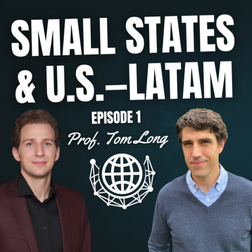
What role do small states play in shaping global politics — and how does U.S. domestic politics influence Latin America? 🎙️ Dr. Ivo Ganchev speaks with Prof. Tom Long (University of Warwick) to explore: The strategic role of small states in international affairs How U.S. domestic politics affects Latin American foreign policy The historical foundations of regionalism in the Americas Republican internationalism and Latin America’s contribution to international order Tensions between presidentialism and regional integration 🎧 New Regional Orders is the official podcast of the Centre for Regional Integration, hosted by Dr. Ivo Ganchev. Each season focuses on a different world region, unpacking the political, economic, social, and geographic factors that drive regional change. 🔗 Learn More Centre for Regional Integration: www.regionalintegration.org Dr. Ivo Ganchev: www.ivoganchev.com Prof. Tom Long: www.tomlongphd.com